|
Institute for Migration and Ethnic Studies NEEDS YOU From: silva.meznaric@zg.tel.hr (Silva Meznaric)
To: letters@croatianworld.net (Nenad Bach)
Dear Mr Bach -
I am writing to you with a hope that you would find time to answer to a number of impertinent questions attached to this letter. The matter of fact is that my institution (Institute for Migration and Ethnic Studies in Zagreb) is about to start a research concerning Croatian recent Diaspora in States, including various associations. The attached protocol is addressed to initiators and organizers of associations. It is my understanding that you are among the most prominent among them; therefore, we would appreciate very much if you could have a look at the attached protocol and answer the questions you would find relevant for your activities. Thanks in advance,
Srdacno
Dr Silva Meznaric
Institute for Migration and Ethnic Studies
Radicev trg 3
Zagreb 10000
Tel 385 1 6111 563
fax 385 1 46 14 208
E-mail: silva.meznaric@zg.tel.hr Dear Crown subscribers and readers, Please assist Dr. Silvia Meznaric and Dr. Sasa Bozic. My suggestion is to ask them directly to send a Croatian and English Questionnaire in MS Word and therefore you can fill it on your own computer and send it back via email. If we do not participate and we do not share... we can not complain about it. PARTICIPATE ! best, Nenad Bach INSTITUTE FOR MIGRATION AND ETHNIC STUDIES, explorative questionnaire for the research: Croatian Migrant Communities: Belonging and "Multiculturalism" Project Leader: Saša Božić, PhD,Research Fellow Institut za migracije i narodnosti
Trg Stjepana Radića 3
HR-10000 Zagreb, Hrvatska Tel. +385-1-611-1564
Faks: +385-1-611-9680
e-mail: sasabozic@inet.hr Questionnaire number: In the Croatian social sciences the research of the activities of Croatian emigrants in the countries of immigration was neglected. Croatian migrant associations as institutionalised forms of national unity of the emigrants form the activity and identity of large number of Croatian migrants and their descendants. They influence the integration of migrants in the new societies, their attitude towards naturalisation, assimilation or remigration. They can influence the formation of new Croatian minorities in the countries of the EU as well as in other countries. The social, cultural and political differences between the migrant communities in Western Europe and overseas countries are neglected as well. In Croatian scientific and political public life many actors usually point to the activities of "Diaspora", "Croatian migrants", "Croatia abroad" however they haven't tried to treat the problem in a methodical, systematic manner. The influences on the Croatian migrant communities were not researched nor their influence on the society of immigration. Their influence on national, international and transnational flows and processes were not researched. This is why the Institute for migration and ethnic studies started the research which goals are: 1. To describe Croatian migrant communities within the context of contemporary migration flows and multiculturalism. 2. To explore the statistical data about Croatian citizens and Croats in general, residing in the countries of Western Europe and overseas, estimate their number and spacial distribution. 3. To define structure and patterns of communities’ organisation; how they develop, reproduce and imagine themselves. 4. To explore differences among them in receiving countries determined by these countries’ different models of political belonging and to define and explain differences between Croatian communities related to time and mode of their emergence and distance from the country of origin. Your help in the fulfilment of the goals of this research has almost the greatest value because you are an expert in this field who lives daily with problems and successes of your association, club, society. This is why we kindly ask you to take time for our questionnaire and to answer our questions and thus help Croatian social sciences as well as Croatian public to understand the activities of Croats in diaspora. Your anwers will be used for the scientific purposes only. Your answers will not be published under your name without your explicite verification. (If the space next to the question isn't big enough for the answer, please use the empty right page.) Beginnings of association, club, society - What is the name of your association, club, society?
| | - In which town/city, province and state is your association, club, society situated?
| | - When was your association, club, society founded?
| | - How many founders did your association, club, society have?
| | - How old were the founders (if it is impossible to answer – to which generation did they belong /young, middle age, older/?)
| | - How many women were among them?
| | - How many second or third generation members were among them?
| | - If the founders of the association, club, society are the first generation immigrants – from which region of Croatia or Bosnia and Herzegovina do they come?
| | - What was the profession of the founders?
| | - How long already were the founders in the U.S.?
| | - What were the goals of the association, club, society?
| | - Did the founders have a statute or some other document? (If they had we would kindly ask you to send it to us.)
| | | - Is the association, club, society officially registered? (If yes, which legal form does it have?)
| | - Which type of activities was most common in the association, club, society in its initial phases?
| | - With which other Croatian associations, clubs, societies (in the U.S.) did your association develop its relations in the beginning?
| | - Did your association, club, society have contacts with other Croatian associations, clubs, societies around the world at the beginning of its activities? (If yes with which associations, clubs etc.?)
| | - With which other (American or other migrant non-Croatian) associations, clubs, societies or other institutions in the U.S. did your association develop its relations in the beginning?
| | - Did your association, club or society have contact with associations or institutions in the homeland at the beginning of its activities? (If yes, with which associations, institutions?)
| | - Which changes were the most important since the foundation of your association, club, society? (in terms of change of the number of members, of the type of activities, of the relations towards other associations etc.)
| | - Which difficulties did your association, club, society have in the beginning?
| | Structure, organisation and activities of the association - How many members does your association, club, society have today?
| | - How many female members does your association, club, society have? (in numbers or percentages)
| | - How old are the members in average? (If it is impossible to say – to which generation do they belong – younger, middle age, older, diverse generations)
| | - From which part of Croatia or Bosnia and Herzegovina do the members (or their parents, ancestors) of your association, club, society come?
| | - What are the members doing professionally? (in general, the majority)
| | - How many members of the second or the third generation of immigrants are there in your association, club, society? (in numbers or percentages – approximately)
| | - Which activities within your association, club or society would you describe as the most important?
| | - How often do the members of your association, club, society meet?
| | - How many members are usually present?
| | - Which administrating or governing bodies does your association, club, society have? (e.g. president, presidency, secretary etc.)
| | - Within which governing body are the decisions made that are important for the association, club, society?
| | - How are the activities of the association, club, society funded? What is the main source of financing? (membership fees, donations, professional services etc.)
| | - Is somebody employed by the association, club, society? If so, how many people are employed?
| | - How are the new members attracted to join your association, club, society?
| | - How did the present members of your association, club, society find out about the association, club, society?
| | - Which criteria must someone fulfil to be able to become a member of your association, club, society?
| | - Which main reasons for the joining of the association, club, society do the members usually mention?
| | - What are the most important goals of the association, club, society, today?
| | - Which activities of association, club, society are planned for the future?
| | - Is your association, club, society a member of a wider organisation that gathers Croatian associations, clubs etc.? If yes which one?
| | - With which other Croatian associations, clubs, societies in your town/city or region, does your association, club, society have contacts?
| | - Could you please describe these contacts? (How often, how many participants, what is the goal of these contacts etc.?)
| | - Could you please point out a few actions that were initiated by your association, club, society that you find particularly important?
| | - Could you please describe shortly the way in which activities were carried out?
| | - Could you please point out a few actions that were initiated by your association, club, society that weren’t a complete success?
| | - Why weren't they a complete success?
| | The relations with associations, clubs, societies of other diasporas and with the U.S. institutions - Does your association, club, society have contacts with associations, clubs, societies of other diasporas? If yes, with which ones?
| | - What is the goal of cooperation with the associations, clubs, societies of other diasporas?
| | - How often do the members of your association, club, society meet the members of those other diaspora associations, clubs, societies?
| | - Do you have any problems with associations, clubs, societies of other diasporas? If so, what problems?
| | - With which U.S. institutions, does your association, club, society have most contacts?
| | - Could you please describe the contacts with the U.S. institutions? (goals, legal framework etc.)
| | - How do the most active members of your association, club, society evaluate American policies towards immigrants or ethnic groups (e.g. affirmative action etc.)? Why do they evaluate them in that way?
<
|
»
(E) Croatian Stories - BALLAD OF THE MINERS
|
BALLAD OF THE MINERS 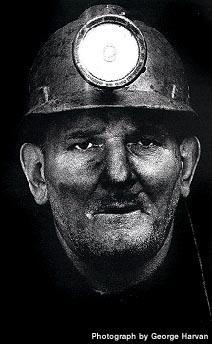 | 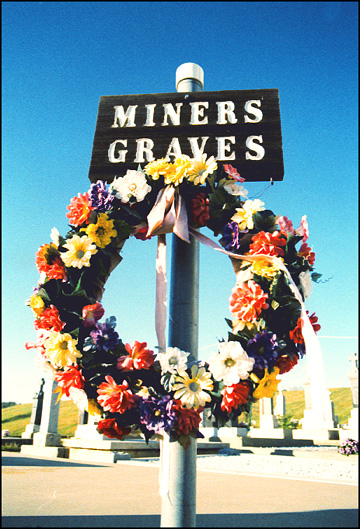 |
by Ivo Tasovac
"So much Autumn, so many memories,
should the head in a melancholy promenade,
through beings and and objects, fall
on someone's shoulders, descend softly upon
the unknown transient with the words: I should like you
to be good, or to become so if you are evil as so many
others, for the Autumn is here and one should listen
to its voices."
Frano Alfirevic
The graveyard was located about two miles
east of the original mining colony of Park City in
Utah, which because of its mineral wealth attracted,
at the turn of the twentieth century, many Croats from
the Lika regions to this part of the New World. I had
heard a lot about the miners and their graveyard but this
was the first time I could visit it and see it with my
own eyes. After an early Sunday morning mass. I was
driving alone towards Park City. I deliberately took
a longer drive through the Emigration canyon and the
Wasatch Mountains. The smell of incense still hung in
my nostrils to be gradually replaced, as i was
zigzagging up the mountain, by the smell of dying
Summer. The day was soft and the mountain, turning
its color from green into red was soothing. At this
time of the year it was a majestic sight . The Autumn
beauty, stretched from the bottom to the top of
the mountain, and beyond to the next, looked like a
surrealistic garment, woven by magic hands of an
unseen mountain fairy. Indeed, I felt how someone's
head, in a melancholy promenade, was falling upon me
the unknown transient....And I wanted to be good and
to listen to the voices of the Autumn....
After an hour or two of driving, I found
myself standing in the middle of the graveyard. In
contrast to the surrounding mountains, this place
could hardly give you a spiritual uplift at first
sight. The broken crosses and tombstones around me ,
reminded me of the battles long since forgotten. The
graves, like frightened children of the darkness,
were squeezed together afraid to cry aloud. I noticed
that only along the freeway the cemetery was
protected by rusty barbed wire, the rest of it was
open for the cows and horses to graze freely. The
nearby grave with "fresh" flowers, plastic roses, that
is, attracted my attention. Some scrambled letters
were chiseled into the stone: " OVDE OPOCIVA U MIRU
BOZIJEM FRANE BUSIJA RODEN 2 JULY UMRA 19 FEB.
1924." There was no year of his birth. I was surprised
because when I met the old Busija, he'd never told me
about his dead son. He'd told me in rather a strange language, a mixture
of bad English and bad Croatian, many stories about other Croatian
miners dead and buried. ''Sure, sure, rankane moj, you go down , see
graveyard down below ...those car ronaju by, and you fajind all Crowts
and bingo". I took me awhile to get straight what he wanted to say,
particularly the bingo business which he used, I finally realized, as his
exclamation point.
From somewhere the wind was blowing . I smelled the earth
blended with the redolence of human bones. I moved around from grave to
grave. Among the miners from Croatia there were those from Ireland, Norway.
Sweden, Germany, Greece and some Jews were buried with them as well.
Apparently, no one thought it extraordinary to be buried all together.
They all found eternal peace in this sticky clay , while they
were alive, they all ''barked'' at each other, as the old Busija had put
it. ''You don't know no English and the Greek starts in Greek , and you at
ponasu and if you could bark better, you won the war. and bingo''.
The eminent Croatian writer from Lika, Mile Budak, often spoke
with a degree of pride and sadness, that his Lika populated the whole world
and herself never depopulated. It seemed to me indeed that the whole Lika
was buried in this plot of land. In one bunch of graves Pavichichs,
Padjans, Tomjenovichs, and Tomlinovichs were buried. A little distance
from them, the Frkovics and the Frkovichs. The same family with different
spellings. Then there were the Druzenovichs, Stimacs, Brjljachichs,
Umelinovichs, Harvatins, Umiljenovichs, and Rupchichs. Scattered around were
Uzelacs, Jenovichs, Pintars,
Rukavinas, Surilovichs, Rubicks, Borovacs, Begichs and others. The most
numerous were the Frkovics.
One could hardly expect to know much about their lives from the
inscriptions left above their graves. Yet from those scrambled letters and
words, someone who promenades through beings and objects could feel an
authentic pain, akin to the pain and frustration of
dying soldiers in the field of battle, asking the questions why ? Why
such a pain, why such a death ? - and no consoling answers were ever heard.
I tried hard to relive in my mind the
days of their lives spent in the bowels of the earth. I saw myself
standing at the entrance of the mine, with a thousand feet of stones
hanging above my head. And then the thought leaped out of my head, like a
burning comet in the thick darkness of a Summer night, telling me that
the stone above my head was not ordinary stone, but rather, petrified
dreams,
hopes, and angry oaths of those simple souls who left their pastures at the
foot of Velebit Mountain in search for a crust of bread in the New World.
''USPOMENA OD TVOJE ZENE FRANJKE OPOCIVAJ
ZLATO MOJE LAKA TI CRNA ZEMLJA'', stands above Frank Tomljenovich
grave. He was dead at thirty-two years of age. And this was not the only
case. Most people buried here died at that age, and even younger. The
number of dead children was staggering. I stumbled upon the grave in
which the dead were buried at at company expense, if they had no money of
their own to meet the burial cost. There were holes of several square
yards, fenced around with pieces of timber, resembling sheep-pens. There
were no names to know who was buried in these company holes. Except for
the remnants of
decayed wooden crosses, planted in the middle of these sheep-pens, there
was nothing else.
I sat down on one of the Frkovich's grave, thinking about death
and dying. By pure association of thoughts, all the cemeteries I had seen
along the sea coast of Croatia came to my mind. Looking around me at the
broken crosses and the graves like sheep-pens, I strongly felt that our
dead in Croatia were still alive and amongst the living. They
simply transformed themselves into the symmetry of stone, into the long
rows of harmonious monuments, into the dark and tall and eternal cypresses
above the sea. Into our souls... By comparison, the endless sky of Utah
and Wyoming appeared to me from this graveyard
like the gigantic cruel jaws of some wild beasts, which cracked and
grinded everything into dust ...
I suddenly stood up and walked from grave to grave. T felt that the
words were falling from mouths on the ground like leaves from the trees
and then blown by winds from the ground into the sky. I dawned upon me that
I was whispering something subconsciously like a prayer I once knew. It
took me awhile to realize that I was not whispering a prayer but a old
Tadijanovic's poem about the slaughtered sheep. Once I realized what I was
doing, I didn't know whether to say it loudly in English or Croatian. I
decided to say it in English for the benefit of all buried here. First
words in Croatian would appear in my mind, then
I would translate them into English and recite them as loud as I could for
everyone to hear. While reciting I felt that dead rose from their graves
and listen. I saw the tears glistening in the sockets of their dead eyes.
When I moved, they followed me close behind . When I stopped, they stopped too
and stand still, waiting for me to move again.
. ''A young shepherdess of pale complexion, down the slope, at dawn
was herding
twelve fleecy sheep into a sleepy town to be sold to the fat butcher. They
were lead by the proud ram..'' ,I went on and on. These simple and
uncomplicated words by which the poet described so well the brutality of
human existence, on this occasion and at this place were by far more
appropriate and sublime than all the prayers I knew... ''The butcher's
apprentices, silently, like wolves, took them away. Not a single one
returned. Today is a holiday, the
herd is being slaughtered for the feast...''
The autumnal sun had already dispersed the fog above the valley,
and a few clouds, white like washed fleece hung in the sky above the
mountain. I turned my face towards the sun, with my eyes wide open.
Through my eyes the sun light, like melted silver, poured into my soul,
making me feel well and rejuvenated. I turned around and walked back to
Busija's son grave and ended my 'prayer': ''The dead eyes, the fleece
spilled with blood, the broken legs. Over the slope the sun rose...On the
way home, the shepherdess thought to have heard a mournful bleating, in the
distance.''
On the way home, I listened to the voices of the Autumn, though I
wasn't sure whence they were coming from. From the slopes of the mountain or
the graves I had left behind. I remember however the words and their
sound. It was an archaic, centuries old, nasal sound. Mournful and shrilled
like the old lamentations around the extinct Croatian hearths.
Ivan Tasovac
ivan.tasovac@zg.tel.hr
|
»
(E) VIPnet celebrates its fourth birthday
|
CroatianVIPnet celebrates its fourth birthday
VIPnet closed the first quarter of 2003 with an 11.1% increase in profits representing US$75 million.
Croatia's GSM network, VIPnet has celebrated the 4th anniversary of its commercial launch, having exceeded the number of one million customers and at the end of the first quarter of 2003 has 1.1 Million customers. VIPnetís market share has increased to 50.3%.
Considering the last financial year, Josef Vinatzer, VIPnet`s CEO, emphasized: "Croatia has achieved a penetration rate of 50.5 % and it ranks fifth among the countries of Central and Eastern Europe. Mobile communications are of great importance to economic development and growth. When we started operating, the growth of the number of customers was the most important. Today, an increase in the satisfaction of our customers is far more important to us. Our mission for the forthcoming year is a high level of satisfaction of the customers".
Last month, mobilkom austria repurchased 19% of the shares in VIPnet from Western Wireless International and increased thereby its shareholding to 99%, with Vecernji List holding a 1% share in VIPnet.
In January, the mobilkom austria group signed the partnership agreement The Best of Two Worlds. This agreement has been entered into with Vodafone. This agreement resulted in the Vodafone EUROCALL service which makes it possible for VIP.smart customers to place calls to 24 countries under more favorable terms. The VIPnet`s CEO presented also a new service - Prepaid roaming Top-up - which makes it possible for the Prepaid customers of Vodafoneís networks to renew their account in Croatia with vouchers purchased at VIPnet.
In the forthcoming period, VIPnet is preparing the construction of a new commercial building in éitnjak, which should be completed by 2005. The business premises will occupy 9,384 sq. m. and 16,630 sq. m. will consist of additional facilities. It has been planned to build a nursery school and an infant nursery school, a fitness center, a swimming pool, a sauna and caft?.
VIPnet is also starting the new financial year with a new CFO - Dino Dogan. Dino Dogan has already been working with VIPnet for six months as Head of Process and System development, and as of this month, he will take the position of CFO. The new CFO presented the business results for the first three months of 2003. VIPnet closed the first quarter of 2003 with an 11.1% increase in profits representing US$75 million.
http://www.cellular-news.com/story/9224.shtml
|
»
(E) World Bank finances Croatia transport plan
|
World Bank finances Croatia transport plan
Reuters, 07.08.03, 4:06 PM ET
Interest Rates Emerging Markets
Eastern Europe New Issues
WASHINGTON, July 8 (Reuters) - Croatia is to get a $156.5 million World Bank loan to upgrade transport links designed to give the country an edge in international trade, the bank said on Tuesday.
"The main objective of this project is to increase Croatia's trade competitiveness by improving the international transport chain through the Rijeka gateway for both freight and passengers traffic through modernizing the port and road network connections, and privatizing port operations," the bank said in a statement.
The loan has a 15 year maturity and a 5 year grace period.
Copyright 2003, Reuters News Service
|
»
(E) Croatian Mariachi
|
Music, culture define the name 'mariachi' By Mike Hazelwood
Staff writer Historians have long argued the definition of the word "mariachi." Some say it's derived from a French word referring to marriage or a wedding. Others say the name has roots in native Mexico and is derived from a kind of wood used in platforms for musicians and dancers. But ultimately, the music itself defines the word. "It reflects the Mexican culture," says Juan Morales of Porterville, a widely respected professional mariachi composer and performer involved with several local youth groups. While a majority of songs center on love, topics come from all slices of life -- love, hate, anger, patriotism, nature, work, play and everything else under the sun. Thus, mariachi is a fixture at all types of gatherings -- birthdays, weddings, funerals and everything in between. The instrumentation of the typical mariachi group contributes to its identifiable sound, which can be equally festive and heart wrenching. Some instruments are specific to mariachi music, such as the vihuela, a small guitar with a bright, prickly sound, and the guitarrón, a bass guitar with a warm, deep sound. Other instruments are common to all types of music, including violins, trumpets and harps. But mariachi music, which was born in Mexico during the 1800s, has changed since growing in the United States in the last 50 years. "Mariachi continues to evolve," Javier Rodriguez says. Many traditional mariachi songs were blatantly sexist and all the performers were men. You could write tons of songs with the theme: "I'm a womanizer who can out-drink anyone, and I'll ride off on my trusty horse, which is the fastest ever." But in the United States today, all-female mariachi groups are spreading, and the sexist lyrics are disappearing. In Tulare County youth groups, the membership is about half boys and half girls, directors say. Porterville's Mariachi Academy has organized an all-female group. "That's a big change," says Lali Moheno, a Tulare County supervisor who has grown up as a mariachi fan. "Traditionally women just weren't around mariachi," Moheno says. Another change has come in the way mariachi is learned. "Traditionally mariachi was handed down from generation to generation in each family," Rodriguez says. There was no sheet music to speak of since most performers couldn't read it. But over the last half-century, legends such as Nati Cano and his group, Los Camperos -- which will perform with a group of Tulare County students in September -- changed things. The best mariachi performers are classically trained at the university level, especially the composers and arrangers. The music they play has also dipped outside the mariachi realm, adding twists of classical and popular genres. Morales, who taught at the University of California, Los Angeles, and performed for years with Los Camperos, is credited with spreading formal mariachi instruction in the Valley. In Texas and Arizona, as well as the San Diego area, mariachi is well established in the school systems. That has led to an increase in non-Latino performers. Rodriguez, whose group Mariachi Juvenil Alma de Mexico competes around the United States, has seen a global interest in mariachi. International competitions have featured mariachi groups from Germany, Croatia, Italy and other non-Spanish speaking nations. Many groups are even government funded. When Rodriguez heard a version of the mariachi classic "Volver, volver" sung in Japanese, he realized the music had grown to a broad new level. "The music transcends language," Rodriguez says. Originally published Saturday, July 19, 2003 Source: http://www.visaliatimesdelta.com/news/stories/20030719/localnews/607290.html
|
»
(E) Success of Bojan IVE on Sailing World Championship
Success of Bojan IVE from Croatia on Sailing World Championship Laser 4.7 World Championship
13 - 18 July 2003 Cesme, TURKEY
Final Qualification races completed
On the last day of the qualification series at the Laser 4.7 World Championship the fleet enjoyed another excellent day of sailing in 14 to 18 knot winds and more big waves. In the first fleet to start the Turkish flags were waving at the second mark when the women's overall leader, Ayda UNVER, led the fleet in what was to be the most exciting race of the day. Behind her was the overall series leader Onur DEREBASI. After the downwind and second upwind leg Alek Stewart from Peru had just stolen the lead from Ercan KARAGUN (TUR). Unver was still a creditable fifth which she held to the finish. On the next downwind Stewart succumbed to a 3 strong Turkish challenge from Karagun, Mustafa Cakir and Derebasi which became the final finishing order. Bojan IVE from Croatia dominated the second fleet after passing Ates Cinar (TUR) on the first downwind. In his second race of the day he was not so fortunate. On the first windward leg he was fouled by a port tack boat and lost 25 metres and rounded the first mark 8th or 9th. Thereafter he had a yoyo race. "I gained 2 boats on the downwind, lost 1 on the upwind, gained 2 on the downwind, and lost two on the last leg" he said with a smile on his face. "But I like the big waves." His seventh place finish drops him to third overall which very respectable for a fifteen and half year old just out of Optimists sailing his first major Laser event. In the same race Milosz LANDOWSKI from Poland regained his form seen earlier in the week to take the winning gun form the consistent Cinar. Race 8 for the yellow fleet Great Britain's Phillip WHITE spoilt a repeat of a Turkish 1,2,3 by gaining third behind Cakir and Derebasi with Unver building on her fifth place of the previous race with a sixth to further extend her lead over Italy's Anita di Iasio. The top sailors now go head to head in the gold fleet for the final 4 races in what promises to be a hard fought battle. With a 4 point lead Derebasi is looking comfortable discarding only a 3rd place the same as the second place Cinar. A second discard is allowed after 10 races are completed but only one race can be discarded from the final 4 races. A change to lighter winds could still upset the results. Source: http://www.laserchampionships.org/47wor03/index.htm.
|
»
(E) World championship Jul 25 to Aug 12 in Sibenik, Croatia.
World championship Jul 25 to Aug 12 in Sibenik, Croatia Sapphires lose against Brazil The Australian young women's basketball team has lost to the Brazillian young women's side 89-81, despite making a comeback in the final quarter. The match was played at Northeastern University's Matthews Arena in Bosten in the United States, and was the second game of the Sapphires friendly series in the US. Hollie Grima led the Sapphires scoring with 18 points and five rebounds. Shelley Hammonds continued her good form adding 15 points, and Laura Summerton and Michelle Musselwhite added 14 points each. Coach Mark Wright says he expects the Brazillian young women's team to perform well in the upcoming world championships to be held from July 25 to August 12 in Sibenik, Croatia. "Brazil are a very strong and physical team," Wright said in a statement. "I am pleased with the way the girls applied themselves in the last quarter, especially the bench when they were called upon. "I am happy with our progress towards what we are trying to achieve," he said. The game formed part of a friendly series between the US, Australia and Brazil young women, and the US Pan American Games squad. All three young women's teams are working toward the 2003 world championships beginning next week in Croatia. The Sapphires play their final game in the US on Saturday against the US Pan American team.
|
»
(E,F) Freedom of press in Croatia - French Style
Freedom of press in Croatia - French Style CROATIA : Criminal code amendments and planned press law changes deal a blow to press freedom / CROATIE : Nouveau code pénal et projet de loi sur la presse - la liberté de la presse en régression 17 July 2003 International Secretariat Europe desk 5, rue Geoffroy-Marie 75009 Paris France
Tél : (33) 1 44 83 84 84
Fax : (33) 1 45 23 11 51
E-mail : europe@rsf.org
Web : www.rsf.org
www.press-freedom.org
CROATIA Criminal code amendments and planned press law changes deal a blow to press freedom Reporters Without Borders today condemned newly adopted amendments to the criminal code and proposed changes to the press law, saying they would hamper access to official information, limit the possibility of criticising public figures and make it easier to prosecute journalists, thereby encouraging self-censorship. "This regression in press freedom is very regrettable, especially as the president of the European Commission has just described Croatia as an example to follow for Balkan countries seeking to join the European Union," Reporters Without Borders secretary-general Robert Ménard said. Ménard urged Prime Minister Racan Ivica and culture minister Antun Vujic to do everything possible to ensure that the criminal code amendments are repealed and that any change to the press law does not obstruct the work of journalists. If the amendments to the press law are passed in their present form, the authorities will be able to refuse to provide information to the press without giving any explanation; the cut-off period for bringing a libel suit will be extended from six months to five years; a newspaper's editor in chief will be held responsible for libel damages rather than the publisher; and it will be forbidden to publish "official secrets" and "business secrets." In the first of the two amendments to the criminal code approved on 9 July, parliament repealed article 203, which protected journalists from prosecution for libel if they acted in good faith and there was no intent to defame. Under the second amendment, to article 309, any insult or criticism hampering the work of a judge or prosecutor is henceforth punishable by three years in prison and any journalist expressing an opinion on an ongoing trial can be sentenced to one year in prison.
Liberté de la presse 17 juillet 2003 Secrétariat international Bureau Europe
5, rue Geoffroy-Marie 75009 Paris France
Tél : (33) 1 44 83 84 84
Fax : (33) 1 45 23 11 51
E-mail : europe@rsf.org
Web : www.rsf.org
www.press-freedom.org
CROATIE Nouveau code pénal et projet de loi sur la presse :
la liberté de la presse en régression Reporters sans frontičres s'inquičte des nouvelles dispositions du code pénal, votées la semaine derničre par le Parlement, et du projet de loi sur la presse actuellement en discussion. "Ces deux réformes facilitent les poursuites judiciaires contre les journalistes, entravent l'accčs ŕ l'information publique et réduisent les possibilités de critiquer les personnes publiques. Tout cela risque de renforcer l'autocensure de la presse. Il est trčs regrettable que la Croatie, que le président de la Commission européenne vient de qualifier d'exemple ŕ suivre pour les pays des Balkans dans leur démarche en vue d'adhérer ŕ l'Union européenne, régresse en termes de liberté de la presse", a déclaré Robert Ménard, secrétaire général de l'organisation. Reporters sans frontičres a demandé au Premier ministre, Racan Ivica, et au ministre de la Culture, Antun Vujic, de tout mettre en Śuvre pour que les nouveaux amendements au code pénal soient abrogés et pour que la réforme de la loi sur la presse n'entrave pas le travail des journalistes. Si le projet de loi sur la presse est approuvé en l'état, les pouvoirs publics pourront refuser de donner des informations ŕ la presse sans fournir d'explication. De plus, le délai maximum de prescription pour la diffamation passera de six mois ŕ cinq ans, et la responsabilité des dommages sera imputée non plus au directeur de publication mais au rédacteur en chef. Le texte propose également d'interdire la publication de "secrets officiels" et de "secrets d'affaires". Par ailleurs, le 9 juillet 2003, les députés ont approuvé deux amendements au code pénal concernant la diffamation. L'article 203, qui permettait ŕ un journaliste de ne pas ętre poursuivi s'il était de bonne foi et si la diffamation n'était pas intentionnelle, a été abrogé. Désormais, le journaliste devra fournir la preuve de la véracité de ses propos. L'article 309 prévoit, avec la réforme, une peine de trois ans de prison pour toute insulte ou critique entravant le travail d'un juge ou d'un procureur. Ce dernier article prévoit également une peine allant jusqu'ŕ un an de prison pour tout journaliste ayant exprimé son avis sur l'issue d'un procčs en cours. Responsable Bureau Europe / Head Europe Desk
Reporters sans frontiTires / Reporters Without Borders
5, rue Geoffroy Marie
75 009 Paris, France
tel. 33 (1) 44 83 84 67, fax 33 (1) 45 23 11 51
email : europe@rsf.org
Web : http://www.rsf.org
Pičce jointe :
Auteur : RSF Europe - Publié le 2003-07-18
Source: http://www.categorynet.com/fr/cp/details.php?id=23939
|
»
(E) Ana Vejzovic Named Assistant Curator at the Brooks Museum
|
Ana Vejzovic Named Assistant Curator at the Memphis Brooks Museum of Art
MEMPHIS, (amnnews.com) — Kaywin Feldman, Director of the Memphis Brooks Museum of Art, has announced the appointment of Ana Vejzovic as Assistant Curator of the Brooks. The primary curatorial duties of the position will include the research, exhibition, and display of contemporary art.
“It is fitting that Ana receive this recognition and opportunity,” said Feldman. “Her training in art history and curatorial studies makes her exceptionally well suited for this position with a focus on contemporary art.”
“We received applications from many impressive applicants and Ana stood out,” said Pacini. “Although her primary interest is in contemporary art, she is excited about working with the encyclopedic collection at the Brooks. She is a strong addition to the curatorial team, and we are expecting great things from her.”
The assistant curator position was made possible through the generous funding of philanthropist Hall Cannon, a Memphian currently residing in New York City. Kathy Albers, owner of Albers Fine Art Gallery in Memphis, was instrumental in working with Cannon to help the Museum fund this new appointment.
“The Memphis Brooks Museum of Art is the preeminent fine art museum in Memphis,” stated Cannon. “I believe in the importance of contemporary art and its role in modern American life. I am thrilled with the choice of Ana and know that she will make a great addition to the excellent staff at the Brooks.”
As Assistant Curator Vejzovic will participate in research for new acquisitions, aid in the interpretation and installation of the Brooks permanent collection, and support the development of special exhibitions. Her position will also require public lecturing and significant contribution to publication.
Born in Croatia, Vejzovic’s expansive background includes an undergraduate degree in art history and a masters in curatorial studies. Well-versed in Western Art with a special emphasis on the contemporary period, her studies include travel in Rome and Sicily, Italy.
Her curatorial experience includes exhibitions such as Space Matters and Rest Assured both at Bard College. She has worked at the Pratt Fine Arts Center, a community art center in Seattle, Washington and most recently at ArtPace: A Foundation for Contemporary Art in San Antonio, Texas.
Regarding her new appointment at the Brooks, Vejzovic stated: “I am extremely pleased to begin an affiliation with the Brooks. It is an extraordinary opportunity to work with the largest encyclopedic art museum in the Mid-South. I look forward to familiarizing myself with the community and the artists in the Memphis area and its surrounding region.”
http://news.amn.org/press.jsp?id=1679
|
»
(S,E) Studia Croatica - 16 Jul, 2003
|
STUDIACROATICA - BOLETIN - NEWSLETTER Este Boletín es publicado por la revista Studia Croatica – Instituto de Cultura Croata, editada en Buenos Aires desde 1960 – This Newsletter is produced by Studia Croatica – Institute for Croatian Culture, a journal published in Buenos Aires since 1960.www.studiacroatica.com – joza@velocom.com.ar AGENDA La Agenda de Argentina / Agenda for Argentina: www.studiacroatica.com/agendas/agenda.htm ================================================================= JUGADORES DE RUGBY La Selección croata de Rugby Sub-18 busca jugadores menores de 18 años para ser pre-seleccionados con vistas a la última serie clasificatoria a jugarse a fines de octubre en Holanda representando a la República de Croacia. Deben ser chicos de ascendencia croata. Contactar a Jure Franceticjaflika@hotmail.com (en castellano, inglés o croata). CROATIAN RUGBY PLAYERS The Croatian Rugby Selection Sub 18 is looking for rugby players under 18 in order to be pre-selected to represent the Republic of Croatia at the Rugby Last Classifying Series to be played in October in Holland. The players have to be of Croatian descent. Contact Jure Franceticjaflika@hotmail.com (in English, Croatian or Spanish). ================================================================= MEDICOS CROATAS – CROATIAN PHYSICIANS Svjetski zbor hrvatskih lijecnika World Association of Croatian Physicians Weltweite Vereinigung Kroatischer Ärzte e.V. Asociación Mundial de Médicos Croatas Invitamos a los miembros de la profesión médica y a otros interesados a adherirse a la Asociación Mundial de Médicos Croatas. En el site hay información y formularios de adhesión en croata, inglés y alemán. We invite members of the medical profession and others interested to join the World Association of Croatian Physicians. In the site there is information and application forms in Croatian, English and German. "The World Association of Croatian Physicians (WACP) is an association of physicians, dentists, pharmacists and veterinarians or other persons or organizations of Croatian origin or any other nationalities, who wish to contribute to the understanding between nations and to support of Croatian public health". http://www.alp.mcgill.ca/wacp/ ================================================================= † MARIA JURICIC de TOMSIC El 7 de julio a las 02 horas falleció una autentica croata MARIA JURICIC de TOMSIC nacida el 8 de diciembre de 1904 en OSRARIJE CROACIA. Que en paz descanse. ================================================================= 
STUDIA CROATICA - Nuevo material en la Web – New Material Biblia La Biblia en idioma croata en Internet: www.studiacroatica.com/biblia/titulos.htm. Hemos ingresado la primera parte del libro de Isaias, enwww.studiacroatica.com/biblia/stvaranje.htm . Hasta ahora hay ingresados 16 libros del Antiguo Testamento. - The Holy Bible in Croatian (16 books) can be found at www.studiacroatica.com/biblia/titulos.htm. Continuamos publicando el libro Croacia, 2000 años de Historia, de Gaspar Glavic. Se encuentra enwww.studiacroatica.com/glavic/glavic.htm . GASPAR GLAVIC: MIS LECTURAS SOBRE LOS 2000 AÑOS DE LA HISTORIA DE CROACIA - Primera parte - A book on the history of Croatia, in Spanish, by Gaspar Glavic ================================================================ MATERIAL PARA EL ESTUDIO DEL IDIOMA CROATA Tablas conteniendo las palabras y conjuntos de dos y tres palabras consecutivas de uso frecuente en diarios croatas recientes. Son tres tablas conteniendo la expresión en croata y su traducción al español y al inglés. Se presentan ejemplos en croata en forma de tablas de frases centradas (Key Words in Context) para las letras a, b, c, c, c, d y e (2400 ejemplos en total). www.studiacroatica.com/lingua/lingua.htm MATERIAL FOR THE STUDY OF THE CROATIAN LANGUAGE Tables containing words, groups of two- and three words frequently found in recent Croatian newspapers. There are three tables with the Croatian expresions and their Spanish and English equivalents. Tabla de 500 palabras croatas con castellano- 500 frequent words with English Tabla de 300 grupos dos palabras – 300 most frequent two-word groups Tabla de 300 grupos de tres palabras - 300 most frequent three-word groups Key Words in context Also, we present examples in Croatian, arranged as Key Words in Context for the letters a, b, c, c, c, d and e (2400 examples in total):www.studiacroatica.com/lingua/lingua.htm Terminación de palabras Word endings En todos los idiomas es importante la terminación de las palabras. Esto es especialmente el caso cuando las palabras se declinan, como en el caso del idioma croata. Esta característica constituye la dificultad más grande para el aprendizaje del croata. Para ayudar a su estudio, presentamos ejemplos de oraciones de los diarios, ordenados por terminación. In every language word endings are important. This is specially the case in languages that declinate, like Croatian. This feature constitutes the most dificult part of learning Croatian. To help in studying this feature, we present here many newspaper examples, ordered by word endings. o Palabras terminadas en / Words ending in: -ali -vši o Palabras terminadas en / Words ending in: -um -smo 
LINKS
www.Croatia.orgEsta CROWN tambien! Nenad Bach produce el excelente site http://www.croatianworld.net/ con material en inglés y croata ================================================================= Ø Canadian-Croatian Congress Quebec - Kanadsko Hrvatski Kongres Quebec - Le Congres Canadien-Croate du Quebechttp://www.alp.mcgill.ca/khkq/cccq_home.htm Ø Croatian American Association:http://www.caausa.org Ø Croatian Information Centre – Centro Informativo Croata: www.hic.hr Ø Croatian Focus (Brian Gallagher)www.croatiafocus.com Ø Croatian World Congresshttp://www.crowc.org/english/home.asp Ø Darko Žubrinic www.hr/darko/etf/etfss.html Ø Hrvatsko Slovohttp://www.hkz.hr/Hslovo.htm Ø Midwest Croatianshttp://www.midwest-croatians.org Ø National Federation of Croatian Americanshttp://croatianworld.net/NFCA/ Ø New York Croats:http://www.nycroats.com ================================================================= AMIGOSon muchos los correos que recibimos con todo tipo de preguntas y comentarios. Pero algunos mensajes son especiales como el que reproducimos: Tengo un amigo croata muchisimo mayor que yo. Solo hablamos un par de veces y me mostró libros croatas que él guardaba. Vino huyendo de la guerra y vivía solo aquí en Peru. El me hablo del dolor que sentía por no tener a su familia cerca y me dijo que vino perseguido por la guerra. Esto fue hace muchos años, extrañaba mucho a su familia y quizás viajó allá porque cuando fui a visitarlo nuevamente despues de varios años no lo encontre. Seguro se fue a pasar los ultimos años cerca de su familia pero me dejó un gran cariño por los croatas y el interés de seguir aprendiendo de ellos y del amor a la patria. Me dejó también el interés sobre la vida de los croatas y el dolor que tenía por las heridas de la guerra que nunca dejan nada bueno. A él las heridas nunca le sanaron y trabajaba para enviar ayuda a una asociación de croatas refugiados en Perú. Cuando yo lo conocí él tenia 70 años y yo 17 y en sus ojos tenía una profunda tristeza que nunca se me olvidarán. We get many mails with all sort of questions and comments. Some are special, like this one: I have a Croatian friend much older than me. We have only talked a couple of times and he showed me some Croatian books that he kept. He came flying from the war and he lived alone here in Peru. He told me about the pain he was living with for not having his family near by, and he told me that we came chassed away by the war. That was many years ago. He missed much his family. That was many years ago and perhaps he traveled back home because when I went to visit him again after some years I not find him. Surely he travel to live his last years with his family, but he left me with a great love for the Croatians and the desire to continue learning from them specially their love for their homeland. He also left with me an interest for the life of Croatians and the pain he had due to the wounds of the war, that never leave any good. His wounds never cured, and he worked to send help to an association of Croatian refugees in Peru. When I met him he was 70 and I was 17, and in his eyes he had a deep sadness that I will never forget. Gavi Huamani Castro, Perú ================================================================= DESDE CARACAS, VENEZUELA Matja Krizmanic, de Venezuelaamzk86@yahoo.com, nos escribe: “pertenezco al grupo de danza croatas en Venezuela. me gustaría saber si me pudieran enviar o indicar donde puedo conseguir las canciones para los bailes, ya que el material con el que contamos no es suficiente. Si es posible, tambien tips para los bailes en general.” Solicitamos a quienes puedan ayudar a los chicos de Caracas, se comuniquen con Matja. Agradeceremos también nos copien o informen quienes le respondan. ================================================================= ABUELO CROATA Quisiera saber si hay algun geriátrico para croatas o bien personas para compañia unas horas por la tarde de 14 a 19 hs., de un abuelo croata de 93 años en buen estado de salud, que vive en Banfield. Desearia saber los precios por ese servicio. Comunicarse con Ruben Kustra:rkustra@arnet.com.ar ================================================================= LIBRO DE GASPAR GLAVIC Para obtener información sobre el libro Croacia, 2000 años de Historia, de Gaspar Glavic, seguir el link: http://www.glavichfamilyhistory.readywebsites.com/page/page/463257.htm A book on the history of Croatia, in Spanish, by Gaspar Glavic ================================================================= BUSCAN DATOS Y FAMILIARES – PERSONS AND FAMILIES SOUGHT Capitán Mato Lucic Jakob – Santiago / Jacobo /- Borcic Mile (Marjan) Vucko Dane Babic Nikola - Nicolás Tomas Mario Marusic – Mile Bauk Información sobre personas y familiares buscadas está en www.studiacroatica.com/buscan/buscan.htm - Data on persons and their families being sought by relatives
|
|
|




 full story
 printer version