Sponsored Ads
|
Articles by this Author
»
(E) German Leader Cancels Vacation to Italy and goes to Croatia?
|
German Leader Cancels Vacation to Italy and goes to Croatia?
By STEPHEN GRAHAM, Associated Press Writer
BERLIN - Chancellor Gerhard Schroeder scrapped a planned vacation in Italy following a series of diplomatic spats with Rome, opting Wednesday to rest at home in Germany instead. The Italian prime minister's laconic response: "I'm sorry for him."
Schroeder's decision to ditch a trip to the Marche region next week followed an Italian official's assertion that German tourists were "stereotyped blonds with a hyper-nationalist pride."
The chancellor's spokesman, Bela Anda, said the quarrel would make it impossible for Schroeder and his family to have "a restful and undisturbed vacation."
But Germany's conservative opposition brushed aside the row as "pure summer theater" and said Schroeder's decision was an attempt to distract voters from domestic problems.
Italy and Germany have been on diplomatic tenterhooks since Italian Prime Minister Silvio Berlusconi told a European parliamentarian from Germany last week that he would make a good Nazi prison guard in a film. Berlusconi made the gaffe after the German lawmaker questioned the prime minister about laws that have eased his legal problems in Italy.
Schroeder initially held on to his vacation plans — accepting Berlusconi's expression of regret.
However, tensions escalated after Italian Industry Minister Undersecretary Stefano Stefani lampooned German vacationers as "stereotyped blonds" and Germany "a country intoxicated with arrogant certainties."
Some Italian ministers had distanced themselves from Stefani, to the satisfaction of many German officials. Still, two of Schroeder's ministers called for Stefani's removal from office — and the controversy smoldered.
"You have to ask if a man is fit for this job, with responsibility for tourism, if he says German tourists aren't needed any more," German Interior Minister Otto Schily said Wednesday. "He'll have to accept that they perhaps will go to Dalmatia and Istria (Croatia), Spain or France — there are a lot of good places for vacations."
Schily, who owns a house in Tuscany, said he had yet to decide whether he would take a vacation in Italy this year.
The chancellor — under intense domestic pressure to spur economic growth and brighten the dismal unemployment picture — seemed to have struck a chord with fellow Germans with his decision to take his vacation in his hometown of Hanover.
Under the headline "No Bella Italia!" the mass-circulation Bild daily urged the chancellor earlier Wednesday to stay home. Germany's n-tv television channel, which asked viewers to phone and e-mail it with their views on the chancellor's decision, said more than 80 percent supported it.
"Year upon year, thousands of Germans spend their vacation in Italy," said Olaf Scholz, general secretary of Schroeder's Social Democratic Party. "They don't need to be collectively insulted, and the chancellor has made that clear with his decision."
Berlusconi was asked to comment on Schroeder's decision during a visit to Positano, on the Amalfi coast, and responded: "I'm sorry for him," according to the ANSA news agency.
The diplomatic rifts have underscored the love-hate relationship between the two countries.
Germany's powerful economy and political stability compared with Italy's political chaos has underlined the rivalry. Berlusconi has made a point of trying to make Italy's weight felt internationally, sidling up to the United States and Russia while making clear Germany and France can no longer take Rome for granted.
|
»
(H) BUDUCNOST JE VASA
|
BUDUCNOST JE VAŠA
15. NEDJELJA KROZ GODINU - B
BUDUCNOST JE VAŠA
(Mk 6, 7-13)
Isus šalje svoje ucenike u svijet da navještaju Radosnu vijest svim ljudima, u svim krajevima i svim domovima. Da bi naviještali Radosnu vijest trebaju biti potpuno slobodni od svega što bi ih sputavalo na tom putu. Moraju biti slobodni od kruha i ruha, slobodni od obitelji i rodbine, slobodni od casti i vlasti – slobodni kao ptice nebeske. Vrlo je bitno biti slobodan za naviještanje pa i za primanje Evandelja.
Mi smo danas navikli na reklame. U reklamnim porukama se uvijek ne radi o životnim istinama. Radi se uglavnom o interesu koji nas je sve više-manje zahvatio. Taj isti interes opasan je za kršcanstvo i naviještanje Isusove poruke. Istina je da se nekada puno više pripisivalo "popovskom" interesu nego li snazi samog Evandelja. Sada je ipak takovo mišljenje rjede, jer se u drugim zanimanjima može živjeti bolje nego li u svecenickom zvanju. S te strane je to dobro. Dobro je za navjestitelje i za naviještanu Vijest.
Od navjestitelja se traži da naviješta iz dubine svojeg uvjerenja, iz svoje osobne vjere, traži se da mu je Radosna vijest važnija od svagdanjeg kruha. Zar takav nije bio Isus Krist? Kaže: ptice imaju gnijezda...., a sin covjecji nema gdje bi glavu svoju sklonio. Isus nije kukao nad svojim neimanjem, vec je naglasio svoju slobodu. On je bio potpuno slobodan i potpuno za sve. Apostol nije apostol radi hrane i novca, on je od svega slobodan. Svaka vezanost uvjetuje 'propovjednika' u iznošenju poziva i zahtjeva Evandelja.
Ucenik je onaj koji se pouzdaje u Boga i buducnost. On nece ostati sam niti na smetlištu. Uvijek ce biti onih kojima je Rijec Božja pala u srce, pa ce udijeliti sklonište navjestiteljima. To se iskustveno pokazalo istinitim u vrijeme dok je Crkva progonjena i kad su joj sve oduzeli.
Isus upucuje da se ne "baca bisere pred svinje" – tamo gdje ne prihvacaju Radosnu rijec, ne treba ju profanirati. I ovaj nam je nacin poznat neposredno po 'padu komunizma'. Nažalost, bacalo se biserje pred divljac i ismjehivace Isusa i kršcanstva. 'Pokrstilo' se sve i svašta bez uvjerenja i vjerovanja. Sad se to pokazuje da je lošije od nevjere. Kršcanstvo i evandeoska poruka su vrijednosti koje se ne smije profanirati. Vrlo cesto se neozbiljno upotrebljava Isusova rijec. Cesto sami navjestitelji neozbiljno shvacaju istu poruku (osobito ako to cine radi kruha i ruha), kao i oni kojima se naviješta. Iz ovoga proizlazi, treba vrednovati svoje kršcansko uvjerenje i ne naturivati ga tamo gdje nece biti prihvaceno i življeno.
Isus upozorava svoje ucenike što slijedi njihovo propovijedanje: zlo ce lijeciti... Navjestitelj Vjecne ljubavi time izgoni zlo iz svijeta i time lijeci bolesna srca od zla... Navještaj nece otkloniti nesrece covjeka i svijeta, ali ce ojacati ljude koji su time zahvaceni da uza sve nedace žive smirena srca i savjesti.
Navještaj Isusa i njegove poruke nije nikakva propaganda, jer nema za cilj da zavlada niti da se dobije dobit. Cilj joj je da donese radost i smisao životu. Ne širi se ideologija koju treba pamtiti i drugima predavati. Radi se o životnoj istini koja se življenjem širi i potvrduje. Naviješta se iz ljubavi i radosti. To dvoje je nemoguce u sebi skrivati. Isus garantira da ce biti sa svojim ucenicima u svim njihovim rijecima i ponašanjima. Pratit ce ih ono što je pratilo njega: Božja sila i Duh Sveti.
Unijeti svjetlo u covjekovu dubinu ne može se nekim psihološkim metodama, medutim može dobrotom i ljubavlju. Tko je u sebi osjetio Boga, može pomoci drugima da ga takoder pronadu i prepoznaju u sebi i svijetu. Osnovno je u kršcanskom i ljudskom životu za razumijevanje Isusove poruke: OBRACENJE. Zaokret u nutrini. Okretanje prema svjetlu i prema buducnosti. Obracenje iz pesimizma u optimizam, iz prošlosti u buducnost. Tako nas Isus lijeci plemenitim (pozitivnim) mišljenjem i ljubavlju. Sve je pozvao da 'ustanu'.
Tako vjecno odzvanja Isusov zov na obracenje prema buducnosti. Bog je naša buducnost i naš smisao. Svi smo pozvani da jedni drugima budimo pozitivno mišljenje i optimizam. Svi mi danas Isusa trebamo na osobnom planu – za svoju dušu - više nego li za 'korist'. Nestaju vanjski interesi, a gladuje covjekova nutrina. Danas smo duševno gladni, a tjelesno ugojeni. Idite po svem svijetu, propovijedate Radosnu vijest, ja (Uskrsli Krist) bit cu s vama. Bog ce iz vas govoriti vjecnom ljubavlju koju želi svako ljudsko srce.
Fr. Marijan Jurcevic, o.p.
|
»
(E) VIEWPOINT FROM LONDON
|
Viewpoint from London Charles R Shrader's A Military History
THE SARAJEVO-BELGRADE DEAL
By Brian Gallagher
The Croatian Herald, Australia No. 974 - 11 July 2003
Did the government of Bosnia-Herzegovina support
Belgrade during the Serbian invasion of Croatia in
1991? This is a question worth looking at especially
in light of a new history of the Muslim-Croat war by
American military historian Charles R Shrader. It is
being publicised as reaching 'uncomfortable'
conclusions. These conclusions are that Croats were
outgunned and on the defensive in that conflict; not a
view that will not go down well in some circles. Given
such re-assessment, it is worth looking at Sarajevo's
behaviour towards Croatia in 1991.
Much is made of the alleged deal between Franjo
Tudjman and Slobodan Milosevic to partition
Bosnia-Herzegovina (BiH). In their noted history "The
Death of Yugoslavia", the authors Laura Silber and
Allan Little make the rational point that this
agreement did not last long, as the Serbs made their
move against Croatia shortly after it. This alleged
agreement is much aired, especially in regard to the
Muslim-Croat war. It no doubt serves the purposes of
many in different ways such as the international
community, the Serbs, some Croatian politicians, and
for obvious reasons the Bosnian government of the
time.
It is in Silber/Little's work that we find some
disturbing facts about the behaviour of the then
Sarajevo government that the publicity around the
alleged Milosevic/Tudjman deal has helped obscure.
Tudjman had put feelers out to BiH President
Izetbegovic's government via its Croat members about
opening a second front against the Serbs using the BiH
Territorial Defence forces (TO). However, pro-Belgrade
Bosniak Interior Minister Alija Delimustafic had
already placed the BiH TO on Belgrade's side. He
agreed to allow the Yugoslav Army (JNA) to use BiH as
a command base to attack Croatia. JNA General
Kadijevic agreed with the Bosnian leadership to set up
joint patrols.
This help was highly significant. Silber/Little quote
no less a figure than JNA counter-intelligence chief
Aleksander Vasiljevic on the matter. He states how
joint Bosnian/JNA patrols and checkpoints were set up
prevent armed movements by paramilitaries and to
facilitate for JNA movements. BiH was needed to get
the JNA to Knin in Croatia. Vasiljevic clearly thinks
that Bosnian help to the JNA was instrumental: "If
they had not got through we would never have been able
to fight. Bosnia was our corridor to Krajina (occupied
Croatia)".
This obviously reflects on Delimustafic's boss,
President Izetbegovic. Izetbegovic respected and
feared the JNA, praising it at one point as a
"stabilising effect" in BiH - blaming reservists for
trouble. He had agreed with Kadijevic to joint
Bosnian/JNA patrols.
Indeed, when there were murders of muslims by Serbs in
the town of Bijeljina in 1992, Izetbegovic - under
pressure - invited in the JNA to the town. This,
despite the JNA slaughter of Croats in Croatia.
Furthermore, the JNA had the previous year attacked
and destroyed the the Bosnian Croat town of Ravno. The
JNA had already shown aggression towards BiH yet
Izetbevovic invited them to Biljeljna. The non-Serb
population was swiftly ethnically cleansed. Little
wonder that many Bosnian Croats did not trust
Sarajevo.
Silber/Little shy away from the implications of the
agreements with Belgrade. But it is fairly clear from
this that Sarajevo supported Serbian aggression
against Croatia, prior to the Serbs all-out attack on
BiH. This needs more exploration, especially given the
high profile claims regarding Croatia's role in BiH
during the war.
This matter should not detract from the reality of
Serbian aggression against BiH, nor does it mitigate
any Croat atrocities committed against Muslims. Nor
indeed should it detract from many Bosniaks who
supported Croatia. But Sarajevo's role in supporting
Belgrade’s criminal enterprise against Croatia in 1991
is a matter that is long overdue for proper
examination.
*For those interested, Charles R Shrader's "The
Muslim-Croat Civil War in Bosnia : A Military History"
should be available this month, published by Texas A&M
University Press Consortium ; ISBN: 1585442615
Š Brian Gallagher
My 'Viewpoint from London' column appears fortnightly
in the Australian 'Croatian Herald' and thereafter at
www.croatiafocus.com
|
»
(E) Justice Scalia, who last year went to Croatia
|
Justice Scalia, who last year went toCroatia
Law.com
Foreign Matter
July 8, 2:00 am ET
Tony Mauro, Legal Times
Even though the Supreme Court has adjourned for the summer, a majority of the justices will be under the same roof later this week -- not in Washington, D.C., but at the Villa la Pietra in Florence, Italy.
ADVERTISEMENTJustices Stephen Breyer, Ruth Bader Ginsburg, Anthony Kennedy, Sandra Day O'Connor and Clarence Thomas are set to meet Wednesday through Friday with European judges and scholars to discuss the new European Constitution. And most of those five justices are also making other trips this summer to locales such as Luxembourg, Paris and Salzburg.
In short, another typical summer of international travel for the modern day Supreme Court. But the justices' wanderlust has taken on extra significance in light of the Court's newfound interest in invoking the rulings and views of foreign courts and international authorities in its own jurisprudence.
In the two decisions on domestic hot-button issues last month -- Lawrence v. Texas, on gay rights, and Grutter v. Bollinger, on affirmative action -- some of the justices surprised many scholars by looking beyond U.S. borders for precedential support.
Justice Kennedy, writing for the majority in Lawrence, cited a 1957 report to the British Parliament and a 1981 ruling of the European Court of Human Rights to make the point that opposition to gay rights was neither long-standing nor universal. In the first sentence of her concurring opinion in Grutter, Justice Ginsburg invoked an international pact on combating discrimination as proof of an "international understanding" that affirmative action should not last forever.
Those references may not seem like a lot. But to international law experts who have spent years urging the Court -- largely without success -- to take a more global view in its rulings, they were a very big deal -- and could foreshadow more to come.
"This was a breakthrough term. The veil has been lifted. The ostrich's head came out of the sand," says Yale Law School professor Harold Koh, a former Supreme Court law clerk and assistant secretary of state for human rights in the Clinton administration. "And it is a function, really, of how much they travel."
The trend toward citing foreign precedents is more than a high court oddity. It has provoked a sharp doctrinal debate inside the Court and in academia, and has political dimensions outside the Court as well -- exemplified by the fact that the practice is opposed by Justices Thomas and Antonin Scalia, and by Jack Goldsmith III, President George W. Bush's nominee to head the Office of Legal Counsel at the Department of Justice. Goldsmith, whose Senate Judiciary Committee confirmation hearing is set for today, may play a key role in upcoming cases involving the detention of terrorist suspects and aliens. The role of foreign court precedents could be an issue.
"Once you rely too heavily on foreign courts the question arises: Is the Court setting social policy, or is it interpreting our Constitution?" says University of Virginia law professor Curtis Bradley, co-author with Goldsmith of law review articles criticizing the use of international law.
Bradley, too, ascribes the Court's interest in foreign law to the Court's heavy diet of international travel. "The more the justices travel abroad and the more interactions they have, the more references like these you'll get, the more cosmopolitan a lens they will look through."
On their trips overseas, the justices learn much that helps explain their new internationalism, according to Koh and others. For one thing, they find out that foreign courts and their judges are mature, sophisticated counterparts grappling with many of the same issues the justices face back home. Affirmative action and gay rights, for example, have been before courts from India to South Africa for years. On human rights issues such as the death penalty, foreign courts have often debated -- and disposed of -- questions that the U.S. Supreme Court is still dealing with in its incremental style.
A case in point is last year's high court decision in Atkins v. Virginia, the other recent ruling cited by Koh and others.
In Atkins, Justice John Paul Stevens observed in a footnote that "within the world community, the imposition of the death penalty for crimes committed by mentally retarded offenders is overwhelmingly disapproved." By a 6-3 vote, the Court joined that disapproval.
Which points up another lesson justices have seen in their travels: The U.S. Supreme Court is no longer viewed worldwide as a beacon or trailblazer on civil and individual rights.
For example, Koh says, the European Court of Human Rights is "eight cases beyond Lawrence" in developing gay rights doctrine. Courts from South Africa to Canada have gone further on the gay marriage issue than the Supreme Court is likely to for years.
At a personal level, too, the justices no longer find they are as exalted or revered as Supreme Court justices once were when they headed to overseas meetings.
At an American Bar Association convention in London three years ago, O'Connor had to fight for a seat in the audience at a panel discussion, while on the stage, Kennedy was asked why the Supreme Court ignores international legal trends. His unpopular answer: Foreign courts are too "remote" and "unknown" for the American public to accept. A noted London barrister pointedly told Kennedy, "Your system is quite certain it has nothing much to learn from us."
Now, as evidenced by Lawrence, Kennedy appears to be a convert. His reference to the European human rights court June 26 was the first in Supreme Court history to appear in the text of a decision rather than a footnote, according to Koh.
O'Connor, too, has become an enthusiastic proponent of the view that U.S. judges can learn from the work of international and foreign tribunals. She is an active participant in an American Society of International Law (ASIL) program that seeks to educate U.S. judges about international developments. "Because of the scope of the problems that we face, understanding international law is no longer just a legal specialty," O'Connor said at the society's 2002 meeting. "It is becoming a duty."
O'Connor this spring accepted an assignment from President Bush to lead a conference in Bahrain later this year on judicial reform in the Middle East.
Oddly, though, O'Connor did not cite international decisions in her own majority in Grutter last week -- possibly an omission made to hold her majority.
Earlier this year, Breyer told ASIL, "I have found discussions with foreign judges increasingly valuable" on institutional matters, and he quoted Ginsburg as saying, "We are the losers if we neglect what others can tell us about endeavors to eradicate bias against women, minorities, and other disadvantaged groups." Stevens and David Souter are also counted in the camp of justices who are sympathetic to the trend, though neither seems to hit the international circuit with much regularity.
By the same token, not all of the world-traveling justices have come back eager to incorporate international trends into their writing.
Justice Scalia, who last year went to China, Croatia, Switzerland and Austria, according to his financial disclosure form, is the most vehement opponent of the Court's use of international precedents. In Atkins, the death penalty case last term, Scalia said the views of the world community were "irrelevant." In his dissent in Lawrence, Scalia dismissed the majority's discussion of foreign views as "dangerous dicta." He also quoted Justice Thomas' statement in a 2002 decision that the Court "should not impose foreign moods, fads, or fashions on Americans."
Chief Justice William Rehnquist, for his part, has remained relatively silent on the trend. He also frequently travels and teaches in Europe during the recess, though one of his frequent destinations, Innsbruck, Austria, is off the list this summer. The St. Mary's University School of Law's Innsbruck program, his host, announced last month that Rehnquist had canceled his appearance this summer on the recommendation of his doctor because of his knee surgery late last year.
Virginia law professor Bradley thinks Scalia and Thomas are right to be concerned about the practice. "When you pick out a couple of cases from foreign courts, how do you know you are getting a good sense of an international trend?" he asks.
Bradley also asserts the trend could backfire for those who hope it will bring more progressive rulings from the Court. In some areas of the law -- freedom of speech and of the press, most notably -- foreign courts are often far behind the U.S. high court's usually expansive understanding of the First Amendment. "How much you like this trend is affected by which issue you are talking about," Bradley notes.
Yale's Koh thinks the Court's actions last month will be a signal to future litigants that they need not be shy about adding foreign citations to their briefs. He sees a potential danger in overdoing it, however.
In cases that stem from the post-Sept. 11 detentions of aliens and enemy combatants, for example, Koh says it will be appropriate and useful for those who oppose the Bush administration's actions to cite at least some international precedents.
But those foreign views, Koh adds, may be overshadowed by national security arguments on the government side. So Koh worries that if government opponents rely too heavily on foreign precedents and then lose, their use may become a scapegoat for defeat. "The Court might just blow off those [international] cases," he says, "and the progress we've made this term will be undone."
http://biz.yahoo.com/law/030708/28e99ff477e33ad946c71638bfd8bdc2_1.html
|
»
(E) Can somebody answer to this provocations? Write to the editor
Can somebody answer to this provocations? Not to the writer but editor in chief? Julia Pascal@Sibenik
Monday July 14, 2003
The Guardian I take my actors to the Sibenik International Children's Theatre Festival. On the idyllic Croatian coast, we pass burned-out Serbian villages. This is a clear message to any Serbs planning return. We are to perform The Golem. This Yiddish Frankenstein story comes from medieval Prague and, in my version, the monster created to defend ghettoised Jews from Catholics, is a metaphor for the conflict between self-defence and violence. Most importantly, it is about minority culture. The contradiction between what we are presenting and what we are seeing soon becomes apparent. U signs are common graffiti. This is the U of the fascist Ustashe, the puppet Nazi state of the second world war which still has underground support. We give theatre workshops to teenagers. War talk is taboo at home but with us, they feel safe enough to reveal childhood memories of bombings and tanks. Our workshop leader asks, "What is the U painted on the walls here?" The next day I am hauled into the theatre programmer's office and ordered to keep politics out of the festival. "Parents have been complaining," she says. "You mustn't talk about war and certainly never mention Ustashe in the theatre." Another theatre board member proclaims that my troupe are "not English, they're Jews". Before our performance, we give a synopsis of The Golem in Croatian for non-English speakers. The translation is scrupulously checked to ensure it contains no Serbian or international vocabulary. Language, as well as people, must be ethnically cleansed. Minorities have got the message. The few remaining Serbs and Bosnians here are fast changing their names and converting to Catholicism . I meet a 40-year-old Serb married to a Croatian. He was drafted by the Croatian army to fight Serbs in l99l. His reward was being thrown out of his flat for being a Serb. I meet J, a 76-year-old Croatian who, at 15, ran to the partisans. This war heroine fought Ustashe, Italians and Germans and still has a body full of shrapnel fragments. President Franjo Tudjman withdrew the partisans' pensions for six months during the 199l war and her husband, once Tito's bodyguard, starved to death. 0thers committed suicide at the humiliation of being transformed from heroes to pariahs. Today, J's pension has been cut in half, the stolen 50% going to the Ustashe fascists who attacked her in the 40s. I tell her joining the EU will rebalance this injustice, but I might as well be talking about flying saucers. All around I find suspicion of European solutions. Croatia is isolated and traumatised. J cries at the death of Tito's dream of a multi-ethnic Yugoslavia. "I am a Yugoslav," she insists. "I spent my whole life fighting nationalism. And it was all for nothing." Back in the Solaris Hotel I talk to a Croatian waiter, a former gastarbeiter in Germany. We discuss Berlin. "Sheisse," he spits. "Berlin is sheisse. Too many Turks. Just like the Bosnians. I hate Muslims, I want to go to Iraq and fight Muslims." On the last night of the festival, our driver, who is the son of a theatre secretary, is to return us to Solaris. His drinking mate, a six-foot giant, sandwiches me in. I am crushed between the two drunks who scream with laughter and hardly look at the road. "Calm down," I tell the driver who ignores me. When our Croatian actor/translator intervenes, he yells at her, "Fuck off, you. And your Jews." It is our last day and we chill out. One of the actors starts a jamming session on the beach. The Hotel Solaris Animation Team join us. These local musicians are paid to entertain the mainly German guests. Tonight is a Caribbean evening. The singers are wearing rasta wigs and have blacked up. I tell them, "You know this would be seen as offensive in Britain." "Look," they say in surprise, "we are not racist. We don't even dislike black people. We just hate Serbs." Julia Pascal's last play Crossing Jerusalem is published by Oberon Books pascal7038@aol.com Source: http://www.guardian.co.uk/arts/features/story/0,11710,997925,00.html
|
»
(E) Guardian prints nonsense - YOUR RESPONSE NEEDED
|
Guardian Published Rubbish E Subject: Julia Pascal's diatribe
Hilda M. Foley
Letter to the Guardian
July 17, 2003
Letters@guardian.co.uk
Dear Editor:
It was shocking to read the outright lies in Julia Pascal's letter about
her attendance at the International Children's Festival in Sibenik,
Croatia. One could not possibly address all the allegations she made as
the letter would become overly long. Here are a few: She wrote about
seeing "burned-out Serbian villages on the Adriatic coast". Fact is,
there never in history have been any Serbian villages on the Croatian
Adriatic coast. The Croatian Serbs lived in the Dalmatian hinterland,
from which, during the Yugo/Serb aggression against Croatia of 1991-1995
they ethnically cleansed the total Croatian population of some 200,000
people and looted and burned down their homes and properties. It is from
that occupied area of Croatia that Serbs shelled almost daily Croatia's
coastal towns and villages, including Sibenik, the site of the Children's
Festival, and not sparing even the 15th century cathedral, a UNESCO World
Heritage Site. These kind of lies she has spread simply cannot be
ignored.
It seems the only people she talked to were some disgruntled Serbs,
complaining about their pensions being cut in half. Well, they can join
the rest of Croatian pensioners. Thanks to Serbia's and their 5th column
and paramilitary's aggression, Croatia has suffered much economic and
material damage resulting in the states' drastic pension reductions for
everyone. Of course, how would Ms. Pascal know that?? It did not stop her
though from badmouthing Croatia!
Furthermore, Ms. Pascal could only find "Nazi Croats" with the "U" sign
for "Ustasha", referring to the Ustasha Nazi puppet regime of WWII,
notwithstanding that even during WWII only 2% of Croatians supported
that regime. Of course how would she know ....?! As for the supposedly
antisemitic remarks, they are simply preposterous! Except for the said
Ustasha puppet regime of WWII, Croatians as a people have never been
known to be antisemitic.
Let us hope that Ms. Pascal will never be invited to Croatia again, as
she badly misused Croatia's hospitality that thousands of her countrymen
enjoy each Summer. By the way, this same lady asked the festival
officials for a three day extension of her and her groups' stay, which
was paid by the festival sponsors! Strange indeed!
Sincerely,
Hilda M. Foley
National Federation of Croatian Americans
13272 Orange Knoll
Santa Ana, Ca 92705
714 832-0289
http://www.guardian.co.uk/arts/features/story/0,11710,997925,00.html Dear Editor in Chief, To my enormous surprise, I read you published letter from Ms. Pascal about International Children's Festival in Sibenik, Croatia. If it was a local newspaper that had no reputation I would still be astonished and when I read it in Guardian I was even more astound. You are losing your reputation RAPIDLY by publishing PURE rubbish full of incompetence and hate. The list is to long even to start. Check on your own and that should be an editor's job anyway. Mistakes happen and I am aware of it. I make them on a daily bases. Please let this one NEVER HAPPEN AGAIN Nenad Bach Editor in Chief, CROWN News
Croatia.org Letters@CroatianWorld.net
|
»
(E) Dien Bien Phu and the Lasva Valley - NEW BOOK
|
Deconstructing War
Dear folks:
I write to draw your attention to a book that just came out, and is available from www.amazon.com. Short intro follows below.
The author is Reg Shrader, former US military officer in Vietnam, and noted military historian (see bio below). He writes about the war between Muslims and Croats. Probably the first serious work on this uneasy war-within-a-war subject. Schrader studied military formations, intelligence activity, and other issues and came to some very contrarian conclusions.
Shrader compares the situation of the Croat community in central Bosnia to that of the French army units at Dien Bien Phu in 1954. The French camps in the valley of the Nam Yum River were surrounded by the Viet Minh who greatly outnumbered them, and who held the high ground all around the valley (50,000 Viet Minh to 15,000 French Union troops). Naturally, the Viet Minh successfully besieged and overran the French who were unable to clear the Viet Minh from the high ground in order to keep open their lines of communications in the Dien Bien Phu area.
At the time when some popular myths about the Balkan war activities are beginning to unravel (Galbraith/Storm), the myth about the Muslim-Croat war could be the next to be deconstructed .....
Please give it a look.
Sincerely, Miles
Jacket Copy for Charles R. Shrader, The Muslim-Croat Civil War in Central Bosnia, 1992–1994
In The Muslim-Croat Civil War in Central Bosnia, Charles R. Shrader offers the first full-scale military history of a crucial conflict in Bosnia between two former allies. When the Bosnian Serbs and their Serbian allies attacked Bosnia-Herzegovina in March, 1992, the Bosnian Croats and Muslims collaborated to defend themselves. As Serbian pressure increased and it became clear that the West would not intervene, the two allies began to stake out their own claims.
Drawing on testimony and exhibits from cases presented before the International Criminal Tribunal for the Former Yugoslavia, Shrader describes the organization and tactical doctrine of the Croatian Defense Forces and the Muslim-led Army of Bosnia-Herzegovina. He analyzes the strengths and weaknesses of the two sides in such fields as communications, training, and logistics. He assesses not only the problems of command and control in the newly formed armies, but also the impact of criminal activity, the mujahedeen, and the intervention of peacekeeping forces.
What looked to many like aggression by the Bosnian Croats, Shrader views as the adoption of an “active defense,” a doctrine embraced by U. S. forces, against a predatory Muslim force. He believes UN and European observes rushed to judgment regarding the aggressive intent of the Croatian command. Far from being the attackers, Shrader concludes, the Bosnian Croats in Central Bosnia were clearly outnumbered, outgunned, and on the defensive. Surrounded by superior Muslim forces, they barely held out in their enclaves in the Lasva Valley until a cease-fire was achieved in February 1994.
Although Shrader’s work is a detailed, meticulous analysis by a neutral expert, not everyone will find his conclusions comfortable. But every serious student of the conflict in Bosnia will have to take his history into account. Enhanced by maps, useful appendices, and a glossary, this should become the standard work on military operations in Central Bosnia and a useful case study of internal warfare and ethnic conflict.
Charles R. Shrader began research for this book while serving as a military consultant on a case before the war crimes tribunal at The Hague and continued his research with field studies of the battle sites.
Dr. CHARLES REGINALD SHRADER
Dr. Charles R. Shrader retired from the United States Army in 1987 as a Lieutenant Colonel after 23 years service as an Infantry and Transportation Corps officer. He is now an independent historical writer and consultant. Named a Fellow of the Association of the United States Army Institute of Land Warfare in 1999, he has served as the Executive Director of the Society for Military History (1992–2000) and as the President of the National Coalition of Independent Scholars (2000–2002).
Dr. Shrader earned the BA degree in History (cum laude with “High Honors in History”) from Vanderbilt University in 1964, and was elected to Phi Beta Kappa in 1965. He was awarded a doctorate in Medieval History from Columbia University in 1976. He is also a graduate of the US Army Command and General Staff College (1978), the US Army War College (1982), and the NATO Defense College (1984).
Dr. Shrader was commissioned and entered the Army from ROTC in 1964. His assignments as an Infantry platoon leader and battalion operations officer at Fort Carson, Colorado, were followed by two tours with Transportation units in Viet Nam. He later served as a liaison officer between major logistical headquarters and as a truck battalion executive officer in Germany.
For over 17 years Dr. Shrader was active in the study and teaching of history and the administration of historical programs within the Army. He served as an Assistant Professor of History at the United States Military Academy and as a history instructor at the US Army Command and General Staff College. He was the first acting Director of the Combat Studies Institute at Fort Leavenworth, Kansas, and later served as Chief of the Oral History Branch of the US Army Military History Institute at Carlisle Barracks, Pennsylvania, where he also held the “General of the Army George C. Marshall Chair of Military Studies” at the US Army War College. He subsequently served as the curriculum director of the NATO Defense College in Rome, and at the time of his retirement from active duty he was Chief, Historical Services Division, US Army Center of Military History, in Washington.
Dr. Shrader has published several articles on medieval history and manuscript studies as well as on topics in American military history. He is the author of Amicicide: The Problem of Friendly Fire in Modern War and of an essay on “Field Logistics in the Civil War” in The US Army War College Guide to the Battle of Antietam (ed. Jay Luvaas and Harold W. Nelson). He also contributed an essay on British-American logistical cooperation in World War I to The Great War, 1914–18: Essays on the Military, Political and Social History of the First World War (ed. R. J. Q. Adams) and several articles to the Dictionary of American Military Biography (ed. Roger J. Spiller and Joseph G. Dawson). He is also the author of U. S. Military Logistics, 1607–1991: A Research Guide (Greenwood Press, 1992), and Communist Logistics in the Korean War (Greenwood Press, 1995). He is the General Editor of a five-volume Reference Guide to United States Military History (Facts-on-File, 1991–1994) and the Editor of the three–volume anthology, United States Army Logistics, 1775–1992 (Center of Military History, United States Army, 1997). Dr. Shrader’s recent works include The First Helicopter War, a study of logistics in the Algerian War of 1954–1962 (Praeger, 1999); The Withered Vine, a study of the logistical support of the Communist insurgency in Greece, 1945–1949 (Praeger, 1999); and The Muslim-Croat Civil War in Central Bosnia, 1992–1994—A Military History (Texas A&M University Press, 2003). He has also written a two-volume study of French and Viet Minh logistics in the First Indochina War, 1945–1954, and a study of the sale of armaments by the Soviet Bloc and the West to Indonesia, 1950–1970. He is currently working on a study of operations research in the U. S. Army and a book on the Regular Army of the United States in the Civil War.
|
»
(E) Rudolf Steiner founder of Waldorf Schools born in Croatia
|
Rudolf Steiner founder of Waldorf Schools
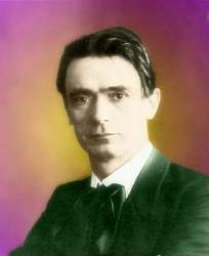
Rudolf Steiner (1861-1925)
When books and an individual come into collision and there is a hollow sound, this need not be the fault of the books! - Rudolf Steiner
Dear Nenad,
This article appeared in "Conscious Choice" magazine in Chicago and
mentions his humble beginnings as the son of a railway official born in a
small Croatian village.. He was on the front cover titled "The spiritually
gifted life of Rudolf Steiner". "The Truth About Rudolf Steiner" the founder
of "Waldorf" Schools, author of about 25 books, presenter of over 6000
lectures, a man who was simply decades ahead of his time - a true forerunner
and messenger of love and freedom. Here is more information about him and
the Waldorf Schools.
Sincerely,
Mirna
Rudolf Steiner was born 1861 in Kraljevica (Croatia) of Austrian
Catholic parents. He is viewed in America as German philosopher. Steiner's
anthroposophical teaching, presented as "spiritual science," is an
extraordinary synthesis of "organic" ideas in nineteen-century German
thought with theosophical material and fresh occult intuitions. The model
for fuller knowledge of individual beings is the organic idea of a
self-evolving and self-directing organism, which Goethe saw in the "primal
plant." The method for generalizing such knowledge is one of intuitive
thinking. Steiner espoused a "monism of thought": a valid world image is
ever building as individual spirits live in (miterleben) the organic world
process.
Heralding Nietzsche's independence of thought, Steiner followed him in
rejecting both natural teleology and objective moral laws. Yet he maintained
that Nietzsche was always protesting and tragically dashing his free spirit
against an alien culture and a limited science of nature. Nietzsche's
doctrine of "eternal recurrence," however, was a factor which led Steiner to
give sympathetic attention to Indian thought. Nature is, after all, but one
manifestation of spiritual reality, which reveals itself more directly in
thought and in art. Among Indian ideas which Steiner adopted while a
theosophist is fourfold construction of man on earth as having the physical,
the either, the astral bodies, and the "I" with their respective powers of
development and transformation.
While the higher aim of Steiner's pedagogy was to develop special
powers of spiritual insight, the cultivation of moral balance, a harmony of
virtuous dispositions intermediate between excesses and defects, was
considered a prerequisite.
Josip Remenar - SutrA magazine - New York
"Waldorf Schools"
"His ideas are all based on his insights into the nature of the human
being and his insights into the spiritual life. Steiner believed people
should come to know higher worlds through their own searching.
The best known and most widely accepted idea of Steiner's is Waldorf
education. Steiner designed the Waldorf system in 1919 for the children of
workers at the Waldorf Astoria cigarette factory in Stuttgart, Germany, at
the request of factory owner Emil Molt. His creation was based on his theory
of the three developmental stages. Early childhood, until age7, whenchildren learn best
through physical activity and play; age 7 to 14, when children learn
through feeling and the imagination; age 14 and up, when children can begin
to develop their intellect. Waldorf schools are rich in the arts and
storytelling. Seasonal festivals, fairy tales, myths, and legends feed a
child's creative spirit. This educational approach was way ahead of its
time, applying the theory of multiple intelligences and sensory experiential
learning some 60 years before
the theory was introduced in our culture. Teachers create the
educational experience and the same teacher stays with the class from first
to eighth grade. Teachers also run the school. While Waldorf is based on
anthrposophy, the philosophy is not taught to
children. "The whole idea of Waldorf is NOT to fill a child up with
information and not to inculcate a dogma, but to allow children to
develop into adults who can think for themselves," said Edwards.
Parents who send their children to Waldorf Schools are not necessarily
students of anthroposophy. "There is a wide range of reasons people send
their children to our school," says Colleen Everhart, high school
chairperson and drama teacher at Chicago Waldorf. "Some are familiar with
anthroposophy and want an education based on that, others follow a holistic
way of living and
eating organic food; others want an alternative form of education."
"The pre-schoolers gather round a candlelit table; holding hands they
sing the blessing. Soon they will eat organic bread rolls, which they helped
bake. This is snack time at Waters Edge School, A Waldorf initiative and a
brainchild of Rudolf Steiner - this on located in the north of Chicago
suburb of Wauconda." "This was the education I wished I had had; this was
the education I was
determined to give to my son...."
by: Claudia Lenart
Frequently Asked Questions
What is Waldorf Education?
Developed by Rudolf Steiner in 1919, Waldorf education is based on a
developmental approach that addresses the needs of the growing child and
maturing adolescent. Waldorf teachers strive to transform education in to an
art that educates the whole child-the heart and the hands, as well as the
head. For more information, please go the Waldorf Education page.
Are Waldorf schools religious?
Waldorf schools are non-sectarian and non-denominational. They educate
all children, regardless of their cultural or religious backgrounds. The
pedagogical method is comprehensive, and, as part of its task, seeks to
bring about recognition and understanding of all the world cultures and
religions. Waldorf schools are not part of any church. They espouse no
particular religious doctrine but are based on a belief that there is a
spiritual dimension to the human being and to all of life. Waldorf families
come from a broad spectrum of religious traditions and interest.
What is the curriculum like in a Waldorf school?
Waldorf Education approaches all aspects of schooling in a unique and
comprehensive way. The curriculum is designed to meet the various stages of
child development. Waldorf teachers are dedicated to creating a genuine
inner enthusiasm for learning, that is essential for educational success.
Pre-kindergarten and kindergarten children learn primarily through
imitation and imagination. The goal of the kindergarten is to develop a
sense of wonder in the young child and reverence for all living things. This
creates an eagerness for the academics that follow in the grades.
Kindergarten activities include:
a.. storytelling, puppetry, creative play;
b.. singing, eurhythmy (movement);
c.. games and finger plays;
d.. painting, drawing and beeswax modeling;
e.. baking and cooking, nature walks;
f.. foreign language and circle time for festival and seasonal
celebrations
Elementary and middle-school children learn through the guidance of a
class teacher who stays with the class ideally for eight years.
The curriculum includes:
a.. English based on world literature, myths, and legends
b.. history that is chronological and inclusive of the world's great
civilizations
c.. science that surveys geography, astronomy, meteorology, physical
and life sciences
d.. mathematics that develops competence in arithmetic, algebra, and
geometry
e.. foreign languages; physical education; gardening
f.. arts including music, painting, sculpture, drama, eurhythmy,
sketching
g.. handwork such as knitting, weaving, and woodworking
The Waldorf high school is dedicated to helping students develop their
full potential as scholars, artists, athletes, and community members. The
course of study includes:
a.. a humanities curriculum that integrates history, literature, and
knowledge of world cultures;
b.. a science curriculum that includes physics, biology, chemistry,
geology, and a four-year college preparatory mathematics program;
c.. an arts and crafts program including calligraphy, drawing,
painting, sculpture, pottery, weaving, block printing and bookbinding;
d.. a performing arts program offering orchestra, choir, eurhythmy
and drama;
e.. a foreign language program;
f.. a physical education program.
Does Waldorf education prepare children for the "real" world; and, if
so, how does it do it?
It is easy to fall into the error of believing that education must
make our children fit into society. Although we are certainly influenced by
what the world brings us, the fact is that the world is shaped by people,
not people by the world. However, that shaping of the world is possible in a
healthy way only if the shapers are themselves in possession of their full
nature as human beings.
Education in our materialistic, Western society focuses on the
intellectual aspect of the human being and has chosen largely to ignore the
several other parts that are essential to our well-being. These include our
life of feeling (emotions, aesthetics, and social sensitivity), our
willpower (the ability to get things done), and our moral nature (being
clear about right and wrong). Without having these developed, we are
incomplete-a fact that may become obvious in our later years, when a feeling
of emptiness begins to set in. That is why in a Waldorf school, the
practical and artistic subjects play as important a role as the full
spectrum of traditional academic subjects that the school offers. The
practical and artistic are essential in achieving a preparation for life in
the "real" world.
Waldorf Education recognizes and honors the full range of human
potentialities. It addresses the whole child by striving to awaken and
ennoble all the latent capacities. The children learn to read, write, and do
math; they study history, geography, and the sciences. In addition, all
children learn to sing, play a musical instrument, draw, paint, model clay,
carve and work with wood, speak clearly and act in a play, think
independently, and work harmoniously and respectfully with others. The
development of these various capacities is interrelated. For example, both
boys and girls learn to knit in grade one. Acquiring this basic and
enjoyable human skill helps them develop a manual dexterity, which after
puberty will be transformed into an ability to think clearly and to "knit"
their thoughts into a coherent whole.
Preparation for life includes the development of the well-rounded
person. Waldorf Education has as its ideal a person who is knowledgeable
about the world and human history and culture, who has many varied practical
and artistic abilities, who feels a deep reverence for and communion with
the natural world, and who can act with initiative and in freedom in the
face of economic and political pressures.
There are many Waldorf graduates of all ages who embody this ideal and
who are perhaps the best proof of the efficacy of the education.
From Five Frequently Asked Questions by Colin Price
from Renewal Magazine, Spring/Summer 2003
Why do Waldorf schools teach reading so late?
There is evidence that normal, healthy children who learn to read
relatively late are not disadvantaged by this, but rather are able quickly
to catch up with, and may overtake, children who have learned to read early.
Additionally, they are much less likely to develop the "tiredness toward
reading" that many children taught to read at a very early age experience
later on. Instead there is lively interest in reading and learning that
continues into adulthood. Some children will, out of themselves, want to
learn to read at an early age. This interest can and should be met, as long
as it comes in fact from the child. Early imposed formal instruction in
reading can be a handicap in later years, when enthusiasm toward reading and
learning may begin to falter.
If reading is not pushed, a healthy child will pick it up quite
quickly and easily. Some Waldorf parents become anxious if their child is
slow to learn to read. Eventually these same parents are overjoyed at seeing
their child pick up a book and not put it down and become from that moment a
voracious reader. Each child has his or her own optimal time for "taking
off." Feelings of anxiety and inferiority may develop in a child who is not
reading as well as her peers. Often this anxiety is picked up from parents
concerned about the child's progress. It is important that parents should
deal with their own and their child's apprehensions.
Human growth and development do not occur in a linear fashion, nor can
they be measured. What lives, grows, and has its being in human life can
only be grasped with that same human faculty that can grasp the invisible
metamorphic laws of living nature.
From Five Frequently Asked Questions by Colin Price
from Renewal Magazine, Spring/Summer 2003
Would a child be at a disadvantage if he were transferred from a
public school into a Waldorf school, or out of a Waldorf school into a
public school?
Children who transfer to a Waldorf school in the first four grades
usually are up to grade in reading, math, and basic academic skills.
However, they usually have much to learn in bodily coordination skills,
posture, artistic and social activities, cursive handwriting, and listening
skills. Listening well is particularly important since most of the
curricular content is presented orally in the classroom by the teacher. The
human relationship between the child and the teacher is the basis for
healthy learning, for the acquiring of understanding and knowledge rather
than just information. Children who are used to learning from computers and
other electronic media will have to adjust.
Those children who enter a Waldorf school in the middle grades often
bring much information about the world. This contribution should be
recognized and received with interest by the class. However, these children
often have to unlearn some social habits, such as the tendency to experience
learning as a competitive activity. They have to learn to approach the arts
in a more objective way, not simply as a means for personal expression. In
contrast, in their study of nature, history, and the world, they need to
relate what they learn to their own life and being. The popular ideal of
"objectivity" in learning is misguided when applied to elementary school
children. At their stage of development, the subjective element is essential
for healthy learning. Involvement in what is learned about the world makes
the world truly meaningful to them.
Children who transfer out of a Waldorf school into a public school
during the earlier grades probably have to upgrade their reading ability and
to approach the science lessons differently. Science in a Waldorf school
emphasizes the observation of natural phenomena rather than the formulation
of abstract concepts and laws. On the other hand, the Waldorf transferees
are usually well prepared for social studies, practical and artistic
activities, and mathematics.
Children moving during the middle grades should experience no
problems. In fact, in most cases, transferring students of this age-group
find themselves ahead of their classmates. The departing Waldorf student is
likely to take along into the new school a distinguishing individual
strength, personal confidence, and love of learning.
From Five Frequently Asked Questions by Colin Price
from Renewal Magazine, Spring/Summer 2003
Why do Waldorf schools recommend the limiting of television, videos,
and radio for young children?
A central aim of Waldorf Education is to stimulate the healthy
development of the child's own imagination. Waldorf teachers are concerned
that electronic media hampers the development of the child's imagination.
They are concerned about the physical effects of the medium on the
developing child as well as the content of much of the programming.
There is more and more research to substantiate these concerns. See
Endangered Minds: Why Our Children Don't Think and Failure To Connect: How
Computers Affect Our Children's Minds For Better and Worse by Jane Healy;
Four Arguments for the Elimination of Television by Jerry Mander; The
Plug-In Drug by Marie Winn; and Evolution's End: Claiming The Potential of
Our Intelligence by Joseph Chilton Pearce.
What about computers and Waldorf Education?
Waldorf teachers feel the appropriate age for computer use in the
classroom and by students is in high school. We feel it is more important
for students to have the opportunity to interact with one another and with
teachers in exploring the world of ideas, participating in the creative
process, and developing their knowledge, skills, abilities, and inner
qualities. Waldorf students have a love of learning, an ongoing curiosity,
and interest in life. As older students, they quickly master computer
technology, and graduates have successful careers in the computer industry.
For additional reading, please see Fools Gold on the Alliance For Childhood'
s web site, www.allianceforchildhood.org and The Future Does Not Compute by
Steven Talbot
How do Waldorf graduates do after graduation?
Waldorf students have been accepted in and graduated from a broad
spectrum of colleges and universities including Stanford, UC Berkeley,
Harvard, Yale, Brown, and all of the top universities. Waldorf graduates
reflect a wide diversity of professions and occupations including medicine,
law, science, engineering, computer technology, the arts, social science,
government, and teaching at all levels. Waldorf high schools can provide
specific data on the university affiliations, professions, and
accomplishments of their graduates. A list of Waldorf high schools is
available on the Alumni Information page.
What is Eurythmy?
Eurythmy is the art of movement that attempts to make visible the tone
and feeling of music and speech. Eurythmy helps to develop concentration,
self-discipline, and a sense of beauty. This training of moving artistically
with a group stimulates sensitivity to the other as well as individual
mastery. Eurythmy lessons follow the themes of the curriculum, exploring
rhyme, meter, story, and geometric forms.
A Waldorf class teacher ideally stays with a group of children through
the eight elementary school years. What if my child does not get along with
the teacher?
This question often arises because of a parent's experience of public
school education. In most public schools, a teacher works with a class for
one, maybe two years. It is difficult for teacher and child to develop the
deep human relationship that is the basis for healthy learning if change is
frequent.
If a teacher has a class for several years, the teacher and the
children come to know and understand each other in a deep way. The children,
feeling secure in a long-term relationship, are better able to learn. The
interaction of teacher and parents also can become more deep and meaningful
over time, and they can cooperate in helping the child.
Serious problems between teachers and children, and between teachers
and parents, do arise. When this happens, the college of teachers studies
the situation, involves the teacher and parents-and, if appropriate, the
child-and tries to resolve the conflict. If the differences are
irreconcilable, the parents might be asked to withdraw the child, or the
teacher might be replaced.
In reality, these measures very rarely need to be taken. A Waldorf
class is something like a family. If a mother in a family does not get along
with her son during a certain time, she does not consider resigning or
replacing him with another child. Rather, she looks at the situation and
sees what can be done to improve the relationship. In other words, the adult
assumes responsibility and tries to change. This same approach is expected
of the Waldorf teacher in a difficult situation. In almost every case she
must ask herself: "How can I change so that the relationship becomes more
positive?" One cannot expect this of the child. My experience is that with
the goodwill and active support of the parents, the teacher concerned can
make the necessary changes and restore the relationship to a healthy and
productive state.
From Five Frequently Asked Questions by Colin Price
from Renewal Magazine, Spring/Summer 2003
How can a Waldorf class teacher teach all the subjects through the
eight years of elementary schooling?
The class teacher is not the only teacher the children experience.
Each day, specialty subject teachers teach the children eurythmy,
handcrafts, a foreign language, instrumental music, and so on.
The class teacher is, however, responsible for the two-hour "main
lesson" every morning and usually also for one or two lessons later in the
day. In the main lesson, she brings all the main academic subjects to the
children, including language arts, the sciences, history, and mathematics,
as well as painting, music, clay modeling, and so on. The teacher does in
fact deal with a wide range of subjects, and thus the question is a valid
one.
A common misconception in our time is that education is merely the
transfer of information. From the Waldorf point of view, true education also
involves the awakening of capacities-the ability to think clearly and
critically, to empathetically experience and understand phenomena in the
world, to distinguish what is beautiful, good, and true. The class teacher
walks a path of discovery with the children and guides them into an
understanding of the world of meaning, rather than the world of cause and
effect.
Waldorf class teachers work very hard to master the content of the
various subjects that they teach. But the teacher's ultimate success lies in
her ability to work with those inner faculties that are still "in the bud,"
so that they can grow, develop, and open up in a beautiful, balanced, and
wholesome way.
Through this approach to teaching, the children will be truly prepared
for the real world. They are provided then with the tools to productively
shape that world out of a free human spirit.
From Five Frequently Asked Questions by Colin Price
from Renewal Magazine, Spring/Summer 2003
What is the tuition at a Waldorf school? Is there financial assistance
available?
Enrollment and tuition costs vary from school to school and are
comparable to other private schools in the same geographic location that are
not subsidized through church affiliations. In the United States, Waldorf
schools are independent and are supported by tuition income, fees, and
charitable contributions. Each school develops its financial aid assistance
policies and determines the amount of tuition assistance it can offer. There
is no North American general fund at this time to assist individual children
to go to a Waldorf school. For the most current tuition information, you may
contact individual schools directly through our Affiliated Schools list.
I've looked in your search engine and can't find a school in my area.
Are there any other schools?
If you are looking for a kindergarten, there may be a stand-alone
Waldorf kindergarten in your area. Contact the Waldorf Early Childhood
Association at www.waldorfearlychildhood.com, email
info@waldorfearlychildhood.com.
Are there resources for Waldorf home schooling?
Yes. Waldorfhomeschooling.org offers many resources. Waldorf home
schooling conferences are held in California every year, organized by Rahima
Baldwin-Dancy, author of You Are Your Child's First Teacher.
Are there any Waldorf schools for developmentally disabled children?
Somerset School in California and Beaver Run in Pennsylvania are both
specially geared towards children with special needs. Rudolf Steiner worked
with developmentally disabled for several years, and there are both schools
and adult communities based out of Anthroposophy. Please visit the Camphill
Association of North America's website for more information.
Where can I find an international list of Waldorf schools?
For a list of Waldorf schools around the world, click on Bund der
Freien Waldorfschulen (Germany). You will then be able to search by country.
Other lists and resources may be found in our Links section.
Starting a Waldorf School
Initiative groups follow many different patterns in their development,
but in recent years a certain trend has evolved which seems to be helpful to
many groups. The initiative groups usually begin study groups for adults,
and after a few years start a playgroup for children. After a year or two
more they may feel ready to found a kindergarten, and several years later
may have grown to the point where a school can be founded. As you can see,
it takes time to initiate a school, and it can easily take seven years or
longer from the beginning of the first study group to the opening of the
first grade. The timing varies from one community to another, but all have
found that it is essential to have a strong foundation in Waldorf Education
and Anthroposophy if their school is to grow and thrive, and such a
foundation is not laid overnight. A Waldorf school is not just an
alternative to public schools or another independent school; its curriculum
and philosophy proceed from the worldview and the insights into the nature
of the child that Rudolf Steiner has given us in Anthroposophy. If there is
not a core community surrounding the school initiative that is thoroughly
familiar with and committed to that philosophy and pedagogy, then it is
unlikely that the initiative will prosper.
Communities also find that while enthusiastic parents are essential
for helping to found a school, this same enthusiasm can lead one to decide
to found a school too quickly. Just as Waldorf schools are nonprofit
organizations that are not created for the financial benefit of any
individual, so their founding must also have an element of selflessness
rather than being created to benefit certain children and their families. We
know this can be a difficult thing to hear, but the pace of development is
probably the single greatest factor in determining the future strength or
weakness of a school. A weak, hastily built foundation remains with a school
for its lifetime, and one sees the effects of it again and again. We all
want schools that will flourish and thrive, and it's quite possible to found
such schools if one works hard and does not rush.
Many communities have been inventive in meeting their own children's
needs in the years before a school is started. They have had regular
festival celebrations for families, organized puppet shows, painting
classes, or other activities. Some have developed programs for
elementary-aged children who are unable to go to Waldorf schools. These
programs usually focus on the Waldorf story curriculum, the arts, and
festival celebrations. They meet after school or on Saturday mornings.
Leaders of such programs do not need to be fully trained Waldorf teachers.
Often they are parents who are educating themselves about Waldorf Education
through summer courses and other studies.
Returning to the basic pattern, which has evolved in recent years, we'
d like to go over the steps one by one, sharing with you some of what the
schools themselves have told us.
The Truth About
Rudolf Steiner
This 20th Century Spiritual Genius Helps Us Grasp the Concepts of
HigherWorlds, Reincarnation, and the Working of the Human Soul.
by Ralph White
Conscious Choice, June 2003
Exactly one hundred years ago something spiritually remarkable was
happening in Central Europe. A figure had emerged with the most profound
insight into the deepest mysteries of the human experience: death,
reincarnation, the existence of higher worlds, and the destiny of human
evolution. He was highly educated in Western philosophy and science, widely
read in cultural and artistic matters, and possessed a magnetic gift as a
public speaker and writer. Over the course of the next 25 years he gave over
6,000 lectures, none of them the same, wrote 25 books, and founded major new
impulses in education, agriculture, medicine, and numerous other
disciplines. A century later the schools that developed from his spiritual
insight into the
development of the child constitute the world's most widespread,
independent approach to education. His organic approach to farming and
agriculture preceded the back to the land movement of the '60s by half a
century and is now widely practiced. And villages inspired by his work for
"those in need of special care" -- physically challenged and disabled adults
and children, are found on every continent. Surely such a figure would be a
household name among the millions in North America who consider themselves
part of the consciousness community -- people concerned with the very issues
to which this individual had devoted his life. It would be hard to imagine
that someone so dedicated to serving humanity and so successful in his
efforts would be mostly unknown to the many who take pride in their
commitment to spiritual and social renewal. Yet that is exactly what has
happened. Somehow, Rudolf Steiner -- perhaps the most spiritually gifted and
accomplished figure of the 20th Century --remains marginalized by most
cultural creatives today. A man who felt his destiny was, above all, to give
to the modern world a correct and scrupulous understanding of karma and
reincarnation, has been largely forgotten as a spiritual teacher while the
Tibetan Book of the Dead and all things Buddhist have become hip and
fashionable. How can this be? Clearly, it didn't help that Steiner died in
1925, that he never came to America, and that all his lectures were given in
German. New readers can be easily overwhelmed by the sheer volume of his
work,
the difficulty of knowing where to start, and the frequent use of
unfamiliarterms.
To be sure, Steiner's books are never easy reading. Each one demands
the intense mental effort of grasping totally new thoughts that seriously
expand the mind and the imagination. The result, however, is that the reader
emerges with a magnificent conception of the journey of spiritual evolution
that encompasses the mystery centers and civilizations of the ancient world,
the medieval and renaissance mystics, the full spectrum of philosophy, and
the attainment of knowledge of higher worlds. An awakened reader also
develops an overwhelming sense of the vastness of human existence. When we
read Steiner on what he calls "the life between death and rebirth" we are
not perplexed by arcane accounts of the various bardo
states that often require a lama for explication. Instead, he paints a
lucid picture of the moment of death when a vast tableau of our life rises
before us. This is followed by the phase he calls kamaloca in which the soul
relives its life backwards, this time infinitely more sensitive to the
effects produced on others by its actions. This is really the moral
purification or ennoblement of the soul that has come down to us in twisted
form as purgatory. After this extended period when we truly grasp the
consequences of our actions, the soul is said to journey out into devachan,
the sphere of the planetary intelligences, imbibing cosmic wisdom until the
"midnight hour of existence" is reached and it begins its journey toward
rebirth. Then, aided bythe magnificent super-angelic beings that have come down to us in
meager and distorted form as the plump little cherubim and seraphim of
church decoration, we shape the contours of our future incarnation to
balance the actions of our previous life. As Saul Bellow, for years a
serious student of Rudolf Steiner, has commented, this is a view of human
life and death that is hair-raising. And it must be said that even if only
five percent of what Steiner describes is true, then our lives and deaths
are the wildest cosmic ride any of us could ever ask for.
A Gifted Mortal Now, how did he know all of this? Most mortals have a
hard enough time just making it through the day without finding time to
contemplate these spiritual subtleties. Rudolf Steiner, however, was blessed
by clairvoyant vision from the age of nine when he first became aware of
spiritual beings beyond the material plane. But he was far from a
woolly-minded mystic. Despite his humble beginnings as the son of a railway
official in a small Croatian village, he went on to pursue a rigorous
education in technical and scientific subjects in Vienna, and then to
receive a doctorate in philosophy.
At the age of 24, his intellectual gifts were recognized and he was
invited to edit the scientific works of the great German poet and
playwright, Goethe. He then spent years immersed in scholarship in the
Goethe-Schiller Archives in Weimar before moving to Berlin and teaching at a
workers' educational institute, along with figures like Rosa Luxemburg. It
was only after the 20th Century had begun and he had turned 40 that he began
to speak openly of esoteric matters. Until that point, he had been known as
a philosopher, scholar, writer, editor, and cultural commentator. Suddenly,
he completely shocked his contemporaries by giving detailed, sophisticated
talks on the most profound spiritual subjects that clearly displayed a level
of knowledge unrivaled by anyone at that time in the Western world. It is
difficult for most of us to imagine what the early years of the last century
were like. Many people of cultural influence and social prominence were
strongly drawn to the new spiritual wisdom then appearing through people
like Steiner in Central Europe and Gurdjieff and Ouspensky in Russia. It was
a time of immense optimism and Steiner rapidly drew to himself a significant
following as he began a tireless series of lectures all over Europe. The new
century seemed to promise unimpeded progress and work was begun in
Switzerland on a striking new building, the Goetheanum, which was intended
to become a
center for the deepest spiritual mysteries.
Unfortunately, the outbreak of the First World War intervened, an
event that Steiner observed at close hand through his contacts with a
high-ranking member of the German General Staff. His views on how it came
about, partially detailed in the book The Karma of Untruthfulness, contain
much that is of value to us as we contemplate how we have been manipulated
into the war in Iraq. Steiner was never blind to the dark side of existence.
In fact, he felt strongly that the development of a deeper understanding of
evil was an essential spiritual requirement of the modern age and he did all
he could to
awaken people to the increasingly powerful influence of regressive,
materialistic impulses. After the war, he continued to teach widely
and write. He discouraged any tendency of others to view him as a guru,
believing that such a role was no longer appropriate in the modern age when
the spirit of individual freedom is paramount. His constant emphasis was on
the possibility of awakening through meditation higher faculties that
slumber in the souls of all humans and the crucial necessity of doing this
if people were to respond to the urgent spiritual requirements of the day.
He saw his teaching as a contemporary
successor to the holy wisdom understood in the ancient cultures of
India, Persia, Egypt, and Greece. Then it had been confined to mystery
centers like Delphi and Ephesus where only the carefully selected could be
initiated into the deepest mysteries of existence. Now, however, it was
available to all and the opportunity was presented to humanity to lift
itself beyond the materialism of the 19th Century to a renewed sense of
membership in a spiritually alive cosmos. Now we could bring to the inner
world the same rigorous, objective, scientific spirit that we had applied to
the outer world, and we could do so with autonomy and without superstition.
However, if the world failed to awaken, he foresaw dire consequences that
might abort our evolution and deny the very purpose for which human beings
had come into existence His work attracted the hostile attention of the
early Nazis and they violently disrupted a number of his lectures. He,
however, refused to be cowed or deterred in any way. In the last five years
of his life many people began to approach him to ask how Anthroposophy or
Spiritual Science, the titles he gave
to his work, could be applied to practical realms. Farmers, teachers,
doctors, and priests all longed for renewal in their fields and Steiner's
response was gracious. He had only to be asked. Then he felt spiritually
bound to give all he could. His lecture series on education, offered
originally to workers and management of the Waldorf tobacco factory in
Stuttgart who wanted to start a school, became the seed of the worldwide
Waldorf School movement. His talks to farmers
in Silesia became the source of the whole movement for biodynamic
agriculture that he viewed as essential if both human and environmental
health were to be maintained. He even gave a wonderful lecture series to
professional beekeepers as he could see that the decline of the honeybee
presaged the demise of healthy food and the rural environment.
What Was He Really Like?
He was simply decades ahead of his time -- a true forerunner and
messenger of love and freedom. But what was he like as a person? Did any
whiff of scandal ever emerge from his life, as it has so often with so many
leading spiritual figures? From the many accounts written by those who knew
him, he was a warm and extremely helpful person of immense integrity whose
weakness may simply have been a great willingness to give private time and
counsel to the many who
asked for it. Despite the photographs that always portray Steiner as a
stern-faced, serious individual, he was apparently extremely funny. He
was also a man of artistic talent as a sculptor and architect who saw the
arts as a vital bridge between the material and spiritual worlds. Why do we
know so little about this extraordinary individual almost 80 years after his
death? It's true that the Anthroposophical Society has branches worldwide,
Waldorf Schools proliferate, biodynamic farming is widely practiced and
respected, and there are literally thousands of initiatives all over the
planet inspired by his work in fields as varied as socially responsible
banking, treatment for drug addiction, herbal and homeopathic medicines,
even puppet-making. But the anthroposophical community has, until recently,
tended
to hold itself somewhat apart from the rest of the holistic movement,
perhaps because Steiner's legacy is so all encompassing that it can appear
complete in itself, requiring little outreach to others. Steiner was
certainly possessed of a comprehensive spiritual genius, but we
know him today mostly through the practical dimensions of his work.
His stunning spiritual research into higher worlds, his encyclopedic
knowledge of esoteric wisdom, and his profound insights into the working of
the human soul all remain strangely ignored by a public yearning for deeper
truths. We desperately want to know the truth about reincarnation, we hear
frequent references to angels, we remain fascinated by the remnants of
ancient mysteries still visible in stone circles and Egyptian monuments. Yet
this man who -- more than any other figure of the last century -- has the
capacity to enlighten us on all these matters, remains mostly unread in
holistic circles. The more than 200 books by and about Rudolf Steiner
available in English constitute an amazing treasure trove of sacred wisdom.
Casual reading they are
not, but the rewards far outweigh the effort involved. While academic
philosophy remains hopelessly detached from real world issues, we have
in Steiner a truly modern spiritual philosopher who felt that he incarnated
with a crucial mission to return to the world the kind of knowledge for
which human hearts increasingly cry out. At a time of immense international
danger, when war and terrorism dominate the
headlines and a sense of foreboding hangs heavy in the air, we may
find ourselves increasingly thankful that this seemingly distant figure,
with words of acute relevance to the present time, showed us how to grasp
and lead the struggle for the soul of humanity in which we now find
ourselves engaged.
|
»
(H) Nagrada Fondazione Piccoli - otvoren natjecaj
|
Otvoren Natjecaj Nagrada Fondazione Piccoli Oglas - Mundimitar
Poštovani !
za ovo ljeto Zaklada "Agostina Piccoli"
osnovala je "Nagradu Fondazione Piccoli"
ako želite, možete sudjelovati.
Otvorite atachament tu ima sva informacija.
Uz pozdrava, srdacno Gabriele Romagnoli.
http://digilander.libero.it/montemitro
Montemitro, antico paese croato.
Mundimitar, stari hrvatski grad u Italiji.
gabyrom@libero.it
|
»
(E) Fulbright Fellow @ Harvard seeking additional Scholarship
|
Fulbright fellow stipend at Harvard University looking for additional scholarship. Can you help her? (op-ed) Hello Nenad !
I am writing to you from Croatia and was recently awarded a one year Fulbright research fellow stipend at Harvard University and begin studies in September.
Unfortunately the grant is not that much money and will barely cover accommodation and utilities. In order to qualify for additional grant money I have been researching alternative possibilities vis-a-vis supplemental grants.
I know of something called the Balokovic Scholarship because an acquaintance of mine from Croatia was a recipient a few years ago, also at Harvard. Maja Jelusic mentioned that she met a gentleman associated with the Balokovic Foundation when she was working for the NFCA two years ago.
Unfortunately, she does not have the contact information anymore, but mentioned you may know more.
Additionally, if you know of any other grants available, would very much appreciate if you let me know.
My thesis topic is: A Cost Benefit Analysis of Croatian Membership in NATO. I did my undergraduate and graduate work at the University of Toronto and previously, I worked for the Croatian Embassy in the US (Washington, DC).
I hope this information has helped you out some, and I hope to hear from you soon.
Best regards from Zagreb.
Ms. Mirella-Marie Radman
PfP Coordinator
NATO and PfP Directorate
Defense Policy Division M-1
Office of the Assistant Minister for Defense Policy
Trg Petra Kresimira 4/III Kat, Soba 308
Ministry of Defense of the Republic of Croatia
Zagreb, 10000, Croatia
Tel: +385 1 4621 321
Tel: +385 1 4567 280
Cell:+385 91 455 2333
Fax: +385 1 4551 754
Fax: +385 1 4567 593
E-mail: radmanm@pcc.pims.org
Web: www.morh.hr
|
|
|




 full story
 printer version