Search


Advanced Search
Nenad Bach - Editor in Chief

Sponsored Ads
 »  Home  »  Authors  »  Nenad N. Bach
Nenad N. Bach

Articles by this Author
(Page 246 of 452)   « Back  | 244 | 245 | 246 | 247 | 248 | Next »
» (E) Owen praised Milosevic in The Hague
By Nenad N. Bach | Published 11/30/2003 | History | Unrated


Owen praised Milosevic

for avoiding a "bloodbath" ???????????

During the cross-examination Owen praised Milosevic for avoiding a "bloodbath" from happening in the Muslim enclave of Srebrenica in 1993.

"I believe you were very helpful in 1993 when you kept (Bosnian Serb military leader Ratko) Mladic from capturing Srebrenica," Owen said.

Op-ed

What is so painful is that the world just reported this statement, no comments or outrage from intellectuals, politicians, ... anybody significant ..in the world. Premier and the president of our country should be calling press conferences the minute this news came out. No, this is not just a legal matter. This is a public opinion matter. This is our stolen history matter, these are our sons and daughters that were brutally killed by the Milosevic-Owen alliance. Owen is a present member of the House of the Lords. And no comments from England? Are these statements discussed on a diplomatic level? I bet the Queen wouldn't be too happy to hear this publicly.

Nenad Bach

p.s. Almost four weeks passed since this statement came out.

Milosevic was ready to cut a deal to end Balkans wars in 1993: ex-EU envoy
Tue Nov 4,12:32 PM ET


THE HAGUE (AFP) - Former Balkans peace broker David Owen told the war crimes trial of Slobodan Milosevic that the former Yugoslav president was ready to cut a deal to halt the wars in Croatia and Bosnia in 1993 -- two years before the conflict ended.


Under cross-examination by Milosevic himself, Owen said the Serb strongman had given up on the idea of carving up a "Greater Serbia" encompassing parts of Bosnia and Croatia in 1993 when he signed a peace plan that he co-authored.

But he added Milosevic did not actively promote a peace deal.

"I believe you wanted peace from April 1993 onwards," said Owen, adding: "I wish you had made your verbal support for peace into military and economic pressures which could have brought about peace earlier."

The so-called Vance-Owen plan signed on April 23, 1993 was the first proposed settlement that ruled out linking the Bosnian Serb entity in Bosnia with Serbia. The plan failed because the Bosnian Serb leadership voted against it.

Owen, a former British foreign minister, was the European Unions peace envoy to the former Yugoslavia during the wars from 1992 to 1995.

During the cross-examination Owen praised Milosevic for avoiding a "bloodbath" from happening in the Muslim enclave of Srebrenica in 1993.

"I believe you were very helpful in 1993 when you kept (Bosnian Serb military leader Ratko) Mladic from capturing Srebrenica," Owen said.

The EU envoy said an attack of the densely populated enclave and ensuing street combat would have resulted in "carnage".


When Mladic finally did capture the then UN-protected safe area of Srebrenica two years later his troops slaughtered over 7,000 Muslims. The 1995 Srebrenica massacre is an important part of the genocide charge Milosevic faces over the bloody war in Bosnia.


The prosecution argues that the former president had the power to stop the carnage or punish those responsible namely Mladic and Bosnian Serb political leader Radovan Karadzic. The fact that he did neither is a key element in the genocide indictment.


Milosevic has been on trial at the International Criminal Tribunal for the former Yugoslavia here since February last year. He faces more than 60 charges of war crimes and crimes against humanity for his role in the 1990s wars in Croatia, Bosnia and Kosovo that tore apart the Balkans. For the war in Bosnia that left over 200,000 dead he faces a separate genocide charge.


Prosecutors argue that Milosevic condoned the atrocities committed by rebel Serbs under his control as part of his plan to create a "Greater Serbia" carved out of parts of Bosnia and Croatia.

During the trial Milosevic has tried to cast himself as a peacemaker.

"Without Serbia there would not have been any Dayton accord" Milosevic boasted, referring to the peace agreement signed in December 1995 that ended the war in Bosnia and Croatia.

"I think that is undoubtedly true," Owen replied.

The testimony of the top British diplomat is a boost for Milosevic's claim that he was striving for peace, but cannot be called an outright victory for him.

Owen's view that the former president could have stopped the war but was unwilling to do so supports the prosecution's assertions that Milosevic controlled the Bosnian and Croatian Serbs.

The prosecution has until the end of this year to wrap up its case against Milosevic. After a three-month break to prepare his defence, the former president, who is defending himself in court, will present his case.

The trial is expected to last until at least 2005.

Source:http://story.news.yahoo.com/news?tmpl=story&u=/afp/20031104/wl_afp/warcrimes_yugo_milosevic_031104173233           
 

» (E,H) Croatia: Myth and Reality by Michael McAdams
By Nenad N. Bach | Published 11/30/2003 | History | Unrated


Dear Mr. Bach,

Here's the link to quite interesting work by American scholar Michael McAdams "Croatia: Myth and reality": http://mirror.veus.hr/myth/  .

Thanks in advance and kindest regards,

Tomislav Petricevic

Postovani gosp. Bach,

Prilazem link na vrlo zanimljiv rad americkog znanstvenika Michaela McAdamsa "Hrvatska: Mit i stvarnost": http://mirror.veus.hr/myth/  .

Unaprijed zahvalan i najljepsi pozdravi,

Dear Tomislav,

Mr. McAdams has a home here at Crown from the first day. Yes, it is important to be repetitive even when you speak the truth. Thank you for paying attention. I recommend this work tremendously and this book should be in every library of the world. With digital library option, it is very possible. Ministry of information should produce these results, years ago. Get the book and place it in your local library.

best,

Nenad

» (H) SLAVA DUBROVNIKA ISPISANA NA 19 PRAMACA
By Nenad N. Bach | Published 11/30/2003 | History | Unrated


SLAVA DUBROVNIKA ISPISANA NA 19 PRAMACA


Kada za mjesec dana pomorski Dubrovnik uz pjenusac i zelje za dobro more u svoje okrilje prigrli najnoviju prinovu Atlantske plovidbe, bit c´e to i prigoda da se podsjeti na tisuc´godisnje pomorske tradicije i cvrstu povezanost Grada i mora.

Preuzimanje suvremenog panamaxa za prijevoz sipkih tereta, nekadasnje svicarske Silvrette, koji c´e pod hrvatskom zastavom zaploviti kao City of Dubrovnik, pravi je povod da se u prilogu MORE pozabavimo brodovima s imenom grada pod Srem.
Prinova Atlantske plovidbe bit c´e 13. trgovacki brod nasih brodara koji u posljednjih 150 godina nosi ime Dubrovnika, po cemu je Grad nedostizni rekorder. Primat je jos naglaseniji znali se da su isto ime nosila i tri strana broda, te jos tri u mornarickoj sluzbi. Uistinu impresivna flota od 19 razlicitih Dubrovnika! Dakako govorimo o brodovima s hrvatskim imenom Grada, jer valja podsjetiti na znamenitu jedrilicu The City of Ragusa kojim je Nikola Primorac usao u legendu preplovivsi Atlantik, ili na jedrenjak Citta di Ragusa koji se u kronikama spominje jos 1787. godine.

SLAVA PRVOG PAROBRODA

Kao prvi Dubrovnik obicno se istice parobrod izgraen 1880. godine u skotskome gradic´u Dumbartonu po narudzbi skupine Dubrovcana predvoenih Aleksandrom Opuic´em. Bio je to prvi dubrovacki parobrod, najmoderniji putnicko-teretni brod svoga doba, od 310 tona nosivosti, dug 39,4 i sirok 6,1 metar, brzine 9,5 cvorova. Za svaku sigurnost je imao i - jedra, a bio je iznimno cvrste gradnje i s lakoc´om se nosio s kusnjama nevremena, pokazujuc´i svoje kvalitete na zahtjevnoj pruzi Trst-Zadar-Split-Dubrovnik-Bari.
Gradnja Dubrovnika bila je golemi iskorak u brodarstvu Grada, pa nije cudno da se o njemu toliko pisalo jos od 19. veljace 1880., kad je prvi put pristao u Dubrovniku. U tamosnjoj floti ostat c´e do 1892., kada je prodan brac´i Rismondo iz Makarske koji mu daju ime Biokovo. Poslije je usao u sastav drustva Dalmatia, a zabiljezeno je da je potonuo u ozujku 1923. uz istarsku obalu, na putu iz Rijeke u Trst.
Povijesni i slavni parobrod ipak je bio drugi brod s imenom Dubrovnika. Naime jos 1846. godine u Gruzu je izgradjen jedrenjak od 389 tona, prvi brod koji je ponio hrvatsko ime Grada. Vlasnici su mu bili S.G. Getaldi i V. Budmani, no vec´ 1853. oni ga brodaju Antoniju Busettu iz Venecije, koji im daje ime Giuseppe II. Jedrenjak ni u Veneciji nije dugo ostao, 1861. je prodan Rusima i od tada mu se trag gubi negdje u Crnome moru.

DVA POTONUC´A U 40 DANA

Vratimo se u doba parobroda, u 1892. godinu. Cim je prodan prvi Dubrovnik, Dubrovacka parobrodarska plovidba preuzela je, u Troonu, opet u Skotskoj, drugi brod istoga imena. Bio je to mnogo vec´i brod, od 481 brt, dug 50,9 i sirok 7,4 metra, s vrlo snaznim parnim strojem od 650 “konja” i brzinom od deset cvorova. No drugome Dubrovniku nije bilo sueno i dugo ploviti.
Kako biljeze kronike Prvoga svjetskog rata, 9. svibnja 1916. brod je u Neretvanskome kanalu, negdje na pola puta izmeu Hvara i Peljesca, s dva torpeda potopila francuska podmornica Archimede. Poginulo je tada 18 putnika i clanova posade, a zbog potapanja nenaoruzanog broda punog zena i djece, Austro-Ugarska je ulozila notu Francuskoj optuzujuc´i zapovjednika podmornice za ubojstvo s umisljajem. Sok je bio to vec´i sto je to bio drugi parobrod s imenom Dubrovnika torpediran u samo 40 dana!
Naime 1. travnja 1916. ruska je podmornica Tjulen kod turskoga mjesta Galata Burnu torpedirala jedan od najvec´ih dubrovackih brodova, suvremeni teretnjak nosivosti 7224 tone, dug 116 i sirok 14 metara. Taj cetvrti Dubrovnik bio je star nepune cetiri godine: po narudzbi brodarskog udruzenja “Napried” izgraen je 1912. u britanskom brodogradilistu Northumberland Shipbuilding Co. u mjesto Howden-on-Tyne.
Trebale su proc´i godine dok se dubrovacko brodarstvo oporavilo od ratnih stradanja i nakon cetiri novogradnje, godine 1923., javlja se peti Dubrovnik, mali, stari i neugledni parobrod koji c´e brzo biti zaboravljen. Brodovlasnici brac´a Matijevic´ kupili su u Britaniji vec´ 53 godine stari brod King’s Lynn od 575 brt, dug 56 i sirok 7,7 metara. Izgraen u Middlesbroughu iste 1880. kao i prvi dubrovacki parobrod, taj se Dubrovnik pokazao nepouzdanim, pa je vec´ 1927. prodan u Italiju. Nekoliko je puta mijenjao imena, najprije Palmaria, pa Fratelli Testa i na kraju Fauna pod kojim je usao u Drugi svjetski rat, u cijim mu se vjetrovima zameo i svaki trag.

SESTI, SEDMI, OSMI...

Po vec´ uhodanoj tradiciji, cim su brac´a Matijevic´i prodali svoga starca, njegovo ime dobiva sada vec´ sesti Dubrovnik. Ni to nije bio novi brod nego stari Lovrijenac izgraen 1909. u Monfalconeu za Dubrovacku parobrodarsku plovidbu. No prethodno je temeljito preureen i ubrajao se meu najmodernije na Jadranu. Dubrovcani mu 1937. mijenjaju ime u Dedinje, pod kojim c´e ploviti sve do ratne 1943., kada je, u talijanskoj sluzbi, potopljen kod Venecije. Ni ta promjena imena nije bila slucajna. Jer Dubrovcani su u skotskom brodogradilistu Lithgows u Port Glasgowu upravo bili narucili svoj najmoderniji teretnjak, a ime mu je moglo biti samo - Dubrovnik. Primopredaja je obavljena u veljaci 1938., a bio je to brod kojim su se u Gradu, ali i na cijelom Jadranu, s pravom ponosili: nosivosti 9150 tona, dug 136,5 i sirok 17,1 metar...
Taj je, sada vec´ sedmi Dubrovnik, izdrzao sve kusnje rata, nacionalizaciju 1946., prelazak pod zastavu Jugolinije, a 1957. i pod stijeg slovenske Splosne plovbe. Prodan je tek u prosincu 1969. godine jednoj tvrtki iz Somalije, a plovidbu je okoncao u rujnu 1970. u rezalistu u Chittagongu pod imenom Sudix.
No, dubrovacka prica ide dalje. I, pogaate, slijedi osmi Dubrovnik, a ime, opet pogaate, odabrano, cim je onaj stari izbrisan iz upisnika. Atlantska plovidba je 1971. u spanjolskoj Matagordi preuzela bulk carrier nosivosti 25.130 tona, dug 164,8 i sirok 22,7 metara. Dotad najvec´i Dubrovnik bio je porinut pod imenom Magdalena del Mar za jednu tvrtku iz Bilboa, ali je prije dovrsenja prodan Atlantskoj. Taj je brod ostao relativno kratko u njezinoj floti, samo 15 godina. U srpnju 1986. prodan je Kinezima za uistinu neobicnu zadac´u: posluzio je kao plutajuc´i lukobran prigodom gradnje nove luke u Shanghaiju, a nakon toga je otpremljen u staro zeljezo.
Sljedec´i, deveti Dubrovnik, cekao se do sijecnja 1989., kada je u Falmouthu posada Atlantske plovidbe preuzela veliki bulk carrier nosivosti 61.318 tona i dug 224 metra. I to je bio “Spanjolac”, nekadasnja Ereaga, izgraen u Puerto Realu i isporucen u studenome 1983. U floti Atlantske ostaje punih 14 godina, do pocetka 2003., kada je prodan grckoj kompaniji s Malte i postao Mighty Michalis. No, dogodila se i jedna promjena: od 1997. plovio je kao City of Dubrovnik. Pomalo neobicno, no bio je to samo jos jedan dokaz popularnosti imena Dubrovnika.

I CITY I “PRINCIPESA”

U nasu pricu tada, naime, uplovljava veliki feribot Dubrovnik, deseti hrvatski brod s imenom Grada, ali kojemu maticna luka nije bila pod Srem nego u Rijeci. Kad ga je Jadrolinija kupila, htjela mu je svakako dati zvucno ime Dubrovnik, pa su s Atlantskom postigli dogovor: bijeli brod postat c´e Dubrovnik, a vec´ pomalo stari bulker bjelosvjetski City of Dubrovnik. Iako je na Jadran stigao preko Francuske, taj deseti Dubrovnik je izvorno irski brod. Ne samo da je pripadao vodec´oj tvrtki British & Irish iz Dublina, nego je bio i najvec´i feribot izgraen u Irskoj prije nego im je brodogradnja zauvijek nestala.
Feribot dug 122 i sirok 18,8 metara porinut je u lipnju 1978. u Verolme Cork Dockyardsu u Corku pod imenom Connacht, a namijenjen je bio linijama izmeu irskih i britanskih luka. Mogao je ukrcati 326 automobila i 960 putnika, a kada je u veljaci 1979. krenuo na prvu plovidbu izmeu Corka i Swansea, ucinio je to zbilja impresivno: brzinom od cak 20 cvorova. U ljeto 1986. brod kupuju Francuzi, te ga salju na ureenje u njemacki Meyer Werft, odakle stize u punom sjaju i s imenom Duchesse Anne te oznakama tvrtke Brittany Ferries, da bi 1996. stigao u Jadran kao jedan od najprestiznijih bijelih brodova.
Iste godine zaplovio je i Dubrovnik Express, najsuvremeniji kontejnerski brod u floti Croatia Linea. No nije to bio posve novi brod, nego nekadasnji Koper Express, jedan od cetiri poznata “expressa”, nosivosti 25.904 tone, dug 177,6 i sirok 32 metra. Izgraen je u Uljaniku 1987., a ime Dubrovnika dobio je u ozujku 1996. godine. Na zalost, nije dugo pod njim plovio. Samo tri godine poslije, u vrijeme rasula Croatia Linea, zaplijenjen je u Durbanu i tamo u kolovozu 1999. prodan na drazbi. Danas plovi pod panamskom zastavom i imenom MSC Giovanna.
Prici o brodovima s imenom Dubrovnika tu dakako nije kraj. Koncem srpnja 1998. u Messini, u slavnome brodogradilistu Rodriquez, dubrovackome je Atlasu isporucen najmoderniji putnicki brod na Jadranu, brzi jednotrupac nazvan Princess of Dubrovnik. “Principesi”, kako je Dubrovcani od milja zovu, doskora c´e se prikljuciti i City od Dubrovnik s pocetka nase price, a s kojim c´e dubrovacko brodovlje dosegnuti najvec´u tonazu u povijesti...


Plovio je 82 godine!

Ime Dubrovnika naslo se i na pramcima dvaju ratnih brodova i jednoga nadasve zivopisnog parobroda koji c´e na Jadranu ostati zapamc´en po 82 godine plovidbe! Zivot je zapoceo 1880. u Trstu kao jedan od tri jednaka broda carsko-kraljevske financijske kontrole s maticnom lukom u Zadru, s talijanskim imenima dalmatinskih gradova - Ragusa, Zara i Spalato. Godine 1899. trojka dobiva hrvatska imena - Dubrovnik, Zadar i Spljet. No vec´ 1901. netko u Becu odlucuje se za neobicnu hrvatsko-talijansku kombinaciju, pa tri broda financijske straze postaju Dubrovnik-Ragusa, Zadar-Zara i Spljet-Spalato!
Nakon Prvog svjetskog rata Dubrovnik-Ragusa nastavlja isti posao, ali u Kraljevini Jugoslaviji, najprije samo godinu dana kao Kosovo, a onda punih 20 kao Oplenac. U travnju 1941. Talijani su ga zarobili u Boki kotorskoj i uvrstili u flotu svoje Guardia di finanze pod imenom Galiano. Vec´ 27.ozujka 1945. vrac´en je Jugoslaviji, da bi poslije dvije godine i temeljite rekonstrukcije ponovno zaplovio, ali kao putnicki brod u sastavu Jadrolinije. Dobio je ime Budva i ostao u bijeloj floti sve do prosinca 1962., kada je predan rezalistu u Svetome Kaji.
Imenom Dubrovnika pocasc´en je i prvi moderni razarac jugoslavenske Kraljevske mornarice, izgraen 1931. godine u britanskom brodogradilistu Yarrow & Co. u Scotstounu pokraj Glasgowa. U travanjskome ratu 1941. Talijani su ga zarobili u Boki i pod imenom Premuda odmah poslali u borbene akcije. Nakon kapitulacije Italije razarac su u Genovi zarobili Nijemci i uvrstili u Kriegsmarine pod oznakom TA 32. Prigodom povlacenja iz Italije posada je sama potopila nekadasnji Dubrovnik. Pod imenom Dubrovnika i danas plovi jedan ratni brod. To je ophodni brod minopolagac Hrvatske ratne mornarice, sluzbene oznake OBM 41. Nekadasnji raketni camac JRM-a, sovjetskoga tipa “osa”, izgraen jos 1970. godine, zarobljen je u Domovinskome ratu i preinacen za novu ulogu, te dobio ime Dubrovnik.

Iz Odese i Houstona

Prica o brodovima s imenom Dubrovnika svakako ne bi bila cjelovita bez tri stranca: jednoga Rusa i dva Amerikanca. Meu desetcima brodova svih vrsta koji su proslih desetljec´a na Jadranu graeni za sovjetske, a onda ruske brodare, u ljeto 1967. godine nasao se i Dubrovnik. Bio je to klasicni teretnjak s navoza rijeckoga “Trec´eg maja” nosivosti 14.339 tona koji c´e u floti Crnomorske paroplovidbe iz Odese ostati gotovo cetvrt stoljec´a. Pocetkom 1991. prodan je Grcima, zaplovio je pod malteskom zastavom i imenom Daphne, da bi vec´ koncem iduc´e, 1992. godine, smiraj nasao u rezalistu, u indijskome Alangu.
Dva Dubrovnika zaplovila su 1982. godine s navoza maloga brodogradilista Marine Mart Inc. u Port Isabelu u Teksasu. Bili su to blizanci, koc´arice Dubrovnik I i Dubrovnik II, duge samo 21,3 i siroke sest metara, a vlasnik im je tvrtka Campeche Seafood Products Inc. iz Houstona. No nedvojbeno se iza toga imena krije neko od hrvatskih iseljenika, vjerojatno upravo iz dubrovackog kraja, koji se i na taj nacin sjec´aju zavicaja.

Slobodna Dalmacija & Marijan ZUVIC´


http://www.dubrovnikportal.com/html/clanak_print.shtmlclanak=8868.2&pm=no

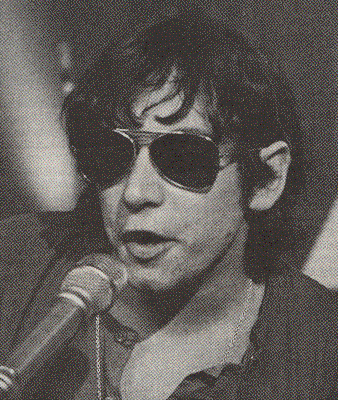
» (E) Eric Burdon: Rising son of rebel music
By Nenad N. Bach | Published 11/30/2003 | Friends | Unrated


Eric Burdon

Rising son of rebel music


Op-ed

I performed with Eric in Sarajevo in 1999.

Nenad

27 November 2003

Eric Burdon, the tough frontman of 1960s band The Animals, has remained a performer. Now he has documented his memories and thoughts in the book Don't Let Me Be Misunderstood. He talks to Rosa Shiels.

"How many minutes do we have?"

"It's up to you, my lass."

The avuncular Geordie on the end of the phone is one of Newcastle-upon-Tyne's most famous sons.

As the founding singer of English band The Animals in the 1960s, Eric Burdon - now also in his 60s - set the standard for white boys doing R'n'B way back when white boys were better at saccharine pop.

Growing up in the industrial north of England, Burdon's natural musical tendencies were always towards black soul and blues, and his growly, authoritative voice stood out way above the light romantics on the international charts when the Animals broke through in 1964 with a song about a New Orleans brothel, House of the Rising Sun.

Decades on, almost anyone who picks up a guitar for the first time tries to pick out the arpeggio opening chords of this anthematic blues ballad.

Along with the Beatles and the Rolling Stones, the Animals made up the victorious British Invasion when they took their stylistic originality across the Atlantic and broadened the scope of modern music.

Burdon chose to stay stateside, which is his chosen base to this day.

Although Eric Burdon's name will be linked forever with the Animals - perpetuated, in part, by Burdon, who has formed various New Animals bands through the years - he is a singular man.

His life and times are marked as much by his own experiences in the heady '60s and '70s as those of the wild and talented people with whom he associated, from Jimi Hendrix and Elvis, to John Lennon, bluesmen BB King and Jimmy Witherspoon, Janis Joplin, Steve McQueen, John Lee Hooker, and Jim Morrison - the list goes on and on.

Burdon's take on the apocryphal, often jaw-dropping events that shaped him and those of his contemporaries who managed to survive the wild hallucinogenic swerve of the era is all there in his new book, Don't Let Me Be Misunderstood.

Written with Jeff Marshall Craig, it is a loosely chronological collection of music-biz insider insights and anecdotes about the festivals, the drugs, the crazy times, the successes; Jimi Hendrix's last lonely hours, John Lennon's uncomfortable reunion with his father, Brian Jones' death; the middle men, managers, roadies, groupies, and rip-offs.

Read about backstage at Monterey; about Burdon's short spell in jail in Germany as a suspected associate of the Baader-Meinhof gang; about performing in the Joseph Stalin Hall of Culture in Warsaw and the Sarajevo war zone.

Turn him on with a question and this Rock and Roll Hall of Famer answers in gritty, familiar tones.

"I had a terrific book many years ago that I once loaned to Nina Simone. It was a book of newspaper clippings, songs, and ideas. I managed to get every artist in it to sign their autographs, so it was quite a treasure, you know. Unfortunately, it was stolen and disappeared, and I haven't seen it since. That was my first lesson in letting go.

"Then I had a fire in my home in Palm Springs in California and lost all the photographs that I'd taken - a lot of really good collectable stuff. That was my second lesson in lettin' go. So I gave up on collectin'."

Somehow, despite the excesses of spirit he readily admits to between the covers, Burdon's recall is fairly lucid, and despite leading a full-on touring schedule, he was able to get his recollections down.

"Jeff would help me stay on track, because I was continually touring. I'd go away on tour and we'd pick up the pieces when I came back. It was his job to a), help me with research and b), tell me 'stay away from that subject, develop this one'. So he was kind of like an in-house editor. The writing process for me is long- hand notes, going to tape, and then handing it over to him. He would take it from there."

A quick look at his website will show you that this year he's been in Germany, Austria, Belgium, Croatia, Thailand, Australia, and New Zealand for performing engagements and book signings.

"This last year has been the busiest in living memory. I've moved from one agency to another, so I had to work off the old gigs that the old agency had put in place, and the new agency were tryin' to prove themselves."

On his rare time off, he retreats for soul refreshment to his Palm Springs home, which he shares with his Greek lawyer partner, when she's there.

"I live about 50 minutes outside of Palm Springs up in the mountains in Joshua Tree, and October's when the desert starts to go, 'Aahhhhhhhh, it's over'. It starts to cool down, and I really resent not being there during this month. Joshua Tree is a unique place. It's where all of the B westerns were shot that I used to see on Saturday mornings when I was a kid. And so I get to live among those rocks, among those vistas."

It's a long, long way from Newcastle where his grandfather was the groundsman for Newcastle-upon-Tyne Football Club and his grandmother had a boarding house in the shadow of the football stadium.

The dry air is good for his asthma and his only daughter lives close by ("She's given me four grandchildren, so I'm up to my knees in kids whether I like it or not").

"It's the only desert region in the world, the only arid zone that I can live in, without having children point AK47s at you. Pretty much every other arid zone is steeped in violence," he says.

Always a peacenik and an anti-establishment rebel, Burdon has taken his music to many edgy and dangerous situations.

"It sounds perverse, but it's always a buzz to go to a war zone. I mean, you suddenly start to see everything much clearer than you do in your day-to-day experience. And then you see a place that's absolutely flea-bitten, you know, the madness of weaponry, and you start to notice that every third person has a limb missing. It was really a moving experience. I was only there for three days but for those three days I was wide awake, totally in tune with what I had to get on with, why I was there, and what music means to people."

What does music mean to him?

"I love performance. It's a great way of expressing yourself and being able to exercise your spirit and soul, you know, as well as your physical self. I've found out over the years that music really does have healing power.

"And when you're in a place like the bombed-out building site that we performed in in Sarajevo, you could see the people who were enemies come together, and see soldiers in uniform listening to the ethnic music of the people who they probably were subjugating 24 hours earlier. It's a moving experience.

"Something that struck me as a dark spot in the whole visit, though, was as I was leaving and I thought the concert was over, making my way through the crowd and I looked back and the stage suddenly changed from a warm and colourful arena to a sort of Albert Speer kind of light show.

"A heavy metal band came on stage and suddenly the audience were Nazi fists in the air screaming 'Serbia! Serbia! Serbia!' And I thought, 'Wow, man, they've hijacked the whole concert!' And that's what is going on worldwide. You've got people hijacking religion in order to further their own interests. It's scary."

On his last break from touring, Burdon bought himself a new car "to satisfy my boyish fantasies". Then there's always his Harley.

"I have the obligatory Harley Davidson in my garage. If I get a really good ride in once a month I'm a happy camper.

"I'm the only person on the block who has a Harley Davidson instead of a horse. I'm surrounded by horse people.

"I'd love to have animals, but it's totally unfair to have an animal and live my kind of life.

"I've had dogs in and out of my life since I was a kid, but until my woman comes home and she's gonna be around long enough to look after an animal, that'll be when we get some animal life.

"Life is definitely more fun with animals, that's for sure."


http://www.stuff.co.nz/stuff/0,2106,2740790a1860,00.html

» (E) Dino Rulli, Ph D
By Nenad N. Bach | Published 11/30/2003 | Friends | Unrated


Dino Rulli, Ph D


Hi, I am Dino Rulli, an American biologist of mixed European heritage. I was born on March 18, 1956 in Lorain, Ohio, an industrial town on the shores of Lake Erie. I was blessed to be born and raised by two incredible parents, Sonya and Robert Rulli. Whatever success I have is entirely due to their influence and that of my Russian/Polish maternal grandparents and Italian paternal grandparents. I have six equally lucky siblings.
The more than 75 nationalities represented in Lorain provided opportunities to meet people from all over the world. Exposure to cultures comes in many forms, my first exposure to Croatia was learning to bowl at The Croatian Club, a bowling alley / bar next to the steel mill. They have since relocated to the site of a former country club. Croatia was the featured nationality in the 2002 Lorain International Festival, an annual celebration of Lorain’s cultural diversity. My interest in Croatia was rekindled during the 2000 presidential campaign when I was designated an “honorary Croatian” by Nenad Bach prior to a meeting between ethnic community leaders and Al Gore. Through CROWN and its’ members I hope to be active enough to retain that title.
Early in life, I knew I would be a scientist, preferably near a beach. Much of my teen years were spent SCUBA diving in the cold waters of the Great Lakes. Assuming that the tropics were my destiny, I first went to Michigan State University to study general biology. After college, I worked in a factory in Lorain, awaiting word on my applications to marine science graduate programs. It was gratifying to be accepted into a program to study coral reef fish behavior, a goal since youth. However, fate intervened and I accidentally became a neurobiologist instead.
An unexpected offer from the University of Miami School of Medicine led to a doctorate degree in cellular and molecular biology. My research in Miami involved the transport of proteins in peripheral nerve cells (related to nerve function and regeneration) and central nervous system neurotransmitters related to Parkinson’s disease. The next step, studying the fish sense of smell at the Monell Chemical Senses Center in Philadelphia, was certain to lead to a job on a beach in the tropics. Instead, I ended up working on cow proteins in New Jersey.
The five years I worked as an analytical chemist at the American Cyanamid Agricultural Research Center in Princeton, NJ taught me a lot about the chemical end of the pharmaceutical industry, from drug discovery to manufacturing issues. I transferred to the animal science department, and although still there the company changed hands (now Fort Dodge Animal Health, a Division of Wyeth). My job entails coordinating studies that evaluate new animal health drugs. This includes writing protocols, contracting the investigators, traveling to the trial sites, and writing reports to the FDA. Traveling is sometimes interesting - horses in New Mexico, cattle at a North Carolina prison farm, pigs in Louisiana, dog breeders in Michigan and Canada, and labs and universities in over a dozen other states.
In addition, I have been consulting and doing the programming for an upgrade of the web site for a company that makes silica-based chromatography matrices and columns ( www.stellarphases.com  ).
I have done a little traveling outside of work, such as dive trips to the Caribbean and Canada, visiting friends in Costa Rica and Europe, and a family trip up the Yangtze River in China before the flooding from the Three Gorges Dam. Visiting Croatia is now a priority. It is also nice to be home with my dog Chancey, my cat Pinky, and Chanceys’ cat Smokey. We live in an old cedar log cabin (with some 'flat-walled' rooms added) in Browns Mills, a town at the north edge of the Pine Barrens, the relatively unknown million acres of pines in southern New Jersey. I am now in the 13th year of a five-year plan to rehab the cabin, happy to say almost half done. I’ve stayed involved to various degrees with SCUBA diving, flying, and learning to sail on “Layla,” my 28-foot Columbia sailboat that was based in the Chesapeake Bay and is now in my back yard, awaiting either refurbishing or a flood. As a volunteer in the Coast Guard Auxiliary I’ve been active in teaching classes, VHF communication networks, and participating in safety patrols both on the water and in the air. Various other hobbies and interests keep me busy in my spare time.
My re-introduction to Croatia and the interesting people of CROWN has been very invigorating. I am extremely grateful to Nenad for allowing me to introduce myself, and look forward to meeting many people in this important network of Croatians, honorary or otherwise.

 

R. Dino Rulli, Ph.D.                                                  Curriculum Vitae 2003

                                                                                                                            Last update: Nov. 5, 2003


P.O. Box 1386                                                                                                Home: (609) 893-3048

Browns Mills, NJ  08015-8386                                                                         Work: (732) 631-5828

                                                                                                                                   rullid@yahoo.com


Professional Experience


Fort Dodge Animal Health                    Product Development Manager   Jan. 2000 - present

PO Box 5366                                 Sr. Product Development Coordinator    Dec. 92 – Dec.99

Princeton, NJ  08540-5366                                 Global Animal Science Development (GASD)

(formerly American Cyanamid Co.)


Domestic (US) Investigational New Animal Drug Field Trials general responsibilities

·        Develop and implement field trial programs in support of product registrations

·        Negotiate program and trial parameters with FDA (CVM), ensure trials are in compliance

·        Write protocols, identify investigators, negotiate contracts

·        Monitor trials, audit data, review investigator’s report, write final reports and submission

·        Work with Regulatory Affairs on submissions in support of new animal drug applications

·        Target animal safety trials (GLP), efficacy trials (GCP), bioequivalence studies

·        Studied pour-on (transdermal), injectable, oral gel, oral tablet, and sustained-release formulations in various species (dog, horse, cattle, and swine)

International Responsibilities

·        Review documentation and edit reports of cattle, sheep, swine, and dog trials from

      European, Canadian and Australian subsidiaries

·        Provide technical support to the international Regional Technical Offices


American Cyanamid Co.                                      Senior Research Biochemist   2/92 - 11/92

Princeton, NJ                                                                          Research Chemist    2/88 - 1/92


·        Supervised chromatography projects and personnel, wrote reports for NADA submissions

·        Chaired inter-divisional committee for the advancement of bioanalytical techniques

·        Investigated the utility of new equipment, including capillary electrophoresis, gamma

counters, densitometers, and the Reese system for temperature monitoring

·        Developed and validated analytical methods for recombinant proteins (chromatography,

gel electrophoresis, and receptor assay), minor components (urea, ammonia, carbohydrates, moisture), and residual solvents (gas chromatography)


Monell Chemical Senses Center                                             Research Associate  7/86 - 1/88

3500 Market St.

Philadelphia, PA  19104-3308


·        Biochemical, immunological, and histochemical analysis of vertebrate olfactory systems

·        Investigated putative signal transduction mechanisms by ligand binding assays, second

      messenger assays, and immunohistological assays of olfactory mucosa and bulb

·        Provided biochemical support to behavioral biologists working with fish, birds, and mammals


University of Miami, School of Medicine           Post-doctoral Research Assoc.     5/85- 6/86

Department of Physiology and Biophysics

Miami, FL  33101


·        Investigated putative mechanisms of Parkinson’s disease in mammals by HPLC analysis

      of neurotransmitters from tissue-cultured dopaminergic cells of the basal mesencephalon

      (substantia nigra) in response to growth factors isolated from their target tissue (striatum)

·        Reverse-phase ion-pairing HPLC with electrochemical detection (ECD) of serotonergic

and catecholaminergic neurotransmitters

Education


University of Miami School of Medicine                1978-1985          Ph.D. Dept. of Physiology

Miami,  FL                                                                                                                and Biophysics


·        Cellular and Molecular Biology (Pharmacology, Biochemistry, Physiology) training grant

·        Two-dimensional gel electrophoresis of radiolabeled proteins, quantitative densitometry

·        Thesis:  “Destination of Fast-Transported Proteins in Spinal Sensory Nerves”


Michigan State University                                       1974-1978          BS (Honors); Biology and

E. Lansing, MI                                                                                               Zoology  (dual major)


·        Emphasis in applying general principals of biology, mathematics and chemistry to       problems in field biology and wildlife ecology

·        Director of residential college library and computer center (1975-1978); hired, trained and

managed a staff of fourteen employees


 Publications

Peer-Reviewed Papers

Grubbs, S.T, D. Amodie, D. Rulli, M. Wulster-Radcliff, C. Reinemeyer, T. Yazwinski, C. Tucker, D. Hutchens, L. Smith and D. Patterson.  Field Evaluation of Moxidectin / Praziquantel Equine Oral Gel in Horses. 2003. submitted.

McCall, J.W., P. Supakorndej, M.T. Dzimianski, N. Supakorndej, A.E. Mansour, J.J. Jun, S.D. McCall, G.T. Wang, A. Sinha, and R.D. Rulli. Evaluation of Retroactive and Adulticidal Activity of Moxidectin Canine SR (Sustained Release) Injectable Formulation Against Dirofilaria immitis in Beagles.  2002submitted.

Stewart, T.B., S.E. Wiles, J.E. Miller, and R.D. Rulli.  Efficacy of Moxidectin 0.5% Pour-on Against Swine Nematodes. Vet. Parasitol., 1999, 87 (1), 39-44.

DiPietro, J.A., D.E. Hutchens, T.F. Lock, K. Walker, A.J. Paul, C. Shipley, and D. Rulli.   Clinical Field Trial of Moxidectin Oral Gel in Horses.  Vet. Parasitol., 1997, 72 (2), 167-177.

Rulli, R.D.  “Quantitative Evaluation by Computer-Based Video Densitometry of Film Response to Different Isotopes and Fluorographic Treatments”  Anal. Biochem., 1988, 175, 145-153.

Perng, G., R.D. Rulli, D.L. Wilson, and G.W. Perry. “A Comparison of Fluorographic Methods for the Detection of 35S-Labeled Proteins in Polylacrylamide Gels”, Anal. Biochem., 1988, 173, 387-392.

Bruch, R.C. and R.D. Rulli.  “Ligand Binding Specificity of a Neutral L-amino Acid Olfactory Receptor”, Comp. Biochem. and Physiol., 1988, 91B, 535-540.

Rulli, R.D. and D.L. Wilson  “Destinations of Some Fast-Transported Proteins in Sensory Neurons of Bullfrog Sciatic Nerve”, J. Neurochem., 1987, 48(1), 134-140.

Rulli, R.D. and D.L. Wilson. “Proteins in Fast Axonal Transport are Differentially Transported in Branches of Sensory Nerves”, Brain Research, 1985, 335, 165-168.

Book Chapters

Wrote chapter 8 “Quality Control” in Aroma-Spa Therapy, by Anne Roebuck, 1995, published by Annessence, Inc., Toronto, Canada.  Edited technical aspects of remainder of book.

Valdez, H.B., D. Nonner, R.D. Rulli, L. Gralnik, and J.N. Barrett.  “Trophic Effects of Striatal Proteins on Central Dopaminergic Neurons in Culture”, Progress in Parkinson Research, 1988, 163-172.  F. Hefti and W.J. Weiner (eds.), Plenum Press, NY.

Symposium Proceedings (oral presentations at scientific meetings)

Rulli, R. Dino.  Tolerance and Toxicity Evaluation of Quest® Plus Gel (Moxidectin/Praziquantel) in Foals and Yearlings.  Fort Dodge Satellite Symposium “Moxidectin”, at the 48th AAVP, July 2003, Denver, CO.

Rulli, R.D.  Safety of Repeated Treatments with Moxidectin Canine SR (Sustained Release) Injectable.  American College of Veterinary Internal Medicine (ACVIM) annual meeting, May 2001, Denver, CO.

Selected Symposium Proceedings (written presentations at scientific meetings)

Rulli, R. Dino.  Tolerance and Toxicity Evaluation of Quest® Plus Gel (Moxidectin/Praziquantel) in Foals and Yearlings.  Fort Dodge Satellite Symposium “Moxidectin”, at the 48th AAVP, July 2003, Denver, CO.

Selected Abstracts (presented at scientific meetings)

Heaney, K, T. Rock, D. Amodie, R.D. Rulli, D.D. Bowman, N. Neumann, M. Ulrich, J.W. McCall, and R. Lindahl.  ProHeart 6 and ProHeart SR-12 Research Update:  A summary of recent studies on hookworm persistent efficacy, 3-month retroactive activity and safety in puppies.  19th International Conference of the World Association for the Advancement of Veterinary Parasitology, p.115, August 2003, New Orleans, LA.

Rulli, R. Dino.  Tolerance and Toxicity Evaluation of Quest® Plus Gel (Moxidectin/Praziquantel) in Foals and Yearlings. Fort Dodge Satellite Symposium “Moxidectin”, page 7, 48th AAVP, July 2003, Denver, CO.

Grubbs, S, D. Amodie, M. Wulster-Radcliff, D. Rulli, C. Reinemeyer, T. Yaswinki and C. Tucker  Field Evaluation of Moxidectin / Praziquantel Equine Oral Gel in Horses.  48th AAVP, Abst. 47, July 2003, Denver, CO,

Rulli, R. D. S. Grubbs, K. Heaney, C.E. Heird, E. Ivey-Weich and C. Reinemeyer.  Tolerance and Toxicity Evaluation of Moxidectin/Praziquantel  Equine Oral Gel in Foals and Yearllings.  48th AAVP, Abst. 46, July 2003, Denver, CO.

Cleale, R, K. Heaney, D. Hutchens, M. Hutchinson, T. Klei, G. Levot, C. Reinemeyer, D.Rulli and R. Swain. Dose Confirmation and Field Efficacy Studies of a 2% Moxidectin / 12.5% Praziquantel oral Gel Formulations Against Anoplocephala spp. and other Equine Parasites. 48th AAVP, Abst. 45, July 2003, Denver, CO.

McCall, J.M., P. Supakorndej, M.T. Dzimanski, A. Mansour, J-J Jin, N. Supakorndej, N. Supakorndej, S.D. McCall, K. Heaney, and R.D. Rulli.  Evaluation of Moxidectin (ProHeartŇ 6 and ProHeart SR-12) against 3-, 4-, and 6- month old infections of Dirofilaria immitis in Beagles. 47th AAVP, Abst. 13, July2002, Nashville, TN.

Heaney, K, S. Ranjan, R.M. Cleale, R.D. Rulli, D.D. Bowman, L. Hulsebos, M. Holm-Martin, and R. Atwell.  ProHeartŇ 6 and ProHeartŇ SR-12 Research Update: Larvicidal Effects Against Hookworm Safety Evaluation in Puppies and at 15X the ProHeartŇ 6 dose in Adult Dogs.  47th AAVP, Abst. 12, July 2002, Nashville, TN.

Rulli, R.D.  Safety of Repeated Treatments with Moxidectin Canine SR (Sustained Release) Injectable.  American College of Veterinary Internal Medicine (ACVIM) annual meeting, May 2001, Denver, CO.

McCall, J.M., P. Supakorndej, M.T. Dzimanski, A. Mansour, J-J Jin, N. Supakorndej, S.D. McCall, G.T. Wang, and R.D. Rulli.  Evaluation of Retroactive and Adulticidal Activity of Moxidectin Canine SR (Sustained Release) Injectable Formulation Against Dirofilaria immitis Infections in Beagles. Heartworm Symposium, April 2001, San Antonio, TX.

Blagburn, B.L., A.J. Paul, J.M. Butler, D.E. Hutchens, J.L. Vaughan, W. Tranquilli, R.M. Cleale, and R.D. Rulli.  Safety of Moxidectin Canine SR (Sustained Release) Injectable in Ivermectin-Sensitive Collies and in Naturally Infected Mongrel Dogs.  Heartworm Symposium, April 2001, San Antonio, TX.

Bowman, D.D., J.W. McCall, P. Supakorndej, N. Supakorndej, S.D. McCall, R.M. Cleale, PlJ. Scholl, and R.D. Rulli.  Efficacy of Moxidectin Canine SR (Slow-Release) Injectable Against Experimental Hookworm (Ancylostoma caninum and Uncinaria stenocephala) Infections in Dogs.  45th AAVP, Abst. 6, July 2000, Salt Lake City, UT.

Blagburn, B.L., J.M. Butler, J.L. Vaughan and R.D. Rulli.  Clinical Observations Following the Administration of Moxidectin Canine Sustained Release (SR) Injectable in Heartworm Positive Dogs.  45th AAVP, Abst. 60, July2000, Salt Lake City, UT.

Stewart, T.B., S.E. Wiles, J.E. Miller, and R.D. Rulli. 1998  Efficacy of moxidectin 0.5% pour-on against swine nematodes.  43rd AAVP, Abst 2,July 1998, Baltimore, MD.

DiPietro, J.A., D.E. Hutchens, T.F. Lock, K. Walker, A.J. Paul, C. Shipley, and D. Rulli. Effect of Moxidectin Oral Gel on Posttreatment Strongyle Egg Count Suppression in Horses.  AAVP, Abst. 23, July 1996, Louisville, KY.

Vest, D.J., Tracy Fant, Catherine Wade, R.D. Rulli, and T.M. Craig.  A Controlled Study on the Effect of Moxidectin on Gasterophilus intestinalis. AAVP, Abst 28, July 1996, Louisville, KY.

Bruch, R.C., J.H. Teeter, and R.D. Rulli. “Olfactory Structure-Activity Relationships: Receptor Binding Specificity and Cyclic Nucleotide Second Messengers”, Chemical Senses, 1989, 14(1), 176.

Bruch, R.C., R.D. Rulli, and A.G. Boyle.  “Olfactory L-amino Acid Receptor Specificity and Stimulation of Potential Second Messengers”, Chemical Senses, 1987, 12(4), 642-643.

Rulli, R.D. and R.C. Bruch.  “Ligand binding Specificity of the Olfactory L-alanine Receptor of the Channel Catfish”, Chemical Senses, 1987, 12(4), 692-693.

Rulli, R.D. and D.L. Wilson. “Selective Routing of Fast-Transported Proteins in Branches of Sensory Axons” Soc. Neurosci. Abstr., 1983, 9, 20.


Awards

2000, 2001      American Home Products Performance Incentive Award

1998, 1999      American Home Products Personal Achievement Award

1978    NIH Institutional Fellowship (full scholarship to Ph.D.)

1974    National Merit Scholar

1972    MAA (Mathematics Association of America) award

Selected Professional Courses (needs updating)

·        VICH/GCP and OECD Guidelines for Study Directors and Monitors, March, 2001

·        GLP refresher course, at BASF (formerly American Cyanamid), January, 2000

·        How to Handle Regulatory FDA Inspections, at American Cyanamid, November, 1998

·        Report Review Procedures, at American Cyanamid, October, 1996

·        Performance Planning, at American Cyanamid, February, 1996

·        GLP refresher course, at American Cyanamid, January, 1996

·        Interpersonal Communication Skills (Skillpath Seminar), Atlantic City, NJ  June, 1995

·        Technical Writing Workshop (Shipley Associates), Princeton, NJ  March, 1995

·        Data Integrity Workshop, at American Cyanamid, August, 1994

·        Marketing Workshop, Princeton, NJ, February, 1994

·        Workshop on the Regulation of Animal Products, The Food and Drug Law Institute,     Alexandria, VA  June, 1993

·        Praxis:  Back to Basics (Kenning principals of management),  April, 1993

·        Computer courses in:  Formal Reports Electronic Database (FRED), SAS Basics Version 5,             Intermediate Lotus, Advanced DOS 5.0, Windows 3.1, Word for Windows 2.0, Excel           4.0, and Introduction to the Internet, at American Cyanamid Company, October 1988 -             September, 1994

·        FDA Perspective Update - Validation of Drug Substances and Drug Products (Rutgers,          College of Pharmacy), New Brunswick, NJ, December, 1991

·        Regulatory Compliance (Center for Professional Advancement), Chicago, IL, Sept.,  1991

·        Advanced Techniques for Ion Analysis (Waters Co.), Princeton, NJ, August, 1991

·        Ask the FDA (Rutgers, College of Pharmacy), Woodbridge, NJ, June, 1991

·        EPA Good Laboratory Practice (GLP) Standards, by W. Garner, Rider College, Trenton,         NJ, June, 1991

·        Introduction to Good Laboratory Practices, by C. Lennon, at American Cyanamid Co.,             February, 1991

·        Introduction to Oracle SQL*Plus, at American Cyanamid, September, 1990

·        Capillary Electrophoresis, ABI Symposium, April, 1990

·        Chemical Dynamics (graduate chemistry course, Princeton University), Princeton NJ, 1989

·        Targeted Selection (Interviewing techniques), at American Cyanamid, September, 1988


Teaching Experience

1997 -              Certified Instructor, US Coast Guard Auxiliary.   Instructor in public education boating safety and advanced coastal navigation courses

1987 - 1988     Instructor, Photographic Techniques for Scientific Publications, Monell Chemical Senses Center, Philadelphia, PA

1986 - 1987     Directed undergraduate student research in neurobiology, University of Pennsylvania, Philadelphia, PA

1982 - 1985     Lab Instructor, Physiology, S.E. College of Osteopathic Medicine, North Miami Beach, FL.  Nerve-muscle physiology, EKG, cardiovascular pharmacology of the dog (surgery lab), pulmonary physiology, renal physiology, and endocrinology

1980 - 1985     Tutored medical students from the University of Miami School of Medicine, S.E. College of Osteopathic Medicine, and St. Georges University, in medical physiology

1979                Assistant Instructor, P.A.D.I. (Professional Association of Diving Instructors) Advanced SCUBA course, Florida Keys, FL

1977 - 1978     Swimming Instructor, Michigan School for the Blind, Lansing, MI

1975 - 1976     Assistant First Aid Instructor, Michigan State University, E. Lansing, MI

1973 - 1974     Photography and Darkroom Techniques course instructor, Southview High School, Lorain, OH


Certifications

2003                Amateur Radio (Ham) License – Technician (KC2LCE)

2002                US Coast Guard Auxiliary – Air Crew

2000                US Coast Guard Auxiliary – Aviation Observer

1998                Certified in:  CPR, Infant CPR, Standard First Aid,

1998                Certified Vessel Examiner, US Coast Guard Auxiliary

1998                Certified (by Coast Guard) as Boat Crew Qualified

1997                Certified as Instructor - US Coast Guard Auxiliary

1997                Certified (by Coast Guard) as Auxiliary Specialist in:  Weather, Seamanship,

      Navigation, Communications, Search and Rescue, Patrols, Administration

1996                US Coast Guard Auxiliary - Basically Qualified (BQ) member

1996                Sailing and Seamanship Course, US Coast Guard Auxiliary

1991                Commercial Pilot (Airplane)

1990                Instrument Rating (Airplane)

1988                Private Pilot (Airplane, Single-Engine Land)

1980, 1991      Basic Rescuer - CPR (American Red Cross, American Heart)

1978                Assistant SCUBA Instructor (Y.M.C.A.)

1977                Water Safety Instructor (American Red Cross)

1976, 1987      Advanced Lifesaving and Water Safety (American Red Cross)

1975                Standard First Aid (American Red Cross)

1974                Advanced SCUBA Diving (N.A.U.I.)

1973                Ice Diving Clinic (Lee Somers, Univ. of Michigan)

1971                Basic SCUBA Diving (P.A.D.I., Y.M.C.A.)


» (H) Skulptura KANADSKI TOTEM Vlade Polgara u Lisinskom
By Nenad N. Bach | Published 11/30/2003 | Culture And Arts | Unrated


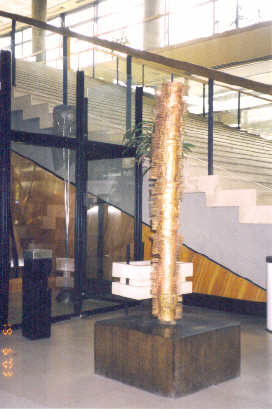
Kanadski Totem Vlade Polgara u Lisinskom

Moja skulptura "Kanadski totem" koja sa nalazi u predvorju koncertne dvorane "Vatroslav Lisinski u Zagrebu od samog otvorenja te reprezentativne koncertne dvorane.Radjena je na osusenom drvetu agave koji sam nasao plutati u moru.Izradjena na Visu,donesena u Zagreb a nazivom i izgledom potsjeca na totem te je na taj nacin i veza izmedju Hrvatske i Kanade.Oni koji idu na koncerte i priredbe u "Lisinskom" zacijelo su je zamijetili.

Pozdrav iz Ottawe
Vlado Polgar

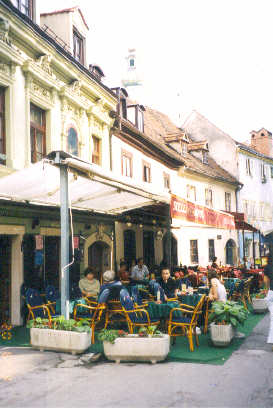
Malo iz Tkalciceve ulice ovog ljeta.Mislim da smiruje


» (E) Filmmaker Brenda Brkusic on PBS Dec 21, 2003
By Nenad N. Bach | Published 11/30/2003 | Culture And Arts | Unrated


Croatian American filmmaker Brenda Brkusic

will be featured on PBS, Dec 21 2003

Op-ed

Support our new generation of socially conscious filmmakers, artists and writers who bring more good for all of us. This project is worth of your support. I do. It is about our history that has been stolen from us for 50 years.

Nenad

22 year old Croatian American filmmaker Brenda Brkusic will be featured on PBS for the Next Generation Filmmakers television program on Sunday December 21, 2003 at 3:30 pm (PST). Brenda will talk about the making of her documentary film, "Freedom from Despair," which was shot in California, Chicago and Croatia last summer. You will also see a preview of the film which includes music composed by Nenad Bach.

Southern California residents can see the show on KOCE. Please check the station listing for your neighborhood at the following links:http://www.koce.org/cable_list.htm  for cable listings, and http://www.koce.org/satellite.htm  for satellite TV. If you do not have cable or satellite, KOCE's regular over the air channel is 50.

The segment with Brenda will air during the last 10 minutes of the half hour show, and it is estimated that over 3 million people will be watching. Let's raise the numbers and let KOCE know that we support programs like "Freedom from Despair."


Brenda Brkusic directing actors on location at Lepoglava Prison in Croatia for the filming of "Freedom from Despair."


"Next Generation Filmmakers"

"Freedom from Despair"


A young man's journey from despair, a nation's struggle for freedom.


Contact: crofilm2003@yahoo.com
 

» (E) Croatians in South Africa
By Nenad N. Bach | Published 11/30/2003 | Community | Unrated


Croatians in South Africa


In Search of a Better Life
Are Croats (amongst) the first settlers in South Africa ?


To claim that Croats participated in the discovery of new continents and that they sailed with Columbus,
Magellan, Da Gama and other great explorers, would not be easily believed and probably questioned by many.  To say that they established the first supply station and probably had a colony on the South African coast sounds like fiction. However, the 1400-1650's were in fact the golden age for Croatia, quite
disproportionate to her size in territory and population.

These Croat explorers: sailors, mariners, captains, pilots, merchants, bankers and diplomats; were mostly
from the Dalmatian Coast and the Republic of Raguza (Dubrovnik).

The Croatian Republic of Dubrovnik was known in the Middle Ages as the Republic of Raguza and it was well
respected for its merchants, shipbuilders and sailors. Together with Venice they commanded the largest
merchant fleets in the Mediterranean. Using the able diplomats and unsurpassed skills of its mariners and
merchants Raguza managed to spread trade interests far away from the Mediterranean. In order to improve
the spice trade a Raguzan colony of Sao Braz was established on the Malabar Coast in north Goa, India. The
Church of Sao Braz was built in 1653. This coIony had at one time 12 000 residents. Saint Vlaho was (is)
the Patron Saint of Raguza (Dubrovnik). It is of interest to note that Saint Vlaho is mentioned as Blaise
or Blaze in English and Braz or Bras in Portuguese.

"During the absence of Venice the largest part of the oriental trade was taken over by Raguza, which in
about 1530-1540 had a virtual monopoly of that trade. For a decade or two there existed a sharp
competition between Raguza and Portugal, which was also carried on in Portugal's own East Indian empire.
The Raguzan colony Sao Braz near Goa is one of the strangest and most interesting examples of the economic
expansion of that little republic in the period of the commercial revolution." (*)

This book has. South Africa's map,. dated 1508, with two place names:' '.Cape of Good Hope and Cape of Sao
Bras (Saint Vlaho)!, see below.

"Sao Bras or Mossel Bay is located 60 leagues beyond the Cape of Good Hope. Bartholomew Dias stopped there
and named it Bahia dos Vaqueiros. Vasco da Gama had remained there for thirteen days on his voyage to
India, securing beef and water from the natives. It was here that he broke up his store-ship. Cabrat would
probably have stopped at Mossel Bay (Sao Bras) for supplies and water had it not been for the storm which
he encountered in the South Atlantic"

On the early 19th century maps (1805) there is still distinctively marked, Cape of St. Blaise, situated
between Mossel Bay and adjacent Fish Bay.

This indicates that able Ragusans had established, under the name of Sao Bras, and used Mossel Bay as a
supply station on their voyages to India. May we proudly conclude, on the basis of the above evidence,
that Croats discovered and lived in this beautiful land before Dias, Da Gama and other famous explorers,
certainly long before van Riebeeck! "C.DE S. BRAS", Cape and Bay of Saint Blaise (Vlaho)

For us, Croats and descendants of early Croat settlers in South Africa, the "Book about the voyage of
Pedro Alvares Cabral to Brazil and India in 1500-1501", London 1937, is of special interest.

Compiled from:

A.S. Eterovich, "Croatia in the New World"(*) Ragusan Press, CA, 1992.

(article taken from CASA (Croatian Association of South Africa) newsletter)

http://www.geocities.com/ivol2001/cs_1stcr.htm
http://www.geocities.com/ivol2001/cs_refer.htm

» (H) Donja Hercegovina Website
By Nenad N. Bach | Published 11/30/2003 | Community | Unrated


Donja Hercegovina


Prof. dr. Pero Marijanovic, dekan Gradjevinskog fakulteta u Mostaru, bi bio zahvalan ako biste upoznali clanove sa slijedecom web stranicom, na kojoj ima i forum.
http://www.rb-donjahercegovina.ba/

Lijep pozdrav.

Vlado

» (E) Marijon Ancich Years of Service
By Nenad N. Bach | Published 11/30/2003 | Community | Unrated


Marijon Ancich teaches his physical education classes in style these days

By Rob Fernas, Times Staff Writer


Marijon Ancich teaches his physical education classes in style these days — at the wheel of a golf cart that makes it easier for the 66-year-old coaching legend to get around the Santa Fe Springs St. Paul campus.

Football boosters and colleagues pitched in to buy the cart last year, after Ancich had surgery to alleviate a painful case of sciatica. Before then, he said, "It got to the point where I couldn't get across the field. I had to go sit down."

Brent Newcomb, 61, knows the feeling. The veteran football coach at Antelope Valley had a heart attack in 1997 and had his hip replaced two years ago.

When his doctor told him to take it easy during a game last month after a bout of dizzy spells, Newcomb tried to put his players at ease by telling them, "If I happen to drop dead on the field, that's right where I want to die. You guys keep playing."

Though the years have taken a physical toll on Ancich and Newcomb, they have no intentions of stepping aside. The excitement of Friday nights keeps them in a routine that has defined their lives for several decades.

"Guys who are 66 years old are usually on a fishing boat somewhere," St. Paul assistant coach Marc Hernandez said of Ancich. "Marijon is still molding young men. That's something not many people can do."

Ancich, in his 41st season as a head coach, and Newcomb, in his 26th season, have combined to coach 766 high school games. Yet they had never stood across the field from each other until Friday night, when St. Paul played at Antelope Valley in a Southern Section Division III quarterfinal.

Second-seeded St. Paul won, 35-20, to give Ancich his 331st career victory, the second-highest total in California history behind Herb Meyer of Oceanside El Camino.

Newcomb has 204 victories as of the end of this season.

Ancich's teams won three section titles and appeared in five finals during his first stint at St. Paul from 1961 to 1981, and he guided Tustin to two championship games in nine seasons from 1984 to 1992.

Newcomb's Antelope Valley teams have won three section titles and appeared in six finals.

"Once it gets in your blood, it's hard to get out," Newcomb said. "I'm not a person who goes home and turns on a saw in the garage and starts wood projects. I'm not into painting or gardening. My hobby is football. My best friends are football coaches."

Like Newcomb, Ancich said he still gets a kick out of working with teenagers.

"I still enjoy the competitive experiences of the students," Ancich said. "It keeps your mind focused and you have the ability to watch guys grow up in front of you.

"To see them come back as adults is inspiring. Many of my former players have done some great things. You feel like you're helping them."

Many of Ancich's former players and assistants have coached in the Southland, including Dick Bruich of Fontana Kaiser, Pat Degnan of Quartz Hill, Tim Lins of Moorpark and former Cal State Northridge and Temescal Canyon coach Bob Burt. A "Family Tree" in the St. Paul program lists 116 coaches who either played or coached for Ancich.

"I don't think there's any coach in Southern California who doesn't have some tie to Marijon Ancich," Hernandez said. "He's kind of like the father of football in Southern California."

Ancich's personal family tree also has deep roots. He has seven children from two marriages and 27 grandchildren. His oldest child, daughter Joette McEntee, died last year at age 47 after a long battle with multiple sclerosis.

Many alumni remain loyal to St. Paul, returning to attend games and help with fund-raising projects. Some are drawn by the traditions initiated by Ancich and that continue to distinguish the Swordsmen program.

Players still embrace the school's pregame ritual. Dressed neatly in navy-blue blazers, gray slacks, light-blue dress shirts and St. Paul ties, they have traditionally enjoyed a meal of steak and potatoes with one stipulation — no talking.

The idea is to make the players focus on the game, and far more often than not, it's worked. Ancich has a career record of 331-117-10 and has won 18 league titles, 14 of them at St. Paul.

But Ancich acknowledged that getting his players' attention becomes increasingly difficult with each season.

"The most difficult thing is getting the information into their heads," he said. "Our strength has always been preparation, but that's really hard to do now. Everyone has these [video] games. The distractions are unbelievable."

Ancich, a 1955 San Pedro High graduate, started as an assistant at St. Paul in 1959, becoming the coach two years later.

After St. Paul capped a perfect 1981 season with a 30-9 victory over Colton in the Division I final, he accepted a job as offensive coordinator at Northern Arizona. But he soon grew weary of the college game and returned to Southern California after one year, helping out at Cerritos College for a season before becoming the coach at Tustin in 1984.

Tustin was 3-17 in the two seasons before his arrival. Under Ancich, the Tillers won four league titles and reached the playoffs seven times.

Despite his advancing age, Ancich still shoulders the bulk of the coaching duties for St. Paul.

"A lot of head coaches have coordinators left and right," Hernandez said. "He's basically the offensive and defensive coordinators. As assistant coaches, we implement it, but he does all the play-calling and sets the defense. He's still sharp as can be. I'm just glad I'm on his side."

Newcomb said he considers Ancich one of the three greatest coaches in the state, along with El Camino's Meyer and Bob Ladouceur of Concord De La Salle.

"It's really impressive what he's done for football," Newcomb said. "It's an honor for us to play against St. Paul."

It's not often when Newcomb has faced a more experienced coach. He started as an assistant at Antelope Valley in 1969, when the high-desert community was sparsely populated.

"We used to have alfalfa, mining and aerospace," Newcomb said. "Now we've got shopping malls and everyone drives to L.A. to work."

Newcomb learned many of his coaching techniques as an assistant under John Lowry, who guided Antelope Valley to section titles in 1976 and 1977 before resigning. Newcomb became coach the next season and soon distinguished himself.

His teams won a section title in 1981 and reached the final in 1985 and 1986. Perhaps the highlight of the 1986 season came when the Antelopes ended Canyon Country Canyon's 47-game winning streak, among the longest in state history, in a regular-season game at Antelope Valley.

It was "one of our greatest victories," Newcomb said.

Others would follow. Antelope Valley won Division II titles by beating Canyon in 1988 and Newhall Hart in 1994.

Newcomb had established a winning tradition, but his career appeared in jeopardy after he suffered a heart attack a few months after the 1997 season.

For a coach who had hinted at retirement in the past, it seemed a perfect time for Newcomb to step down. But any talk of retirement faded as Newcomb's health improved and Antelope Valley continued to enjoy success.

This is the fourth consecutive season the Antelopes have advanced at least to the quarterfinals. Newcomb's record is 204-109-3 with 11 league titles.

"He enjoys what he's doing," said Newcomb's son Brandon, the team's offensive coordinator. "We're still playing in big games. That's what it's all about."

Along the way, Newcomb has grown more understanding of his players, many of whom have little knowledge of the program's tradition.

"I've had to change a little bit," he said. "Our players used to have buzz haircuts and say, 'Yes, sir; no, sir.' We've had a lot of people move up from L.A. Now there's always a kid or a parent testing you."

Newcomb said he doesn't know when he'll stop coaching, but he does know what would make his final seasons easier on him.

"I'd probably be a lot better off if I had a golf cart," he said.

Informed that Ancich already uses a cart, he replied, "That's amazing. I've been thinking about getting one."

Just goes to show that great minds — and aging bodies — think alike.

Copyright 2003 Los Angeles Times

(Page 246 of 452)   « Back  | 244 | 245 | 246 | 247 | 248 | Next »
Croatian Constellation


Popular Articles
  1. Dr. Andrija Puharich: parapsychologist, medical researcher, and inventor
  2. (E) Croatian Book Club-Mike Celizic
  3. Europe 2007: Zagreb the Continent's new star
  4. Nenad Bach singing without his hat in 1978 in Croatia's capital Zagreb
  5. (E) 100 Years Old Hotel Therapia reopens in Crikvenica
No popular articles found.