Search


Advanced Search
Nenad Bach - Editor in Chief

Sponsored Ads
 »  Home  »  Authors  »  Nenad N. Bach
Nenad N. Bach

Articles by this Author
(Page 391 of 452)   « Back  | 389 | 390 | 391 | 392 | 393 | Next »
» (E) Novalja apartment summer 2002
By Nenad N. Bach | Published 05/8/2002 | Classifieds | Unrated


Contact: VilaDionizija@aol.com 

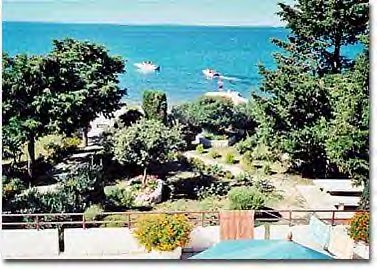
Great Adriatic Vacation in Novalja, on the island of Pag, Link Below
Apartmani Vila Dionizija-Novalja, Croatia click ---- Apartment on the Beach !!!!

http://www.novalja.com/images/accommodation/direct/severinskunca/index.html 

» (E) Shopping at Heart of Croatia Gifts!
By Nenad N. Bach | Published 05/8/2002 | Classifieds | Unrated
 
Newsletter Topics

Neckties (“Cravat”) Imported from Zagreb

♥ New Photographs of the Dalmatian Coast by Milena Soree

♥ Spring Cleaning: Price Reductions of up to 50% off!

Our Lady of Medugorje Vase from Samobor

♥ Slivovica Glasses Close-Out

♥ Graduation, Wedding, and Fund-Raising Ideas

♥ Special 10% Off Coupon Available!

 Neckties: ‘Cravat’ from Croatia…Choice “Father’s Day” Gifts!

And, now, imported directly from Croata in Croatia, we are pleased to present to you beautiful, 100% silk neckties! Croata neckties are reputably the top quality in the tie industry in the world. We are presenting just two of Croata’s wonderful designs, to determine exactly what our customers are interested in purchasing/wearing. Croata neckties come from the Homeland of the Cravats: CROATIA! Authentic Croata ties are packaged in a protective, plastic wrapping, and come with an elegant (gift) tie box which says, “Homeland of the Cravats” on one side and “Domovina Kravata” on the other. We have available at the present time, one tie with a recognizable design from Zagreb; the other ties (4 in all) are designed using the Croatian Grb. We only have a total of 5 of these ties in stock, so naturally our first customers will be our lucky customers. However, we will be adding both inventory and other design choices as time goes on.Visit us at www.croatiagifts.com to order.

                                     Fabulous Photographs by Acclaimed Croatian Artist Milena

If you are lucky enough to have traveled to the Croatian Dalmatian Coast, no doubt you have fallen in love with the area. We now present to you the closest thing we have found to actually traveling there. When you view these photographs by acclaimed artist Milena Soree, we guarantee that you will feel as if you had actually stepped through the lens of her camera and onto the beach. You will feel the sun beating down on you,  be able to smell the salty sea air, and feel the stones beneath your feet. Look out to the glimmering blue sea and see the stark white line of the mountains carving their designs into the sky, as well as the varying shades of the red-tiled rooftops in seaside towns and villages…The splendor and magnificence of the Dalmatian Coast is expertly captured by artist Milena Soree in these original photographs. Memories are fleeting, but a photograph has the ability to capture a moment in time that lasts forever. When you purchase one of Soree’s photographs, you can actually “own” a bit of the Dalmatian Coast for yourself. Photographs are limited edition and are original. All photographs are matted, signed and numbered by the artist. Order at www.croatiagifts.com.

                                 Spring Cleaning At Heart of Croatia Gifts! 50% Price Reductions

In order to make room for our new inventory, “Heart of Croatia Gifts” is doing some spring cleaning! Visit our new category entitled, “Spring Cleaning” at www.croatiagifts.com, to see many products we are selling at substantial discounts---some products are as much as 50% off of the original prices!

                            Exquisite Our Lady of Medugorje Vase from Samobor

A beautiful, finely-cut and exquisitely etched vase is now available to order from Samobor, Croatia. It is engraved with Our Lady of Medugorje as she appeared in 1981 to six children, bringing them the message of “Peace” (“Mir”). This lovely engraving on this stately vase also depicts St. James Church in Medugorje. Visit us at www.croatiagifts.com to order.

We are privileged to offer our customers the opportunity to purchase exquisite, finely-cut crystal from Samobor, Croatia.  This is all hand-cut crystal that exceeds industry standards of 24% lead, with a refractive index of above 1545.This high quality crystal comes from Samobor, an enchanting 759-year-old market town close to Zagreb. Samobor is recognized world-wide for its 180-year-old tradition of crystal glass craftsmanship. Although the crystal industry was temporarily halted during the war in Croatia, “Kristal Tuk” has recently begun to produce crystal in Samobor once again.

                                        Slivovica Glasses Now Available IMMEDIATELY!

We have 5 crystal Slivovica glasses from Kristal Tuk in Samobor that are currently available. These glasses are on CLOSE-OUT and no more (in this style) will be made.www.croatiagifts.com

                                        *Graduations, Weddings, and Fund-Raising Ideas*

Heart of Croatia Gifts offers many possibilities for those special (Croatian) graduates, and for those special (Croatian) brides and grooms-to-be! You may want to consider musical instrument pins or framed instruments for those Junior Tamburitzan graduates, among many other choices. Or, may we suggest a beautiful tablecloth or a cookbook for a unique wedding gift? We have many categories to browse in that offer a wide variety of Croatian gifts choices that are both practical and beautiful. Many of these items are ONLY available at Heart of Croatia Gifts, www.croatiagifts.com.

We know that many Junior Groups will be traveling to Toronto this summer to participate in the wonderful convention being held there. We also realize that many of these groups will need to raise funds in order to get there. Visit our special FUNDRAISING IDEAS CATEGORY to see some very special gift items at knock-down prices that can help your group to raise significant income! You may want to consider our American-Croatian and Canadian-Croatian flag pins, as well as our instrument pins and magnets! www.croatiagifts.com.

                                                    10 % Off Coupon Available

We at “Heart of Croatia” Gifts are offering you, our valued customers, a 10% off coupon for purchases of $25 or more. This coupon has unlimited use, meaning you can return as many times as you would like within the next month and receive 10% off each time you shop with us! This coupon expires on June 7th. To use your coupon, you must type: znxzg68kp whenever you order so that 10 % will automatically be deducted from your total expenditures. Thank you for shopping at Heart of Croatia Gifts!

Melissa Pintar Obenauf

www.croatiagifts.com

obenaufm@alink.com

Toll Free: 877-906-8314

~We take Discover, MasterCard, Visa, as well as personal checks and money orders~


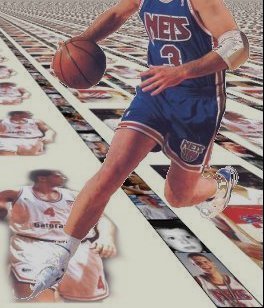
» (E) Drazen Petrovic Remembered, Nominated For Hall of Fame
By Nenad N. Bach | Published 05/7/2002 | Sports | Unrated

From the May 7, 2002 New York Times. John Kraljic


Petrovic: An Athlete of the World

By HARVEY ARATON
ARIO MIOCIC still calls Willis Reed to reminisce, to wonder what might
have been and just recently, and most therapeutically, to speculate on
what could be.

"Did you hear about Petro?" Miocic said to Reed, the New York basketball
legend, when the news came late last month that Drazen Petrovic had been
nominated to the Basketball Hall of Fame by the international committee.

Of course he had, responded Reed, himself a member of the hallowed Hall.
Miocic could count on Reed to be in Springfield, Mass., next fall if "a
guy Mario and I had a lot of love for" is among the inductees who will
surely include Magic Johnson, the ultimate point guard.

Petrovic was more of a long-distance straight shooter, by way of
Sibenik, Croatia, but had his own court vision and uncompromising
leadership skills. Years before David Stern's global expansion resulted
in a storming of the N.B.A. gates by Europeans and now even Asians with
attitude, Petrovic told his friend, Miocic, who had immigrated to New
York from Croatia in 1986:

"Mario, I never think, `Oh, good, I've opened the door to European
players and now I am going to sit on the bench and be happy. I want to
be a cornerstone of a team, a leader.' "

* * *
He had just about arrived, as a third-team all-league selection with the
Reed-built Nets, when he died in a car accident on a rain-slicked German
autobahn before the start of the 1993 N.B.A. finals. Drazen Petrovic was
28, in the morning of his adult life, beginning the prime of his career
and a national sports hero back home.

In Croatia, Miocic said yesterday by telephone from his home in Miami,
the Petrovic name is still more revered than merely respected, as
evidenced by Goran Ivanisevic's dedication of his Wimbledon title last
summer to the guy Miocic said "showed Croatia what it means to be a
great professional athlete of the world."

Basketball fans there still cheer these new Nets and imagine the aging
Petrovic running the floor with the magical and munificent Jason Kidd.
He surely was one of the game's fiercest workers, but if Petrovic were
alive today, more than playing or beholding in the wonderment of a
winning Nets team, he would be filled with pride by the power of his
leaguewide legacy, the ever-expanding collection of international impact
players.

Dirk Nowitzki of Germany is the franchise player in Dallas. Yugoslavia's
Peja Stojakovic is a go-to guy in Sacramento. Spain's Pau Gasol is the
first rookie of the year from Europe. With financial tariffs, the
Chinese are exporting the towering Yao Ming next season, and he is the
intriguing prize of the coming N.B.A. draft.

* * *

"The coaches overseas all studied under guys like Dean Smith and Bobby
Knight," Reed said. "If they said they wanted something done their way,
it's not like their players could say, `I'll go play where I can do what
I want.' They are ahead of our kids in the offensive fundamentals and
they've seen they can be stars, and that all started with Petro."

Petrovic wasn't the first to come, but he was the one to transfer direct
from the European leagues and confound the schools of thought that
international players could be role players at best and that the white
N.B.A. star was a dying breed.

He paid his dues the way most intruders in xenophobic territory do, by
enduring those skeptical and small-minded. Opponents and even teammates
who couldn't find Croatia on the map if it were blinking sneered at his
confident swagger. John Starks of the Knicks called him a "trash-talker
with an accent" and before one tip-off made some untoward comment about
complicity in the World Trade Center bombing in 1993. Danny Ainge, who
played with Petrovic on his first N.B.A. team, the Portland Trail
Blazers, once told me that Petrovic had confided a belief that his
nationality had kept him out of the 1992-93 All-Star Game.

"He suffered," Miocic said. "But Drazen was very strong. He kept going,
until the end."

Even after Petrovic died, Miocic would stand in the runway leading to
the locker rooms during Nets home games with an approving nod from Reed,
now the club's senior vice president. Miocic now works in real estate in
South Florida but still relishes the days when he and Petrovic would go
out for dinner at a Croatian restaurant in Long Island City, or stop by
a church on the Manhattan side of the Lincoln Tunnel.

He doesn't forget, and all these new-age Europeans flying across his
television screen make him smile at the memories and at the prospect of
Petrovic's deserved enshrinement as his everlasting reward.


NOTICE: This e-mail and the attachments hereto, if any, may contain legally
privileged and/or confidential information. It is intended only for use by
the named addressee(s). If you are not the intended recipient of this
e-mail, you are hereby notified that any dissemination, distribution or
copying of this e-mail and the attachments hereto, if any, is strictly
prohibited. If you have received this transmission in error, please
immediately notify the sender by telephone and permanently delete this
e-mail and the attachments hereto, if any, and destroy any printout thereof.

» (E) Winning the Peace in Bosnia - by Paddy Ashdown
By Nenad N. Bach | Published 05/7/2002 | Politics | Unrated
 
COMMENT & ANALYSIS: Winning the peace in Bosnia: The 
US must maintain its military presence in the region to keep criminals and 
terrorists at bay, says Paddy Ashdown: 
 
Financial Times; May 3, 2002 
By PADDY ASHDOWN 
 
September 11 streng-thens the case for US engagement 
in the Balkans. This will be my message when I meet 
administration officials in Washington today in 
preparation for taking on the job of high representative in Bosnia next month. 
"To tell you the truth, Bosnia didn't mean anything to me. Here it's 
different. It's about New York and my country being 
attacked." Those were the words of a young infantryman, on active service in 
Afghanistan, quoted recently in a US newspaper. And I have met soldiers, 
young Americans serving in Bosnia, who wish they too were in Afghanistan, 
doing a soldier's ultimate duty: defending his country. 
As a former Royal Marine, I know how they feel. My reply to them is this: 
dealing with terrorism in Afghanistan is vital for all of us. But, in a 
different way, so is dealing with instability in Bosnia. We cannot afford to 
let today's weak states become tomorrow's havens for organised crime and 
terrorism; to let today's Bosnias become tomorrow's Afghanistans. 
I am confident that this will not happen in Bosnia - but only because I remain confident that the inter-national community is determined not to let it happen. Otherwise I would not have accepted the job. When the Soviet forces at last pulled out of 
Afghanistan in 1989, all of us around the world heaved a sigh of relief. We thought that country now had achance to prosper as a free and democratic state on 
its own. We were wrong. The west disengaged too early, leaving Afghanistan on 
its knees, run by warlords, funded by organised crime and drugs. Far 
from the rule of law, it was the perfect base for terrorist organisations such 
as al-Qaeda. Bosnia, too, has not had time to stabilise fully after 
a savage conflict, the like of which had not been seen in Europe since 
the second world war. But the country has come a long way. Bosnia today is 
at peace. People are returning to the homes they were driven from in the 
early 1990s and are rebuilding their lives. The governing parties are led 
by moderates. The war criminals are being rounded up and the mujahideen have 
gone. Nevertheless, Bosnia is by no means a normal state. It is far from 
being a functioning democracy or a free market economy. After 50 years of communism and five years of brutal conflict, how could it be? Bosnia is passing through a double transition: from communism to the free market and from conflict to peace. People are having not only to learn to live together again but also to learn about democracy 
and the market: to take on board a whole new political and economic 
culture. Today Bosnia has made huge, even miraculous, progress. 
But it remains a weak, fractured state, prey to organised crime. It 
still needs our help. Many ask: but why should we give it? There are other 
priorities, other mdangers. We have limited resources. We cannot stay in 
Bosnia for ever. I accept that. But as Bosnia has changed, so, too, has 
the nature of our engagement. In 1995, the US had more than 20,000 soldiers in 
Bosnia. Today, it has fewer than 3,000 - less than 1 per cent of the US Army. The 
Nato force is still capable of dealing with any of the potential threats 
it faces. But it is now mainly a European force. The US contribution is less 
than 15 per cent. US and Nato troops will continue to be withdrawn as the 
threat declines. And as Nato's role has scaled back, so the European Union's 
role has grown. But US troops and US engagement will be necessary for some 
time yet to smooth this transition. Without the credibility that American 
leadership brings, there is still a real risk that Bosnia's fragile stability 
will disintegrate once more into conflict and criminality. 
It is true that Bosnia matters more to Europe. It is on our continent and is 
our responsibility. It remains one of the key routes for organised crime 
into western Europe. But Bosnia also matters to America - and for these 
reasons. First, if we leave Bosnia with the job half done, the 
crime gangs, warlords and terrorists will come in by the back door just as 
our last troops are leaving at the front. Then we would have to come back 
in force, sooner rather than later. Second, the Balkans are forcing the Europeans to 
develop the tools to promote peace and prosperity beyond their borders. 
There is little doubt that German forces would not today be serving in 
Afghanistan without the Balkan precedent. By staying engaged, the US can help 
shape this process. Third, by staying to help get the Balkans right, 
America will hasten the day when those countries can join the EU and the US can 
hand over once and for all to Europeans the responsibility for keeping the 
peace there. Europe needs America, not least for the leadership of 
which only it is capable. But in an uncertain world and an uncertain 
century, America also needs Europe. A new post-cold-war partnership has been 
and is being forged in the Balkans. Its utility will endure far beyond 
Afghanistan. The writer takes over as high representative to Bosnia 
and Hercegovina on May 27 
 
Copyright: The Financial Times Limited 1995-2002 
 
Distributed by www.CroatianWorld.net. This message is intended for Croatian Associations/Institutions and their Friends in Croatia and in the World. The opinions/articles expressed on this list do not reflect personal opinions of the moderator. If the reader of this message is not the intended recipient, please delete or destroy all copies of this communication and please, let us know! 
» (E) Dario Solman at PS1 - New York
By Nenad N. Bach | Published 05/7/2002 | Culture And Arts | Unrated


DARIO ŠOLMAN

“The Real Thing – the Making of the Film”, animation still, 2002

Invitation for P.S.1 Opening

You are cordially invited to the opening of
«Listening to New Voices»
2001-2002 Studio Program exhibition
featuring the work by Dario Solman

The opening will take place on
Sunday, May 19, 2002
12 to 6 PM.
at the P.S.1 Contemporary Art Center,
22-25 Jackson Ave at 46th Ave, Long Island City.
Please consult www.ps1.org   for details and directions.

«Listening to New Voices» is curated by Daniel Marzona and Larissa
Harris, and features 20 national and international artists participating
in the P.S.1 program.

Dario Solman (1973) is the first Croatian participant of the P.S.1.'s
International Studio Program. Prior to his residency at P.S.1, Mr.
Solman has completed graduate studies in arts at the Ohio State
University and undergraduate studies at the Academy of Fine Arts in
Zagreb. He has exhibited widely and has taught at the Arts Academy in
Split and the Ohio State University.

Dario Solman will exhibit his most recent work “The Real Thing – the
Making of the Film”, the mix media project created in residency at
P.S.1. His previous work can be viewed at the web site:
http://dariosolman.tripod.com/.

The Croatian participation at the prestigious International Studio
Program is supported by the Ministry of Culture of Croatia, FACE Croatia
Foundation (under the leadership of Mrs. Mercy Bona Pavelic), Trust for
Mutual Understanding and realized through the Arts International and
HDLU-Zagreb. Initiator and coordinator of the program is Branko
Franceschi, curator/manager of the Miroslav Kraljevic Gallery, Zagreb,
Croatia.

P.S.1 Contemporary Art Center, a MoMA affiliate, is the leading
institution for the breakthrough contemporary art in the world. In
addition to Croatia, 15 leading countries send their artists to the
International Studio Program, making it one of the most desirable
residencies for the emerging contemporary artists.

For more information contact:
Branko Franceschi at branko.franceschi@ina-np-sir.tel.hr 
Dario Solman at dariosolman@hotmail.com 

» (E) Croatia and the European Union
By Nenad N. Bach | Published 05/5/2002 | Politics | Unrated

The following article was published in the Liberal Democrat European Group (UK) newsletter, and reflects my own views and not those of the group. It was subsequently published in Hrvatski Vjesnik in their April 26 edition. 
Croatia and the European Union

Brian Gallagher
brigall@yahoo.co.uk 

Croatia and the EU have never had an easy
relationship. The EU never wanted to recognise Croatia
in the first place, and the current situation is that
a political row has broken out in Croatia over
Croatia's signing an agreement with the EU; it seems
to have more to do with re-creating the former
Yugoslavia than offering Croatia the chance to join
the European Union. Such a policy has implications for
both Croatia and the European Union. Should the EU be
embarking on such an enterprise?


The EU had never liked former Croatian President
Franjo Tudjman and his Croatian Democratic Union
(HDZ). The EU accused him of "authoritarianism", media
control etc. Tudjman's democracy was hardly perfect -
how could it be given the circumstances of war,
occupation. But his "authoritarianism" was
exaggerated. Some observers noted that in fact most of
the press were against him and not for him. 

The EU and others subsidised and supported
anti-Tudjman press and politicians in order to oust
him and his HDZ party. In 2000, due to to genuine
unpopularity and Tudjman's death a new Social Democrat
(ex-communist)/Liberal government was formed. Former
top HDZ politician Stipe Mesic, who had fallen out
with Tudjman and formed his own party became the
president.

A new opportunity for Croatia both internationally and
domestically was squandered however. The criticisms of
Tudjman's regime such as authoritarianism, media
control etc. soon became far more applicable to the
current government. When the new government were
elected, the opposition press overnight became the pro
government press. Or rather supporting various
factions ie President Mesic against Prime Minister
Racan as in the case of Feral Tribune. 

The Split based Slobodna Dalmacija was an exception.
It was the only opposition daily - bizarrely it was
owned by the state, due to a scandal under the
previous government. It kept its line despite the
changes. It ferociously attacked the government, the
UN war crimes tribunal and the President. This is the
sort of thing that is of course normal in a democracy.
However, it was too much for the President and his
supporters in the Press such as Feral Tribune and
Nacional.


The President ran a campaign against the newspaper,
calling it "fasisctoid" - it was nothing of the sort,
certainly no more extreme than the Daily Mail. 
Eventually, in an act of blatant cronyism and
censorship the government replaced the editors in
April, resulting in a mass demonstration in Split. Now
there is not much in the way of an opposition press in
Croatia - a very unhealthy situation. Issues such as
President Mesic's election funding - a mystery - are
thus not adequately explored.

There have been other dubious incidents. Former HDZ
minister Andrija Hebrang was barred from entering
Australia - the reason given was that it might upset
relations with another government. In other words the
Croatian government requested he not be allowed entry
- just in case, no doubt, he discussed the political
situation in Croatia with Australia's sizeable Croat
community.

A Croatian academic was called in by the police for a
"talk"; he had published 1948 documents on a Yugoslav
secret police investigation of prisoners that the
still alive investigating officer claimed was false.
The documents were entirely genuine; but it is 
disturbing how such people have influence and can have
the police "talk" with people.

The Catholic church has criticised the government. 
The response has been an attempt to intimidate the
church into silence by talk of right wing plots
involving the church - as if communism had never
disappeared. This is even taking the form of
attempting to apply pressure by the government,
apparently with EU help, complaining to the Vatican - 
who will no doubt so see straight through this.


All of this has gone unnoticed by western governments,
NGO's human rights groups etc. for the simple reason
that the government is regarded as "compliant" by the
western powers - who also happen to fund many NGO's.


Another serious problem is the funding by the EU of
"independent" media. Such media tend to support the
EU's favoured politicians in the region. The
recipients of this aid are often extreme left-wing
individuals. The rabidly anti - HDZ (and some would
argue, anti Croatia) pro-Mesic newspaper Feral Tribune
- which unpleasantly singles out its enemies as "Shit
of the Week" is perhaps the most obvious example of
this, having previously received EU funds. Its
journalists are bizarrely quoted as "independent" in
the western media - no mention is made of their
political views or their ultimate funders. 

It is not only internal; the Institute of War and
Peace Reporting (IWPR) in London is in part funded by
the EU, and Feral journalists crop again in writing
articles - a recent example being a skewed piece on
the aforementioned anti-church activities, focusing on
Government attempts to threaten the church into
silence by changing its favourable tax status. Instead
of condemning this attack on "turbulent priests", this
particular article appeared to approve of it! On
the serious issue of the Slobodna scandal, the IWPR
had nothing to say.

IWPR, when covering Croatian affairs often attacks the
HDZ or the Catholic church in this case as being
fascistic, or sympathetic to fascism. 

Such rhetoric of course was used by Slobodan Milosevic
and his cronies to justify the destruction of Vukovar,
the bombardment of Dubrovnik and various other war
crimes. Its use by IWPR is thus disturbing.

Such reports are read by the BBC and other western
news organisations and become "received wisdoms". 

Feral Tribune and the IWPR are just two examples of EU
subsidy to favoured journalistic outlets; there are
many others. 

Recently, the Croatian government has signed an
agreement with Europe - the Stabilisation and
Association Agreement (SAA) The SAA applies only to
the ex-Yugoslav republics - minus Slovenia, plus
Albania. Macedonia has already signed such an
agreement.

It is touted as Croatia's first step towards the
European Union. In fact it seems designed to keep
Croatia and the other countries of the region out. 
Worse, it appears to be an attempt to re-create the
former Yugoslavia.

It should be explained that many in the region are
concerned over attempts to re-create some kind of
Yugoslav federation. Yugoslavia was little more than
a Serb racket; completely different countries were
forced together under Serbian hegemony, and for
Croatia it meant near colonisation by the Serbs
including the creaming off of tourist profits to the
Serbs, suppression of the Croatian language in favour
of "Serbo-Croat" - Serbian - and most of the top
posts going to Serbs.

So it has come as a bit of shock for many that
Articles 11-14 - "Regional Cooperation" - of the
agreement appears to bind the SAA countries into some
kind of federation. These provisions demand that
Croatia creates 'bilateral' links with the other SAA
states. These include areas such as political
dialogue, a free trade area, mutual concessions
concerning the movement of workers and capital as well
as other areas not covered in the agreement 'notably'
the field of justice and home affairs. How ever you
look at it, put together that makes a federation. What
is also disturbing is the coercive element. Croatia
must make those agreements with the other SAA states
within two years of those states concluding their 
SAA agreements with the EU - or all relations with the
EU cease. EU External Relations commissioner Chris
Patten has claimed there is no plan to recreate
Yugoslavia, and Croatia is not part of a regional
plan. Quite apart from Articles 11-14 contradicting
him, his own comments at a recent speech spoke of
"re-connecting the ties that bind peoples of the
region together" and of the countries establishing
''a network of close contractual relations among
themselves". "This is more than a bilateral process"
he said. 

Croatia is broke; but it is an economic oasis compared
with Albania and Serbia. When movement of workers and
other provisions kick in, Croatia will no doubt one
way illegal immigration problems, problems which may
no doubt concern the EU sufficiently enough to keep
Croatia out of the EU. We all know how much of the
press treats such issues - and how politicians react
to them. Certainly one cannot imagine the EU signing
'movement of workers' agreements with Albania; why
then force it on Croatia?

Should the EU be embarking on an enterprise of
effectively creating - by sleight of hand and coercion
- some kind of "West Balkans" federation? 
Imperialism, colonialism... whatever one calls it the
EU SAA project is neither liberal nor democratic. And
is propping up unpopular governments in Croatia - and 
elsewhere - a good idea? Especially when it involves
attacks on the church and a blind eye to press
censorship? What are the long term effects, the
implications for the future? The path ahead could be
disturbing indeed.

But there is a different approach. Firstly, all
funding, assistance etc. for "independent" media and
favoured political parties in Croatia should cease.
Politics and media must develop naturally, even if
that means the return of the HDZ to power. 
Electorates must not fear the wrath of the EU if they
want to vote for a particular party. 

Further, the whole SAA approach should be jettisoned.
It should be replaced by an individual approach, not
tying Croatia's - or any other country's fate - to any
regional plan. 

One constructive idea put forward by Vitomir Miles
Raguz, the former Bosnia-Hercegovnia ambassador to the
EU and NATO is to extend the European Economic Area to
the countries of South East Europe, prior to eventual
accession to the European Union. Suitably augmented,
to cover concerns such as movement of labour, such an
approach could work.

An EU approach to Croatia such as that employed for
Poland, Slovenia etc. could pay dividends in future;
a regional approach could produce something else
again. We all know how the last regional plan fared -
it was called Yugoslavia.

(c) Brian Gallagher

» (H) Fabrijev raskosni knjizevni kozmos
By Nenad N. Bach | Published 05/4/2002 | Culture And Arts | Unrated


Nedjeljko Fabrio 
- Dobitnik Herderove nagrade -

Uglednu Herderovu nagradu utemeljilo je prije više desetljeca Sveucilište u Becu, a namijenjena je "njegovanju i unaprjedivanju kulturnih odnosa s istocnim i jugoistocnim narodima i dodjeljuje se osobama koje svojim primjerom pridonose održanju i povecanju europske kulturne baštine u skladu s miroljubivim sporazumijevanjem medu narodima". Nedavno je obznanjeno da je ovogodišnji dobitnik književnik i akademik Nedjeljko Fabrio za svoj svekolik književni rad. Time se Fabrio uvrstio u niz hrvatskih znacajnika iz podrucja književnosti i humanistickih znanosti (Miroslav Krleža, Maja Boškovic Stulli, Dunja Auguštin, Vjenceslav Richter, Zdenko Škreb, Ivo Frangeš, Viktor Žmegac, Branko Fucic) koji su do sad odlikovani tim prestižnim europskim priznanjem. Poslije Krleže Fabrio je, dakle, drugi hrvatski pisac koji je ovjencan tom nagradom. 

Fabriovo književno pismo vec cetrdeset punih ljeta, u raznovrsnim žanrovskim diskurzima i stilovima (pripovijednom, dramskom, esejistickom, znanstvenom, prevoditeljskom) traje kao neporeciva i stamena vrijednost suvremene hrvatske književnosti. U punom smislu ono uvjerljivo opovrgava nerijetko izricane teze o njezinu provincijalnu, ruralnu i rubnu znacaju i znacenju. Rodenjem i životnim bivanjem, ali i cijelim svojim duhovnim bicem, uronjen u prebogat i složen svijet dviju kljucnih povijesnih i kulturalnih sastavnica hrvatskoga etimona - Sredozemlja i srednje Europe - Nedjeljko je Fabrio tim prevažnim prostorima europskoga i svjetskog univerzuma posvetio cio svoj stvaralacki vijek. 

Vec su u prvima, eksperimentalnim, Partitama za prozu (1966.) - u kojima je uocljiv izrazit autorov osjecaj i nerv za glazbu što ce ga stalno pratiti da bi maestralno bio oknjižen prije nekoliko godina u Maestru i njegovu šegrtu - došle do izražaja dubinske poveznice s hrvatskom mediteranskom baštinom. Navod iz Zoranicevih Planina, u jednoj od tih ranih proza - I mi bismo od ovud pobigli, dali nas slatkost bašcine uzdrži - o tome puno govori. Drame: Reformatori (1968.), gdje se strjelica europskoga usuda prijelomne prve polovice XVI. stoljeca s Matijom Vlacicem Ilirikom odapinje iz hrvatske Istre u srce njemacke, Lutherove, reformacije; Cujete li svinje kako rokcu u ljetnikovcu naših gospara koja iznova aktualizira najranjivija mjesta hrvatske novije povijesti i njezine tragicne ožiljke na covjeku pojedincu; Meštar koji ispisuje dramu umjetnika; nikad neizveden Magnificat (1970.), dramska alegorija o izloženosti kazališta gruboj (politickoj, dakako) zbilji. U razdoblju duge hrvatske šutnje, poslije sloma Hrvatskoga proljeca, zašutjevši kao dramatik, Fabrio piše i objavljuje brojne novele, talijanisticke i kroatisticke eseje i studije (Apeninski eseji, Štavljenje štiva), ustrajno prevodi talijanske prozaike XX. stoljeca, stvara nenadmašne glazbene medaljone. 

U strašnom je i sudbonosnom vremenu rata za neovisnu Hrvatsku u dva mandata predsjednikom Društva hrvatskih književnika. Svojim je neumornim djelovanjem i odlucnim istupima tada inkarnirao neslomljivu volju i svijest hrvatskih pisaca u zajedništvu sa svojim narodom, poticuci nadu i vjeru u Domovinu i neuništivost njezine tisucljetne kulture i onda kad je izgledalo da nikakve nade nema. Iz toga je proizašao kratki roman Smrt Vronskog (objavljen još za Domovinskoga rata 1994.), gdje se carobnom formulom pišceve imaginacije Tolstojev junak dovodi u samo srce vukovarskog pakla. Jedna od najvelicajnijih prica cjelokupne svjetske prozne književnosti spojena je s pjesnickim poniranjem u sudbinski aktualan trenutak nacionalne egzistencije i ugroze sama opstanka.

Stvaralac maniristicke cistoce i jasno cizelirane recenice (kako napisa Zdravko Zima), baveci se kljucnim pitanjima egzistencije pojedinca i kolektiva (Velimir Viskovic), tvorac dotjerana stila, osobito lomljenja recenice (Josip Pavicic) koja se pretapa u melankolicnu i baladicnu sucutnost (Božidar Petrac), Nedjeljko je Fabrio ponad svega vjeciti tragac za ljepotom rijeci i izraza. Sam je, u Reformatorima, znakovito, zapisao: Ništa nije što kroz rijec ne prode. Opsjednut pak ludilom Povijesti (jedan mu je od leitmotiva, poantiran u završetku Vježbanja života, da 'Povijest je ludilo, jalovost i smrt'), s podkožno ucijepljenjim resantimanom spram hrvatstva, mediteranstva i srednjoeuropejstva, morao je Fabrio konacno stici do svoje Jadranske duologije (koja ce se, skorašnjim objavljivanjem novog romana, Trimeron/Roman einer kroatischen Passion, pretvoriti u trilogiju). 

Kronisterija Vježbanje života i Familienfuge Berenikina kosa nisu samo idejni i estetski vrhunac i svojevrsna sinteza Fabriova književnog djela, one su impresivno pjesnicko svjedocanstvo o bitnim, odredujucim silnicama povijesnih tijekova na hrvatskome tlu kroza posljednja dva stoljeca. Stapanje krajnje akribicno istražene dokumentarne grade s poetski izmaštanim i višestruko izukrštanim ljudskim sudbinama - a koje su i opet, u ishodištu i konacnici, prokleto uvjetovane politikom; jer ona je, na nesrecu, kako kaza Napoleon Goetheu u Weimaru godine Gospodnje 1809., sudbina moderna covjeka - vodi dubinski u paradigmatican svijet našega užeg i šireg povijesnog, kulturalnog i zemljopisnog prostora. A da je on prepoznat i u tim širim razmjerima, dokazuju prijevodi na madarski (Varos az Adrian) i njemacki (Das Haar der Berenice), naskoro i na ruski (Smrt Vronskog).

Pocetkom 1990. vratio se Fabrio rijeckim uprizorenjem Vježbanja života trijumfalno na hrvatsku pozornicu s koje prakticki bje izgnan prije dvadeset godina. Slijedila je Bereninika kosa koju je, kao i Vježbanje, u zagrebackom HNK-u 1994. režirao Georgij Paro. Dosadašnju ukazalištenu romanesknu trilogiju zakljucuje Smrt Vronskog u rijeckome HNK-u Ivana pl. Zajca 1995. u prilagodbi i režiji Ivice Boban. A Vježbanjem života u hrvatsko glumište je usješno i uzorno uveden model integralna kazališnog spektakla.

Mi zato, stostruko, klicemo casnom laureatu: Ad multos et faustissimos annos!

Darko GAŠPAROVIC

Fabrijev raskosni knjizevni kozmos

Ove godine to prestizno medjunarodno priznanje pripalo je i
jednom od nasih vodecih suvremenih pisaca - Nedjeljku Fabriju,
koji je to odlicje na ceremoniji dodjele primio iz ruku
rektora Beckog sveucilista.

BEC, 3. svibnja - Svecana dvorana drevnog beckog Sveucilista
sredisnje je mjesto dodjele Herderove nagrade i proslave
svakoga od sedam Europljana nagradjenika na velikom prostoru,
od Baltickog do Crnog i Egejskog mora. Po svome znacaju ta
nagrada, sto se dodjeljuje za umjetnost i humanisticke
znanosti, naziva se jos i malim Nobelom, a dodjeljuje je
Zaklada F. V. S. sto ju je 1963. godine utemeljila recena
zaklada Alfreda Toepfera.
Ove godine to prestizno medjunarodno priznanje pripalo je i
jednom od nasih vodecih suvremenih pisaca - Nedjeljku Fabriju,
koji je ovo odlicje na ceremoniji dodjele - sto je protekla uz
zvukove fanfara i rektorski zbor u togama koji je pratio tu
tradicionalnu i rijetku svetkovinu - primio iz ruku rektora
Beckog sveucilista. U pozdravnom govoru rektor prof. dr. Georg
Winckler upozorio je da se ovogodisnja dodjela Herderove
nagrade dogadja u teske dane Beckog sveucilista kada je vlada
uvela restrikcije na visoko obrazovanje. Tako su nas na ulazu
docekali prosvjedni golemi natpisi i studenti koji su dijelili
letke.
Laudaciju "sedam velicanstvenih" za govornicom slavnog Beckog
sveucilista procitao je medjunarodno priznati slavist s
göttingenskog sveucilista prof. dr. Reinhard Lauer, isticuci
humanitarni znacaj profila te nagrade koja promice osobitost
malih jezika i kultura. Socijalno i demokratsko ujedinjenje
srednje, istocne i jugoistocne Europe moze uspjeti, ali sto ce
biti s kulturama tog podrucja? - pita se dr. Lauer.
Ovogodisnji su dobitnici Herderove nagrade grcki lingvist
prof. dr. George Demetrius Babiniotis, bugarska politologinja
prof. dr. Radost Todorova Novoivanova, rumunjski kompozitor
Aurel Stroë, poljska povjesnicarka prof. dr. Lech
Trzeciakowski i trojica knjizevnika. Latvijac Maris Caklais,
Madjar Peter Esperhazy i hrvatski knjizevnik Nedjeljko Fabrio
komu je medju nagradjenicima dan upravo najvece znacenje.
Receno je tom zgodom da je Fabrio jednako plodonosan pisac na
svim podrucjima te da njegova djela pokrivaju sveukupan
knjizevni kozmos. Kao takva presnaznosna i prevelika da bi
ostala zatvorena samo u granice Hrvatske - istaknuo je dr.
Lauer i dodao: "Fabrio je nedvojbeno najveci suvremeni
hrvatski pisac", pa i ova nagrada dolazi u prave ruke noseci
mu priznanje za svekoliki knjizevni opus, koji je ispisan
briljantnim stilom neogranicenih dosega a obaseze obiteljsku i
drustvenu kroniku povezanu sa sudbinama malih ljudi i
tragedijama koje im donosi povijest kao izvor nesrece. U
korpusu jadranske duologije, posebno se osvrnuo na njegov
najnoviji roman "Triemeron" izricuci mu sve superlative i
najavljujuci njegovu blistavu buducnost. Na kraju te rijetke
europske svetkovine duha u ime laureata zahvalio je Peter
Esterhazy.
Vecer uoci dodjele Herderove nagrade ugledna becka knjizevna
institucija "Literatur Haus" posvetila je svojoj redovitoj
publici susret s ovogodisnjim dobitnikom te nagrade, hrvatskim
knjizevnikom Nedjeljkom Fabrijom i njegovim dugogodisnjim
prevoditeljem na njemacki Klausom Detlefom Olofom, dobitnikom
austrijske drzavne nagrade za prevodjenje. Fabrio je uvodno
kazao da dolazi u ime literature koja je pisana na cak deset
svjetskih jezika i koja je toliko europska, da je od ranoga
srednjeg vijeka do postmoderne ponavljala i osebujno
interpretirala sve europske stilske formacije.
- Bec je grad koji je zauzeo vidno mjesto na stranicama
jadranske trilogije, i to iz povijesnih, ali i romanesknih
razloga. To se ponavlja i u "Triemeronu", mom najnovijem
romanu, s jednakim resantimanom, iako se povijest i tu
potrudila da uzburka odnose carskoga grada spram svih, pa tako
i spram hrvatskog naroda u carevini - kazao je Fabrio, a Olof
procitao poglavlje o Jelacicevoj obrani Beca, sto je ovaj put
izazvalo znatizelju jer obicni gradjani znaju premalo o sudbini
vlastita grada. Tako se ponovo zavrtjelo kolo u kome su se
javili i hrvatski ban i Karl Marx i madjarski revolucionari i
ono sto Fabrio zove "ludilom povijesti".
Na vise od 1200 stranica, sada vec zavrsene jadranske
trilogije, obrce se bezbroj ljudskih sudbina koje dodiruju sve
zemlje ovoga prostora, ali uz zajednicku kob koja ih uvlaci u
propast u trenutku kada i sami pomisle stvarati veliku
povijest - dodaje Fabrio.
Pristup pun razumijevanja i sucuti prema tim malim ljudskim
sudbinama u nacerenom zrcalu povijesti u kome se zele vidjeti,
otvorio je piscu put do dvije velike europske nagrade, jedne u
Madjarskoj 1993., a druge u Austriji 2002. koje su zacudo
istovrsne po ocjeni njegova opusa, a to je promicanje suzivota
u srednjoj i jugoistocnoj Europi. Stoga i ne cudi, kako je
kazao Nedjeljko Fabrio na kraju knjizevne veceri, da su
zavrsne rijeci Trilogije preuzete iz srednjovjekovnih misnih
tekstova a glase: "Dona nobis pace" ili Gospode daruj nam mir
- sto je publika prihvatila dugim pljeskom. Medju mnogobrojnim
novinarima austrijskog radija i televizije u publici je toplo
pozdravljena nazocnost hrvatskog veleposlanika u Becu Drazena
Vukova-Colica.

Branka Dzebic

» (E) GARTH HUDSON "The Band" Live Webcast/May 4th
By Nenad N. Bach | Published 05/3/2002 | Friends | Unrated


Dear All,

Garth Hudson, from a legendary "The Band" has hisfirst solo album out. "The Sea To The North". Support him. He and hiswife Maud are, besides their talent, humanitarians that recognize injustice inits early stage. My admiration and support ! You can support them by buyingtheir CD. Garth HudsonThe album is a journey in the land of worldly sounds, a texture that stays withyou for a long time. One of a kind music, that you cannot compare to anythingand still feels like home. I am humbled and honored to be working with them.

Nenad Bach

Here is the info about the live stream broadcast of Garth's CD The Sea To The North:

GARTH HUDSON of "The Band" live stream web cast featuring his first solo CD The Sea To The North in it's entirety including an interview! Toll-free call in line during broadcast: 800-921-9667. Bob Reicher's "Nighthawks" show at WOMR 92.1fm broadcast is this coming Saturday night, May 4th, 10:00 PM to 1:00 PM Pacific/1:00 AM to 4:00 AM Eastern (Sunday morning).

Log on during broadcast to listen live:
Click Here: Live365 - WOMR 92.1fm
http://www.live365.com/stations/womr?site=womr 


» (E) Host a Croatian College Student
By Nenad N. Bach | Published 05/3/2002 | Classifieds | Unrated


About 6 months ago, I began working with Dr. Matko Marusic of the
University of Zagreb to assist Croatian high school students who wish
to spend 2 to 4 weeks visiting the U.S. In fact, we established a
basic web page: http://croatianstudents.cjb.net. These visits have
been extremely rewarding for both students and host families.

Recently, Dr. Marusic contacted me regarding a Croatian college
student, Tihomir Matecevic, who would like to spend a month living
with a U.S. family this summer. Although his English is weak, he is
eager to learn. He comes from a relatively poor family in Slavonia,
and now lives in Zagreb where he studies Physics. He is able to pay
for his airline ticket, but is understandably short on cash and would
like to earn his keep and a little pocket money while here. Perhaps
the ideal situation would be a family who could use help around the
house caring for children or the elderly or with general housework or
yard work.

If you or someone you know is interested in hosting Tihomir or in
simply learning more, please contact me at joe_misurac@bigfoot.com.
Please pass this message on to others as well. Hvala vam.

» (E) Davor Suker Soccer Academy "International Soccer Camps"
By Nenad N. Bach | Published 05/2/2002 | Sports | Unrated
Dear Nenad,
 
Judging by the amount of calls and enquiries received from Croats and non-Croats from abroad, I am certain that information about the Davor Suker Soccer Academy "International Soccer Camps" would be interesting to CROWN members. It would be **greatly** appreciated if you could include information about the camp on the CROWN site.
 
Parents visiting Croatia with their children might want to add a special touch to their children's holidays by enrolling their children in the camps. The camps (there are 4, each running for 7 days) are loads of fun for the kids, and judging by last year's pilot camp, a life-time memory for them. Most of the kids that participated last year are back this year! Note that the camps are open - that is, children don't have to be active players (recreationalists) and both girls and boys come along. Also worth noting is that children of no Croatian heritage are participants (eg. Germany, Italy, Cyprus, Slovenia, Austria...).
 
The program includes not only training in soccer technique, but also demonstrations by Croatian National Soccer Team "Vatreni" members (Davor Suker is with the kids for the entire camp), Internet and foreign language workshops, special lectures on sports nutrition, etc, etc. Of course lots of entertainment is provided and outings organised.
 
Brief information can be found on the Academy's website: www.sukeracademy.hr
 
Note that the site is under construction thus only information about the Camp is online.
 
Thanks for the attention and best regards


MEĐUNARODNI NOGOMETNI KAMP - POREČ 2002.
PRIMAMO PRIJAVE DO 01.06.2002.,
REZERVIRAJTE MJESTO ZA SLJEDEĆE TERMINE:

A. 22.06. / 29.06. 2002. C. 06.07. / 13.07. 2002.
B. 29.06. / 06.07. 2002. *
D. 13.07. / 20.07. 2002.
* popunjeno

Zaigrajte nogomet s Davorom Šukerom,
Aljošom Asanovićem, Zvonimirom Bobanom,
Robertom Jarnim...
Djeca od 8-16 godina. Puni pansion, sportska prehrana,
svi polaznici kampa su osigurani, pod nadzorom trenera, doktora, odgajatelja... Trening dva puta dnevno u našoj opremi.

>>Cijena: 3.804,00 kn >>Rezervacija termina 700 kn
Svaki polaznik dobit će komplet sportske opreme "S9".

Informacije:
Davor Šuker nogometna akademija d.o.o.
Drenovačka 5, 10 000 Zagreb, Hrvatska
tel.: +385-1 301 1302; tel./fax: +385-1 301 0415
davor.suker@sukeracademy.hr

(Page 391 of 452)   « Back  | 389 | 390 | 391 | 392 | 393 | Next »
Croatian Constellation


Popular Articles
  1. Dr. Andrija Puharich: parapsychologist, medical researcher, and inventor
  2. (E) Croatian Book Club-Mike Celizic
  3. Europe 2007: Zagreb the Continent's new star
  4. Nenad Bach singing without his hat in 1978 in Croatia's capital Zagreb
  5. (E) 100 Years Old Hotel Therapia reopens in Crikvenica
No popular articles found.