|
|||||||||||||
| |||||||||||||
|
|||||||||||||
| |||||||||||||
|
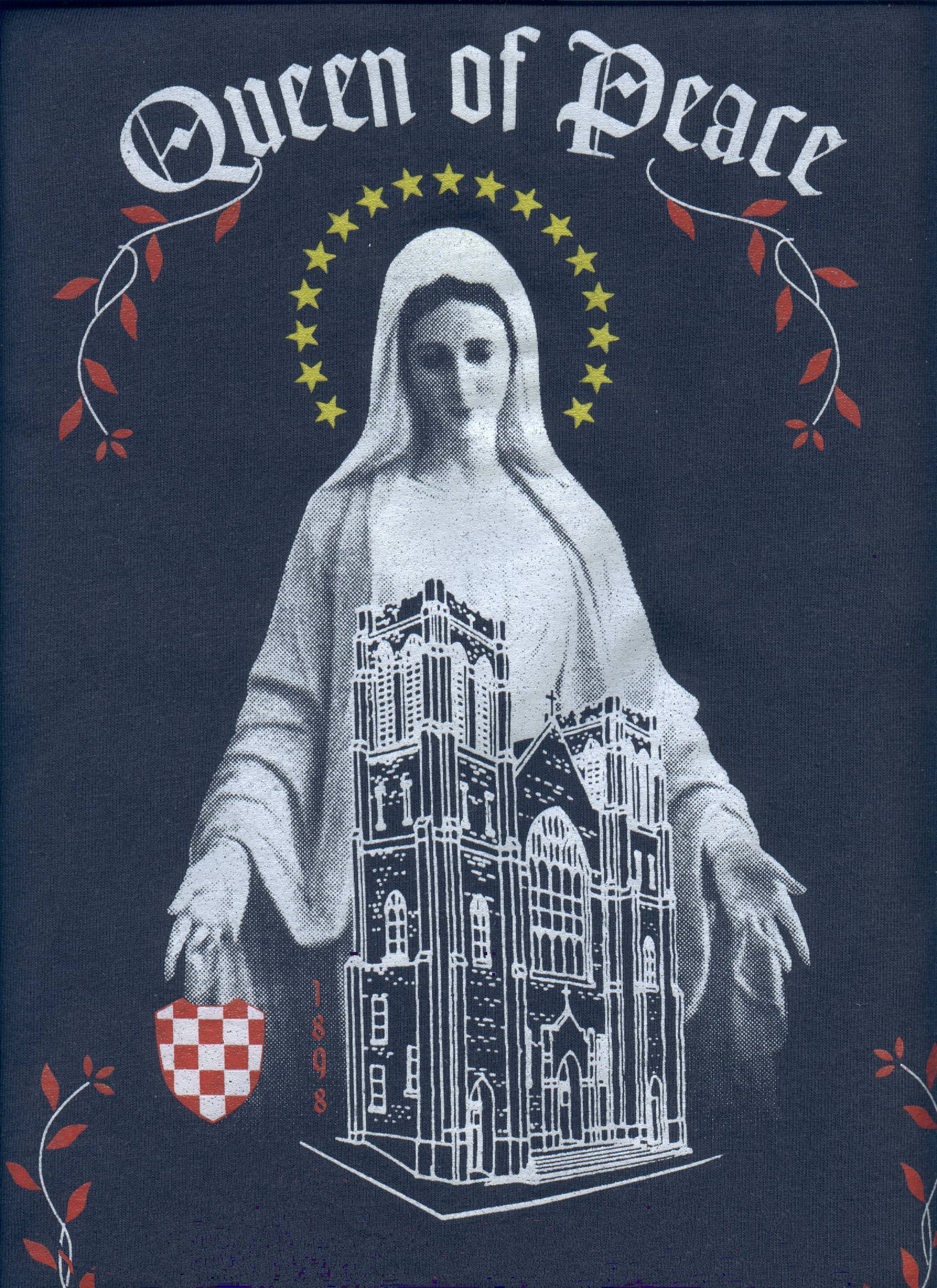
http://community.pennlive.com/cc/stmarys Rudy Pavlick |
| Remilitarization of the island of Vis / Remilitarizacija otoka Visa A public rally against remilitarization of the Island of Vis, called Our Heart and Mind for Hum! (Srce i um za hum!), will take place on April 7th, 2002 on Hum, the island’s tallest peak. The rally is organized to protest against the installation of radar on Hum, remilitarization of the Vis Island and the potential NATO presence on the island. An appeal to the Croatian public, currently being signed in the town of Komiza, Vis Island, states: We, the remaining inhabitants of the island of Vis, and all the signatories of this appeal, ARE ANNOUNCING TO THOSE WHO ARE TRYING TO SEAL OUR FATE THAT WE SHALL NOT ACCEPT ANY SOLUTION THAT WOULD IN ANY WAY RUIN OUR LAST CHANCE FOR SURVIVAL ON THIS ISLAND. THIS CHANCE WAS INCIDENTALLY BORN OUT OF OUR HALF-A-CENTURY LONG ISOLATION THAT RESULTED IN THE ISLAND’S UNPOLUTED ENVIRONMENT, OUR ONLY KEY FOR A BETTER FUTURE. Signing of the appeal to the Croatian and global public about preservation of the cleanest archipelago in the world will begin exactly at noon on April 7, 2002 at the center of the Adriatic archipelago, the top of Hum on the island of Vis. All friends of the environment are asked to join us in this event. Sincerely, The last inhabitants and friends of the Vis Island P.S. Public rallies will also be held on April 6th, 2002 in the auditoriums of the city of Vis and the town of Komiza. To find out more about this topic, please see: http://www.arhitekt.hr/easa/vismapping/forum/index.html (scroll to the bottom for English translation) or check out the island’s home page at: http://www.arhitekt.hr/easa/ Remilitarizacija otoka Visa Javni prosvjed protiv remilitarizacije otoka Visa, Sarce i um za hum! naziv je dogadjaja koji ce se desiti 7. 04. na najvecem brdu otoka Visa Humu. Organizira se javni prosvjed protiv postavljanja radara na Humu i prosvjed protiv remilitarizacije otoka Visa, a u svezi dovodjenja nato vojske na nas otok. Ovih dana u Komizi se potpisuje apel Hrvatskoj javnosti u kojem se porucuje: Mi preostali stanovnici otoka Visa, i svi potpisnici ovoga Apela PORUCUJEMO SVIMA KOJI BI HTJELI KROJITI NASU SUDBINU, DA NECEMO PRIHVATITI NIKAKVO RJESENJE KOJE BI NAM NA BILO KOJI NACIN UGROZILO POSLJEDNJU SANSU KOJU IMAMO A TO JE UPRAVO POSLJEDICA NASE POLUSTOLJETNE IZOLACIJE - CISTA I NEZAGADJENA PRIRODA KOJA JE JEDINI ZALOG NASE NADE U BUDUCNOST. Tocno u 12.00 sati 07. 04.2002.sa vrha Jadrana i centra jadranskog arhipelaga, sa brda Hum na otoku Visu pocet ce se s potpisivanjem poruke Hrvatskoj i Svjetskoj javnosti o ocuvanju najcisceg ARHIPELAGA Svijeta. Stoga molimo sve letace i prijatelje prirode da svojom nazocnoscu uvelicaju ovaj cin. Posljednji stanovnici i prijatelji otoka Visa. P.S. Javni skupovi na istu temu odrzat ce se 06.04. u dvoranama Grada Visa i Komize. Detaljnije informacije mozete naci na: http://www.arhitekt.hr/easa/vismapping/forum/index.html ili na web-stranici otoka Visa: http://www.arhitekt.hr/easa S E N S E S If this text was to explain the idea of SENSES - Easa 2002 we should return two years in the past. Funny, in the summer of 2000 we were pretty much lost about the ideas on what was our Easa meeting supposed to be. Still under the impressions of Greece and Malta, we were nothing more than a crazy bunch of enthusiasts with little experience and working habits. Instinctively, we looked for the place, without a theme or a goal to our quest. It was almost like stage managing of the film without a screenplay, director or actors... no budget. So all we could do was to look, smell and touch all the way down the Adriatic coast... we thought it to be the most natural way. That's how we found Vis... just like a dog finding a comfortable place on the porch, always returning to sit there. In September 2000. we started cooking - it seems like a good word for it - when you cook, as in design, you never know what is going to come out ... not until the very end. We gathered all the ingredients and placed them in the great pot of Vis - it was interesting because at first nothing seemed to fit. We tasted it along the way... adding things, stirring it... we deliberately hesitated with the main ingredient... scared and curious of mistakes that might occur. The temperature grew - cooks started loosing temper... we realized we depended on time. In need of rest, our regular activities on the island were a fresh energy supply... while cooling down for the next round, the idea revealed itself. Senses came to us like a ship in a fog - you can see the light and feel it's big, but you see nothing... again we waited. The most important thing is we often contacted local people. During long conversations we made true friendships. That's how it came to us : we have to do something that is of good use for the island... above all it has to be practical. You could say it's something within the EASA spirit - reacting on context to solve real problems. Liverpool 81' was a bit like that. We felt that lately we all became a bunch of happy tourists with Easa as an agency - it could be fun but it's not just. Which is why we decided to deal with real problems one by one and 1:1 scale. The locals liked the idea - over the time they became weary of stories that came from the outside. Our approach was to build, and talk about architecture as little as possible. The idea that Easa people should come to Vis and start building the island in exchange for sun and wine and bread and sea... was totally liberating. Vis is an empty house. The main idea is to make small changes enabling life and work on places that will demand it in the near future. On certain places we are invited to make predictions of the future needs through new programs: It is mostly abandoned army infrastructure, a net of leftover voids with bad memory throughout the island in need of repair and change into public and working facilities. In some cases the new needs are expressed by the locals: mostly in need of repairs and product design. On certain locations projects should consider wider context of the Adriatic and suggest programs to enhance agricultural and propose specific tourist potential of the island. However, it should be on a scale small enough to be executed in our time and cost possibilities. Every workshop has it's own theme according to context and preferences of the tutor. The task of participants is to be engaged with the conditions on the site and innovative in their approach. Common to all workshops is Vis and its sea environment, its energy that influences your body and senses. The method is 1:1 scale. The idea of 1:1 is based on radical relationship of scale to a process of design and architectural education. All ideas are tested in nature and real time. In present day education a possibility for this approach has almost disappeared. 1:1 is out of date and even more abstract physical models are often avoided. By solving design problems in real space / time we are getting hot architectural and artistic debate conflicting real and virtual, tactile and visual, natural and abstract scale. It puts us close with the performative side of architecture building with accessible material, using our own skills in a given space and time frame. Senses is dealing with our ability to use our body and its sensory potential. The bases for all knowledge comes through our senses. In time of absorbing virtuality we are all ready to embrace, our physical body follows as an invisible baggage of humanity. In terms of real body, space and time experience Easa 2002 is an attempt to (re)discover possibilities in an approach so simple and obvious that we usually neglect it in our work. Theoretical supplement for workshops should be the Mediterranean context of Vis as a far sea island a self contained system that never really depended on governments that claimed their authorities upon it. The idea of Mediterranean identities and their resistance to global changes is based on universality developed early in history. It enabled Mediterranean people of different ethnic and religious origin to develop a sense of community and a kind of cultural likeness. Primordial conditions of life by the sea was probably responsible for similar strategies all Mediterraneans have in intervening in their environment. When we were still developing the Senses thing we came up with an idea of a woman / man that will look after the people in workshop - not as a tutor but more as a host - a man of the land and senses. He would cook, prepare refreshments and appetizers, tell stories about island and its people. We called him Gruje after the local word for a man of fisherman skill and physical strength ... man of great passion for life and of libidinous energy. Gruje is concerned with the bodily - she keeps you in good biorhythm. We wanted Gruje to be personification of the senses idea. Gruje will also look after organisation of workshop through materials and tools, local contacts and schedule. He is as much important as tutor and that's why we'll choose Gruje's ourselves between the people that already spent some time on the island. Tutor is of equal vigour and energy but her/his aim is to activate your mental powers. She / he will help you to deliver your ideas and shape them in the final product. Tutor is not necessarily to be an educated architect although her / his life practice should respond closely to problems of real scale and time action with installations and performance. Tutor and Gruje should work as one - it is very important to match the couples. Some of the burning questions about the resistance of local communities and their economy to global changes, on the development of new lifestyles and the new urbanity of megalopolitan de-concentration which will effect low density areas, about taking an active role in the ecology of environment and that of the human body even the ecology of senses itself due to a devastating effect of visual culture; all of these are possible theoretical contexts of the Senses Easa 2002. But first of all we should try to live it. Senses is a long term project with Easa 2002 as an invitation for all of you to join us in the long-run. We strongly believe that the way of living and working that we are going to experience on Vis this summer could be an example of future life on the island and a choice for its new population. Welcome all of you. easacroatia@yahoogroups.com Distributed by www.CroatianWorld.net. This message is intended for Croatian Associations/Institutions and their Friends in Croatia and in the World. The opinions/articles expressed on this list do not reflect personal opinions of the moderator. If the reader of this message is not the intended recipient, please delete or destroy all copies of this communication and please, let us know! |
   |
| Wonderful, enlightening, and educational discussion which I didn't get to read until now due to Easter preparations. I grew up in Miami (where my father still lives) and love it there, too. Great city...however crime-ridden it is! Much of what you both (Davor and Adrianna) say is very true. How to change it is another story. I think we all do what we can, on however a small scale that may be. I am an elected school board member so I try on a daily basis to encourage our school district to begin foreign language instruction at early ages for our children. What I am finding is that everyone (here) agrees with me, but money----as usual----is a huge obstacle. In America, we depend on the taxpayers for monies to run our schools and we (my school district/community) have a huge levy ($$$) on the ballot for May because our state (OH) supposedly has run out of money for education. It is very frustrating! The diversity issue and the racial issues are ones with which we contend on a daily basis. Educated people fight the system and the social mores but again, it is difficult to see any major progress so we can only do what we can do....inch by inch, person by person. True, there are many "ugly Americans" but then again, there are many wonderful people who live here who are educated and compassionate sorts who try to buck the system. I guess what I would like to say is that there are social ills and political problems and economic sores in all countries and if we all can take the time to get to know one another on a person by person basis, then we will be able to break through those barriers and find that we have more in common than we may think. All I can say is that people had better start getting along in the future or we won't have anything left of our world. It's a scary place right now, as we all know. I understand what you say about perceptions of America politics/military might and I agree with most of it. Again, how to change it is mind-boggling. So I continue to dance kolos and play tamburitza music. I believe that Croatian people not only have a very rich and beautiful folkloric heritage but that part of the reason that this heritage has been so much a part of everyday life, is that it truly is an escape from the realities of life. Melissa Pintar Obenauf Distributed by www.CroatianWorld.net. This message is intended for Croatian Associations/Institutions and their Friends in Croatia and in the World. The opinions/articles expressed on this list do not reflect personal opinions of the moderator. If the reader of this message is not the intended recipient, please delete or destroy all copies of this communication and please, let us know! |
| |
| My family and I are interested in renting a house on the Croatian coast this summer, probably around July 15 to August 15, maybe a little bit longer. We are mainly interested in staying in Brac (Bol or surrounding areas) and/or the Makarska Riviera. We are also open to hearing about houses for rent in other areas on the southern Dalmatian coast (Split and below). If anyone has a house to rent, knows of someone who rents houses, or can refer us to useful resources (such as websites, agencies, newspapers, etc.), it would be greatly appreciated! Hvala! Katarina Milicevic kmilicevic@hotmail.com Distributed by www.CroatianWorld.net. This message is intended for Croatian Associations/Institutions and their Friends in Croatia and in the World. The opinions/articles expressed on this list do not reflect personal opinions of the moderator. If the reader of this message is not the intended recipient, please delete or destroy all copies of this communication and please, let us know! |
| |
| CONFERENCE THEME: "Cultural Diversity for Sale: Global Economies of Art and Entertainment" CONFERENCE DATES, LOCATION: September 20-21, 2002, Hotel Roanoke, Roanoke, VA Scholarly papers are invited from any academic discipline. Send a 500-word abstract and short CV to conference organizer Janell Watson, rjwatson@vt.edu. Electronic submissions only, please. Submission deadline: June 1, 2002. WEB SITE: www.fll.vt.edu/watson/symposium ABOUT THE TOPIC: While globalization enhances cultural diversity by bringing together people from many countries and traditions, it also threatens cultural diversity by creating an international mass culture through film, television, and advertising. This paradox has become familiar in globalization studies. Economic considerations often drive both the migration of people and the spread of the new mass culture. What is the relationship between economics and culture? What is the place of art and cultural traditions in a world dominated by a market-driven global mass media? Must cultural diversity offer itself for sale, in order to survive? The ever accelerating pace of globalization in what seems to be all spheres further complicates the already daunting task of drawing intelligent connections between economics and culture. Culture, high and low, seems to be but one more product circulating unevenly among rich and poor, first world and third world, North and South, East and West. Cultural products, along with their producers, marketers and consumers, are marked by differences of many kinds: gender, class, race, ethnicity, nationality, religion, political affiliations, sexuality. The global economy is itself multiple: there are global economies of goods, services, and equities, but there are also global economies of music, film, plastic and performing arts, ideas, language, fashion, food, lifestyle, tourism, sexuality, sports, psychic structure, belief, and even environment (i.e., the trade in pollution vouchers). Academic disciplines likewise comprise global economies, involving transnational exchanges of scholars and publications (print and electronic) which rely on a global circulation of funding. Cultural difference informs each of these economies. Papers are invited which address the relationship between the global economy and cultural difference in specific areas of art, literature or culture, from a contemporary or historical perspective. KEYNOTE SPEAKERS: Jean-Pierre Bekolo (Cameroonian Filmmaker), Steven Feld (Music and Anthropology, Columbia University), Amitava Kumar (Postcolonial studies,Penn State), Jordan Sand (Japanese History and Culture, Georgetown), Rick Mattioni (News Director, WVTF public radio), Frederick Thomas (Exec. VP and General Manager, MHz Networks) SPONSORS: Virginia Foundation for the Humanities, Virginia Tech (Humanities program, Center for Interdisciplinary Studies, College of Arts and Sciences Humanities Symposium Award, Department of English, Department of Communication Studies, University Honors Program, Office of Multicultural Affairs) --------------------------------------------- Dr. Janell Watson Department of Foreign Languages & Literatures Virginia Tech 315 Major Williams Hall Blacksburg, VA 24060 Phone: (540) 231-9009 Fax: (540) 231-4812 Email: janell.watson@vt.edu Distributed by www.CroatianWorld.net. This message is intended for Croatian Associations/Institutions and their Friends in Croatia and in the World. The opinions/articles expressed on this list do not reflect personal opinions of the moderator. If the reader of this message is not the intended recipient, please delete or destroy all copies of this communication and please, let us know! |
| |
| Please join theHuman Rights Watch University chapter of USC on April 3 at 5 PM for a screening of "Living Afterwards," a documentary about 3 Bosnian women. CCS member Terree Bowers will be on hand to speak about his work with an international tribunal. *** WHAT: A screening of Living Afterwards, a documentary chronicling the emotional healing of 3 young Bosnian women after the atrocities committed by Serb Chetniks in the early nineties, followed by a discussion of war tribunals led by Terree Bowers, an attorney who has worked for the International Criminal Tribunal for the former Yugoslavia from 1994-1998. WHO: Presented by Human Rights Watch University, the Unruh Institute of Politics, WSA, GLBTA, and the Initiative to Study Political Violence WHEN: Wednesday, April 3, 5 PM WHERE: USC Campus, Taper Hall 301 Admission is FREE Parking at USC is $6. Use Lot #3, enter on Figueroa. Distributed by www.CroatianWorld.net. This message is intended for Croatian Associations/Institutions and their Friends in Croatia and in the World. The opinions/articles expressed on this list do not reflect personal opinions of the moderator. If the reader of this message is not the intended recipient, please delete or destroy all copies of this communication and please, let us know! |
| |
| Prije nekoliko dana prof. dr. Mario Essert (Strojarski fakultet, Zg) odrzao je divno predavanje o Bibliji na CDu, koja bi trebala uskoro izaci u izdanju Krscanske sadasnjosti. Radi se o fenomenalnoj interkativnoj Bibliji na hrvatskom jeziku, sa svim mogucim pomagalima za pretrazivanja i konkordancije koja mozete zamisliti. Ovo je vec treci pokusaj prof. Esserta objavljivanja Biblije na elektronskom mediju: prvi 1993, drugi 1997, i evo sada 2002. Sva su ova pregnuca u vezi s dolascima Pape u Hrvatsku. Za upite (koji bi mogli pomoci i brzem objavljivanju CDa obratite se na redakcija@glas-koncila.hr Lijep pozdrav, Darko Zubrinic http://www.hr/hrvatska/Croatia-HCS.html Distributed by www.CroatianWorld.net. This message is intended for Croatian Associations/Institutions and their Friends in Croatia and in the World. The opinions/articles expressed on this list do not reflect personal opinions of the moderator. If the reader of this message is not the intended recipient, please delete or destroy all copies of this communication and please, let us know! |
| |
|
Aque & Terre 1/2002
|
| Croatian Constellation |
|
|
| Popular Articles |
|
Except where otherwise noted, content on this site is licensed under a Creative Commons Attribution License. |




 full story
 printer version