Search


Advanced Search
Nenad Bach - Editor in Chief

Sponsored Ads
 »  Home  »  Authors  »  Nenad N. Bach
Nenad N. Bach

Articles by this Author
(Page 394 of 452)   « Back  | 392 | 393 | 394 | 395 | 396 | Next »
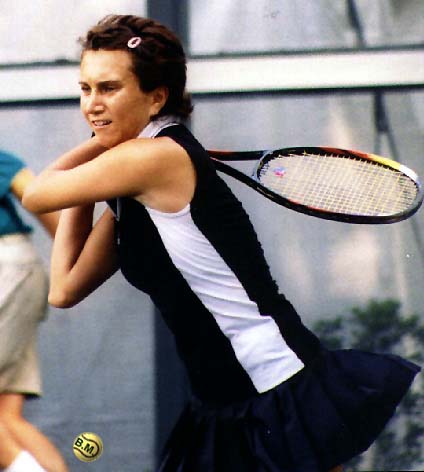
» (E) Iva Majoli, Croatia WINS Tennis Family Circle Cup
By Nenad N. Bach | Published 04/21/2002 | Sports | Unrated


IVA WINS

Tennis-Family Circle Cup final result

CHARLESTON, South Carolina, April 21 (Reuters) - Final result at the $1.224 Family Circle Cup WTA tennis tournament on Sunday (prefix denotes seedings):

Iva Majoli (Croatia) beat Patty Schnyder (Switzerland) 7-6 (7-5) 6-4


» (E) Majoli Knocks Off Schnyder To Win Family Circle Cup
By Nenad N. Bach | Published 04/21/2002 | Sports | Unrated
 
By BRUCE SMITH 
.c The Associated Press 
 
CHARLESTON, S.C. (April 21) -- Iva Majoli became the lowest-ranked player to win a top-tier tournament when she defeated Patty Schnyder 7-6 (7-5), 6-4 Sunday for the championship of the Family Circle Cup, her first singles title since the 1997 French Open. 
 
The match was also the first top tier women's final featuring two unseeded players, with Majoli ranked 58th in the world and Schnyder 30th. 
 
Majoli also became the first unseeded player to win the Family Circle Cup, earning $182,000 in the $1.2 million tournament at the Tennis Center at Daniel Island. Majoli had missed almost a year on the tour after undergoing shoulder surgery in 1999. 
 
"It's been a great week. I mean, it feels so good to win again after like a couple of years,'' Majoli said. 
 
Upsets were the rule during the Family Circle, which saw only two seeded players reach the semifinals. 
 
Schnyder defeated three top 10 players, eliminating No. 10 Amelie Mauresmo in the second round, No. 7 Serena Williams in the quarterfinals and No. 1 Jennifer Capriati in Saturday's semifinals. 
 
"I couldn't expect it from me to play a match like a day before or two days ago,'' Schnyder said. "I thought I could win the whole thing, but I lived so many great moments during the week and it's been the best week of my life.'' 
 
"I think there was a lot more pressure on her after beating all the top seeds to win,'' said Majoli, who beat Schnyder for the first time in five matches. "It's a very big difference to play under all that pressure.'' 
 
Sunday's match on the green clay of stadium court, where a thermometer read 114 degrees, featured nine service breaks in the first set. In the tiebreaker, Majoli built a 5-1 lead, but Schnyder closed within 6-5 before sending a ball long, giving Majoli the set. 
 
Schnyder broke Majoli in the next game to take the early lead in the second set. But Majoli broke back in the second game and, leading 5-4 in the set, surrendered only one point in breaking Schnyder in the final game to seal the victory. 
 
Saturday's loss cost Capriati her No. 1 ranking. Venus Williams, who did not play at the Family Cup, regains the top ranking after just over a month. 
 
The lowest-ranked player ever to reach the final of a top-tier tournament was Capriati, who was unranked when she lost to Martina Navratilova at the Family Circle in 1990. 
 
The tour was restructured in 1980 to feature a series of top-level events with bigger names and bigger purses. There are currently nine Tier I events on the Sanex WTA Tour. 
 
Before Sunday, the lowest-ranked player to win a top-tier tournament was Lisa Bonder, who was No. 54 when she won the Tokyo Queen's Classic back in 1983. 
 
04/21/02 17:24 EDT 
 
Copyright 2002 The Associated Press. 
 
Distributed by www.CroatianWorld.net. This message is intended for Croatian Associations/Institutions and their Friends in Croatia and in the World. The opinions/articles expressed on this list do not reflect personal opinions of the moderator. If the reader of this message is not the intended recipient, please delete or destroy all copies of this communication and please, let us know! 
» (H) NAGRADA von Coudenhove Kalergi BISKUPU FRANJI KOMARICI
By Nenad N. Bach | Published 04/21/2002 | Culture And Arts | Unrated


OBAVIJEST O DODJELI NAGRADE COUDENHOVE KALERGI
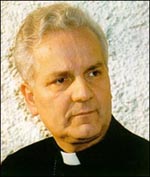
BISKUPU FRANJI KOMARICI
U Becu 12. travnja 2002.

Bishop Komarica honored with Richard von Coudenhove Kalergi Award

U sklopu proslave 80. obljetnice Medjunarodne paneuropske unije., koju je svojim programatskim clankom iz 1922. Paneuropa - ein Vorschlag i vizionarskom programatskom knjigom Paneuropa iz 1923. utemeljio Richard von Coudenhove Kalergi, ove je godine Zaklada Coudenhove Kalergi dodijelila svoju nagradu banjoluckomu biskupu Franji Komarici.
Proslava se odrzala u Becu i Bratislavi od 12. do 14. travnja 2002., a pocela je 12. travnja u 19h u svecanoj dvorani Haus der Industrie na Schwarzenbergplatzu dodjelom nagrade Coudenhove Kalergi. Ta je nagrada dosad uglavnom bila dodjeljivana najuglednijim europskim politicarima, poput kancelara Helmuta Kohla ili ministra Aloisa Mocka, za zasluge u procesu europske integracije, pa je odluka da se ove godine dodijeli duhovnoj osobi bila izuzetna i znakovita, tim vise sto se radi o jubilarnoj godini.
Nagradu su u ime Zaklade urucili bivsi austrijski ministar vanjskih poslova dr. Alois Mock, "ministar koji je uveo Austriju u Europsku uniju" i koji od prosle godine predsjedava Zakladi, i g. Marco Pons, potpredsjednik Zaklade. Ona je biskupu Komarici dodijeljena kao covjeku koji je svjedocio o najvisim europskim i krscanskim vrijednostima u dijelu Europe koji je u doba rusenja zidova i ujedinjavanja Europe u prethodnom desetljecu bio ugrozen najgorim zlocinima protiv covjecanstva; kao nosiocu duhovnih vrijednosti, koji je svojim zivotom, izlazuci ga neustrasivo smrtnoj pogibelji, svjedocio o dostojanstvu svake ljudske osobe, o zalaganju za sve zgazene i ugrozene ljude, i o djelatnoj ljubavi prema bliznjemu, pa i neprijatelju, i usred rata i vrtloga zlocina.
Na dodjeli je laudatio (pohvalni govor) laureatu drzao g. Roy Gutman, urednik vanjskopoliticke redakcije Newsweeka, dobitnik Pulitzerove nagrade i autor knjige A Witness of Genocide o genocidu u ratu protiv Bosne i Hercegovine i Hrvatske. U govoru je istakao strahovite okolnosti u kojima je djelovao biskup Komarica u Banjoj Luci i naveo zlocine lokalnih vlasti. Govorio je o visokim moralnim nacelima biskupa i hrabrosti s kojom se suocavao sa smrtnim opasnostima u ratu. Kao ocevidac svjedocio je o biskupovu nepristranu zalaganju za sve ugrozene, stradale i gazene, o njegovoj borbi protiv progona i za pravo svih - u Banjoj Luci osobito ugrozenih Hrvata i Muslimana - na svoj zavicaj. Izrazio je svoje dozivljaje razocaranja slabim i sporim odgovorom medjunarodne javnosti na dogadjaje, i istakao znacenje koje je biskup Komarica imao kao "nas heroj" u borbi za ljudska prava u strasnom vremenu genocida.
U prepunoj svecanoj dvorani govorio je potom na izvrsnom njemackom i sam biskup Komarica. Zahvalio se na nagradi i istakao da ju prima u ime svih koji su stradali, kojima su prava bila i jos su uvijek gazena, svih za koje nam je duznost brinuti se i pomoci im. Govorio je o Europi, procesu njena ujedinjavanja, i o nacelima na kojima se to ujedinjavanje mora temeljiti ako polazimo od postovanja dostojanstva ljudske osobe. Govorio je o patnjama ljudi u svojoj biskupiji, o svima stradalima u ratu i prognanima i o njihovim potrebama. A zatim o svojim i nasim duznostima i zadatcima i o najvisim vrednotama koje nas u zivotu i javnome radu trebaju voditi.
Pri urucenju nagrade, kao i nakon govora biskupa Komarice, cijela se dvorana – vise stotina uglednih predstavnika iz preko dvadesetak zemalja Europe, te iz Japana - digla na noge i dugim odusevljenim pljeskom izrazila svoje postovanje biskupu, i svoje zadovoljstvo odabirom ovogodisnjega laureata. Osjecalo se da u tim velikim trenutcima za nas Paneuropa odaje priznanje jednomu hrvatskom biskupu iz Bosne i Hercegovine koji za nju predstavlja vjerodostojnoga i herojskoga svjedoka njihovih najvisih vrijednosti, najvisih vrijednosti krscanstva i Europe.
Na godisnjoj skupstini Medjunarodne paneuropske unije 13. travnja u Bratislavi u zgradi staroga pozunskoga sabora, pod pokroviteljstvom slovackoga Predsjednika Rudolfa Schustera i uz njegovo sudjelovanje, te na jubilejskoj svecanosti 14. travnja u Hofburgu u Becu, na kojoj su svecani govornici bili bivsi njemacki kancelar Helmut Kohl, "kancelar ujedinjenja Njemacke koje je omogucilo dalje ujedinjavanje Europe", austrijska ministrica vanjskih poslova gdja Benita Ferrero Waldner i predsjednik Medjunarodne paneuropske unije dr. Otto von Habsburg, bio je biskup Franjo Komarica prisutan kao pocasni gost. 
Na dan jubilejske svecanosti, prije programa u Hofburgu, svetu je misu u beckoj katedrali Sv. Stjepana za cijelu Medjunarodnu paneuropsku uniju i prisutne vjerike vodio biskup Komarica, dok su katedralni zupnik i prof. Franjo Topic iz Sarajeva koncelebrirali. Citanja i molitve vjernika bile su na nizu europskih jezika: njemackom, francuskom, talijanskom, hrvatskom, madjarskom, slovenskom, a sredisnji je dio liturgije bio na latinskom. Propovijed biskupa Komarice kasnije je u svom svecanom govoru u Hofburgu dr. Otto von Habsburg nazvao "jednom od najljepsih antologijskih propovijedi u novijoj povijesti Crkve".

Iako ovo kratko izvjesce stize prekasno za dnevne listove, vjerujemo da moze jos biti od koristi tjednicima, te specijaliziranim radijskim i televizijskim programima.
Hrvatska paneuropska unija procjenjuje da bi bilo vrlo pozeljno da tako velik dogadjaj kojim je odlikovan jedan hrvatski biskup iz susjedne nam Bosne i Hercegovine bude povodom za razgovore s biskupom Franjom Komaricom i za razgovore o njem, o kontekstu njegova djelovanja i o nacelima i vrednotama za koje se zalaze, u primjerenim glasilima i programima. Nadamo se da bismo vam uskoro mogli pomoci i u nabavljanju snimljenoga materijala s proslave 80. obljetnice Medjunarodne PEU u Becu i Bratislavi, kao i sa dodjele nagrade Coudenhove Kalergi biskupu Komarici.


Iz Hrvatske paneuropske unije, 
Jurisiceva 1a, 10000 Zagreb, 
tel. 4813451, 4813452, fax 4813453; 
e-mail: hpeu@zg.hinet.hr (hpeu@zg.tel.hr).

Predsjednik HPEU i potpredsjednik MPEU
Prof. dr Mislav Jezic

» (H) Tarbuk laureat "Slavenskoga"
By Nenad N. Bach | Published 04/21/2002 | Culture And Arts | Unrated


The history of croatian music, 100th anniversary of the composer Josip Stolcer Slavenski
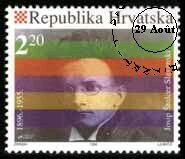
Priznanje pripalo Mladenu Tarbuku za skladbu "Sanjaci" 
nadahnutu stihovima Nikole Sopa / Bogata godisnja zetva 
hrvatske glazbe - cak 59 praizvedbi 

ZAGREB, 10. travnja - Vjesnikova vec tradicionalna nagrada 
"Josip Stolcer Slavenski" za nova djela hrvatskih skladatelja, 
praizvedena u prosloj 2001. godini pripala je Mladenu Tarbuku 
za njegov vokalno-instrumentalni ciklus "Sanjaci", praizveden 
u listopadu na manifestaciji Medjunarodne glazbene tribine u 
Puli. Djelo je pod ravnanjem skladatelja izvela koloraturna 
sopranistica Lidija Horvat-Dunjko uz instrumentalni sastav 
"Cantus".
Ziri koji je radio u sastavu Tonko Ninic (predsjednik), Erika 
Krpan, Visnja Pozgaj, Frano Parac i Nenad Turkalj nije imao 
nimalo lak zadatak, jer je hrvatska glazba prosle godine 
obogacena cak s 59 novih djela orkestralne, scenske, vokalne i 
komorne glazbe. Tolikom broju praizvedbi pridonijela je i 
cinjenica sto se prosle godine odrzavao i zagrebacki Biennale 
suvremene glazbe, pa su domaci autori uz redovite koncertne 
repertoare i manifestaciju koja se svake godine odrzava u Puli 
imali dovoljno prilike za plasman svojih novih djela.
Ziri je birao kandidate u tri kruga glasovanja, od cega je u 
prvi krug uslo cetrnaest skladatelja: Zeljko Brkanovic (dvije 
skladbe), Zoran Juranic, Vjekoslav Njezic, Pavle Despalj, Ivo 
Josipovic, Igor Kuljeric, Olja Jelaska, Mladen Tarbuk, 
Dubravko Detoni, Miroslav Miletic, Davorin Jagodic, Kresimir 
Seletkovic, Berislav Sipus i Pero Gotovac.
U drugome krugu u uzi su izbor usli Berislav Sipus s ciklusom 
klavirskih preludija "Noci", Igor Kuljeric s Koncertom za 
marimbu i orkestar i Mladen Tarbuk sa svojim "Sanjacima", a 
pored njih jos Pavle Despalj s Koncertom za violoncelo i 
orkestar, Vjekoslav Njezic sa skladbom "Traces" za orkestar i 
elektroniku, Dubravko Detoni za elektronsku skladbu "Tajna", 
Pero Gotovac za zborsku skladbu "Misa Delmata" i Ivo Josipovic 
za "Tubu ludens" u izvodjenju tube i orkestra. U zavrsnome, 
trecemu krugu glasovanja lauratom je proglasen Mladen Tarbuk 
za skladbu "Sanjaci", i to ce djelo biti izvedeno 9. svibnja 
na 29. muzickom memorijalu "Josip Stolcer Slavenski" u Cakovcu 
u dvorani tamosnjeg 
Obrazlozenje zirija: Mladen Tarbuk (1962.) godinama se vec u 
hrvatskoj glazbenoj javnosti istice ne samo kao plodan i 
darovit skladatelj suvremenih nadahnuca, nego i kao dirigent i 
organizator. Zasluzan je za sustavno oformljenje i kvalitetan 
uspon Simfonijskog puhackog orkestra Hrvatske vojske, a 
nedavno je postavljen i za intendanta Hrvatskoga narodnog 
kazalista u Zagrebu. Kao skladatelj gotovo je izvodjeniji u 
inozemstvu na brojnim manifestacijama suvremene glazbe, a i 
dobitnik je brojnih inozemnih nagrada i priznanja.
Snovidjenja Nikole Sopa 
Za svoje "Sanjace" nadahnuo se ciklusom jednoga od velikih 
hrvatskih pjesnika 20. stoljeca, Nikole Sopa, nazvanog "divnim 
katolickim pjesnikom tragicne sudbine". Radi se o 
produhovljenim stihovima koji izrazavaju snovidjenja i koji su 
upravo svojom metafizickom produbljenoscu navela skladatelja 
da na sjajan nacin osebujno slozenim instrumentalnim sastavom 
od osamnaest glazbenika zvukovno docara atmosferu te poezije, 
pa je i u kritikama zapazeno da mu je u tome pogledu djelo bez 
usporedbe u dosadasnjoj hrvatskoj glazbi.
Osim toga, skladba je uvjetovana suradnjom jedne iznimne 
pjevacice, sopranistice Lidije Horvat-Dunjko, koja je u stanju 
ispjevati vrtoglave koloraturne visine sve do trecega A; 
uposlivsi neuobicajeni komorni instrumentarij skladatelj je 
pronalazio iznenadjujuce, veoma apartne zvukovne kombinacije, 
suzivljene glasu te sjajne pjevacice. 
Nenad Turkalj (Vjesnik, Cetvrtak, 11. travnja 2002.)

Tarbuk laureat "Slavenskoga"
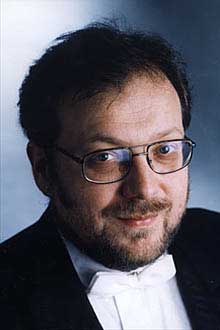

Mladen Tarbuk (1962.) diplomirao je dirigiranje i kompoziciju na zagrebačkoj Muzičkoj akademiji i Visokoj glazbenoj školi u Grazu, a zatim se je usavršavao na bečkoj Visokoj glazbenoj školi.
Njegova dirigentska djelatnost proteže se na operu i na koncertni podij. Za interpretaciju Janaček Ravnao je mnogim uglednim orkestrima poput Državne filharmonije iz Hallea, orkestrom Državne opere iz Praga, Simfonijskim orkestrom Graza, te je gostovao u Njemačkoj. Češkoj, Italiji, Austriji, Rusiji, Madjarskoj, Belgiji i Sloveniji. Suradjivao je s mnogim uglednim interpretatorima dnašnjice".

U razdoblju od 1993.-2000. vodio je Simfonijski puhački orkestar Hrvatske vojske, koji se je pod njegovim ravnanjem razvio u jedinstven sastav u ovome dijelu Europe. Od 1999. djeluje i kao prvi dirigent Simfonijskog orkestra HRT, s kojim je, uz značajna gostovanja (München, Ljubljana) i redovite koncerte u okviru njihovog Majstorskog ciklusa, snimio niz vrijednih i zaboravljenih djela hrvatske glazbene baštine. Takodjer se bavi i redigiranjem velikih djela baštine, pa je tako rekonstruirao drugi čin Papandopulove "Sunčanice", te redigirao i postavio na scenu HNK-a u Zagrebu izvornik Zajčeva "Nikole Šubića Zrinjskog".

Premda je težište njegova opusa u komornoj glazbi, autor je niza simfonijskih ostvaraja (Stara hrvatska glazba, Hrvatska suita, Zildjian Concerto itd.). Osobito je zapažen njegov rad na komornim oblicima glazbenoga kazališta (Franz Mileni, Martyre d'un jongleur). Dobitnik je prvih nagrada na 22. medjunarodnom natjecanju za zborsku skladbu u Talosi i "Dr. Ernst Vogel" (1993.) u Stockerau, Nagrade "Stjepan Šulek" (1994.), te dvaju Porina (1998. i 2001.). Skladbe su mu se izvodile na mnogim uglednim festivalima suvremene glazbe (World Music Days Manchester, Moskovska jesen, Gaudeamus Amsterdam, Wien modern, Europamusicale München, Trieste prima, Musikprotokoll Graz, Muzički biennale Zagreb itd.), te snimane za fonoteke ORF-a, BR-a, BBC-a, RAI-a, NR-a i HRT-a. Snimio je svoj Zildjian Concerto za udaraljke i orkestar za HoneyRock.
Na Muzičkoj akademiji u Zagrebu djeluje kao docent glazbene teorije.


Op-ed

Mladen Tarbuk je isto i netjak (ili bratic, ili tako nesto, ali u rodu) nase Hilde Foley.

nb

» (E) IVA MAJOLI IN TENNIS FINAL ON SUNDAY 1 PM WCBS
By Nenad N. Bach | Published 04/20/2002 | Sports | Unrated

IVA MAJOLI

Croatian tennis player, Iva Majoli reached final at the Family Circle Cup in Charleston, South Carolina. The tennis match will be televised on April 21st at 1 PM on WCBS. Majoli will play against Swiss player Patty Schnyder. 


Age: 20 
Height: 5-foot-8
Weight: 130 
Plays: Right-handed 
Career Titles: 7

Became the first Croatian to win a Grand Slam title by winning the French Open, handing Martina Hingis her first loss of the season; reached the quarterfinals in 1996 in only her second Australian Open appearance, but lost in the first round last year; will be playing in her first tournament of the year; captured three singles titles in 1997 and finished the season ranked No. 6 in the world; reached the quarterfinals at Wimbledon and lost to eventual quarterfinalist Sandrine Testud in the second round at the U.S. Open; since winning in Paris, has nine early round losses.

» (E) Croatian sensation Kori Hlede to Play for NY Liberty
By Nenad N. Bach | Published 04/19/2002 | Sports | Unrated

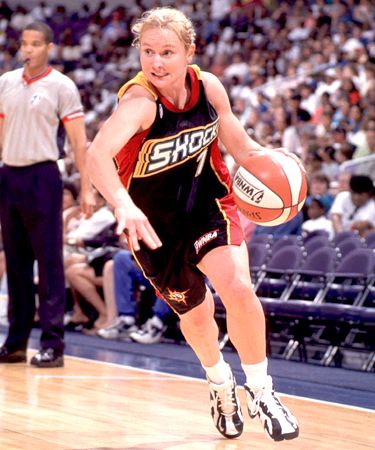
Ready to Shock!
 Croatian rookie sensation Korie Hlede stands alone on the wing as she prepares to take it to the hole.
Photo: Mitchell Layton

Croatian rookie sensation Korie Hlede


April 18, 2002

Utah Gets 14th Overall Pick From NY
By THE ASSOCIATED PRESS

SALT LAKE CITY (AP) -- The Utah Starzz acquired another first-round WNBA
draft choice Thursday, trading Croatian guard Korie Hlede to the New
York Liberty for the 14th overall selection.

The move should open additional playing time for Marie Ferdinand, the
sharp-shooting player Utah took in last year's draft.

``We feel like this is a win-win situation,'' Starzz coach Candi Harvey
said. ``They receive a veteran player and we feel like we will get a
good player with the 14th pick, a player we think we can develop.''

Hlede averaged 8.4 and 2.4 assists during three seasons in Utah. She
played for Detroit in 1999.

Stop and Pop
Korie Hlede, Croatian sensation prepares to show her prowess from the outside
.
Photo: Norm Perdue

» (E,H) Follow the mouse - Slijedi misa
By Nenad N. Bach | Published 04/19/2002 | Entertainment | Unrated
» (E,H) Test Your reflexes - Testiraj svoje reflekse
By Nenad N. Bach | Published 04/19/2002 | Entertainment | Unrated

Test your Response time!

Testiraj svoje reflekse!

Click on "Start" first, and wait until the background color changes. As soon as it changes, hit "stop"!
Kliknite "start" i cekajte dok se pozadina u kutiji ne promijeni.Cim se promijeni kliknite "stop"


» (E) Austrian Cultural Center
By Nenad N. Bach | Published 04/19/2002 | Culture And Arts | Unrated
 
This article appeared in the NY Times' Arts Section on Sunday, April 14. 
It is a great exposition of what other countries do to promote their 
culture in NYC and shows an example of what I have been urging Croatia 
should do. John Kraljic 
 
Op-ed 
Our plea is unison. We need Croatian Cultural Center in major world cities. With substantial budgets and qualified people working in it. 
Nenad Bach 
 
April 14, 2002 
Showing the Flag of Culture (or Not) 
By MICHAEL Z. WISE 
WTH a steeply raked glass facade that appears to fall like the blade of 
a guillotine, the Austrian Cultural Forum is one of the most striking 
buildings to have gone up in New York in decades. It's also a dramatic, 
24-story, $29 million embodiment of how nations use culture to polish 
their image. 
Cultural prestige has always followed troops and trade as a measure of a 
nation's influence. Even when once-great powers lose political and 
economic dominion, they still yearn to hold sway in the cultural realm. 
Austria is a prime example: the collapse of the Austro-Hungarian Empire 
in 1918 may have relegated the surviving Austrian Republic to the bush 
leagues of international politics, but fervid promotion of its artistic 
heritage has enabled this small Alpine nation to retain cultural renown. 
For decades Austria has bankrolled national treasures like the Vienna 
State Opera, the Vienna Philharmonic and the Salzburg Festival. Now, on 
Friday, it will dedicate its towering new American outpost, designed by 
the Austrian-born architect Raimund Abraham. The building, on 52nd 
Street between Madison and Fifth Avenues, contains galleries, a library 
and a theater as well as offices. But it doesn't stand alone; it's only 
the latest in a flurry of gestures by foreign nations to show their 
cultural bona fides in New York. 
Several countries are opening cultural centers to capture the 
imagination of the American public and reflect glory back home; still 
more are lending state support for performances and exhibitions 
involving their native artists at American institutions. 
Yet the phenomenon is mostly one-sided. While many nations have embraced 
cultural diplomacy and made New York the focal point of it, the United 
States has been reluctant to use art to communicate American objectives 
overseas at a time of broad American reach. The end of the cold war and 
the global scope of satellite broadcasting and the Internet have helped 
the United States attain not only vast new political power but also an 
increasingly dominating cultural influence that both attracts and 
repels. And many officials believe that popular culture can be a potent 
weapon in the American arsenal, a view cannily underlined by Secretary 
of State Colin Powell's appearance on MTV in February in which he 
defended the American campaign against terrorism before a worldwide 
audience of young people. But American politicians have shown little 
appetite for using state auspices to export a broader range of American 
arts than is available through market incentives. 
The opposite is happening in Europe. Denmark, Finland, Iceland, Norway 
and Sweden have helped finance construction of the new six-story 
Scandinavia House on Park Avenue, run by a nonprofit foundation as a 
kind of permanent World's Fair pavilion for Nordic art exhibitions, 
concerts, lectures and films. Spain will open a $19 million arts center 
on East 49th Street. The Italian Cultural Institute, now operating out 
of a stately but shabby 1919 mansion on Park Avenue, plans to move by 
the end of 2003 to more up-to-date Midtown premises, where it can 
greatly expand its programming. 
The lavishness of these facilities attests to their home countries' 
belief in the importance of culture as a tool of diplomacy. "It's a 
powerful way for governments and nations to gain positive attention," 
says Curtis Barlow, director of cultural affairs for Canada's Department 
of Foreign Affairs and International Trade. "At the senior level of 
government, there is a growing recognition of the utility and importance 
of this kind of work." 
Foreign diplomats and arts administrators alike say that using culture 
for international understanding has taken on heightened significance. 
"Since Sept. 11, people are more conscious of the fact that we live in 
one world and that culture can help bridge our differences," said Karen 
Brooks Hopkins, president of the Brooklyn Academy of Music, one of many 
New York institutions that benefit from foreign governments' promotional 
efforts. 
Schuyler Chapin, the New York City Commissioner for Cultural Affairs 
from 1994 to 2001, said: "Propaganda has nasty connotations as a word, 
but putting a country's strengths and cultural resources in front of 
people is a very persuasive argument about the legitimacy and general 
artistic energy that may be found in country X. New York is in many ways 
the cultural capital of the Western world, so it's natural that 
countries wishing to represent themselves from the standpoint of 
cultural life would gravitate to this city." 
New York has been a stage for a wealth of foreign-supported cultural 
initiatives in the last two years. A partial list includes the Lincoln 
Center Festival performance of the Dutch opera "Writing to Vermeer," a 
retrospective of the Spanish director Luis Buńuel's films at the Museum 
of Modern Art, French dance performances at the Joyce Theater, a 
workshop featuring the German composer Helmut Lachenmann at Columbia 
University, a symposium on 20th-century Swedish design by the Bard 
Graduate Center and an evening of Canadian comedy at the 92nd Street Y 
presented by Michael J. Fox. All were at least partly supported by the 
nations whose art was on display. 
Why would envoys of the Ottawa government help organize an evening of 
Canadian comedy? "Most people think of Canada in terms of Peter Jennings 
or cold weather," said Kevin O'Shea, a diplomat who was involved. In an 
attempt "to get across a more vibrant image," he said, Canada has 
recently tripled its budget for arts promotion in New York. 
The goal of erasing stereotypes comes up repeatedly. Paolo Riani, 
director of the Italian Cultural Institute, is intent on "presenting an 
image of the country that is not just Mafia, not just fashion." Flavio 
Perri, the Brazilian consul general, wants "to show we are more than 
Carnival." 
Explaining why Israel is helping defray the cost of the Batsheva Dance 
Company's appearance at the Brooklyn Academy of Music later this month, 
the cultural attaché, Ofra Ben-Yaacov, says: "We are too much in the 
news because of events. It's important to see that we don't only fight, 
that we have better channels." Max Imgrügh, chairman of the Swiss 
Institute, which receives part of its financing from the government, 
aspires "to show that there's more to Switzerland than bank accounts and 
the Holocaust." 
Similar thinking in the mid-1980's led to the attention-getting Austrian 
Cultural Forum. Austria wanted to break out of the international 
isolation that had been caused by the revelations of President Kurt 
Waldheim's service in a German army unit involved in Nazi war crimes. 
One way to cast the country in a more favorable light, it was decided, 
would be to erect an arresting, architecturally significant building in 
the middle Manhattan. But it's not an approach every nation is prepared 
to take. 
How to make a mark on New York's jam-packed arts scene through less 
concrete measures is the challenge facing dozens of foreign cultural 
representatives. "It's useless to be gallery No. 1,428 or to make a 
small concert when it's the 27th on a given night," says Stephan Nobbe, 
director of the Goethe Institut. For this reason, the $7.5 million that 
the institute spends each year to promote German culture in the United 
States - largely provided by the German Foreign Ministry - is frequently 
used to help stage events at local institutions like the Guggenheim 
Museum or the Walter Reade Theater at Lincoln Center rather than to 
finance presentations at the Goethe Institut itself, on upper Fifth 
Avenue. 
Less prosperous countries are also resourceful at beating their artistic 
drums. Mongolia staged a citywide festival in 2000 that included 
wrestling and archery displays in Central Park and a show of dinosaur 
relics at the American Museum of Natural History, all of which coincided 
with the Metropolitan Museum of Art's exhibition on the theme of the 
Mongolian horse. 
European powers like Germany and France are old hands at cultural 
diplomacy. The Goethe Institut was founded before World War II and 
rapidly became enmeshed in Nazi ideology. But its postwar activities 
have greatly reinforced the democratic credentials of today's Federal 
Republic. France, which employs 85 people in 10 offices around the 
United States to promote French culture, created the Alliance Française 
in 1883 to help regain national prestige after its defeat in the 
Franco-Prussian War. Since then, France has believed that acquainting 
foreigners with its intellectual and cultural traditions buys sympathy 
for its political and economic policies. 
The official use of culture can backfire. Chinese interference in the 
aborted American premiere of the opera "Peony Pavilion" at the 1998 
Lincoln Center Festival demonstrated the perils. After agreeing to send 
the epic work to the festival, Shanghai officials saw a preview of the 
production and denounced it as "feudal," "absurd" and "pornographic." 
They then refused to allow performers to travel to New York. (The 
director pursued other avenues and the opera was staged in 1999.) 
But curators and artistic directors say they can recall no other recent 
instance of overt state intervention in a cultural endeavor here. 
While New York arts institutions insist that their bookings are based on 
artistic criteria, they often rely on cultural attachés to bring new 
artists and productions to their attention. Foreign governments will 
also foot the bill for curators and presenters to travel abroad to see 
the work. "They provide us with a knowledge base," said Robert Harth, 
artistic director of Carnegie Hall, which does not accept subsidized 
trips. 
The degree to which United States arts institutions receive help from 
foreign nations varies widely. Ms. Hopkins of the Brooklyn Academy says 
"it would be tough" for the Academy to keep up its high level of 
international programming without diplomatic backing. At the Museum of 
Modern Art, foreign financing has been modest in contrast to the overall 
cost of any exhibition, says the director, Glenn Lowry. But state 
support for shows like the recent Giacometti retrospective, backed by 
Switzerland, helped gain additional money from foundations and private 
donors. 
Once government backing is lined up, cultural attachés often go further, 
acting as go-betweens to find corporate sponsors from their own 
countries. Jean-René Gehan, the French cultural counselor, said he had 
helped arrange sponsorships by the media giant Vivendi Universal, the 
aircraft manufacturer Dassault and the Société Générale bank. 
Officially supported culture used to flow more readily across the 
Atlantic. During the 1950's and 60's, the United States Information 
Agency flooded Europe with American orchestras, dance groups, art 
exhibits and jazz performances as well as the Broadway musicals "Porgy 
and Bess" and "My Fair Lady." 
No sooner had the communist threat waned after 1991, however, than 
United States initiatives were cut back severely. In 1999, the U.S.I.A. 
itself was folded into the State Department. The United States dropped 
out of Expo 2000 in Hanover, Germany. The network of American libraries 
and reading rooms overseas has been reduced to 168, from a high of 254 
in 1963. Only 22 percent are traditional lending libraries; these 
"information resource centers," as they're now called, often consist of 
a single computer terminal. 
Sept. 11 and its aftermath raise the question whether slashing cultural 
diplomacy was prudent. Editorial writers are asking how best to combat 
distortions about the United States, and the film critic David Denby, 
among others, has urged that cultural diplomacy be revived in the 
Islamic world. Writing in the online magazine Slate, he advocated 
sending a wider range of films abroad as well as dispatching poets, 
professors and cultural journalists: "We can do it not by boasting or 
exhorting, but by describing, illustrating, embodying - that is, by 
showing up." 
America has long had an aversion to official involvement in the arts. 
Although most foreign countries have national ministries of culture and 
regard protection of their artistic heritage as a public responsibility, 
Americans have been wary of such bureaucratic control. From the 
Depression-era Works Projects Administration through more recent 
upheavals involving the National Endowment for the Arts, federal support 
of culture has set off heated debate. 
Patricia Harrison, the assistant secretary of state for Educational and 
Cultural Affairs, agrees that there's a need to refocus cultural 
diplomacy to correct misperceptions abroad. Along with cultural 
programming, Ms. Harrison oversees the Fulbright Program, which offers 
4,500 grants a year to foreigners to study in the United States and to 
Americans to go abroad. "We need more opportunities for dialogue," she 
said, but she cautioned that that it could take years for any new 
cultural programs to have an impact. Ms. Harrison said the Bush 
administration had not substantially reversed the cuts in cultural 
diplomacy, but added, "We have put a tourniquet on the hemorrhaging." 
Joseph S. Nye Jr., dean of the Kennedy School of Government at Harvard, 
argues that America's commercial cultural exports already make up a form 
of "soft power" that influences other societies by implicitly promoting 
American values like personal freedom, upward mobility and democratic 
openness. But he also believes that the government can't do much to 
offset the hostility that popular products like "Baywatch" or Britney 
Spears videos can provoke. "Efforts to balance the scene by supporting 
exports of American high culture - libraries and art exhibits - are at 
best a useful palliative," Professor Nye said. 
To be sure, advocates of reviving American cultural diplomacy do not 
suggest that Washington merely trumpet the upper reaches of American 
artistic achievement. "We can't simply say we have great novelists and 
great architects," said the historian Richard Pells, author of "Not Like 
Us: How Europeans Have Loved, Hated and Transformed American Culture 
Since World War II." 
"But we need to engage people abroad on why they feel uncomfortable when 
they encounter America in their own living rooms," Professor Pells said. 
"Many people interpret America in terms of its most visible artifacts - 
the Golden Arches or Mickey Mouse. American cultural diplomacy could 
demystify these artifacts and engage in a dialogue on why they're so 
popular." 
 
Distributed by www.CroatianWorld.net. This message is intended for Croatian Associations/Institutions and their Friends in Croatia and in the World. The opinions/articles expressed on this list do not reflect personal opinions of the moderator. If the reader of this message is not the intended recipient, please delete or destroy all copies of this communication and please, let us know! 
» (H) Hrvatski jezik
By Nenad N. Bach | Published 04/18/2002 | Opinions | Unrated
 
"Hrvatski jezik je sluzbeni jezik medjunarodno priznate Republike Hrvatske, i kao hrvatski jezik, a ne nesto drugo, treba se predavati na sveucilistima, spominjati u sluzbenim dopisima, itd. " 
 
Stovani gospodine Bach, 
 
Vec nekoliko godina imam priliku biti ukljucena na CroWorldNet. Iznimno cijenim sav vas rad i vrijeme koje ste ulozili i ulazete na promicanje HRvatske putem Interneta, kao i na povezivanje Hrvata koji ne zive u Hrvatskoj. Javljam vam se ovaj put s misljenjem u vezi nastojanja da se hrvatski jezik afirmira kao samostalan na sveucilistima te u ostalim javnim institucijama u svijetu. Vidjela sam do sad nekoliko puta pisma gospodje Hilde Foley u kojima govori o hrvatskom jeziku. Potpuno razumijevajuci njezinu zelju da se hrvatski jezik konacno legitimira kao samostalan--napokon, i sama uvijek spominjem hrvatski jezik kao odvojen lingvisticki entitet u svim mojim javnim i privatnim nastupima--moram reagirati na argument u kojem gospodja Foley kaze kako su Hrvati govorili hrvatskim jezikom od sedmog stoljeca. Sa duznim postovanjem prema gdji Foley, kao i s ogromnim postovanjem za njen rad i dobre namjere, moram reci kako je to je jednostavno netocno. Sve do 19. stoljeca nije bilo 'hrvatskog jezika' kao standarda, a stvarnost rascjepkanih hrvatskih teritorija bila je okarakterizirana s tri dominantna dijalekta. Izraz 'hrvatski jezik' neki su autori koristili za razlicite dijalekte, ali ono sto je najvaznije jest da je 'hrvatski jezik' kao termin u razlicitim povijesnim periodima imao razlicita znacenja. Sasvim sigurno hrvatski jezik nije u predmodernom razdoblju bio nacionalni jezik. 
 
Uzasno je vazno da se ova cinjenica shvati jer s argumentom da Hrvati govore hrvatski 'od stoljeca sedmog' svaka diskusija gubi na ozbiljnosti i time na kredibilitetu. Stovise, ne trebamo se plasiti toga da se hrvatski kao standard moze locirati tek u 19. stoljecu jer to je vrijeme kad i tzv. 'veliki' evropski narodi prolaze kroz iste procese. To vazi i za Francuze, koji, ako je suditi po njihovim zakonima o francuskom jeziku, do svog jezika drze vjerovatno vise no ijedan drugi europski narod. Naime, francuski seljaci iz jedne regije nisu se mogli razumjeti sa seljacima iz neke druge regije cak niti krajem 18. stoljeca. 
 
Nisam lingvista i ne mogu ulaziti u diskusije kojima se doticu leksicki, sintakticki, itd. elementi hrvatskog jezika, i njegovog odnosa prema srpskom. Ali, u kontekstu evropskih naroda utvrdjivanje lingvistickog standarda bio je uvijek vise-manje politicka odluka ( i proces), i jedan od glavnih nacina nacionalne homogenizacije. Sto se prije ovo prihvati kao cinjenica, to prije ce nasa nastojanja da afirmiramo hrvatski jezik kao nesto sto treba stajati odvojeno od srpskog jezika postati plodna. 
 
Moji prijatelji Svedjani mi kazu kako mogu razumjeti norveski jezik bez da taj jezik uce. Svejedno, ova dva jezika nitko ne predaje ili o njima govori kao svedsko-norveskom. Imajuci to u vidu, mislim kako svaka rasprava o autonomnosti hrvatskog jezika treba pocivati na sljedecem: Hrvatski jezik je sluzbeni jezik medjunarodno priznate Republike Hrvatske, i kao hrvatski jezik, a ne nesto drugo, treba se predavati na sveucilistima, spominjati u sluzbenim dopisima, itd. Ovakva argumentacija, vjerujem, tesko moze naici na bilo cije suprotstavljanje. 
Srdacno vas pozdravljam, 
 
Slavica Jakelic 
 
Distributed by www.CroatianWorld.net. This message is intended for Croatian Associations/Institutions and their Friends in Croatia and in the World. The opinions/articles expressed on this list do not reflect personal opinions of the moderator. If the reader of this message is not the intended recipient, please delete or destroy all copies of this communication and please, let us know! 
(Page 394 of 452)   « Back  | 392 | 393 | 394 | 395 | 396 | Next »
Croatian Constellation
CROWN
Cro World Calendar
Studia Croatica
Croatian History
Croatian Heritage
Croatie

Association of Croatian American Professionals
CroAmPro.com

Everything Is Forever - Nenad Bach Band
Nenad Bach Band
New Album


Croatian Dating.com - meet croatian singles
CroatianDating.com

Poduzetnik
Poduzetnik

Advertise Here


Popular Articles
  1. Dr. Andrija Puharich: parapsychologist, medical researcher, and inventor
  2. (E) Croatian Book Club-Mike Celizic
  3. Europe 2007: Zagreb the Continent's new star
  4. Nenad Bach singing without his hat in 1978 in Croatia's capital Zagreb
  5. (E) 100 Years Old Hotel Therapia reopens in Crikvenica
No popular articles found.