Sponsored Ads
|
Articles by this Author
»
(H,E) Najteze je..The most difficult...-Better Humor Than Tumor
|
Najteže je biti bezpomoćan a najlakše je pomoći bezpomoćnom
The most difficult thing is to be helpless, but the easiest thing is to help one who is. - profdr. Žarko Dolinar
|
»
(E) Steelton PA Croatian Picnic Sunday August 4
|
The Traditional St. Mary's Picnic will be held on Sunday, August 4th at Cibort Park in Bressler (Steelton), PA. Lamb and pork will be roasted at the picnic grounds and is available by the pound, as a dinner or in a sandwich. Baked goods include apple, cherry, cheese and cabbage strudel.
Other foods available are cabbage and noodles, sausage, hot dogs, barbeque and individual pizzas. There will plenty of liquid refreshments and continuous music with tambura and polka bands.
Plenty of free off-street parking and no admission charge and it all starts at noon on Sunday, August 4, 2002 at Cibort Park in Bressler, PA
Sincerely,
Rudy Pavlick, Secretary
St. Mary's Preservation Society
hrvata@worldnet.att.net 
|
»
(E) OSI International Policy Fellowships
|
Subject: OSI International Policy Fellowships, For Central and Eastern
Europe, the former Soviet Union, and Mongolia, and countries in South and
Southeast Asia, the Middle East, and North Africa
CALL FOR PROPOSALS
CENTER FOR POLICY STUDIES
INTERNATIONAL POLICY FELLOWSHIPS, 2003
All applications must be submitted online at http://www.osi.hu/ipf by August 1, 2002
The Central European University Center for Policy Studies (CPS) is calling
for proposals for its year 2003 International Policy Fellowships (IPF)
program, which is affiliated with the CPS and the Open Society
Institute-Budapest. Broadly speaking, an open society is characterized by a
reliance on the rule of law, the existence of a democratically elected
government, a diverse and vigorous civil society, and respect for minorities
and minority opinions. Launched in late 1999, the CPS works with a
broadening circle of policy analysts and institutions to promote the
development of policy center networks throughout Central and Eastern Europe,
the former Soviet Union, and Mongolia, as well as countries in South and
Southeast Asia, the Middle East, and North Africa. The Center undertakes
policy research and advocacy that furthers the open society mission and
disseminates quality analyses in accessible formats.
The CPS International Policy Fellowships are intended to support the
analytical policy research of open society leaders and to provide these
Fellows with professional policy training. The program aims to improve the
quality of analysis in countries where the Soros foundations work by
ensuring that these leaders are able to conduct research in their home
region while maintaining local affiliations and a high degree of mobility
and intellectual freedom. Fellows participate in four training seminars in
Budapest over the course of the fellowship year conducted by professors of
public policy from around the world and gain vital skills including how to
write professional policy documents, identify appropriate policy
instruments, and effectively advocate policies-skills that are
underdeveloped in countries where the Soros foundations work. Good policy
analysis is characterized by elements including a reliance on
well-researched data; comprehensive, non-ideological assessment of relevant
factors and options; explicitly stated criteria for assessing options;
consideration of the interests and groups affected; and the clear
presentation of feasible recommendations for action as well as how these
recommendations should be communicated and implemented.
Outstanding Fellows from Eastern Europe may be nominated to participate in
additional training and research opportunities including a three-month
International Junior Public Policy Scholar Fellowship in Washington, D.C. in
affiliation with the Woodrow Wilson Center's East European Studies program.
The Woodrow Wilson International Center for Scholars, the United States'
official memorial to President Wilson, was established by congressional
legislation in 1968. Meant to reflect and continue Woodrow Wilson's
commitment to a deeper understanding of issues crucial to global peace and
stability, the Center serves as an international, interdisciplinary,
non-partisan scholarly institute which fosters scholarship in the humanities
and social sciences and encourages dialogue between the academic and policy
communities. East European Studies, housed at the Woodrow Wilson Center,
provides a non-partisan forum for bringing historical and contemporary
understanding of the former communist states of Eastern Europe and the
Baltics to the nation's capital and throughout the country. For more details
on the Wilson Center and its East European Studies program, please see
further details at the end of this announcement and visit the Center's
website at www.wilsoncenter.org.
Applicants are encouraged to submit individual, practical and
policy-oriented research proposals in the following subject areas. The
product of each fellowship will be a detailed analysis of a major issue to
be published in English and translated into other languages:
2003 Fellowship Issue Areas
Note: Although the topics Conflict Prevention in Southeast Europe and The
Future of the Caucasus are not included in this year's announcement, IPF
remains especially interested in receiving applications from these regions.
Please apply according to the relevant topic rather than region. Also please
note that applicants interested in Gender Policy as it relates to education,
the media, and health should apply in the education, media, and health
categories.
The Policy Process, Building Institutions, Cross-Border Cooperation Outside
the European Union, Cultural Policy, Education Policy, Enhancing the
Learning Experience in Central and East European Higher Education, Primary
and Secondary Education Policy, Environmental Policy, International Climate
Change Policy, Strategic Environmental Assessment and Sustainability
Appraisal as Policy-Making Tools, The Future of Central and Southwest Asia,
Gender Policy: Intra-Enterprise Level Gender Inequalities in Post-Socialist
Societies, Information Policy, Media Policy, Public Health Policy, Tobacco
Economics Research and Advocacy, Policy Priorities in Public Health, Social
Responsibility in Global Governance Structures, State Capacity and the
Leading Economic Sector in Post-Socialist Eastern Europe, State Responses to
the Challenge of Multiethnicity, Reform of Monetary and Fiscal Policy with a
View Towards Enhanced Growth
Terms of the International Policy Fellowship Award
Fellows will be provided with a one-year stipend, expenses including travel,
and needed communications equipment to work full-time on research of their
design in one of the above areas. The amount of the award will vary
depending on standards in the Fellow's country of residence and the
budgetary needs of the proposal.
To Apply: Application Requirements and Procedures
All initial queries must be entered online via the internet directly into
the IPF application database found at http://www.osi.hu/ipf. Those who have
no possibility to access the internet (including from public libraries,
internet centers, or national Soros foundations) should send an e-mail to
fellows@osi.hu or call the IPF offices at (36 1) 327-3863 to discuss the
best alternate application solution. Finalists will be interviewed by
telephone at the expense of IPF. Successful applicants will be notified in
November or December 2002 and no later than January 15, 2003. The fellowship
research cycle will approximate the period from March 2003 to March 2004.
Applications sent by mail, fax or e-mail will not be considered unless you
received prior approval from IPF staff to use an alternative method of
application.
|
»
(E) Opera NIKOLA SUBIC ZRINSKI - A Historic Event 3
|
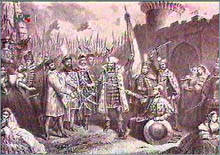
Libretto NIKOLA SUBIC ZRINSKI
The libretto was written by the Croatian poet Hugo Badalic (1851-1900) after a drama "ZRINY" by Theodor Korner (1791-1813). Ivan pl. Zajc composed the music.
"Nikola Subic Zrinski" is without doubt Zajc's most communicative work. It is a heroic opera culminating in the final tragedy; a death of Szigeth's brave defenders faced with the onslaught of Seljuk Turks on their expansion towards central Europe (1566).
Synopsis
In his camp in Belgrade ailing Suleyman II decided to wage a war and advance towards Vienna, although his physician Levi warns him against it. Before the attack on Vienna Szigeth has to be captured and its leader (ban) Zrinski vanquished.
The people of Szigeth sense the invasion and express their fear. Zrinski decides to make a stand and postpones the marriage of his daughter Jelena to his soldier Juranic. Zrinski proposes that women should be sent to Vienna for safety, but they all refuse. Sultan impatient, because unconquered Szigeth is hindering his advancements sends Sokolovic, the grand vizier to negotiate. Mehmed Sokolovic offers Zrinski to make him a king of Croatia and to spare the townsfolk should he hand over the keys of the city. Zrinski promptly refuses. Even after learning that his only son Juraj was captured, Zrinski with his family and troops repeats the solemn oath: By Almighty God I swear that I shall defend Szigeth with my blood; I will never leave you brothers, lest, my heart stops beating in my chest.
In the meantime Sultan dies, but his grand vizier conceals the death from his troops. Eva and her daughter Jelena took refuge in the basement of the old fortress. Jelena 's fiancé Juranic arrives with a message that they are ready for the imminent and decisive battle against much larger enemy. Jelena begs Juranic not to leave her and to: "take tis dagger. Let me die from your hand. Stab your Jelena" In consternation Juranic refuses, but there is no other resolution to the drama and he kills her before going into battle. In the last scene Zrinski says goodbye to his wife Eva. The troops and townsfolk gather together. With the joint cry "To arms, to arms, draw your swords" the draw-bridge is dropped, with Croatian flag held high by Zrinski, they all go to their death, but Vienna and the rest of Europe were spared.
PRAIZVEDBA:
PRAIZVEDBA OPERE NIKOLA ŠUBIC ZRINJSKI
4. studenoga - Velikoj turskoj vojsci pod zapovjedništvom sultana Sulejmana Velicanstvenog i vezira Mehmeda Sokolovica, koja se ljeti 1566. kretala prema još neosvojenom dijelu Ugarske, isprijecila se na putu mala tvrdava Siget i nevelika skupina hrabrih ljudi. Upornom obranom, pod zapovjedništvom hrvatskoga bana Nikole Zrinjskog, zadržana je turska vojska u opsadi mnogo duže nego je to itko mogao ocekivati. I nakon nestanka svake nade u pomoc carskih beckih trupa, posada Sigeta i dalje je branila grad i napokon gotovo sva izginula u posljednjem jurišu u rujnu 1566.
Taj dogadaj potaknuo je mnoge stvaraoce da pokušaju scenski prikazati zbivanja u Sigetu. Prvi je to ucinio njemacki dramaticar Teodor Kerner, cijom je dramom Niklas graf von Zriny otvorena 4. listopada 1834. prva kazališna zgrada u Zagrebu - Stankovicev gornjogradski teatar.
Medutim, najznacajnije djelo na tu temu sigetskog boja stvorio je skladatelj Ivan Zajc. Njegova opera Nikola Šubic Zrinjski skladana na libreto Huge Badalica, prvi je put izvedena u Zagrebu 4. studenoga 1876.
To je djelo zrela majstora, nadahnuto nacionalnim osjecajem, za ono doba znalacki pisana opera, dramaturški cjelovita i s odlicno postavljenim skupnim prizorima, osobito u završnim zborovima. Vodenje i razvijanje pjevacke linije temelji se na talijanskom belkantu, ali se ipak osjeca i prizvuk hrvatske melodike. Umjetnicke znacajke Nikole Šubica Zrinjskog svrstavaju to djelo u red najboljih hrvatskih opernih ostvarenja.
Source for pictures and some text: www.hrt.hr/arhiv/ndd/11studeni/ 1104%20Praizvedba.htm
Toronto Committee for the Promotion of Croatian Opera: producer Edward Mavrinac, with Aranka Lengyel & Srebrenka Bogovic. (e-mail:seb@boldinternet.com) Op-ed Please help and support this HISTORIC MOMENT. Call /emailproducers and ask them if they need help and which kind of help. best, Nenad Bach Any help in staging the Croatian national opera Nikola SubicZrinski is still welcome and much appreciated. Donations (regardless of thesum!) will be acknowledged in the commemorative booklet and for Canadian donorsa tax receipt will be issued. There is also an opportunity to advertise(business, personal "... in memory of", congratulations etc.) in theCommemorative Booklet: black & white or colour. In Canadian funds: full page$400.00(b&w), $600.00 (color), 1/2 page $250.00 (b&w), $400.00 (color),1/4 page $175.00 (b&w) $300.00 (color), 1/8 $100.00 (b&w), $200.00(color).
Please make your cheque payable to "ZRINSKI-OPERA MISSISSAUGA"
Address: Zrinski-Opera Mississauga, The Living Arts Centre, 4141 Living ArtsDrive, Mississauga, Ontario, L5B 4B8, and Canada
|
»
(E) Global Croatia Holds Business Convention
|
“GlobalnaHrvatska” (Global Croatia) Citizens Association (NGO, Udruga građana) “Globalna Hrvatska” (Global Croatia) held its business convention in the Museum of Arts and Crafts in Zagreb on Thursday, July 11, 2002. It drew about tow dozen members, guests and media representatives, and its main goal was to present the objectives of the Association and open a discussion on how to achieve them. President of the Association, Ms. Lilijana Domić, explained in an inspired opening statement that the goal of the “Udruga” is to strengthen cultural exchange among Croats all around the world, with an emphasis on introducing the talent from the diaspora to home public, and on intensifying efforts to present Croatian culture and its representatives to the world. Noting that Croats have been “globalized” for over two hundred years, Ms. Domić emphasized that “our goal is not ‘globalized Croatia’ but global cooperation of Croatian communities all around the world, enabling Croatia to enter the global community as a subject with clear identity and tradition, and not as an object”.
Speaking as the host to the Convention, Professor Vladimir Maleković, Director of the Museum of Arts and Crafts expressed his support for the goals of the GH, and stressed the international character of his own institution, one of the oldest of its kind in Europe, praising the work of some of his distinguished predecessors, Iso Kršnjavi in particular.
Agreement with the stated goals was also expressed by some of the guests, in particular by Dr. Ivan Kujundžić, Secretary for Public Relations of the HDZ, Professor David Pickus of the Arizona State University and Mr. Božo Skoko of the Millennium Promotions.
The founding members of the Association had launched an exhibition project centered on the gallery of the State Archives in Rijeka wherein exhibitions of home artists alternate with those of the artists from the diaspora. Now the Association will take over the sponsorship of the series. Discussion that followed centered on the key task the leadership of the Association will be facing: the funds. As usual, the situation is not great. Yet, whereas there are currently only 600 kunas in the GH’s account, the Association has attracted its first sponsor, the HAK (Croatian Automobile Club) which has generously agreed to help with the costs of the catalogue of the exhibition of the well-known Croatian-Canadian painter, Anton Cetin, to open in Rijeka on October 2, 2002.
The convention was covered by journalists from the Croatian TV, the Večernji list and Hrvatsko slovo.
Membership List:
Višnja Bedenko. Architect., Advisor, City Preservation of Monuments Office, Zagreb
Edward Damich, Chief Justice, Court of Federal Claims, Washington, D.C.
Lilijana Domić, writer, critic and gallerist, Zagreb.
Vladimir Goss, Ph.D., writer, journalist, and scholar
Sena Gvozdanović-Sekulić, Dr.., Professor Emeritus, School of Architecture, Zagreb
Zlatko Jurić, Dr., Asst. Professor, Art History, School of Arts and Sciences, Zagreb.
Vesna Kittelson, MFA, Professor of Art, Minneapolis College of Art and Design, painter.
Valentina Krčmar, Editor, Hrvatska Iskra, Toronto
Silvija Letica, Director, Dept. of Culture, Matica hrvatskih iseljenika
Slobodan Lang, Dr. Med., physician, humanitarian, and writer, Zagreb.
Vladimir Maleković, Director, Museum of Arts and Crafsts, Zagreb, critic and writer.
Melita Matijević, Dpt. of Culture, Matica hrvatskih iseljenika.
Zlatko Ožbolt, architect and designer, Zagreb.
Vesna Škare-Ožbolt, Member of Parliament.
Marko Spalatin, MFA, painter, Blue Mounds, Wisconsin
Miroslav Šutej, academic painter, professor, Art Academy in Zagreb
Carmen Verlichek, journalist and writer, Buenos Aires, Argentina
Nenad Vidović, lawyer, “Degen, Vidović, etc.”
Stanimir Vuk-Pavlović, Dr., Professor and head stem cell lab, Mayo Clnic, Rochester(Minnesota).
|
»
(E) THE WASHINGTON TIMES: Balkans tribunal turns to Clinton
|
THE WASHINGTON TIMES - http://www.washingtontimes.com/
July 8, 2002
Balkans tribunal turns to Clinton
By Jeffrey T. Kuhner
ZAGREB, Croatia - The Balkans war crimes tribunal is examining whether charges are warranted against former President Clinton and his aides for supporting a 1995 military offensive by Croatia that recaptured territory then held by rebel Serbian forces.
The Croatian World Congress sent a letter last week demanding that Carla Del Ponte, the chief prosecutor of the International Criminal Tribunal for the former Yugoslavia (ICTY), open a criminal investigation into Mr. Clinton and other top officials of his administration for "aiding and abetting indicted Croatian Gen. Ante Gotovina in a 1995 Croatian military operation known as 'Operation Storm.'"
When asked if the prosecutor's office plans to indict Mr. Clinton and U.S. officials, Florence Hartmann, spokeswoman for Mrs. Del Ponte, said: "We are working on the basis of an ongoing investigation."
Besides Mr. Clinton, others named in the complaint are former National Security Adviser Anthony Lake, former Deputy National Security Adviser Samuel Berger, Ambassador Richard Holbrooke and former U.S. Ambassador to Croatia Peter Galbraith.
Fears that American officials and soldiers will be prosecuted for participating in U.N.-backed peacekeeping efforts lie behind the Bush administration's threat to scuttle the present U.N. peacekeeping mission in Bosnia.
The threat is part of a dispute involving a separate but similar U.N. tribunal, the International Criminal Court, which was modeled after the ICTY and opened its doors last week. Both courts are based in The Hague.
The Balkans court angered U.S. officials two years ago when it acknowledged it was looking into a similar complaint against NATO commanders for their role in the 1999 U.S.-led bombing campaign in Yugoslavia.
Court officials said at the time they felt obliged to look into all complaints placed before them, but they dropped the matter after a preliminary investigation.
Gen. Gotovina was indicted by the ICTY in June 2001 on charges that he exercised "command responsibility" over a military campaign in which 150 Serbian civilians were killed.
Secretly supported by the Clinton administration, Croatian forces launched a massive three-day military offensive - known as "Operation Storm" - on Aug. 4, 1995, in which Croatia recovered territories occupied by rebel Serbs following Zagreb's drive for independence from Yugoslavia in 1991.
The Croatian World Congress, a nongovernmental organization (NGO) that advises the United Nations, said it believes neither Gen. Gotovina nor Clinton administration officials are guilty of war crimes.
However, it said that if Mrs. Del Ponte insists on prosecuting Gen. Gotovina, then American officials should be prosecuted in the interests of "evenhanded justice" because they played a pivotal role in aiding the general's campaign in Operation Storm.
The Croatian World Congress said the U.S. administration gave the green light for the operation and provided diplomatic and political support for it.
But the NGO stressed that "the most just outcome would be to withdraw the indictment against Gen. Gotovina."
The possibility that the Gotovina case will lead to U.S. officials being indicted by the ICTY worries some lawmakers on Capitol Hill.
Rep. Henry J. Hyde, Illinois Republican and chairman of the House Committee on International Relations, said in a May 29 letter to Secretary of State Colin L. Powell that at committee hearings on the ICTY, "Testimony was presented at our hearing questioning the factual basis for this indictment.
"It was brought to our attention that the ICTY may investigate U.S. officials for potential command responsibility in connection with Operation Storm."
Mr. Hyde said the ongoing investigation in the Gotovina case poses "risks" that U.S. officials would be prosecuted by the "U.N. tribunal for formulating or carrying out U.S. government policy."
Gen. Gotovina, 48, was the military commander of Sector South of the operation that was responsible for the capture of the city Knin.
He is also accused by the prosecutor's office at The Hague of overseeing the ethnic cleansing of 150,000 Serbs in Croatia who fled the military assault. He is currently in hiding, his whereabouts unknown.
The United States provided military and technical assistance to Operation Storm in order to deliver a defeat to then-Serbian President Slobodan Milosevic's goal of forging an ethnically pure "Greater Serbia."
Croatian World Congress H.S.K.
NGO Member of the United Nations
http://www.crowc.org
|
»
(E) U.S. lends support for Croatia to prosecute war crimes at home
|
U.S. lends support for Croatia to prosecute war crimes at home
By EUGENE BRCIC, Associated Press Writer , Wed Jul 10,
ZAGREB, Croatia - The United States voiced support Wednesday for the Croatian government's efforts to win the transfer of court cases pending against its nationals at the U.N. war crimes court back into the hands of its own justice authorities.
"We have agreed to work hand in hand to transition the justice issues back to Croatia," said Pierre-Richard Prosper, the U.S. envoy for war crimes issues.
It was not immediately clear if and to what extent the American initiative was previously discussed with prosecutors in The Hague ( news - web sites), Netherlands, where the international tribunal is located.
It was set up in 1993 to prosecute suspects indicted for war crimes committed during the bloody wars following the gradual disintegration of former Yugoslavia starting in 1991.
The expression of U.S. support for the Croatian government in its struggle to prosecute its own war crimes suspects came only ten days after Washington made clear it does not want to recognize a newly established International Criminal Court, insisting on immunity for its own nationals.
The new international tribunal was established on July 1 to prosecute those responsible for genocide, crimes against humanity and war crimes in cases where countries are unwilling or unable to dispense justice.
The U.S. defied international pressure and refused to ratify a treaty setting up the court, arguing that it would expose American soldiers, diplomats or others to politically motivated prosecution.
"The idea of an international criminal tribunal is a noble idea, but the problem we have with the ICC is that it is a process that is unchecked and does not have sufficient safeguards in place to ensure that it is a fair, credible and non-politicized process," Prosper said.
Although he did not specify, Prosper said that certain flaws in The Hague tribunal contributed to the U.S. decision to oppose the ICC.
"(There were) oversights that allow us to take a decision that we are taking today, to transition the justice back to the state, to work hand in hand with Croatia and to create the partnership that will bring the full sovereignty rights back to the country," Prosper said.
Two Croat army generals so far have been indicted in The Hague for atrocities against minority Serbs, while Croatian media have speculated that several other indictments are looming at the end of summer.
In a tangible sign of support, Prosper said a team of American experts would be dispatched this fall to Croatia to help the local justice system handle war crimes cases at home.
"The U.S. is pleased and satisfied with the level of cooperation Croatia has shown the tribunal," Prosper said. "We believe that Croatia has been a leader in the region and is well on the way toward putting the war crimes issue behind them."
|
»
(H) Dr.Marko Tarle: Izborni sustav - 2
|
Veliki Tin Ujevic rece: ťMi smo išli putem, put je bio dug/ kasno opazismo, da je taj put krugŤ. Izborni sustav - Drugi dio MARKO TARLE
Iz neslužbenih izjava politickih vrhovnika i objavljenih stranackih priopcenja, prilicno se jasnim cini stav današnje politicke pozicije u odnosu na izborni zakon za predstojece, izgleda prijevremene, parlamentarne izbore.
Raspravljat ce se samo o broju izbornih jedinica i stupnju otvorenosti izbornih lista. Razmjerni izborni sustav, sa znacajkama i rezultatima koji su ga u nas dosad pratili, ostat ce, cini se, neizmijenjen.
Poziciji se, dakle, svida model koji je potvrdio još predsjednik Tudman, ona bježi od zakona prema kojem se pred narodom mora potvrdivati pojedinac, a ne kolektivitet stranke. Jedino HSS koketira s vecinskim sustavom i to, izgleda, zbog velikog broja istaknutih lokalnih dužnosnika. Ni oporba nije digla glas protiv razmjernih lista.
Treba sagledati što to zaista znaci, kakav se parlament može konstituirati slijedom takvog izbornog zakona, kakva se vlada iz takvog Sabora može izvesti, kako može djelovati tako izabrana vlast. Grcevito držanje noktima za proporcionalne liste odaje koliko vecinski sustav ugrožava pozicije svih današnjih politicara.
Nije teško pretpostaviti kako ce izgledati strukture vlasti nakon novih izbora razmjernim sustavom. Bit ce samo poneko novo ime, no ťprincip je isti, sve su ostalo nijanseŤ. Dobro nam poznati stranacki vode, pozicijski i opozicijski, kreirat ce ťdruštvene igreŤ uz malo promiješane karte.
Sve smo to vec iskušali, kako u prvih deset, tako i u ove dvije i pol godine. Živjeli smo iz godine u godinu sve lošije, uz mnoštvo obecanja o izlasku iz krize. Zašto bi nepromijenjen izborni sustav dao bitno razlicit ishod: odgovorniji parlament, kreativniju vladu i nekorumpirano društvo? Najava visokog postotka apstinencije najbolji je odgovor na to pitanje.
Nova igracka i zamka za lakovjerne su ťotvorene izborne listeŤ. Zanemarimo li nesnalaženje mnogih biraca u tim izbornim novostima, manipulacije s preskocima u zaokruživanju kandidata nece biti jedina politicka igra. Prijelazi iz parlamentarne u izvršnu vlast bit ce, prema dosadašnjim iskustvima, široko korišteni za politikantske smicalice i osobnu korist, te za promjenu sastava Sabora prema nahodenju politickih celnika.
Ukratko, ne vjerujem da ce nas nedace, do kojih su dovele razmjerne liste, sutra mimoici zbog otvorenih izbornihlista. Dosta nam je ťGulivera rijeci i Liliputanaca djelaŤ
Svima nam je dosta rijeci iza kojih ne stoji akcija ili, citirajuci našeg velikog publicista, dosta nam je ťGulivera rijeci i Liliputanaca djelaŤ. Zar nismo citali i culi kako se Stjepan Radic suprotstavio svima u Saboru, ostavši u manjini, no i kako se uskoro pokazalo da je bio potpuno u pravu! Ima li danas u vlasti takvih ljudi?
Nažalost, nema ih, a trebamo ih više no ikad. Ne zamijeni li podosta današnjih politicara mjesta s protagonistima nove civilizacije, nema poboljšanja u našim životima još dugo, dugo vremena.
Kakav izborni sustav može donijeti nove ljude i istinske promjene?
Vecinski, bar u udjelu kojim je bio zastupljen na izborima 1990. Uz polovicu zastupnika na listama stranaka, recimo sljedbenike politickih ideologija, socijalno-demokratske, populisticke, seljacke, liberalne i tako dalje, biracko tijelo treba birati i pojedince, iza kojih stoji osobni životopis, profesionalni i politicki uspjesi ili neuspjesi, društveni ugled i neokaljano ime.
Kandidat, ali i njegov zamjenik, stajat ce pred biracima, slušati njihova pitanja, izlagati im osobne stavove, obrazlagati im što i kako kani poduzeti, reci im kako ga pozvati na odgovornost, pa i smijeniti, ako iznevjeri obecanja. Takav pojedinacni kandidat ne mora biti clan neke politicke stranke, nego pojedinac, pripadnik društvene udruge, koja, ako to izborni zakon zahtijeva, preraste u politicku stranku.
Vecinski kandidat mora osobno steci povjerenje biraca i njima biti izravno odgovoran, za razliku od onoga s liste koji ulazak u Sabor zahvaljuje najužem stranackom vodstvu, pa se nužno mora ponašati poslušnicki.
Prijede li vecinski izabrani kandidat u izvršnu vlast, u Saboru ga zamjenjuje neposredno izabrani zamjenik. Nad kandidatima izabranim vecinskim sustavom stranacki mocnici nemaju ingerencija sve dok izabranik poštuje gradanski moral i lojalnost svojoj zajednici, a posebno svojim biracima.
Uvodenje vecinskog sustava u izborni zakon jedini je nacin da u Sabor, a potom i u vladu, udu ljudi sposobni oduprijeti se politikantskim smicalicama stranackih vodstava, glasovati po savjesti, a ne za probitke pojedinaca ili interesnih skupina, boriti se za prosperitet, a ne za održanje dotadašnjeg stanja. Sve to stranacka stega onemogucava izabraniku s liste.
To je ujedno i društveni ispit zrelosti za hrvatsko biracko tijelo, jer se jedino tako briše jadikovka ťnemamo pravog izbora, svi su oni jednako loši, nema poštenih politicaraŤ. Uz vecinski izborni sustav pred biracko ce tijelo, siguran sam, izaci stotine danas malo poznatih pojedinaca sa svježim idejama o duhovnom i gospodarskom ozdravljenju naroda i države.Nema uopce sumnje da bi odziv biraca bio mnogo veci no u slucaju razmjernog izbornog sustava. Tek bi tako na glasacima bila puna odgovornost za sastav Sabora ivlade.U svibnju 1990. glasali smo prema izbornom zakonu koji su nam skrojili reformirani komunisti, smatrajuci da samo tako izbjegavaju prigovore o namještenim izborima, da samo tako izbori imaju atribuciju potpune demokraticnosti. Zar su ova vlada, ovaj Sabor i današnji politicari manje vjerni demokraciji no ona komunisticko-jugoslavenska vlast iz 1990. godine?
Nemajmo iluzija, petorka bi nas sve neizmjerno iznenadila pristankom na vecinski izborni sustav, jer on znaci ne samo rastanak s apsolutnom kontrolom vlasti, nego i pomak prema novom, modernijem putu društvenog razvoja. Mnogi su od njih ljudi starog kova, starih navika i zasada, bez dovoljno znanja potrebnih za izgradnju informatickog društva.
Pa kako onda doci do izbornog zakona koji je preduvjet za poštenije pravosude, procesuiranje korupcije i kriminala, rast gospodarstva i zapošljavanja, za svjetlo na kraju tunela?
Prije tridesetak godina americki je predsjednik Nixon morao, želeci se riješiti upornog istražitelja u aferi Watergate, otpustiti cetiri celnika ministarstva pravosuda, jer nisu htjeli provesti neprihvatljiv predsjednikov nalog. Javnost je pobjesnjela pa su Bijelu kucu i Kongres tog vikenda preplavila tri milijuna pisama, brzojava i telefonskih poziva s jednom rijecju: ťOdlaziŤ!Tek su tada politicari predsjedniku okrenuli leda, pa je Richard Nixon dao ostavku. Javnost je smijenila najmocnijeg covjekasvijeta. Mislim da i u nas javnost mora odigrati presudnu ulogu, jer je rijec o sudbini cijelog naroda.
Referenduma o izbornom zakonu zacijelo nece biti. Zato bi svaki gradanin koji smatra da se sljedeci izbori trebaju održati na vecinski nacin morao to priopciti celnicima Sabora, vlade, pa i dnevnom tisku, i to elektronickom poštom, telefaks-porukom, pismom ili brzojavom. Pa cak i osobno, licem u lice.
Vjerujte, prema starim Latinima, glas naroda je i glas boga.
Izborni zakon iz 1990. doveo je na scenu ljude koji su zadatak tog doba uspješno proveli. Zakon iz 2000. nije uspio dovesti na površinu politicare za uspješno provodenje društvenih promjena. Ne izborimo li se sada za vecinski sustav bit cemo, bojim se, osudeni na ponavljanje društvene lekcije od 1990. do danas.
Veliki Tin Ujevic rece: ťMi smo išli putem, put je bio dug/ kasno opazismo, da je taj put krugŤ.Želimo li nastaviti to nesretno kruženje?
Autor je doktor znanosti, znanstveni konzultant, publicist iz Zagreba
|
»
(E) Letter to Los Angeles Times by Hilda Foley
|
The review mentioned was printed in the L.A. Times Book Review section by
the UK Telegraph film critic, so I sent my short letter to both
newspapers. It is not a big deal, but I just could not resist replying to
such stupidity.
dtletters@telegraph.co.uk
Subject: Book Review
Dear Editor:
In his review of "Sundance Sarajevo" film critic Tom Shone writes about
Sarajevo "....You mean like figuring out why the Yugoslavs, having
survived the world's longest siege in modern history, ..."
I don't believe the inhabitants of Sarajevo would appreciate being called
"Yugoslavs". They are Bosnians, of the internationally recognized country
of Bosnia-Herzegovina and it was the Yugoslavs, meaning Serbs, who were
doing the besieging of Bosnia's capital Sarajevo for four terrible years.
Sincerely,
Hilda M. Foley
National Federation of Croatian Americans
13272 Orange Knoll
Santa Ana, Ca 92705, USA
|
»
(E) Published letter in The Washington Post By J. Kraljic
|

My letter to the Washington Post, set forth below, was published today. John Kraljic
Saturday, July 6, 2002 Left Out in Bosnia Wolfgang Petritsch [op-ed, July 2] claimed that a recent agreement to institute constitutional changes in Bosnia and Herzegovina was agreed to by the "main parties" representing the three constituent nationalities of that country. He did not mention that the Croatian Democratic Union, a political party having the overwhelming support of Croats in Bosnia and Herzegovina, refused to sign on to the agreement.
Petritsch admits that his actions were not necessarily democratic but justifies his failure to support democracy by claiming that the people of Bosnia and Herzegovina had been intimidated by threats and violence. If this were so, why hasn't he used his broad powers to arrest and prosecute the perpetrators of such crimes?
Petritsch's legacy is a bleak one for the hundreds of thousands of Croats of Bosnia and Herzegovina: the imposition of rule by an international bureaucracy answerable to no one. Most people would prefer democracy, pure and simple.
-- John Peter Kraljic
The writer is president of the National Federation of Croatian Americans.
|
|
|




 full story
 printer version