
Sponsored Ads
|
Articles by this Author
»
(E) Solved: Croatia is officially the source
|
Solved: The Great ZinfandelMystery
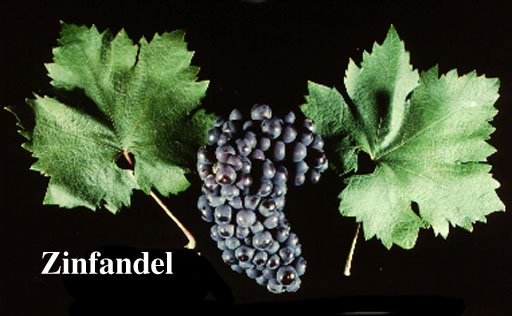
Croatia is officially the source
July 10, 2002
Rod Smith: Wine
Solved: The Great Zinfandel Mystery
The birthplace of California's signature grape turns out to be Croatia
Recent Columns:
Solved: The Great Zinfandel Mystery
Jul 10, 2002
One of the biggest mysteries in the wine world appears to be solved. A UC Davis plant geneticist
has confirmed the Old World origin of Zinfandel--and it's not Italy.
"Zinfandel comes from Croatia," says Carole Meredith. "The grape we call Zinfandel, and the
grape the Italians call Primitivo, are both Crljenak Kastelanski."
That's Crljenak Kastelanski: pronounced tsurl-YEN-ahk kahstel-AHN-ski. Its discovery answers a
question that has fascinated wine lovers and scientists for more than 100 years: Where did
California's signature wine grape come from? Meredith's research culminates a 35-year search by
two generations of scientists facing nearly impossible odds. With more than 10,000 grape
varieties in the world, locating Zinfandel's Old World source was like finding the proverbial
needle in the haystack. In fact, Crljenak is a forgotten variety in its homeland, Dalmatia, and the
more than 1,000 islands off its coast in the Adriatic Sea. So far, Meredith and her team have found
only 20 Crljenak vines, planted among other grapes in three locations.
But 20 vines is enough to rescue the original Zin from oblivion--and that's important well beyond
the satisfaction of establishing Zinfandel's pedigree. Aside from giving Zin new legitimacy among
the wine world's leafy aristocrats, the discovery closes the genetic gap between modern
California Zinfandel vines and their ancient forerunners. Who knows what sensory delights
await Zin lovers once the old Croatian clones become part of the California vineyard mix?
When Meredith revealed her finding casually to friends and colleagues this spring, the news
electrified the wine world. She will formally present her discovery in August at a grape genetics
conference in Hungary. She is also working on a paper to be published early next year in the
Journal of Enology and Viticulture.
The quest to solve the mystery of the Mystery Grape is a scientific whodunit with a diverse cast
of characters. When Meredith became the chief detective on the case in 1991, it had already been
in progress for decades. UC Davis professor Austin Goheen and graduate student Wade Wolfe
laid the groundwork in the 1960s and '70s. The legendary Napa Valley vintner Miljenko "Mike"
Grgich, a native Croatian, was a key informant. The investigative team included scientists,
historians, grape growers and students in California, Italy and Croatia.
Serendipity played a part, too. One of the most important contributions was made by a Croatian
student at UC Davis. Jasenka Piljac was a dishwasher in Meredith's laboratory in the early '90s.
After graduating from Davis and returning to Zagreb, Piljac served as translator and research
assistant during Meredith's 1998 sleuthing mission. "The timing worked out very well," says
Meredith. "I would not have been able to do it without her. And that's an example of the almost
eerie way things have fallen into place on this quest."
The mystery of Zinfandel has haunted wine lovers and viticulturists for more than a century.
Unlike every other fine wine grape in the state, Zin apparently had no European homeland.
Cabernet came from Bordeaux, Chardonnay and Pinot Noir from Burgundy. But for all anyone
knew, Zinfandel came from outer space.
Recent historical research, largely by wine historian Charles Sullivan, has revealed that the first
"Zinfendal" vine appeared in a Long Island, N.Y., nursery in the 1820s. It may have come from the
gardens of the Austrian imperial palace in Vienna, which in the 18th century included vines from
every part of the empire, then including Croatia. Once in the United States, the vine went out
West just after California's statehood in 1850, and it is thought to have shown up in the Sonoma
Valley in 1859.
It arrived in the midst of viticultural mayhem. Because California has no native wine grapes,
hundreds of grape varieties were being imported and planted during that period of explosive
development. Some were misnamed, others were known by multiple names. Zinfandel was just a
face in the crowd.
Yet within a few decades it was the most planted red grape in the state; only in 2000 was it finally
overtaken by Cabernet Sauvignon. Ultimately, Zinfandel became the symbol of California wine.
Fast-forward to the late 1960s. Goheen, the legendary UC Davis viticulturist, is traveling in
Southern Italy in Puglia, near Bari. He tastes a spicy, berryish wine that strongly reminds him of
Zinfandel. He asks to be taken to the vineyard--and finds himself looking at vines that appear to
be Zinfandel. His hosts call the vines Primitivo.
That got the wheels turning. Goheen brought Primitivo cuttings back to California and confirmed
that--visually, at least, since DNA testing wasn't yet available--they seemed indistinguishable
from Zin. Shortly thereafter, Wolfe, a doctoral candidate in plant genetics, announced to the
American Society of Enology & Viticulture that isozyme analysis (a precursor of DNA testing)
showed that Zinfandel and Primitivo were probably the same.
The Cutting Edge
By the late 1980s, DNA profiling was developed to a high degree of accuracy, and Meredith was
on its cutting edge. She used it to demonstrate that the grape known as Pinot Blanc in California
was different from the French Pinot Blanc and was, in fact, the obscure variety called Melon.
Meredith's assistant, graduate student John Bowers, would later use the same techniques to show
that Cabernet Sauvignon was an offspring of Sauvignon Blanc and Cabernet Franc.
Now, Meredith turned her attention to Zinfandel and Primitivo. "Here was a mystery, and I
thought I could find the answer," she recalls. "That was the scientific driver." But there was more
to it than just the challenge. "Since we know what part of Europe all our other varieties came
from, we know where to look for new clones that will give us diversity in California vineyards,"
says Meredith. "With Zin, all we could do was look in old California vineyards. But if we knew
where it came from, we could look there and find more diversity to greatly improve the range of
clones."
The DNA tests used on plants are the same as those used on humans. Tissues (whether blood,
muscle or leaf) are subjected to chemicals that dissolve components progressively until all that's
left is a clear substance containing DNA molecules, each composed of sequences of nucleotides
repeated over and over. A machine scans the isolated DNA for specific sequences, marks them and
makes millions of copies that are finally visible as bands on gel. Then they can be compared with
DNA from other plants.
In 1992, 25 years after Goheen's suspicions were aroused, Meredith ran a DNA test on tissue
samples from Primitivo and Zinfandel vines. They appeared to be indistinguishable. But the tests
were still rudimentary, so it wasn't until 1995 that a more advanced DNA analysis convinced
Meredith that the two vines were, in fact, the same variety.
But what did that mean? Primitivo was not a native Italian grape. Sullivan and other historians
believe it may have been introduced during the 18th century, possibly by Catholic monks.
However, no wines were labeled Primitivo before the 1890s, long after Zin was established in
California. In any case, the true homeland of Primitivo-Zinfandel was unknown.
Is it the Same?
In the early 1980s, the writer Leon Adams suggested that Zinfandel might be the same as Plavac
Mali, a widely planted Croatian red grape that yields a berryish, tannic wine similar to Zin. That
idea was pressed in the '90s by Mike Grgich, who had immigrated from Croatia as a young
winemaker in the 1950s and gone on to become a pillar of the Napa Valley wine community.
Grgich (who produces a Plavac Mali wine in Croatia under the Grgic label) became a prime
motivator in the Zin quest, directing the detectives to promising sites in his native country.
There were Plavac Mali vines in the UC Davis collection, and some appeared to be
indistinguishable from Zinfandel. However, Meredith's tests during the late '90s gave mixed
results. Knowing that mislabeling of vines in institutional collections is common, she decided to
go to Croatia and collect samples herself.
No sooner had she started planning a trip than she got an e-mail from University of Zagreb
genetics professor Ivan Pejic asking for advice on a new project to study the indigenous grapes of Croatia. "That's when I said, 'I'm coming over there, so why don't we work together?' " recallsMeredith.
In spring of 1998 she traveled to Croatia and met Pejic and his colleague, viticulturist Edi Maletic.
With Piljac, Meredith's former lab student, they traveled through the Dalmatian Coast and
islands, taking tissue samples from about 150 Plavac Mali vines in 40 vineyards. Back in her lab
at UC Davis, Meredith ran the DNA tests.
The results were disconcerting. Plavac Mali was not Zinfandel. However, it appeared that one
was a parent of the other, although it wasn't clear which way the genes went. The game was still
afoot.
Meanwhile, Pejic and Maletic devoted themselves to walking vine rows in Dalmatia, looking for
Zin-like leaf shapes in the spring and Zin-like fruit in the fall. Finally, in September 2000, they
found another likely suspect in a mixed planting of old varieties. It was a single specimen of an
obscure old variety called Crljenak Kastelanski (meaning red grape from Kastel, a town near
Split). Still lacking the funds for expensive DNA analysis, they sent tissues from the vine to
Meredith for testing in her UC Davis lab.
No dice. The vines didn't match, and at that point it looked as though the search had hit a
dead-end.
Yet everyone agreed Crljenak really, really looked like Zin. So Pejic and Maletic went back to thevineyard--a six-hour trek by car from Zagreb to the coast--where they realized that in the thicktangle of canes they had mistakenly taken tissue from the shoot tips of a neighboring vine. Thistime they made sure their sample was from the Crljenak vine before they sent it to California.
Bingo. A perfect DNA match linked Crljenak, Zinfandel and Primitivo. On Dec. 18, 2001, she
recalls, Meredith e-mailed Pejic, saying, "I'm convinced." Subsequent testing of samples from othervines provided a bonus revelation: Plavac Mali is an offspring of Crljenak and another Croatiangrape, Dobricic.
Now that Crljenak has been rescued from its precarious position--literally on the brink of
extinction--the next step is to look for more Crljenak vines.
The variety was virtually wiped out by vine diseases in the 19th century, then further reduced
during the Communist era when the native grapes were systematically replaced by high-yielding
varieties suitable for mass production.
Widening the Pool
The goal is to widen the pool of possible clonal material that can enrich the grape's diversity.
Selections from Croatia will complement the Zinfandel Heritage Vineyard, a one-acre Napa
Valley planting of Zinfandel selections taken from old vineyards throughout California by UC
Davis clone specialist James Wolpert and his team.
The ongoing search for Crljenak in Croatia, led by Pejic and Maletic, is being substantiallyfunded
by several California wine producers, led by Ridge Vineyards. The Croatians are focusing on the
large island of Solta, just off the Dalmatian Coast from Split. The vineyards on Solta include quite
a bit of Dobricic, which makes it likely that Plavac Mali's other parent, Crljenak, may be found
there, too. "It makes sense that if they got together, they must have been growing fairly close
together," notes Meredith. "So Solta is a strong possibility."
Meanwhile, California producers have begun to propagate both Primitivo and Plavac Mali and
make wine from the grapes (try Tobin James Cellars Primitivo '99, "James Gang Reserve"). And
Crljenak has been propagated at UC Davis. Cuttings will be available to growers within a year or
so, which means we could begin to see California Crljenak wines as early as 2006.
And then we'll find out from a sensory standpoint if it's all just a matter of names. Will, in fact, a
Zin by any other name smell as sweet?
Copyright 2002 Los Angeles Times
http://www.latimes.com/la-fo-wine10jul10.column
|
»
(E,H) Room in New York to rent / share under $15 a day
|
New York bedunder $15a day ? Cura iz Splita treba malu pomoc! A girl from Split needs help!
From:kjurasin@hotmail.com
Hi!
I will write in English, that way I will know for sure you'll understand me...
My name is Karmen, I am 28 yrs old, I am from Split and currently working on
a cruise ship as a youth counselor. We sail Caribbean's. My contract is
soon over and I have no plans to come back. So now is my only chance to
visit USA. I decided to go to New York for a month. Of course, I need a
place to stay.. I have been surfing Web for weeks...Hotels are far too
expensive for me, hostels don't look like a good idea for such a long stay,
so I decided that the best thing is to rent a room/bed in someone's home.
Just looking for that has been an adventure for itself...I am trying to find
a cheap, safe and warm place as near as possible to the center of Manhattan.
That way I could save time and money being able to walk to the most sights I
want to visit. And as I am planning to see as many Broadway shows as I can,
You can imagine that I will need every saved penny...
Anyway, I have been trying to find that perfect room in all sort of ways,
this being one of them...I found your addresses at CROLINKS. I feel much
safer asking someone from Croatia for a favor, you know how it is...
What I am hoping for is to find a place to live for one month for $15 or
less per day (rent and everything else included). I don't mind sharing a room,
but I'd prefer a female roommate. I already booked a room in a hostel for
the first two nights, 08 and 09 of September. I am flying back to Split on
October 08.
If you can help me or you know someone else who can, I would be sooooo grateful!!
Please email me back even with any little information.
Thank you.
Karmen kjurasin@hotmail.com
Op-ed
I came across many people who visited New York and have the same problem. It would be nice if we (Croatian community of New York) organized - Smjestaj (privremeni)- for Croatians who visit out city. It could be in Astoria, Manhattan or New Jersey. Or have an agreement with the existing facilities that canaccommodate our people. I know it is a major project, but I see it as even beingprofitable for all the parties. We do not know who Karmen is, but in general weshould help our people as much as we can. Is there someone who can take her fora week and see how it works? Hvala.
Nenad Bach
CROWN
letters@CroatianWorld.net
|
»
(E) Cro Cop -Mirko Filipovic - on TV tonight
|

CRO COP Tonight on Direct TV Channel102, 9 pm TONIGHT SUNDAY SEPT.1 9PMON DIRECT TV CH 102 ULTIMATE FIGHTING CHAMPIONSHIP! SEE CRO COP MIRKO FILIPOVIC CROATIAN FIGHTER !!!! POWERHOUSE! info about him herehttp://www.crocop.com/
ENJOY IT ! TONIGHT AT 9PM CH . 102ITS ALREADY ON PREVIEWS AS OF 10 AM
SUNDAY !.
STANKO ROTIMMISSISSAUGA ONTARIO CANADA
P.S. FOR SURE AVAILABLE ON DISHNETWORK TOO AND PAY PER VIEW ON LOCAL CABLE .
|
»
(H) Biblija na hrvatskom na CD-u
|
Biblija na hrvatskom na CD-u 
Prof.dr. Mario Essert i mladi Andjelko Katalenich (uccenik srednje sskole!) autori su izvrsnog CDa koji sadrzziBIBLIJU na hrvatskom jeziku, s velikim tehnicckim moguchnostima. Cijena je samo 80 kn. Mozze se narucciti nabaviti u Krschanskoj sadassnjosti ili izravno na
http://www.ks.hr/
U njemu je i opis Biblije iz pera Bonaventure Dude.
Mali dodatak:
Usput bih spomenuo malo poznati podatak: Najstarija poznata Biblija na hrvatskom jeziku nije Kassichevabiblija, nego Zadarska Biblija o kojoj govori jedan dokument zadarskog arhiva iz 1380.g. Na zzalost, nijesaccuvavana, ali dokument govori o "una Biblia i Slavica lingua".
U to isto vrijeme (14.st.) u Pragu djeluju hrvatski glagoljassi i njihovi ccesskiuccenici tijekom stotinjak godinau u samostanu Emaus (u dijelu Praga koji se zove Vissehrad). Ti su ccesski uccenici
hrvatskih glagoljassa 1416. napisali poznatu Cessku hlaholsku Bibliju, ccuva se u Nacionalnoj knjizznici uPragu (odmah kod Karlovog mosta). U znamenitom ccesskom samostanu Sazava oko 60 km od Praga djelatnosti hrvatskih glagoljassa posvechena je posebna dvorana.
Visse o tome vidi na www.hr/darko/etf/et03.html
i www.hr/darko/etf/novi.html
Darko Zubrinich
|
»
(E) DRUGS AND DEMOCRACY
|
DRUGS ANDDEMOCRACY THE RIGHT STUFF (DRUGS AND DEMOCRACY)
Morphine is said to be good for people subject to severe depressions, or even pessimism. Although the drug first surfaced in a laboratory at the end of the last century, its basis, opium, had been used earlier by many aristocratic and reac-tionary thinkers. A young and secretive German romantic, No-valis, enjoyed eating and smoking opium juice, probably be-cause he had always yearned to alleviate his nostalgia for death. Probably in order to write his poem Sehnsucht nach dem Tode. Early poets of Romanticism rejected the philosophy of rational-ism and historical optimism. They turned inward to their irra-tional feelings, shrouding themselves in the pensive loneliness which opiates endlessly offer.
Once upon a distant time we met Homer's Odysseus, who was frequently nagged by the childish behavior of his pesky sailors. Somewhere along the shores of northern Africa, Odysseus and his sailors had strayed away into the mythical land of the lotus flower. As soon as his sailors began to eat the lotus plant, they sank into forgetfulness, and immediately for-got their history and their homeland. It was with great pain that Odysseus succeeded in extracting them from artificial par-adises. What can be worse for a nation than to erase its past and lose its collective memory?
Unlike many modern wannabe conservatives and televange-lists, Greeks and Romans were not hypocrites. They frankly ac-knowledged the pleasures of wine and women. Sine Cerere et Bacco friget Venus - without food and wine sexual life withers away, too.
The escape from industrial reality and the maddening crowd was one of the main motives for drug use among some reac-tionary poets and thinkers, who could not face the onset of mass society. The advent of early liberalism and socialism was accompanied not only by factory chimneys, but also by loneli-ness, decay, and decadence. If one could, therefore, not escape to the sunny Mediterranean, then one had to craft one's own artificial paradise in rainy and foggy London. The young En-glish Tory Thomas De Quincey, in his essay Confessions of an English Opium Eater, relates his Soho escapades with a poor prostitute Anna, as well as his spiritual journeys in the aftertaste of opium. De Quincey has a feeling that one life-minute lasts a century, finally putting an end to the reckless flow of time.
The mystique of opium was also grasped by the mid-19th century French symbolist and poet Charles Baudelaire. He continued the aristo-nihilistic-revolutionary-conservative tradi-tion of dope indulgence via the water pipe, i.e., the Pakistan huka. Similar to the lonely albatross, Baudelaire observes the decaying France in which the steamroller of coming liberalism and democratism mercilessly crushes all esthetics and all poetics.
When studying the escapism of postmodernity, it is impos-sible to circumvent the leftist subculture and its pseudo-intel-lectual sycophants of 1968. The so-called sixty-eighters hollered out not only for liberty from all political authority, but also for free sex and drugs. Are these leftist claims not part of the modern religion of human rights? At the beginning of the 60's, the musical alter egos of the Western left, the Rolling Stones and Bob Dylan, called out to millions of young people throughout America and Europe, telling intruders to "get off of my cloud" and concluding that "everybody must get stoned."
Predictably, the right-wing answer to the decadence of liber-al democracy was nihilistic counter-decadence. The main dif-ference, however, between these two is that reactionary and rightist addicts do drugs for elitist and esoteric purposes. By their temperament and literary style they reject all democra-cy- whether it is of a socialist or liberal brand. When in the 20th century the flow of history switched from first gear into fifth gear, many rightist poets and thinkers posed a question: What to do after the orgy? The French right-leaning author Jean Cocteau answered the question this way: "Everything that we do in our life, even when we love, we perform in a rapid train running to its death. Smoking opium means getting off the train."
Hashish and marijuana change the body language and en-hance social philanthropy. Smoking joints triggers abnormal laughter. Therefore hashish may be described as a collectivistic drug custom-designed for individuals who by their lifestyle loathe solitude and who, like Dickens' proverbial Ms. Jellyby, indulge in vicarious humanism and unrepentant globalism. In today's age of promiscuous democracy, small wonder that mar-ijuana is inhaled by countless young people all over liberalized Europe and America. In the permissive society of today, one is allowed to do everything-provided one does not rock the boat, i.e., "bogart" political correctness. Just as wine, over the last 2,000 years, has completely changed the political profile of the West, so has marijuana, over the last 30 years, completely ruined the future of Western youth. If Stalin had been a bit more intelligent he would have solemnly opened marijuana fields in his native Transcaucasia. Instead, communist tyrants resorted to the killing fields of the Gulag. The advantage of lib-eralism and social democracy is that via sex, drugs, and rock 'n' roll, by means of consumerism and hedonism, they function perfectly well; what communism was not able to achieve by means of the solid truncheon, liberalism has achieved by means of the solid joint. Indisputably, Western youth can be political-ly and correctly controlled when herded in techno-rap concerts and when welcomed in cafes in Holland, where one can freely buy marijuana as well as under-the-table "crack," "speedball," and "horse." Are these items not logical ingredients of the lib-eral theology of human rights?
Cocaine reportedly induces eroticism and enhances the sex act. The late French fascist dandy and novelist Pierre Drieu La Rochelle liked coke, desiring all possible drugs and all impossi-ble women. The problem, however, is that the coke intaker of-ten feels invisible bugs creeping from his ankles up to his knees, so that he may imagine himself sleeping not with a beautiful woman but with scary reptiles. In his autobiographical novels Le feu follet and L'homme couvert de femmes, La Rochelle's hero is constantly covered by women and veiled by opium and heroin sit-ins. In his long intellectual monologues, La Rochelle's hero says: "A Frenchwoman, be she a whore or not, likes to be held and taken care of; an American woman, unless she hunts for a husband, prefers a passing relationship... Drug users are mystics in a materialistic age. Given that they can no longer animate and embellish this world, they do it in a reverse manner on themselves." Indeed, La Rochelle's hero ends up in suicide-with heroin and revolver. In 1945, with the approach-ing victory of the Allies, and in the capacity of the intellectual leader of the defunct Eurofascist international, Pierre Drieu La Rochelle also opted for suicide.
The English conservative and aristocrat Aldous Huxley is unavoidable in studying communist pathology (Brave New World Revisited) and Marxist subintellectual schizophre-nia (Grey Eminence). As a novelist and essayist his lifelong wish had been to break loose from the flow of time. Mexican mesca-line and the artificial drug LSD enabled him new intellectual horizons for observing the end of his world and the beginning of a new, decadent one. Apparently mescaline is ideal for sensing the colors of late impressionist and pointillist painters. Every drop on Seurat's silent water, every touch on Dufy's leaf, or every stone on the still nature of old Vermeer, pours away into thousands of billions of new colors. In the essay The Doors of Perception, Huxley notes that "mescaline raises all colors to a higher power and makes the percipient aware of innumerable fine shades of difference, to which, at ordinary times, he is com-pletely blind." His intellectual experiments with hallucino-genic drugs continued for years, and even on his deathbed in California in 1963, he asked for and was given LSD. Probably to depart more picturesquely into timeless infinity.
And what to say about the German centenarian, enigmatic essayist and novelist Ernst J?nger, whom the young Adolf Hitler in Weimar Germany also liked to read, and whom Dr. Joseph Goebbels wanted to lure into pro-Nazi collaboration? Yet J?nger, the aristocratic loner, refused all deals with the Nazis, preferring instead his martial travelogues. In his essay Ann?herungen: Drogen and Rausch, J?nger describes his close encounters with drugs. He was also able to cut through the merciless wall of time and sneak into floating eternity. "Time slows down. . . . The river of life flows more gently... The banks are disappearing." While both the French president Fran?ois Mitterrand and the German chancellor Helmut Kohl, in the interest of Franco-German reconciliation, liked meeting and reading the old J?nger, they shied away from his contacts with drugs.
Ernst J?nger's compatriot, the essayist, early expressionist, and medical doctor Gottfried Benn, also took drugs. His medical observations, which found their transfigurations in his po-ems "Kokain" and "Das Verlorene Ich," were collected by Benn as a doctor-mortician in Berlin of the liberal-Weimarian Germany in decay. He records in his poetry nameless human destinies stretched out dead on the tables of his mortuary. He describes the dead meat of prostitutes out of whose bellies crawl squeaking mice. A connoisseur of French culture and ge-netics, Benn was subsequently offered awards and political baits by the Nazis, which he refused to swallow. After the end of the war, like thousands of European artists, Benn sank into obliv-ion. Probably also because he once remarked that "mighty brains are strengthened not on milk but on alkaloids."
Modern psychiatrists, doctors, and sociologists are wrong in their diagnosis of drug addiction among large segments of Western youth. They fail to realize that to combat drug abuse one must prevent its social and political causes before attempt-ing to cure its deadly consequences. Given that the crux of the modern liberal system is the dictatorship of well-being and the dogma of boundless economic growth, many disabused young people are led to believe that everybody is entitled to eternal fun. In a make-believe world of media signals, many take for granted instant gratification by projecting their faces on the characters of the prime-time soaps. Before they turn into drug addicts, they become dependent on the videospheric surreality of television, which in a refined manner tells them that every-body must be handsome, rich, and popular. In an age of TV-mimicry, headless young masses become, so to speak, the impresarios of their own narcissism. Such delusions can lead to severe depressions, which in turn can lead to drugs and suicide. Small wonder that in the most liberal countries of the West, notably California, Holland, and Denmark, there is also the highest correlation between drug addiction and suicide.
If drug abuse among some reactionary and conservative thinkers has always been an isolated and Promethean death wish to escape time, the same joint in leftist hands does more than burn the fingers of the individual: it poisons the entire so-ciety.
 Tomislav Sunic for PRAVDA.Ru
Pravda.RU: More in detail 2002-08-01
Tomislav Sunic is the author of Against Democracy and Equality; The European New Right (1990).
http://www.watermark.hu/doctorsunic
|
»
(H) Hrvatsko nacionalno vijece
|
Hrvatsko nacionalnovijece Hrvati u SRJ se pripremaju osnovati Hrvatsko nacionalno vijece. To ce biti parlament hrvatske nacionalne zajednice kojemu ce drzava prepustiti odredjene ovlasti s podrucja sluzbene uporabe jezika, medija, kulture i prosvjete. Osnivanjem HNV hrvaqtska nacionalna zajednica u SRJ postaje politicki narod, subjekt u politickom smislu.
Podrobnije na www.dshv.org
PROSIRITE OVU VIJEST PO CIJELOMU SVIJETU!
Bela Tonkovic
|
»
(H) TURSKA 1957 - HRVTASKA 200?
|
Turska 1957 Hrvatska 200? Re: NYTimes.com Article: Turkey Abolishes Death Penalty
Moj prijatelj i kolega je sa cijelom obitelji otac,majka i stero djece, (najstarija 6.lijecnica bila je udata i ostala je u Zagrebu) odselili su u Tursku 1957.g.Vec u to vrijeme "zaostali" Turci davali su povlastice povratnicima ili vlastitim drzavljanima-(oni su bili rodjeni u Pljevljima) kada su se useljavali u Tursku tako da su im oprostili porez-malim poduzetnicima na 5 godina,a onda neznatno povecali slijedecih 5 god.Dakle Turska je vec onda znala da ce na taj nacin privuci natrag u zemlju male poduzetnike koji ce razviti tamo svoj biznis i unijeti novac koji su zaradili u svijetu.Mi smo puno blesaviji.Jos uvijek treba bezbroj potvrda,oderu te porezom,a da i ne govorim da su ukinuli cak i one povlastice za povratnike koje je dala bivsa Juga.Da ne govorim o tome da se moira potkupiti razne cinovnike i cinovnicice kako bi dali svoj blagoslov kod bilo kakve transakcije.Zalosno ali istinito.
|
»
(H,E) SUPPORT OurJANET ROBERT for Congress
|
 
Help our JANETROBERT to be elected for Congress Minessota's 6thDistrict http://janetrobert.com Janet Robert for Congress
P.O. Box 624, Stillwater, MN 55082.
Phone: 763-712-4951
Fax: 763-421-8071
E-mail: jrobert@janetrobertforcongress.com JANET ROBERT
Vrlo Zgodna Prilika da Amerikanci Hrvatskog Podrijetla se"ODUZE" jednoj VELIKOJ ZENI VELIKOG SRCA Mary Robert!Vec 30 godina od kako sam bio pocascen prilikom da upoznam Gosp. Mary Morgitch Robert u St.Louis,Mo.. Gdja. Robert je majka 11ero dijece.Uvijek je bila aktivna u pomaganju Hrvatske Zupe S. Josip-a u St.Louis-u kao i mnogih drugih dobrotvornih stvari. Ona je uvijek donirala i to radi i dan danas pomagajuci Croatian Scholarship u California te je pomagala i skolovala mnoge decke i djevojke u St.Louis-u Hrvatskog podrietla.
Kad je poceo rat u Hrvatskoj ta DIVA Velikog Srca je pomogla mnoge Hrvatice i Hrvate u nevolji,. Koliko se sijecam je darovala pok. Kardinalu Kuharicu $50.000.00, isto toliko Kardinalu Puljicu,Biskupu Komarici mislim $25.000.00 i tako redom. Donirala je lijepe sume novca i za NFCA i CAA, bit cu slobodan i reci da je donirala milione dolara za Humanitarne pomoci i za Hrvate u Hrvatskoj i Bosni i Hercegovini. Ona je danas 83 godine .Jedna njezina kcer, Janet Robert, se natjece za Congress women u Minnesota State. Ovo nam je sad vrlo zgodna prilika, svima nama Hrvatima ili Amerikancima Hrvatskog podrietla, da kazemo VELIKO HVALA Gdji. Mary Robert, da svi pomognemo njezinoj kceri Janet Robert da dobije za Congresswomen. Ujedno bi imali jos jedan glas u Congress-u vise uz George Radanovich i Dennis Kucinich.
Sad nam je zgodna prilika da svi koji mozemo poslati Janet Robert
novcanu pomoc u bilo kojem iznosu,$5.00-$10.00-$20.00-$50.00-$100.00 i vise pa neka to posalju na njenu dolje prilozenu adresu. Sto nas vise to ucine to bolje. Ne samo iz financijskih razloga negol i iz moralnihrazloga. Dali postoji mogucnost da mi Hrvati toje Amerikanci Hrvatskog Podrijetla , u iducih 10 godina, nadjemo nacina da jos 10 Amerikanaca Hrvatskog podrietla postanu Congressmani. Mislim da bi se i CAA i NFCA morali dobro zamisliti na toj temi.
Bilo bi jako unosno da se u svakoj Hrvatskoj koloniji formira po nekoliko osoba koje ce uzeti i probati skupiti novcanu pomoc za Janet Robert. Ja obecajem da cu to uciniti ovdje u Cleveland-u za Janet Robert i Tony Peraica koji se natjece za Cook County Commissioner-a. Sto god skupimo poslat cemo pola-pola za Janet Robert i Tony Peraica.
Kad budete pisali checks onda to napisite na:
JANET ROBERT
for Congress
P.O.Box624
Stillwater,Mn.55082
Corporate contributions su zabranjene zakonom.
Pomozimo nasu JANET ROBERT
Anthony Dizdar Cleveland Oh.
A longtime Minnesotan, Janet Robert has put public service and working to better her community at the heart of her personal and professional life. From her service as a volunteer with United Way to her work as a City Council Member in the town of Oak Park Heights, Robert has earned a reputation as a common sense leader who gets the job done.
Currently, Robert runs her own independent law practice where she serves as counsel to several non-profit organizations. Among the groups benefiting from Robert's representation are the St. Croix Valley Girls' Volleyball Association, the St. Croix Animal Shelter and Friends of the Stillwater Parks.
In addition to her independent legal work, Robert served as a Member of the Oak Park Heights City Council. Among her accomplishments is the establishment of a prairie restoration project in Oak Park Heights, the creation of a committee to develop a pedestrian and bicycle trail system in the city, and the founding of the Party in the Park to foster better community spirit and goodwill.
Robert is currently active with the law enforcement community serving as citizen member of the Washington County Community Corrections Advisory Committee. As past Chair, Robert has provided leadership and a citizen's perspective on offender accountability and ways to create cost effective and cost efficient services. Under Robert's leadership the department's focus was shifted from offenders' rights to victims' rights, probation data was updated statewide and shared with other counties, and supervision of offenders was improved.
Robert also served on the Municipal Revenue Committee of the Association of Metropolitan Municipalities where she worked to find strategies for shifting communities away from the property tax and how to deal with the impact of energy deregulation. In addition, she served as a citizen member of the Minnesota Department of Transportation Design Review Committee where she represented the city of Oak Park Heights in discussions over the St. Croix River bridge design.
Robert has been an active community volunteer working with the Family Violence Network, the United Way, co-founding the Hope House of St. Croix Valley, and co-founding St. Croix Valley Christians in Action, Car Care Saturdays. She is also a member of the Stillwater Rotary.
Robert attended Notre Dame University and received her law degree from St. Louis University. Currently, she lives in the Stillwater area with her son Paul who attends St. John's University in Collegeville, MN.
Janet Robert for Congress
P.O. Box 624, Stillwater, MN 55082.
Phone: 763-712-4951
Fax: 763-421-8071
E-mail: jrobert@janetrobertforcongress.com
|
»
(E) UNaccepted practice in Language
|
One byOne Cheryl,
Accepted where? Maybe we can start a trend and go with Macedo-Bulgarian,
or Russo-Ukranian. I wonder how those people would feel if you said them
it's an accepted practice?
As for the academically, I suggest you check several distinguished
American Universities offering courses in ex-Yu languages. Although they
were slow, even them today offer courses in either Croatian or Serbian,
but not Serbo-Croatian.
Serbo-Croatian was terminology served by Tito's regime and never accepted
among either Serbian or Croatian people.
With kind regards,
Bozidar
On Tue, 13 Aug 2002, hankbradley wrote:
I'll stop saying 'Serbo-Croatian' when NPR learns to pronounce Sarajevo.
Cheryl Spasojevic wrote:
Academically and linguistically, Serbo-Croatian is still the accepted
terminology.
Cheryl
----- Original Message -----
From: Bozidar Yerkovich <bozidar@guitar.rockefeller.edu
To: Michael Kuharski <mk@mailbag.com
Cc: <Renaud.Gilles.A@hydro.qc.ca ; <eefc@eefc.org
Sent: Monday, August 12, 2002 7:03 PM
Subject: Re: What is the verb used for "play" (an instrument) ?
Michael,
I thought that Serbo-Croatian term was a non-precise desription of two
languages spoken in the several states where SFR Yugoslavia used to be?
Languages are Croatian and Serbian. If you wanted to denote that words in
question are the same, I'd suggest that '/' delimiter would be more
appropriate (e.g. French/Canadian French).
We can't live in past I suppose...
Best regards,
Dr. Bozidar Yerkovich
On Mon, 12 Aug 2002, Michael Kuharski wrote:
Gilles -
Some musician friends of mine asked me recently if the use of a word
similar to "to play" is universal.
Nope.
English (to play), French (jouer) and German (spielen) are obvious
cases.
What about Slavic languages ?
In Serbo-Croatian "igrati" may mean
(1) to play a game,
(2) to dance a dance,
(3) to play a role in a play.
However, there is a separate verb "svirati" for playing an instrument.
The same distinction is made in Bulgarian between the corresponding
verbs
"igraja" and "svirja".
The ability to learn language is common to us all, and the way that
words
refer to generalized notions (objects, actions, qualities, situations,
...)
with something in common is universal, but little else is. Have you
noticed
how much trouble our Eastern European friends have distinguishing the
arbitrary distinctions between "do" and "make"?
-- Michael Kuharski
|
»
(H) INTERNATIONAL FRIENDSHIP FESTIVAL San Diego 2002
|
INTERNATIONAL FRIENDSHIP FESTIVAL 2002
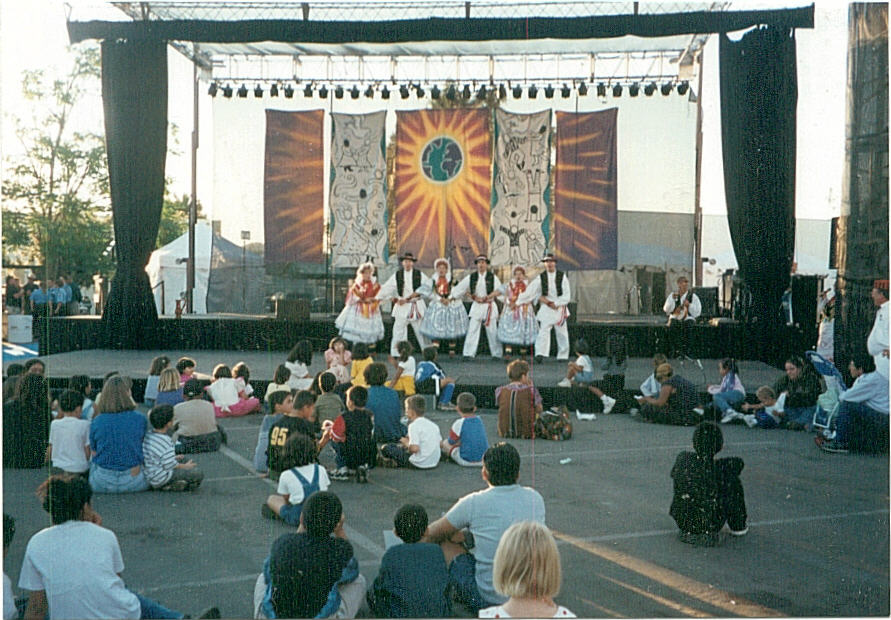 Dragi Prijatelji,
Pozivam Vas da nam se pridruzite u predstavljanju "Lijepe Nase" na dvanaestom Internationalnom festivalu prijateljstva koji se vec tradicionalno odrzava u El Cajonu (San Diego)CA.Ove godine ce to biti u Rujnu (Septebru) 28 i 29. i to od 10 AM -10 PM u subotu i od 11 AM- 6 PM u Nedjelju.
Hrvatsku cemo predstaviti po treci put na ovom festivalu,kao jednu od 60 drzava koje sudjeluju ovegodine. Mi cemo pokazati nase kulinarske specijalitete,rucne radove ,knjige o Hrvatskoj,turisticko-propagandne razglednice,video-tape,hrvatske nosnje,souvenire i jos puno, puno toga s cime se mozemo ponositi.Ne svecanom otvorenju ce nas predstviti prava hrvatska ljepotica 16-godisnja djevojka iz San Diega, Mariana Pandza koja to vec cini trecu godinu uzastopno i vrlouspjesno. Za hranu (kolace i raznjice,salate,palacinke) ce se pobrinuti nekoliko obitelji i duzna sam ih spomenuti posto sve to cine VOLONTERSKI a to su Ana i Nikola Pandza,Mile Marcelic,Ina i Ante Pocina,Ivana i Anthony Pocina,Nadja i John Pandza,Ivanka i Josip Zagorscak,Marija Lovric,Marija Pitesa,Eva Rusak,Gdja Milica i jos dosta drugih vrijednih volontera koji nam pomazu oko transporta,montaza,prodaje hrane i suvenira, te nas nekoliko razgovara sa posjetiocima i predstavnicima media o mogucnostima za turisicke posjete i od ove godine cemo im ponuditi program za organiziranu grupnu posjetu vec za slijedecu godinu.
Za sav ovaj obiman posao potrebno nam je oko 40 volontera.Statistika pokazuje da ovaj festival posjeti oko 25-30 000 posjetitelja.Intersantno je to sto se skolska djeca natjecu tko ce skupiti na vise jezika pecate sa izvornom rijeci "Prijateljstvo" - "Friendship".Svaka Drzava ima od 30-45 minuta vrijeme da se predstavi na pozornici i to sa pjesmom,plesom i nosnjama.Nas ce i ove godine predstaviti Tamburica iz Crkve Sv.Ante iz Los Angelesa sa plesnom grupom "Kolo" i pjevac Bozidar- Bosko Ciklic.Dolaze nam u pomoc i prijatelji iz San Josea,Hollywooda,San Pedra i LA. Ove godine nase vrijeme na pozornici ce biti u Nedjelju poslije podne. Pozivam Vas da nam se pridruzite u bilo koje vrijeme, ali ako mozete birati vrijeme onda neka to bude u Nedjelju, pa da zajedno zapjevamo - izvodjaci i publika- lijepe nase pjesme, te da prisustvujete lijepoj ceremoniji zatvaranja Festivala. Za sve informacije /oko smjestaja i doceka / mozete se obratiti na tel:619-239-6522 , 619-920-5467,619-275-1144
Srdacan pozdrav i dovidjenja u San Diegu - El Cajonu 09/28-29/2002
Bozena-Boska Marcelic
E-mail:boska1@cox.net It is important to be present. Support events like this. It is multilevel andbeneficial for all of us. Nenad Bach www.CroatianWorld.net
|
|
|




 full story
 printer version