Sponsored Ads
|
Articles by this Author
»
(E) Job Placement at MountSinai, New York $40-46K
|
The job pays between $40 to46,000
If you know of any Croatians looking for a job, please send this tothem........
Presently there is one position available for a person that has an AS or BE degree in electronics from anaccredited program.
Experience would be a plus. The job entails repairing & maintaining
various types of Medical Equipment. A minimum of 1 year commitment is required.
The job pays betw 40 to 46K with full medical benefits & a 410K package.
Those interested can fax a resume to Joe Bogovic at 212 - 860-3669. joe.bogovic@msnyuhealth.org
Thanks -
|
»
(E) Drazen Petrovic of Croatia in Basketball Hall of Fame
|
Our Hero PetrovicGoes Into History 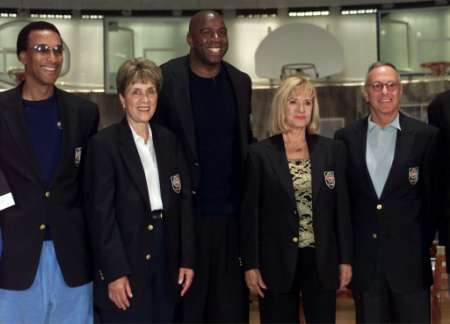
Basketball Hall of Fame inductees (L-R) owner Manny Jackson of the Harlem Globetrotters, coach Kay Yow of North Carolina State, player Earvin "Magic" Johnson of the Los Angeles Lakers, the late player Drazen Petrovic of Croatia's mother Biserak Petrovic and coach Larry Brown of the Philadelphia 76ers pose, September 27, 2002 in the newly constructed Basketball Hall of Fame in Springfield, Massachusetts. They will be formally inducted later in the day. REUTERS/Jim Bourg
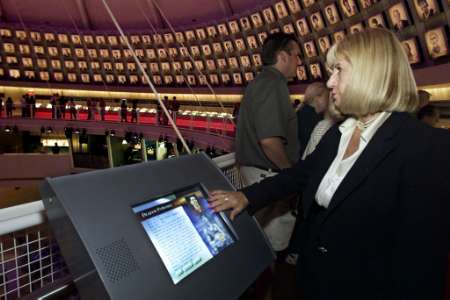
Biserak Petrovic, mother of deceased NBA player Drazen Petrovic, of Croatia, touches her son's picture while viewing a display in his memory in the "Honors Ring" in the main hall of the newly constructed Basketball Hall of Fame, September 28, 2002 in Springfield, Massachusetts. Petrovic, who had been enshrined posthumously the night before, was killed in an auto crash in the midst of his NBA career in 1993. An "Honors Ring" of enshrinees can be seen suspended above. REUTERS/Jim Bourg
|
»
(E) NFCA Works to Increase Funding to Croatia
|
NFCA
NATIONAL FEDERATION OF CROATIAN AMERICANS
1329 CONNECTICUT AVENUE, NW WASHINGTON, D.C. 20036
PHONE: (202) 331-2830 NFCAhdq@aol.com FAX: (202) 331-0050
For Immediate Release: September 25, 2002
Media Contact: Joe Foley (tel: 301-294-0937)
APPROPRIATIONS COMMITTEE OF THE U.S. HOUSE OF REPRESENTATIVES ACTS ON REQUEST TO INCREASE U.S. FUNDING FOR CROATIA
WASHINGTON, D.C. - On September 12, 2002, the Appropriations Committee of the U.S. House of Representatives marked up and passed legislation entitled the "Foreign Operations, Export Financing, and Related Programs Appropriations Bill, 2003." A provision added to the Committee’s Report -- under the heading "Assistance for Eastern Europe and the Baltic States" -- provides an additional $25 million above the President’s budget request of $495 million for this region for Fiscal Year 2003. As the Committee Report to the Bill reads, "The increase above the budget request is intended for additional assistance for Montenegro, the Baltic States, Croatia and regional efforts to solidify democratic gains through the National Endowment for Democracy and other institutions." The funding measure is now on its way to the Floor of the House of Representatives and eventual approval by the full U.S. Congress.
National Federation of Croatian Americans (NFCA) President John Kraljic said that this potential increase in economic assistance for which Croatia is eligible "will help to aid the sustained stabilization and general expansion of the economy of Croatia. The NFCA in Washington, along with its lobbying firm, Foley Government and Public Affairs Inc., plans to continue to strongly support and play an active public affairs role on such important funding legislation and international affairs initiatives affecting Croatia in Washington with the U.S. Department of State, the U.S. Congress, and other Federal entities," Kraljic added.
Kraljic also cited the strong support of U.S. Representatives Maurice Hinchey (D-NY), who serves on the House Appropriations Committee, and George Radanovich (R-CA). Both Members of Congress petitioned the Committee to expand this significant international economic assistance program and to include additional funding for Croatia, a remarkable achievement in light of the increasingly tight budget situation in Washington. Kraljic noted that: "It is time for Croatian Americans to now write to their Congressional Representatives and ask them to protect this additional funding for Croatia as it moves through Congress. We must also ask our Members of Congress to vote to pass the Bill when it comes to the House and Senate Floors this Fall and ask their Congressional colleagues to support the legislation (please contact your Member of Congress at 202-225-3121)."
Kraljic further noted that the fight for increased aid is only half the battle. "We are also concerned that the money be spent wisely and not be used to provide funding to organizations that do not have Croatia’s best interests at heart. The NFCA will continue to fight on this front as well to protect the interests of Croatians on this matter."
The NFCA is a Washington, D.C.-based national umbrella organization that represents over 20 Croatian American groups and
|
»
(E) This is simply the lamest excuse I have ever heard
|
FOR HOW LONG SHALL WE TOLERATE Dear All: Earlier this week Brian Gallagher sent word out to some of us that the Prosecutor would not seek to prove the genocide charges against Slobo with respect to the Croats of BH. This AP story from today confirms Brian's detective work where we read the following:
"Prosecutors say time restraints have forced them to limit the scope of their case, and they will no longer attempt to prove genocide against Bosnian Croats, part of their initial allegation.
``We shall prove the genocide charges related to the crimes committed by Milosevic against the Bosnian Muslims,'' prosecution spokeswoman Florence Hartmann said Wednesday. ``We cannot deal with all the crimes committed in Bosnia.''
This is simply an outrage and the lamest excuse I have ever heard. One thought - some of us have been writing to del Ponte. Perhaps instead of the Prosecutor we should write to the Tribunal itself (Ibelieve the Tribunal's spokesman is James Lansdale) protesting this act and asking that in the name of BH's Croat victims the Tribunal take it upon itself to ask the Prosecutor how much time would be needed to prove its case re genocide against Croats.
This is important as I believe there are no other charges concerning genocide against Croats whether in Croatia or BH which have been brought against anyone else (except possibly Karadzic and Mladic). John Kraljic Op-ed Where is the discussion for WAR REPARATION? Where are our rightsin Vojvodina and Montenegro? Who will PAY for destruction of our country? Theseare the questions that should be raised over and over. Then these"Genocide" questions would never in doubt. What is Croatian Governmentdoing about these issues? NB
Milosevic Faces Next Stage of Trial
By THE ASSOCIATED PRESS
Filed at 2:20 a.m. ET
THE HAGUE, Netherlands (AP) -- U.N. prosecutors face their greatest challenge yet in the next stage of Slobodan Milosevic's trial: proving allegations that he orchestrated a campaign of genocide to achieve Serbian supremacy in Bosnia.
Prosecutors open their case on the 1991-1995 wars in Croatia and Bosnia Thursday when landmark proceedings resume at the Yugoslav war crimes tribunal after a two-week break.
In coming months, they plan to call 177 witnesses to back up charges that Milosevic masterminded a scheme to wipe out the Muslim population in the worst crimes in Europe since the Holocaust.
The evidence: telephone intercepts, statements from Milosevic's close political associates, party documents, military directives and testimony from survivors of massacres by Serb soldiers.
The prosecution took nearly 100 days of court hearings and 124 witnesses to present the first part of their indictment against Milosevic for the Serb crackdown on ethnic Albanians in Kosovo in 1998-1999.
Judges have set a deadline of May 16 for prosecutors to present the remaining 61 counts of war crimes against the former Yugoslav -- and Serbian -- strongman, covering every violation of international law in the court's statute.
While the crimes in the second indictment seem more obvious and widespread -- the tribunal has already convicted a Bosnian Serb general of genocide in Bosnia -- it will be harder to prove Milosevic's involvement.
``It is more difficult because he was not the head of the country at war,'' said Judith Armatta of the Coalition for International Justice. ``He was the president of Serbia, not Yugoslavia'' at the time, she said.
Because there was no formal chain of command linking Milosevic to the crimes, prosecutors need to show that he was part of ``a joint criminal enterprise,'' which planned and coordinated systematic attacks of non-Serbs, she said. They need to show his intent and knowledge of the crimes.
``You have to prove his hands-on role and that Milosevic came to power on the back of Serb nationalism over a period of time and used that to achieve his goal of a 'Greater Serbia,''' Armatta said.
The crimes in Kosovo logically fell under Milosevic's responsibility because, as president, he was also the commander in chief of the forces committing atrocities, tribunal officials have said. But in Bosnia, the burden of proof is tougher.
Prosecutors allege that as the president of Serbia, one of the six republics that made up the Yugoslav Federation, Milosevic exercised power over the entire region by transforming formerly multiethnic Yugoslav institutions into Serb-dominated instruments of war.
Milosevic assumed control of police units and the Yugoslav army, purged political opponents and illegally armed pockets of rebel Serb nationalists to fuel a fight along ethnic lines, prosecutors allege.
Under his command, those military forces set up ``concentration-style'' camps where prisoners were tortured, raped and murdered. The ``ethnic cleansing'' policy virtually wiped out the non-Serb population in large regions of Croatia and Bosnia and led to the killing of thousands.
Hundreds of thousands more refugees fled to neighboring countries, many of them never to return.
Prosecutors say time restraints have forced them to limit the scope of their case, and they will no longer attempt to prove genocide against Bosnian Croats, part of their initial allegation.
``We shall prove the genocide charges related to the crimes committed by Milosevic against the Bosnian Muslims,'' prosecution spokeswoman Florence Hartmann said Wednesday. ``We cannot deal with all the crimes committed in Bosnia.''
When prosecutors finish, Milosevic will present his defense case before the panel of three tribunal judges. The 61-year-old has refused the help of a court lawyer and has conducted his own cross-examinations, working though weekends and court recesses.
The pressure became measurable this year when hearings were postponed twice for two weeks when Milosevic had the flu and high fever.
More recently, doctors warned that Milosevic is at serious risk of a heart attack and the court ordered that the daily proceedings be broken up by a four-day weekend every two weeks.
|
»
(H) Povelja o moru hrvatskom - poziv na potporu i potpis
|
Povelja omoru hrvatskom Dragi Svi,
u petak 20. rujna 2002. u 10.00 sati prije podne, u Zlatnoj dvorani Hrvatskog instituta za povijest, u Zagrebu u Opatičkoj 10. svečano će se potpisati Povelju o moru hrvatskom kojom tražimo tri stvari.
l. nema promjene granica Republike Hrvatske: ni pedlja zemlje ni kapi mora tuđinu,
2. zahtjevamo od Hrvatskog sabora da proglasi isključivi gospodarski pojas (exclusive economic zone) na koji Hrvatska ima pravo i s kojim dobija gotovo 60.000km2 Jadranskog mora u svoja suverena prava i jurisdikciju,
3. nema prodaje hrvatske zemlje i hrvatskih dobara.
Povelju su pripremali hrvatski intelektualci D. Zvonimir Šeparović, akademici Vladimir Ibler i Nenad Cambi, profesori dr Marko Branica,Institut "Ruđer Bošković", dr Antoaneta Požar-Domac, mons. Slobodan Štambuk, biskup bračko-hvarsko-viški, predsjednik Vijeća za pomorce HBK, dr Ivbo Babić, biv. rektor Sveučilišta u Splitu, dr Ivona Marasović, Oceanografski institut Split, dr Igor Fisković, dr Paula Durbešić, dr Šime Meštrović.
Očekuje se da će na svečanosti među prvima potpisati:Akad. Ivo Padovan, HAZU, Igor Zidić, predsjednik Matice hrvatske, dr Mirko Valentić, ravnatelj Hrvatskog instituta za ppovijest, prof. Jasna Helena Mencer, rektorica Sveučilišta u Zagrebu, prof.Damir Magaš, rektor Sveučilišta u Zadru,, prof. Bernardin Peroš, prorektor Sveučilišta u Splitu, Ivo Vrdoljak, voditelj Mare Nostrum Croaticum, dr Ante Rendić-Miočević, ravnatelj Arheološkog muzeja u Zagrebu, prof. Ivo Rendić-Miočević, povjesničar Zadar/Rijeka, prof. Milan Bertoša, Pula, dr Adam Benović, Dubrovnik, prof-. hrvoje Kačić,Zagreb/Dubrovnik, prof. Ivna Bućan, Udruga Lijepa naša Kaštela/Split, prof. Branimir Lukšić, župan spšlitsko-dalmatinske županije.
Povelju su podržali i predstavnici strukovnih udruga Hrvatske:Petar Baranović, udruga ribara,Lenko Garbin, udruga brodara, Zadar,Zlatko Sarić, Sabor otočana.
U prilogu imate integralni tekst Povelje o moru hrvatskom.
Ako ste suglasni sa našim zahtjevima molimo Vas javite to na moj e-mail i tako ćete i Vi postati potpisnikom Povelje.
Povelju ćemo s našim brodarima, mornarima i ribarima odnijeti na krajnju crtu gospodarskog pojasa Hrvatske da bismo dokazali svijetu i susjedima da, ne samo da se ne mogu nadati ustupcima Hrvatske u pitanjima kopna i morskih granica, već da ćemo uzeti ono što nam pripada prema Konvenciji o pravu mora iz 1982. godine.
Za inicijativnu skupinu koja je pripremila Povelju
Dr Zvonimir Šeparović zvonimir.separovic@zg.tel.hr
POVELJA O MORU HRVATSKOM
Prije 25 tisuća godina more je bilo 96 metara ispod sadašnje razine kada počinje njegovo dizanje i nastanak Jadranskog mora. Od stoljeća sedmog na njegove su obale došli Hrvati. Mali rukavac planetarnog oceana, hrvatski dio Jadrana, svjetski je uzorak čarobne ljepote i čudesne ljudske kulture klesane u kamenu. Zahvaljujući moru Hrvati su odavno postali građani svijeta, mornari u lađi koja uči skromnosti i strpljenju u plovidbi prema vječnosti. Paluba svjedoči mjeru koliko smo mali i slabi, dok nam pučina potvrđuje koliko smo veliki i važni.
Povijest Hrvata na moru ukratko je povijest borbe za održanje na svojim obalama i u svojim vodama. Sve do naših dana.
Mi smo prva generacija koja je san pretvorila u stvarnost, svim žrtvama tisućugodišnjeg križnog puta dala smisao, a mudrosti predaka priznanje: hrvatska se lađa 22. svibnja 1992. godine, ravnopravna s drugima, usidrila pred zgradom Ujedinjenih naroda, a naš barjak, jednak ostalima, objavio je svijetu: ŤImamo Hrvatsku!ť
Republika Hrvatska, kao međunarodno priznata, suverena, nezavisna država, članica Ujedinjenih naroda, ostvaruje svoja suverena prava u međunarodno priznatim granicama, u skladu s međunarodnim pravom i običajima, na kopnu i moru.
ŤBožićnim Ustavomť iz 1990. naglašen je suverenitet Republike Hrvatske koji je Ťneotuđiv, nedjeljiv i neprenosivť, Hrvatska Ťostvaruje, u skladu sa međunarodnim pravom, suverena prava i jurisdikciju u morskim područjima i u podmorju Jadranskog mora izvan državnog područja do granica sa susjedima(članak 2.),
Ťoružane snage štite njezin suverenitet i neovisnost i brane njenu teritorijalnu cjelovitostť(članak 7.), Ťťmore, morska obala i otoci, zračni prostor, rudno blago i druga prirodna bogatstva, ali i zemljište, šume, biljni i životinjski svijet i drugi dijelovi prirode, nekretnine i stvari od osobitog kulturnog, povijesnog, gospodarskog i ekološkog značenja, za koje je zakonom određeno da su od interesa za Republiku, imaju njezinu osobitu zaštituť(članak 52)
Republika Hrvatska je obalna i pomorska zemlja, koja ima raskošno lijepu, razvedenu, bogatu obalu i svoje modro more kojim uranjamo u sredozemnu kolijevku kulture čovječanstva. Naša kamena naselja, katedrale i zidine, brodovi za ribare i kapetane,ťskalinadeť maslinika i vinograda, dokaz su našeg postojanja i kulture.
Posebnu su povijesnu vrijednost imali statuti naših gradova i otoka, koji su uređivali odnose među ljudima i u zajednici, posebno vrijedni u onome po čemu su drugačiji i bolji od običaja svoga vremena. Korčulanski statut iz 1214. određuje reciprocitet u odnosu prema susjedima s druge strane granice, a posebno uređuje spašavanje na moru, zabranjuje otimanje onoga što je u moru poslije brodoloma nađeno. Dubrovački statut iz 1272. zabranjuje ropstvo (…ťkada rob stupi na dubrovačku lađu postaje slobodan čovjekť). Poljički statut iz 1440. godine propisuje da će se izdajice Ťu našoj zemlji kada tko predaje sebe i naše zemlje drugom gospodaru protiv volje ostalih plemenitih ljudiťprognati.
Hrvatska pod tuđinskom vlašću nikada nije uspjela do kraja razviti i zaštiti svoje vrijednosti na moru.
Republika Hrvatska nije iskoristila pravo koje je dobila Konvencijom o pravu mora iz 1982. da uvede svoj isključivi gospodarski pojas na Jadranu. Istina učinjen je prvi krupan korak u tom smjeru. Pomorskim je zakonikom iz 1994. godine rečeno: ťU svome gospodarskom pojasu i u epikontinentskom pojasu Republika Hrvatska ostvaruje suverena prava i jurisdikciju radi istraživanja, iskorištavanja, zaštite očuvanja i unapređivanja prirodnih morskih bogatstava, uključujući bogatstva na morskome dnu i u morskom podzemlju te radi obavljanja drugih gospodarskih djelatnosti. Republika Hrvatska štiti more od onečišćenja, čuva i unapređuje morski okolišť (članak 6. Pomorskog zakonika). Ovime je zakonodavac još 1994. godine pokazao da uviđa važnost isključivog gospodarskog pojasa, ali on nije proglašen. U ovom trenutku u Saborskoj je proceduri prijedlog za uvođenje gospodarskog pojasa, međutim, Vlada nije ispunila svoje obveze i tako se postupak ne može okončati.
Hrvatska je međunarodnopravna doktrina (Ibler, Rudolf, Degan, Vukas, Seršić, Barić-Punda, Grabovac, Perišić, Lakoš, Lulić, Turkalj i dr.) bez rezerve za uvođenje isključivog gospodarskog pojasa u Republici Hrvatskoj.
Pravo proglasiti i imati gospodarski pojas Ťza Hrvatsku predstavlja jednu jedinu mogućnost da ona ostvari određenu, prostorno ograničenu pravnu ekspanziju u nenaseljeni prostor – more. Takva ekspanzija temelji na zemljopisnim činjenicama i na pozitivnom međunarodnom pravu. Radi se, dakle, o mirnom i nedvojbeno dopustivom proširenju vlasti obalne države. A takvu legalnu i legitimnu Ťekspanzijuť ostvarilo je do sada najmanje stotinu obalnih država, a da u svezi s tim nije zabilježen niti jedan prosvjed nekog subjekta međunarodnog prava uperen protiv takve Ťekspanzijeť (akademik Vladimir Ibler: Pravo Republike Hrvatske da proglasi svoj isključivi gospodarski pojas, Rad HAZU, 1996)
U gospodarskom pojasu obalna država ima suverena prava radi istraživanja i iskorištavanja, očuvanja i gospodarenja živim i neživim prirodnim bogatstvima morta i podmorja, te glede drugih djelatnosti radi ekonomskog istraživanja i iskorištavanja gospodarskog pojasa, kao što je proizvodnja energije korištenjem vode, struje i vjetrova. Osim toga ona ima jurisdikciju glede podizanja i upotrebe umjetnih otoka, uređaja i naprava, znanstvenog istraživanja i zaštite morskog okoliša. Obalna država ima pravo optimalno iskorištavati živa bogatstva u svom gospodarskom pojasu – ona određuje cjelokupni dopustivi ulov koji ona smije sama izloviti, ako za to ima mogućnosti. Ako to ne može, ona mora sporazumima, uz naknadu, dati drugim državama pristup višku dopustivog ulova. Glede neživih prirodnih bogatstava gospodarskog pojasa u Konvenciji o pravu mora nema bilo kakvih ograničenja suverenih prava obalne države.
Prema tome, proglašenje isključivog gospodarskog pojasa, VELIČINE 60.000 KM2, je naše suvereno pravo . To pravo ne zastarijeva, ali, nema razloga odlaganju odluke o proglašenju jer danomice nastaju enormne štete posebno u ribljem fondu, arheološkim dobrima pod morem i u morskom okolišu. Dok se neopravdano čeka i odlaže odluku bez pravog razloga, drugi nemilosrdno pljačkaju i osiromašuju veliki dio Jadranskog mora na kojeg bismo imali suverena prava i jurisdikciju, da smo proglasili isključivi gospodarski pojas.
Ova je Povelja rezultat razmišljanja učenih ljudi koji su zabrinuti sadašnjim stanjem stvari i koje hoće promijeniti.
ZABRINUTI SMO
najnovijim pojavama ugrožavanja suvereniteta Republike Hrvatske na moru i kopnu, na pojedinim graničnim točkama, od Pirana do Neuma i Prevlake,
zabrinuti pojavama pljačke prirodnih, gospodarskih i kulturnih vrijednosti, zabrinuti pojavama rasprodaje hrvatskih nacionalnih vrijednosti, a u želji da se ostvari sva prava koja nam kao suverenoj obalnoj i pomorskoj zemlji pripadaju, obraćamo se hrvatskoj javnosti, Hrvatskom Saboru i Vladi Republike Hrvatske sa slijedećim
ZAHTJEVIMA:
1.Granice Republike Hrvatske nitko ne smije dovoditi u pitanje, one nisu i ne smiju biti predmetom pregovaranja, trgovanja ili arbitriranja. Ono što smo priznanjem Hrvatske dobili samo su ostaci ostataka (reliquie reliquiarum) povijesne Hrvatske.
Ni pedlja hrvatske zemlje, ni kaplje hrvatskoga mora.
2.Republika Hrvatska, kao obalna i pomorska zemlja, ima pravo na isključivi gospodarski pojas na Jadranskom moru, i to, kako ističe dr Adam Benović: u dnu, na dnu, u vodi i na površini, dakle četiri puta 60.000 km2 morskoga blaga.
Hrvatski sabor treba najhitnije
PROGLASITI ISKLJUČIVI GOSPODARSKI POJAS
na Jadranskom moru u skladu sa Konvencijom o pravu mora iz 1982. godine i Pomorskog zakonika Hrvatske iz 1994. godine, čime će se znatno proširiti suverena prava i jurisdikciju Republike Hrvatske, u skladu sa normama međunarodnog prava.
3.Zabraniti otuđivanje i svaku prodaju obale i mora u bilo kojem obliku. Naše su obale i naše more opće nacionalno dobro s kojim se ne smije raspolagati i trgovati. Moramo ih sačuvati za ovu i buduće generacije.
Ovom se Poveljom hoće očuvati ono što imamo i steći ono na što imamo pravo
ŤMore je jedna velika Božja oranica, poručio je pomorcima na Svetog Nikolu 1997. biskup bračko- hvarsko-viški mons. Slobodan Štambuk, predsjednik Vijeća za pomorce pri Hrvatskoj biskupskoj konferenciji. Zove nas na istraživanje dubina i upozorava da se ne smijemo tek na plićacima zaustavljati..More je najstariji i najsačuvaniji ljudski put i potrebno je zaista otvorenih očiju, a ne kao slijepi putnik morem putovati. Otvorena oka i otvorena srca, kao veliki i sveti zaštitnik pomoraca sv. Biskup Nikola.ťOve je godine u jednom intervjuu poručio:ťNiti jedan izvor, pa ni Jadran, ne bi smio biti na Ťraspolaganjuť samo ovoj našoj generaciji. Mi smo odgovorni za budućnost čistog i plodnog Jadrana. Sve države koje imaju more i te kako ozbiljno moraju doraditi svoje zakone i strogo ih provoditi ako žele da more ostane izvor zdrave hrane i za buduće naraštaje…Zamišljam more ne samo kao zanimljivu Ťsliku životať, već kao Ťfakultet života i duhovnostiť.
Ovu Povelju o moru hrvatskom simbolično ćemo odnijeti s našim brodovima daleko na pučinu, do crte naših suverenih prava koja nam je svijet dao, a Hrvatski Sabor treba čim prije proglasiti. Da ne bude kasno!
Ovu Povelju potpisuju svi kojima je do mora hrvatskog i suverene Republike Hrvatske u njenim međunarodno priznatim granicama.
Povelju su već pozdravili znanstvenici, akademici i profesori, brodari i pomorci, otočani i ribari, oni koji more poznaju i istražuju, kao i oni koji od mora i za more žive.
Obnovi, Gospodine,/lice hrvatske zemlje Tvoje/
A Hrvati neka u kolo rukom o ruku/
Granice tisućljetne Hrvatske označe.
Pošalji Duha Svetoga, Gospodine, i obnovi lice hrvatske zemlje Tvojeť
(iz pjesme Vere Valčić ŤDuhovi 1991.ť)
Označimo rukom o ruku, kako hrvatska pjesnikinja reče, tisućljetne granice Hrvatske.
I našim potpisom.
U Zagrebu, 20. rujna 2002. godine, u Zlatnoj dvorani u Hrvatskom institutu za povijest, Opatička 10
|
»
(E) Hold the Hague accountable - "Who guards the guardians."
|
Hold the Hague accountable (WashingtonTimes)
Jeffrey T. Kuhner
Since ancient Greece, one of the central questions in Western political life is: "Who guards the guardians."This is especially pertinent regarding the international criminal
tribunal for the former Yugoslavia (ICTY) at The Hague. The tribunal was
created in 1993 by the UnitedNations Security Council; it was charged with the responsibility of
bringing to justice those who committed war crimes during the violent
break up of Yugoslavia. Sadly, The Hague has been a disappointment: The prosecutor's office has engaged inabuses of power and issued flawed indictments that pose a threat to U.S.
national interests. The most obvious example of the tribunal's incompetence is the
current trial of former Serb strongman Slobodan Milosevic. This has been
a public relations disaster for The Hague, as Mr. Milosevic has put the prosecutor's office on the
defensive, charging that he is the victim of a Western smear campaign.
Despite the overwhelming evidence that the Butcher of Belgrade masterminded the ethnic-cleansing campaigns in Croatia, Bosnia andKosovo, the prosecution has so far failed to document Mr. Milosevic's numerous crimes. These includethe destruction of Vukovar, the massacre of more than 7,000 civilians atSrebrenica, the savage shelling of Sarajevo, and the murder of countless ethnic Albanians,whose graves are now being discovered all over Serbia.The tribunal's chief prosecutor, Carla Del Ponte — like mostEuropean leftists — is uncomfortable with the notion of moral absolutes. She refuses to acknowledge thatMr. Milosevic in particular, and the Serbs in general, bear the brunt of responsibility for the war crimes committed in the Balkans. Hence,she is looking for an ethnic scapegoat to offset the complaints from Belgrade that her office isdemonstrating "bias" against the Serbs. Mrs. Del Ponte believes she has found it in the Croats.In June 2001, the prosecutor's office issued an indictment for Croatian Gen. Ante Gotovina on charges that he exercised "command
responsibility" over a 1995 military operation in which Zagreb recovered territories seized by rebel Serbforces during Croatia's successful drive for independence in 1991. The
operation resulted in the mass exodus of 150,000 ethnic Serbs from Croatia. The United Statessupported the offensive because it rightly concluded that Croatia was
pivotal to altering the strategic balance of power in the Balkans. The operation not only restoredCroatia's territorial integrity, but also paved the way for the Dayton
peace agreement that ended the war in neighboring Bosnia.
The Gotovina indictment is deeply flawed; it is also revolutionary in its implications for international criminal law. Thetheory of "command responsibility" violates the
basic tenet of the definition of a war crime — the principle of personal responsibility for one's actions. The Croatian general is notaccused of individually committing or ordering atrocities; he is simply guilty of being in "command" whenalleged war crimes were committed. The ultimate goal of the indictment is not only to punish the Croatsfor exercising their legitimate right to self-defense, but to make war itself a crime. Rather than dropping the charges against Gen. Gotovina, Mrs. DelPonte's office is now examining whether to expand the indictment to
include high-ranking U.S.officials — such as former President Bill Clinton — on the grounds thatthey exercised ultimate "command responsibility" for the operation. Troubled by the implications of the Gotovina indictment, theState Department has asked the prosecutor's office to transfer cases involving Croatian military officialsback to the domestic courts in Zagreb. But Mrs. Del Ponte continues to thumb her nose at the United States, demanding that Gen. Gotovina bearrested and sent to The Hague to face trial. Furthermore, the prosecutor's office is abusing its powers. ICTYspokesman, Florence Hartmann, has directly lobbied journalists and media outlets in Croatia,demanding that pro-Gotovina coverage be dropped. She has sought to bully and intimidate reporters asking about the ICTY's basis for the
Gotovina indictment. Mrs. Del Ponte is now requesting that her mandate as chief
prosecutor be extended past its September 2003 expiration deadline until
Mr. Milosevic's trial is over.Instead of renewing her mandate, the Bush administration should demandan independent investigation of Mrs. Del Ponte's office for its abuses
of power, its unethical indictment of Gen. Gotovina and its utter incompetence in prosecuting
the greatest mass murderer of the late-20th century. At the very least, the United States should use its veto at theU.N. Security Council next year to block Mrs. Del Ponte's reappointment.
Washington must hold The Hague accountable for its actions. If it doesn't, who will?
Jeffrey T. Kuhner is an assistant national editor at The Washington Times.
|
»
(E) "What is Anti-Semitism" article
|
What isAnti-Semitism Dear all,
below my letter you will find the letter from Mr. Newmann answering my
first letter and above that is my answer to it.
Hilda
From: hmfgsf@juno.com
To: mneumann@trentu.ca
Date: Wed, 18 Sep 2002 19:59:57 -0700
Subject: Re: "What is Anti-Semitism" article
Dear Mr. Neumann,
Thank you for your answer.
I would just like to make one more remark in regard to your letter. I did
not mean to mention cardinal Stepinac as determining the Croatian
character in general, but he and many other Croatians did save hundreds
of Jews, and since I lived there during the first Yugoslavia and during
the war I know that Croatians simply are not anti-Semitic. No doubt some
individuals were, as in many other countries, but certainly not to the
extent that one could call because of it such nations anti-Semitic. This
is exactly the point you made in your article. Also, when you write about
"contemporary sympathies with the Ustashe" it should be more accurately
called "temporary sympathies", because when the Ustashe first appeared,
Croatians, hoping to be finally free from Serb subjugation expected to
have a free Croatian state. It did not take them long to realize what
kind of state Pavelic was establishing - and that was the end of the
euphoria. Just remember that Croatians formed 11 of the 13 divisions of
the Partisans under Tito - and the majority were not communists.
I don't understand your statement that " Were there an anti-Semitic
tradition even over the last sixty years, that would suffice to justify
my statement". Four years of the Ustasha regime did not make a tradition
where no tradition existed.
Sincerely,
Hilda M. Foley
On Wed, 18 Sep 2002 10:47:00 -0400 mneumann mneumann@trentu.ca writes:
Thank you for your message.
I will certainly review the facts. To say that Croatia is
traditionally anti-Semitic is not necessarily to make a sweeping historical claim;
some traditions are not that old. Though the facts about Stepanic are
genuinely in dispute, his role hardly determines the general
character of Croatian society at any point in its history, and reports about
contemporary sympathies with the Ustashe are not confined to Serb
propaganda material. Were there an anti-Semitic tradition even over
the last sixty years, that would suffice to justify my statement.
However I do realize that Croatia has recently prosecuted war
criminals and that almost everything about Croatian history is in dispute. I
will look for genuinely neutral sources on this matter.
Michael Neumann
hmfgsf@juno.com wrote:
Dear Mr. Neumann:
Just happen to come across your article "What is Anti-Semitism" in
the June 4th issue of Counterpunch which I found very thoughtful and
true. Yet as a Croatian I found your statement that "Croatia (and
Ukraine) are traditionally anti-Semitic" very disturbing because of its gross
inaccuracy. Historically, for centuries, Croatia was never known
to be an anti-Semitic country yet its reputation as such suffers to this
day because of the four years of the Ustasha puppet regime of WWII ,
which was established by Nazi Germany and fascist Italy and pursued
their anti-Semitic policies. There was never an election and the large
majority of Croatians were appalled by the treatment of Jews. Croats,
especially Cardinal Stepinac, saved hundreds of Jews destined for
concentration camps. The Cardinal publicly in church spoke against the treatment
of Jews and fearlessly personally criticized Pavelic, the Ustasha
leader and head of the state. Yet after the war, the communists prosecuted him
for being a "Nazi", which of course was more than absurd. The reason
for the trumped up charges were because Cardinal Stepinac refused to break
with the Vatican and establish an "independent Croatian Church" that
Tito wanted.
You yourself, as the rest of the world, only heard the
Yugoslav/Serb propaganda regarding Croatia. Croatia never denied the crimes
committed by the Ustasha regime ( for which tens of thousands of innocent
soldiers and civilians were killed on the infamous Bleiburg "Walk of the
Cross" after the end of the war and many others wound up in Jasenovac for
just being anti communists.) In contrast the Serbs never admitted their
own war crimes but hid them from general knowledge through their large
(and still operating) propaganda network that demonized Croatia. It was
not hard to achieve, considering Serbia's dominance and subjugation of
the other nationalities comprising former Yugoslavia since its
establishment in 1918.
Isn't it strange that not one Jewish organization ever looked
into the history of Serbian anti-Semitism, fostered for centuries by the
virulently anti-Semitic Serb Orthodox Church. No one mentions that Serbia also
had a Nazi puppet regime during WWII under their general Nedic, that
rounded up and killed or delivered to the Germans thousands of Jews in
Serbia's concentration camps of Sajmiste, Banjica and others. Belgrade
proudly declared itself "Judenfrei" - "Jew free". While Croatia has built
a Memorial in Jasenovac, the Serbs destroyed any trace of their
concentration camps by bulldozing them and building over them.
Serbians' anti-Semitism goes much further back than Nazi Germany. Jews in
Belgrade were not allowed to have certain businesses or education in the
1930's or own property in the countryside. No such restrictions ever existed
in Croatia before or after WWII. I am afraid you have mixed-up the
designation "historically anti-Semitic" by naming the wrong nation.
Since you seem to be an open minded person, I hope you will also
seriously consider my writing in the spirit it is written, not as some
Croatian apologia - because there has been much of it already, but something to ponder.
Sincerely,
Hilda Maria Foley
National Federation Of Croatian Americans
|
»
(E) Belluno Ristorante HALLOWEEN PARTY in New York
|
BELLUNORISTORANTE
340 LEXINGTON AVE.
NY. NY. 10016
TEL. 212 953 3282
BELLUNO RISTORANTE
INVITES YOU TO THEIR
5 TH.
ANNUAL
HALLOWEEN PARTY
SATURDAY,
OCTOBER,
26TH2002
1030PM
TILL-?????
ENTERTANMENT & DJ
PROVIDED BY
THEO PHILIP
HORS'DOUEVRES
CASH BAR
$10.00 ADMISSION
AWARD FOR BEST COSTUME
COSTUME IS A MUST
|
»
(E) Croatian Grb Jewelry
|
CROATIAN GRB JEWELRY NOW AVAILABLE FROM HEART OF CROATIA GIFTS
“Heart of Croatia” Gifts is pleased to present high quality, custom-made 14K gold Croatian Grb/Crest charms for our most discerning buyers. Created at the request of our customers, these 2.2g, 14K gold charms are sure to please all those who enjoy owning and wearing fine jewelry. Charms come boxed and ready to give as a gift. Find our fine jewelry at:
http://croatiagifts.safeshopper.com/124/cat124.htm?307
Visit "Heart of Croatia" Gifts for all your Croatian shopping needs. We carry dolls, Croatian bears, imported ties and crystal, cookbooks, Croatian village collections, tambura pins and magnets, notecards, prints by Ivan Generalic, original art-work by Goran Generalic, and more. Visit us today atwww.croatiagifts.com!
Melissa Pintar Obenauf and Pamela Lacko Kelley, proprietors
Toll Free: 877-906-8314
|
»
(E) Wheelchairs for Croatia
|
ROTARY CLUB OF SAN PEDRO
P.O. BOX 1021, SAN PEDRO, CALIFORNIA 90733
September 3, 2002
Dear Friend:
We are writing to ask for your help with a project we are undertaking to send critically needed wheelchairs to disabled men, women, and children in Croatia. In addition to those born with disabilities, many other people have been injured in Croatia during the war and due to landmines. Often the innocent victims of landmine eruption are farmers at work in their fields or children at play. We know the difference a wheelchair can make in the life a person who was once confined to remaining at home or crawling. These wheelchairs are key to giving them increased mobility, independence and hope.
Our San Pedro Rotary Club has the opportunity to have the dollars we raise matched by organizations also working to help the disabled to become more independent. Money raised in the Croatian community will be matched by Rotarians in San Pedro and Los Angeles and then matched again by the Wheelchair Foundation. Our goal is to raise $6,000 from Croatian Community. Through the matches described above, this money will be increased to $36,000 and will pay for full container of 240 wheelchairs to be sent to Croatia. Your donation of just $25 will buy a new wheelchair costing $150, donation of $250 will buy 10 wheelchairs and so on.
We would like to appeal to all Croatian clubs and organizations to support this worthy cause.
Our community in San Pedro has so many ties to Croatia. We hope that you will give generously to help with this project. Please make your check payable to the Rotary Club of San Pedro, P.O. Box 1021, San Pedro, CA 90733, with note: wheelchairs for Croatia.
The Rotary Club of San Pedro is also sponsoring "An Evening in Croatia" - dinner on Saturday, October 19th, celebrating 80th Anniversary and honoring past presidents at the Dalmatian - American Club to raise money for this cause. Family-style dinner and entertainment will be provided featuring Croatian musicians and dancers.
If you would like to attend, please call Chuck Hanchett at (310) 547-1973.
Help by sending your gift today... Your donation will make a difference in so many lives.
Very truly yours,
Andrea Marincovich Clark Nick Hazdovac
President, 2002 - 2003 Committee Co-chair
AdriaticSP@aol.com
|
|
|




 full story
 printer version