Sponsored Ads
|
Articles by this Author
»
(E) Anthony J.Peraica Wins Cook County Commissioner - 16th District
|
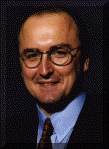
AnthonyJ.Peraica http://www.peraica.com
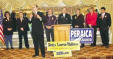
Cook County Commissioner -- 16th District
Today, Cook County government is in a state of crisis. The budget is fast-approaching $3 Billion annually. Themoney for this budget is primarily raised from one source: taxes. While most people understand the need fortaxes and our duty as citizens to help fund our government, no one likes to be taken advantage of. Our taxes aretoo high, because the budget is too high. And the budget is too high for all the wrong reasons: waste; patronage;unnecessary employees, departments, and "consultants". All of these contribute to make your tax bill an unfairburden upon you and your family. When elected your commissioner, I will fight to bring fairness to Cook Countygovernment.
How am I going to do this? By eliminating waste. My first priority will be the Forest Preserve District, where Iwill press for a complete audit of the budget and expenditures, and the imposition of a balanced budget. The mostimmediate means to accomplish this goal is to abolish the Forest Preserve Police force, which unnecessarilydrains millions of tax each and every year. I will vehemently oppose any further tax giveaways from the Countyto the District. The District must also return its focus to its reason for being: the acquisition, preservation, andmaintenance of open spaces. The District must acquire the land the taxpayers have already given it to acquire.For too long, the District has operated primarily to justify its own existence, and has forgotten that primaryfunction. Finally, I will continue my push to bring the District directly into county government, which will makeyour commissioners directly responsible to you for the performance of the District on Election Day.
I will apply a similar approach to county government as a whole. Duplication of services by local governmentsand the County is a tremendous and unnecessary drain on our tax base. Where a county department providesservices already provided by local government, it must be eliminated. I have long argued for the privatization ofcounty golf courses. While this has finally been done, it is only the tip of a very large iceberg. The county payroll is too big. Many functions of county government can be performed by the private sector, both more efficientlyand for fewer tax dollars.
Certainly not least, I will fight to bring ambulatory care and other County services directly to residents of the Western Suburbs. It is simply unfair for suburbanites to pay hundreds of millions of dollars for a hospital whichthey have no reasonable access to. Suburban residents are paying for health care, and it is only fair that they getwhat they have already paid for. If you have any concerns to share, please call me any time at (708) 443-5554.
Main Office
3339 South Halsted Street
Professional Building Suite 1-A
Chicago, Illinois 60608
(773) 890-1001
Southwest Branch Office
5130 South Archer Avenue
Chicago, Illinois 60632
(773) 735-1700
|
»
(E) Lorence Ferich - Photography
|
Lorence Ferich | If you don't believe your dreams then why are you dreaming them. | Art is like an iceberg in the ocean only 1/10 comes above the surface. | | 
When you start being afraid of going under it means that you have reached your top.
| Every move in life is just another bet, it's only the odds that are different. | | It is not a madness that turns this world upside down, it is ordinary mind. Lorence Ferich, New York | 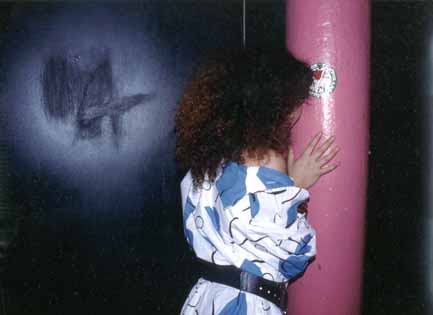 | 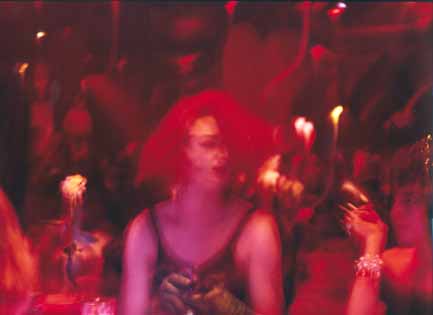 | Lorence Ferich was born in 1954, in Split, Croatia. After classic high school he moved to Paris where he studied Photography and Film (1973 - 76). Since 1976 he has lived in New York where he works as a Freelance Artist and Photographer, specializing in "night life" photography with a unique point of view. Stock photography available from Studio 54 era till "last night party." | Those who come to understand the truth, becomea part of it. Op-ed Recently, Photo Agency Corbis/Sygma acknowledged Lorence's work. Mr.Ferich is aunique man and the words that you just read are his philosophy. Pay attention tohis talent and success. If you want get in tuch with Lorence this is his email: Nenad Bach
|
»
(E) Hot air and screen savers
|

HelloCroatian World Net again! The good news is that lifeis middle aged for me these days. So? so, I went off to New Mexicoand took in the Albuquerque Balloon Fiesta last month. It is an annualevent in that city. There were 981 hot air balloons of all sizes andshapes. Fortunately, I had a digital camera with me. I noticed there is an artistsection on this website with my name there. Other artists are there, also. Nenad suggests, I agree, pictures sometimes tell better stories then words. I have returned as a wiser man who understands a few more things about life anddeeds and what is important, self-respect and empowerment. It is somethingCroatians need a daily dose of. For now my digital photos will speak forme. I shot thephotos, I resized them and I signatured them. I am now in the screensavers business. Thanks Nenad for a caring. It means a lot to methat you were willing to bother and find out and listen. Oh yes, thehigh quality photos are available for cash and business networking. Theyare not free, unless you know how to right click and copy it. Hint, winkand copy!! --Steve Renko rukav1@yahoo.com
|
»
(E) Croatia starts to catch on - Times Online
|
Croatia is beautiful,unspoild and Times Online
November 3 2002
Croatia starts to catch on
MORE THAN 20 tour operators are to start offering trips
to Croatia next year following a record rise in the
number of British visitors this summer, Sarah Turner
writes.
Tourists had been slow to revisit Croatia since the war
in neighbouring Kosovo ended three years ago, but this
summer saw numbers increase by almost a quarter.
Tourist officials now expect 110,000 Britons to travel
to the former Yugoslav country this year, a 22 per cent
increase on 2001. Simply Travel, Cosmos and Headwater
are among the big names to start offering trips there
next year.
Simply Travel features 14 hotels and 12 self-catering
properties, including four agro-tourism projects in
Istria, for next summer. “Croatia is beautiful,unspoild and you can do
everything, from a weekend in Dubrovnik to two weeks in
a villa on an island in the archipelago,” said Sally
Balcombe, a spokeswoman.
Cosmos is offering 11 hotels serviced by Pula airport in
the north, and six near Dubrovnik in the south.
“Croatia is picturesque and cultured with loads of
history. It’s probably more for the older market, rather
than groups of girls and lads,” said Jill Standeven of
Cosmos.
Croatian National Tourist Board (020-8563 7979, www.croatia.hr ); Simply Travel (020-8541 2222); Cosmos (0800-093 3922).
Copyright 2002 Times Newspapers Ltd. http://www.timesonline.co.uk/article/0,,71-465119,00.html
|
»
(E) Fr. Jozo Zovko at Most Precious Blood Church
|
Dear Croatians
Can you send this information via e-mail to all your friends on the list?
Thank you. fra Robert Zubovic
PRAYER, REFLECTIONS
AND
HEALING SERVICE
FR. JOZO ZOVKO, OFM
Tuesday, November 5, 2002
Schedule:
9:00 AM - 11:00 AM
MOST PRECIOUS BLOOD CHURCH
(Lower Church)
32-23 36th street ASTORIA
(No parking lot)
ALL CROATIANS ARE CORDIALLY INVITED
Fr. Jozo Zovko, world renowned franciscan, witness to the Medjugorje apparitions, has become one of the best known priest in the world. Many tribes have made him their chief and he is connected with many miraculous healings. Pope John Paoul II sent Fr. Jozo a thank you note through the polish pilgrims. Pope John Paul II was thankful to Fr. Jozo for his apostolate for Medjugorje, for what Fr. Jozo is doing and has done so far.
For Info:
718-932-9135
RZubovic@aol.com
|
»
(E) A New Conflict in Bosnia-Herzegovina? by Brian Gallagher
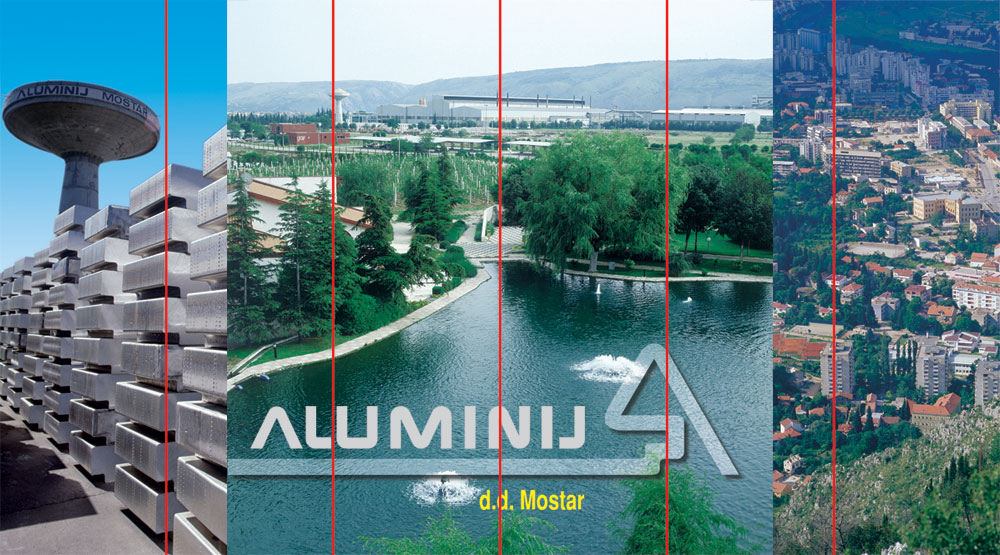
Hrvatski Vjesnik (Australia) The New Generation English Supplement 25 October 2002
A New Conflict in Bosnia-Herzegovina?
Brian Gallagher
I recently visited the city of Mostar in
Bosnia-Herzegovina (BiH). Mostar is in the Muslim
(Bosniak) - Croat Federation half of BiH, and saw
extensive fighting during the war, first during the
Serbian attack and then in the Croat-Muslim war. The
Croats are numerically outnumbered by the Bosniaks,
who effectively control Federation
state institutions.
What I found was a real cause for concern; a push for
ethnic hegemony by the Federation government against
the Croats. The Federation government is attempting to
appropriate the country's most successful company,
Aluminij (Aluminium) from the Croats. Disturbingly
still, massive arms dumps have been discovered in
Bosniak East Mostar.
I visited the Aluminij factory. Aluminij was
severely damaged by the Serbs in 1992. The local
Croats rebuilt the company. Currently it employs 850
people, the company is 60% owned by the workers, the
government having a stake of 35%.
Aluminij produces 50% of all BiH exports and has
forged partnerships with companies in America and the
EU such as Daimler Chrysler and Fiat and could expand.
This is an incredible feat to have occurred in BiH.
All the more so when one considers that the initial
funding to rebuild the company came from Croatia; the
government and the international community contributed
nothing.
The importance to the region of Aluminij cannot be
underestimated; 30,000 people are employed directly or
indirectly by the company. Further, revenue for all
BiH is provided by Aluminij’s use of state
electricity.
Incredibly, the Federation government - and certain of
their international supporters - wish to put this at
risk. They want to takeover the company, claiming
irregularities in its privatisation, and complaining
about its ‘mono-ethnic’ workforce, stating that
non-Croat workers who lost their jobs during the war
have not been re-employed. Mono-ethnic companies in
BiH are as a result of the war; Aluminij is hardly
unique. Other, less profitable ‘mono-ethnic’ employers
are left alone.
Nonetheless I asked the Deputy Director of the company
about this. He informed me that the company had
complied with the relevant laws on the matter. Many
ex-employees had found other work and therefore
legally Aluminij were not obliged to take them back;
this was all on file.
He also pointed out that many ex-employees - including
Croats - only wanted their jobs back when it became
known that Aluminij were paying the highest wages in
the country rather than just after the war, when wages
were rather less.
The Federation government avoids mentioning how the
workforce built it up from nothing; giving the
impression that a profitable company was somehow
stolen from BiH in some kind of mafia scam.
Independent audits have sided with the company, much
to the government’s displeasure. The latest audit did
indeed make some criticism over the original change of
ownership and made suggestions over dealing with
ex-employees. But in light of all the relevant facts,
it recommended the ownership structure should stay as
it is; the auditors presumably realising the
government’s agenda to be less than honourable.
International arbitration is now being advanced.
The Federation's incompetence is demonstrated by the
Kuwaiti investment in a Bosniak factory in Zenica.
Rather than turn it into the next Aluminij, the
investment has come apart due to mismanagement - much
to the fury of the Kuwaitis. Many Bosniaks may loose
their livelihoods. In contrast to successful
Aluminij, the government are not concerned with what
has happened.
The deputy director of Aluminij gave me his opinion as
to what is behind the takeover attempt; the
government wish to use the profits - currently
reinvested- to pay off pensioners, strikers etc. to
win electoral support amongst its constituency.
There can be no doubt that Aluminij would be destroyed
in the event of a takeover; causing unemployment and
scaring off international investors from BiH. The
effect on Croat-Muslim relations would be devastating
- and unpredictable.
It's no secret that the Croats are the most
economically active group in BiH. It's also no secret
that they do not get much international aid. Furhter,
the intenational community has shown little regard for
Croat views,often acting against them, such as the
notorious 2000 election rule change which
disadvantaged the Croats elected representatives, the
Croatian Democratic Union (HDZ).
Despite all this, Aluminij has flourished and there
are many small businesses in West Mostar and the rest
of Croat Herzegovina, in stark contrast to the rest of
the country. This also illustrates the reason for the
popularity of the HDZ; why should Croats vote for the
poverty inducing policies of the international
community's favoured political parties?
The international community often justify their
actions by dubious claims that Croat areas are mafia
dominated and run; if true, the mafia are doing a
rather better job than the federation government or
the international community in producing economic
growth!
Recently, NATO found a massive quantity of arms in
Bosniak East Mostar in various locations, including
factories. The weapons included approximately 10,000
mortars, illegally produced since the war. The
Federation government - put in place by the
international community in 2000 - obstructed the
investigation into the matter. There are suggestions
that Bosniak leaders have some involvement with the
arms stockpiles. It seems that some people have
different ideas about the uses of factories than the
Aluminij workforce.
Paddy needs to deal swiftly with the conflict in the
Federation. He has identified both creating a good
business climate and dealing with terrorism as
priorities. Paddy should visit Aluminij at once and
lend the company his support; the deputy director of
Aluminij informed me that Paddy is welcome to visit at
any time. This would help reassure both the Croats
and international investors in BiH. Paddy would do
well to examine the reasons for Aluminij’s success,
and replicate it throughout BiH.
If Paddy is serious on terrorism he will need to deal
firmly with the arms issue - no matter who it
embarrasses.
A spot of devolution and decentralisation is also
required. Power needs to taken away from Sarajevo and
given to local communities. It could take the heat out
of the current situation. It should also be done in
centralised -and ethnically pure - Republika Srpska;
it would help refugees return if they knew they could
exercise power at a local level.
Longer term, the Croats need an institutional stake in
BiH; the current situation is simply not sustainable,
especially if Croats continue to produce the most
wealth. Croats will not want to subsidise the moribund
BiH state, and it would help prevent the rest of the
country exploiting them. For BiH to survive, it needs
to reach a point where none of the three nationalities
have power over each other.
For the moment, the current political conflict between
Croats and Bosniaks is a very real problem which could
escalate. Paddy needs to resolve it, and soon.
The above article, written exclusively for 'The New Generation' by Brian Gallagher, was written prior to the October elections in Bosnia-Herzegovina.
Š Brian Gallagher
|
»
(E) Belgrade - Baghdad axis
|
Belgrade - Baghdad http://www.tol.cz/look/TOLnew/article.tpl?IdLanguage=1&IdPublication=4&NrIssue=37&NrSection=6&NrArticle=7639&ST1=body&ST_T1=wir&ST_PS1=1&ST_AS1=0&ST_LS1=0&ST_max=1
29 October 2002
Yugoslavia: The Iraqi Affair Heats Up
Banja Luka and Belgrade take the international spotlight over alleged dealings with Iraq.
BELGRADE, Yugoslavia, and BANJA LUKA, Bosnia and Herzegovina--Yugoslav authorities found themselves in the line of fire last week after a Belgrade company was linked to illegal arms dealings with Iraq.
After October’s inspection of Orao, located in Bijeljina in the Republika Srpska entity of Bosnia, the international community concluded that the factory had assisted Iraqi military experts through Belgrade’s Jugoimport SDPR company, which imports and exports arms.
The same company was unsuccessfully targeted by NATO during the 1999 air strikes against Yugoslavia. NATO hit instead the Chinese Embassy, claiming the error was due to bad intelligence.
On 26 October, the U.S. Embassy in Sarajevo sent a diplomatic protest letter, its second. In its first letter, the U.S. government had threatened sanctions against Bosnia if it failed to identify those responsible for the alleged dealings with Iraq.
“This puts you in the position of assistant to Iraqi forces. The fact that SFOR [Stabilization Force in Bosnia and Herzegovina] found documents in the Orao factory now calls into question the credibility of Republika Srpska,” read the second letter.
In October, Britain’s Sunday Times and the Belgrade daily Blic published stories about the Yugoslav and Bosnian companies’ illegal dealings with Iraq; both companies were alleged to have violated the UN arms embargo against Iraq.
In Republika Srpska, the Banja Luka daily Nezavisne novine published two documents found by SFOR at the Orao facility. The first document, translated from Arabic into English, said that in October 2000, Belgrade’s Jugoimport company signed a contract with a Baghdad company called Al Bashair for $8.5 million.
The second document contained correspondence between Jugoimport and another Baghdad company called IBN Firnas. In the correspondence, the director of Jugoimport’s branch in Baghdad, Krsto Grujovic, asks the company’s Iraqi partners to hide all evidence that Orao and Jugoimport have been dealing with Iraq in case of a UN inspection.
On 25 October, a Republika Srpska Defense Ministry special commission released a statement to the press admitting that it had discovered evidence at the Orao factory that proved the company was conducting illegal business with Iraq. Earlier, the ministry had said there were no such documents.
A few days later, the government of Republika Srpska called a special session to discuss the crisis. During that session, the director of Orao, Milan Prica, and two high-ranking Republika Srpska Army officials were suspended. On 28 October, Republika Srpska Defense Minister Slobodan Bilic resigned along with the chief of the Republika Srpska Army, Novica Simic.
In Belgrade, the Yugoslav Defense Ministry, which is responsible for approving all types of military cooperation, denied the accusations. Serbian Interior Minister Dusan Mihajlovic, who is also the president of Jugoimport’s board of directors, likewise denied any knowledge of assistance to Iraq, stating that there were no documents suggesting any kind of cooperation. Montenegrin President Milo Djukanovic also denied any knowledge of the issue.
Still, the detailed account of the companies’ cooperation with Iraq published in Blic had an unexpectedly strong impact. Following the publication of the British and Yugoslav articles, the Yugoslav government sacked Jugoimport head Jovan Cekovic and Yugoslav Army General Ivan Djokic, who also serves as assistant to the Yugoslav defense minister. Djokic was responsible for controlling the movement of arms and military equipment.
Yugoslav President Vojislav Kostunica and Serbian Prime Minister Zoran Djindjic--Serbia’s two greatest political rivals--offered different perspectives on the recent crisis.
According to Djindjic, the Iraqi affair is seriously damaging the country’s international image. Djindjic pointed to the lack of civilian control over the Yugoslav Army as a grave problem.
Kostunica, on the other hand, said that though he condemned the violation of UN sanctions and though the Iraqi affair was significant, he doubted it would damage Yugoslavia’s image. Kostunica called on those responsible to be brought to justice, referring to Jugoimport’s illegal dealings as “hazardous and highly irresponsible business moves.”
Kostunica also said that the Iraqi affair was being used to attack Yugoslav institutions and his own political career, referring to criticism from political parties within the ruling Democratic Opposition of Serbia (DOS) coalition, led by Djindjic.
Nenad Canak, president of the Vojvodina regional parliament, publicly stated that Kostunica should be held responsible for the crisis.
In the meantime, Serbian media have continued to publish daily speculations on the Iraqi affair.
The Belgrade daily Danas published a story saying that Republika Srpska counterintelligence chief Vanko Djukic was personally involved in the affair. Djukic disappeared four months ago. Fifteen days after his disappearance, he reportedly contacted his colleagues from the United States, saying he would never return. Danas claims that it has information that two employees and some microfilm disappeared along with Djukic.
--by Dragan Stojkovic in Belgrade and Dragan Stanimirovic in Banja Luka.
We want your feedback.
If you have comments on this, or any other TOL article,
please email us at react@tol.cz
Copyright Š 2002Transitions Online. All rights reserved.
|
»
(E) Croatiafocus.com
www.Croatiafocus.com Dear friends
I am delighted to announce the launch of www.Croatiafocus.com
The purpose of www.croatiafocus.com is to bring you a different perspective on
the international issues facing Croatia. The articles you will find here
take a closer look at Croatia's relations with organisations such as the
European Union and NATO. The articles analyse the actual documents and
policies of Euro-Atlantic institutions.
You can also find a section regarding the situation in Bosnia-Herzegovina.
If you have a website, then please feel free to place a link to croatiafocus.com on your links page.
Yours
Brian Gallagher
|
»
(E) Ovcara - An Unpunished Crime
|
Ovcara - An Unpunished Crime
Zagreb, October 19 (HINA) - Exactly ten years ago, the world press learned of
the discovery of a mass grave in Ovcara near Vukovar, in which, wounded
Croatians from the Vukovar Hospital were buried by Serbian paramilitary forces
with help of the Yugoslavian army. Dr. Clyde Snow, a U.N. expert for forensic
medicine, announced news of the mass grave’s discovery. In October of 1992, he
visited the Ovcara region and found numerous human remains in the mass grave.
This corroborated with eyewitness accounts of the disappearance of people
during the evacuation of wounded Croats and patients at the Vukovar Hospital.
After the occupation of Vukovar, serbian paramilitary forced and the
Yugoslavian army killed wounded Croats, hospital staff, and civilians from the
Vukovar hospital on October 20, 1991. Because of the obstructions of the
puppet Serb quasi-government in the occupied Croatian regions, exhumations of
the victims in the mass grave started only four years later, on September 1,
1996. In 40 days of work, experts of the Intrnational Hague Tribunal for War
Crimes and the organization of "Doctors for Human Rights", exhumed the remains
of 200 victims. Among them was the body of Sinisa Glavasevic, the legendary
journalist for Radio Vukovar, who reported on the heroic defense of Croatian
soldiers and the suffering of Vukovar by Serbian aggression.
Even though the discovery of the mass graves in Ovcara were the first complete
evidence of war crimes during the wars in former Yugoslavia, caused by Serbian
aggression, the Hague Tribunal has yet to this day not brought any of those
accused of this crime to trial. The head of the Serbian quasi-government in
Vukovar, Slavko Dokmanovic, prior to the trial's start, committed suicide in
the Hague Tribunal's prison, the process for Mile Mrksic has not even begun,
because of his extradition is remains a formal statement of guilt, while
Veselin Sljivancanin and Miroslav Radic have not even been extradited, even
though the indictment against them was served seven years ago.
Translation courtesy of Marko Puljic.
|
»
(E) Mesic in Egypt
|
Croatia& Egypt 10 Years of diplomatic relations President Stjepan Mesic is visiting Egypt and has in the course
of the visit awarded a medal to the Croatian honorary consul
in Egypt, Moustaffa El Naggara for his special contribution
to the development of economic cooperation between Croatia and
Egypt. Mesic said at the ceremony that this year marks 10 years since
the establishment of diplomatic relations between the two countries.
The Association of Writers and Poets of Egypt has handed to
the Croatian president a medal for special honors in the development
of cultural and friendly relations between Croatia and Egypt.
|
|
|




 full story
 printer version