Sponsored Ads
|
Articles by this Author
»
(E) I am either easy or modest
|
I am either easy or modest!
I am house sitting this week. My folks are in the Dominican Republic for a vacation. My mother heard the name of the country, thought a bunch of priests ran the government. I start a three day vacation tomorrow from the daytime job. That means more time for my, bringing home the nostalgia. I plan to start up memories from 1977 to 2002. This was my time in Croatia, every year and $50,000 later. So, I have lots of human interest there. CroWorld will have the initial first memories.
I have 23 photos I have selected for CroWorld. From those I will edit it to ten photos. I'll have words also. I am inspired to text in CroWorld. CroWorld will be the first to read my bringing home the nostalgia. Photos will be included. With the vacation days coming up, my last vacation days for this year from the daytime job, I will start the "homework." I feel I have been on vacation all year. We are on the same page Nenad. I am in a creative cruise control. CroWorld is a home for me of sorts. It will receive my human interests and photos and ramblings on the importance ofbeing a Croatian now and then.
I'll keep you posted and included and I'll tag along. I feel very creative and emotionally sound these days. Maybe I was an emotional solar panel and didn't know it. Now I have the need to light up the virtual reality with a bunch of photos and texts from the rear view mirror. Think metaphors. And now screen savers. Volume 1 is being shipped tomorrow from Albuquerque. Volume 2 has been ordered. Who would havethink it that screen savers could make me happy. I am either easy or modest.
--Steve
|
»
(E) Croatians in Toronto by Vinko Grubisic
|
Croatians in Toronto
By: Vinko Grubisic
From: Polyphony Vol.6, 1984 pp. 88-91
Š 1984 Multicultural History Society of Ontario
Today some 40,000 Croatians live in Toronto. How much history do the Toronto Croatians have behind them? What have been their political, cultural and athletic achievements?
Research on Croatians in Ontario, and in Canada generally, is difficult because of the fact that Canadian statistics did not have a separate entry for Croatians until 1921. We do not know what kind of administrative difficulties were faced by the very first Croatians in Canada, but those who arrived by the end of the last century have had to identify themselves as "Austrians," ''Hungarians,'' ''Yugoslavic group," ''Serbo-Croats," etc. It was difficult and humiliating for them to accept the nationality of their oppressors, who most often were the cause of their leaving their native soil. "The census for the city of Toronto, for example, yields many Germans, Poles, Italians, Jews, and even Swedes, Norwegians, and Portuguese in the 1860's and 1870's but few Croats are easily identified."
In the nineteenth century a few Croatians were farming in southern Ontario. At the beginning of the current century, several hundred Croatians were working in various industries in Toronto. Before World War One, the economic crisis forced several thousand Croatians from their homeland towards the New World. The Austro-Hungarian Empire, in which all Croatian lands were incorporated at that time, did not discourage the young and productive people from emigrating. However, the monarchy changed its attitude once it was at war.
With the creation of the Kingdom of Serbs, Croats and Slovenes in 1918, the Croatians hoped to achieve their long cherished dream of national liberty. Instead they were faced with far greater national and economic oppression than ever before. As a result, new waves of emigrants left Croatia and a large number of them came to southern Ontario, in particular to Toronto and Hamilton, many of them settling in Canada between 1923-29.
During the depression, very few Croatian labourers entered Canada. The majority of Croatian immigrants at that time were women, either wives of earlier settlers or unmarried women. "This decade (1931-41) was indeed the only period in which the number of male Croatian immigrants was surpassed by the number of female immigrants.''
After World War Two, the majority of Croatian immigrants to Canada settled in Toronto. They found jobs mainly in heavy industries and construction, so that after the Italians, the Croatians are probably the largest ethnic group in the construction industry in Toronto.
Many educational and social activities of the Toronto Croatians were achieved within the framework of the Croatian parish-Our Lady Queen of Croatia. From 1939-41, Rev. R. Grskovic was the first Catholic priest to work with Croatians in Toronto. During World War Two the Croatians were left without their own priest, but by 1947 Rev. R. Hrascanec became their spiritual leader. He remained in Toronto until 1950. Then, for a brief time, the Croatian Catholic pastor was Rev. A. Rab, succeeded by Rev. Jure Vrdoljak, who had been in Sudbury from 1955-61. In the first year of his pastoral work in Toronto, the Croatian Catholic parish was officially established and a church was purchased and restored. Soon it became the gathering place for Croatians. The church burned down in 1962, and Vrdoljak's successor, Rev. Charles D. Kamber, built a new church in 1965 on the very same grounds. Rev. Kamber was assisted by Rev. Bozidar Vidov, Rev. M. Grgas and, from time to time the Slovene Roman Catholic priest Rev. France Skumavc.
"Reverend Kamber's active parish work among the Croatians in Toronto in the sixties resulted in further purchases of land for a park and a parish graveyard and he earned universal praise for his efforts after his death in 1969. Kamber's successor, Rev. Josip Gjuran, introduced many new activities to Metro Croatians. He was assisted in his parish work by Rev. Aleksandar Boras (1971-75), by Rev. Ivan Golec (1975-80) and by Rev. lvica Kecerin, who is now head of a new parish centre in Mississauga.
Currently there are three priests in the Toronto parish: Rev. Josip Gjuran, Rev. Jurica Jezerinac and Rev. Valent Bogadi. They are assisted in their work by nuns belonging to the order of Servants to the Child Jesus: Sister Eduarda Maric, Sister Marinka Vrnoga and Sister Mariangela Majic. On Sundays about 2,000 parish bulletins are distributed in this parish. Rev. Gjuran also speaks on the radio each Sunday (1:30-3:00 p.m.) so that his pastoral words can reach all Croatians of southern Ontario.
The Association of Croatian Women is very active in the life of the Toronto Croatian parish. The Caravan Croatian pavilion is held each year in the spacious parish hall. The Croatian Catholic Youth is involved in the many Croatian charitable actions.
They often organise theatre presentations, visit the sick and the elderly. There is also a Croatian Charitable Youth group that organises diverse activities in the Croatian Hall (Hrvatski Dom) on Dupont Street, with all profits going to charitable needs within the community.
Ten years ago, Croatians of Islamic faith built a Croatian mosque in Toronto, headed by Mr. Kerim Reis. Many Croatians of Christians faith helped their Islamic brothers in building the Croatian Islamic spiritual and cultural centre. It is open to all Islamic people for their spiritual needs. It is here that the children are taught the Croatian and Arabic languages, where you can find Croatian Islamic newspapers, books, brochures, etc.
The Croatian Fraternal Union (CFU), an insurance company which is still very active among Croatians, already had, before World War Two, some 1,000 members. Today there are several lodges which are united to form the Federation of CFU for southern Ontario. It is also noteworthy to mention the existence of the Croatian Credit Union of Toronto (Hrvatska Kreditna Zadruga) in which thousands of Croatians deposit and save their money.
Although Croatian language teaching took place in the interwar period, it was not until 1961 that the first Croatian school was organised in Metro Toronto by Rev. Bozidar Vidov, also its first teacher. Rev. Vidov published the school's first textbooks, including a Croatian grammar manual, in the English language. The Saturday school has been steadily growing so that today it has 650 students and is one of the largest Croatian schools in Ontario. It has been named Croatian School Cardinal Alojzije Stepinac. Croatian language and literature has also been taught at the high school level in Toronto as a credit or interest course.
The Croatian Cultural and Educational Society of Canada (Hrvatsko Kulturno Prosvjetno Drustvo u Kanadi) was also formed here in 1969. Unfortunately, its newspaper "Napredak" (Progress) was only short-lived. In 1972 several intellectuals established a Toronto chapter of the Croatian Academy of America, "an American organization whose broad purpose was to educate the members and to publish information generally concerning Croatian literature, culture and history." Last year the Toronto chapter of CAA, together with the Pontifical Institute, organised a symposium on the five centuries of the first Croatian printed book. In 1978 the Croatian Students' Federation was founded and its branch at York University, in cooperation with the staff from the university and Croatian businessmen, prepared the largest symposium on Croatian culture ever held in Canada-Croatian Nationalism and Culture in the Nineteen and Twentieth Centuries. Some twenty scholars from Canada, the United States and Europe took part in it.
Many tambouritza groups were formed before World War Two, but the real renaissance of folk music and dance developed in the 1960s. One of the best-known dance groups in Toronto is the Zrinski Frankopan Croatian Folk Ensemble, directed these past fourteen years by Nikola Vrdoljak. "The Ensemble has not only presented authentic Croatian folklore in song, dance and music, but also taken a very active role in presenting displays of Croatian arts and craft associated with various traditional, national and religious celebrations.'' Another excellent folklore ensemble is Croatia, which has existed since 1971, under the direction of Professor Eli Vranesic. Toronto has also twice been the host city for the Canadian-Croatian Folklore Festival, the largest annual folklore manifestation among the Croatians in Canada.
Among the early Croatian immigrants to Canada and, consequently, to Toronto, there were relatively few people who could read and write. However, already in the first decade of the century, there were several subscribers to the Catholic weekly "Danica" (Morning Star), published in Chicago. The first Croatian paper published in Canada was the "Kanadski Glas" (Canadian Voice), which later became the "Hrvatski Glas" (Croatian Voice). Since 1929 it has had quite a large number of Toronto subscribers. Being the official organ of the Croatian Peasant Party in Canada, its first editor was Petar Stankovic. Adherents to the party, which was founded in Toronto in 1930, named their branch Stjepan Radic, thus honouring the founder and leader of the Croatian Peasant Party and, one can say, of the Croatian nation. Radic was killed in the Belgrade Parliament in 1928. His death provoked feelings of repugnance for the Belgrade government. The Croatian Peasant Party built its Toronto hall in 1930, where practically all their meetings and cultural activities were held. The hall was since purchased by an Irish group in 1981. Some Croatian workers in Toronto also began to publish their left-oriented paper "Borba" (Fight). Its editor, Tomo Cacic, was obliged to move from Toronto to Montreal. He changed the name of his paper to "Slobodna Misao" (Free Thought) in 1931.
From the beginning the Yugoslav Monarchy has tried to control and direct political activities among Croatian immigrants. In 1927 the Yugoslav Club was founded in Toronto. "The Croatian immigrants were in no way attracted to such organisations because they were conscious of the events in their native country, and they were aware of the problems which faced their nation." The proclamation of the Croatian Educational Federation, at its meeting of April 10, 1939, deserves mention because it can be considered very typical of its time:
Croatian Educational Federation of Canada:
-organises and brings together working people regardless of their political opinion, with the objective of educating them about democracy through the newspapers, schools, libraries, and by presenting lectures; -brings the Croatian people closer to Canadians and familiarizes them with the Canadian democratic organisations and institutions;
-develops Croatian culture by organising various cultural activities such as establishing choirs and tambouritza orchestras, and organising various sports;
-helps newcomers from Croatia solve their problems and gives moral support and material help to those working towards the liberation of the Croatian people in the old country.
After World War Two, thousands of Croatians escaped Yugoslav communism and found refuge in Toronto- Some of them became members of the Croatian Liberation Movement (Hrvatski Oslobodilacki Pokret), which has been publishing "Nezavisna DrZaVa Hrvatska" (Croatian Independent State) since 1960. Another political party in Toronto with his own publishing voice is the Hrvatska Republikanska Stranka (Croatian Republican Party). Its paper is "Hrvatski Put" (Croatian Way), formerly "Nas Put" (Our Way). The Croatian political party which owns a hall on Dupont Street is Hrvatski Narodni Otpor (Croatian National Resistance). The Croatian National Congress (Hrvatsko Narodno Vijece) was founded in Toronto in 1974. It is an umbrella organisation which counts several thousand members all over the world. Recently the first meeting of the Croatian Committee for Human Rights was held in Toronto. Some 550 people attended its first banquet. This committee has awakened significant enthusiasm among Croatians and their friends.
In this short survey, we have not mentioned the most important Croatian contribution to Toronto. Thousands of people who came here, either looking for human and political freedom or for a better life, took part in the spiritual and material growth of Toronto. Many ordinary, anonymous people who were and still are working in the construction industry, in factories and hospitals, in public services, or in their own businesses have participated in the flourishing of one of the largest and most beautiful cities in North America. In 1981 Croatians gathered to celebrate the name change of Awde Avenue to Croatia Street. This remarkable event for the Croatian community was noted in many Croatian papers abroad.
Croatians are proud of their tradition and culture, but at the same time they are very open-minded people. Their spiritual, political and cultural leaders often cite a line from the work of the poet Drago Ivanisevic: "Being a Croatian, I am a brother of mankind. "
http://collections.ic.gc.ca/magic/mt48.html
fedor.kabalin@nyu.edu
|
»
(E) Important lecture in NY: Revisiting Topics in Croatian History
|
Croatian Cultural Thursdays and Cultural Association Napredak
Cordially invite you to a lecture:
Revisiting Topics in Croatian History
By Mr. Mario Jareb, Jd. John Kraljic and Dr. Jure Kristo
Wednesday, November 20, 2002
7PM
Auditorium of the Church of St. Cyril and Methodius
502 West 41st Street (between 10th and 11th Avenue)
Free Admission
The guests will be speaking on topics from Croatian history which are still relevant to the current developments and should be especially interesting for the Croatian diaspora.
Program:
7:00 Dr. Jure Kristo: “FBI Surveillance of the Croatian-Americans During the Second World War”
7:10 Mr. Mario Jareb: “Problems Regarding Croatian Borders and the Croatian National Symbols”
7:20 Dr. John Kraljic: “Communist Movement Among the Croatian-Americans in 1930’s”
7:30 Q & A
7:45 Reception
Please join us in this event and help us greet our visiting lecturers before they depart for the convention of American Association for the Advancement of Slavic Studies (AAASS) in Pittsburgh!
For all information, please e-mail: kdeletis@excite.com
Note: Mario Jareb and Jure Kristo will also speak at Columbia University on Tuesday, Novemebr 19th at 12:10. The address is: 420 West 118 Street (Amsterdam Ave), Room 1302.
BIOGRAPHIES:
MARIO JAREB (Institut za suvremenu povijest)
Institute of History
Zagreb
A native of Croatia, Jareb graduated from the University of Zagreb (1994) majoring in history and archaeology. He received MA in history from Central European University in Budapest, Hungary in 1995. Since then, he works at the Croatian Institute of History as a researcher pursing a Ph. D. in history. He received a Fulbright scholarship (2001-2002) at Indiana University, Bloomington, Indiana.
JOHN P. KRALJIC
City University of New York
John Peter Kraljic is a graduate of Georgetown University Law Center and
is completing his Master's Degree in history at City University of New
York. His master's thesis, "The Croatian Community in North American and
the Spanish Civil War," won the George Watt Prize awarded by the Abraham
Lincoln Brigade Archives. A member of the Croatian Academy of America,
Mr. Kraljic has written a number of papers on Croatian history which
have appeared in the United States and Croatia. Mr. Kraljic practices
law and serves as the President of the National Federation of Croatian
Americans.
JURE KRISTO
Institute of History (Institut za suvremenu povijest)
Zagreb
Jure Kristo was educated in Canada (Ottawa- M.A.) and the USA (University of Notre Dame - Ph.D.). After teaching for ten years in various colleges and universities in the States, he returned to Croatia in 1991 and took the position of project director at the Institute of History in Zagreb, where he works presently. He is the author of several books and many articles in Croatian, American, and other journals. He is a member of scientific institutions such as American Academy of Religion, American Association for the Advancement of Slavic Studies, and Catholic Theological Society of America.
|
»
(E) Truffles from Croatia
|
Truffles fromCroatia The following restaurant review from the New York Times mentions that the restuarant features truffles from Croatia. Most Croatian truffles come from the interior of Istria and are considered some of the best in the world. John Kraljic
November 13, 2002
No Mothers, but a Respect for Tradition
By ERIC ASIMOV
SOME restaurants never change. The character of a Peter Luger Steak House, for example, or an Il Mulino is so distinct and fully formed that you want to preserve it forever. Other restaurants, the great majority, must evolve or fade into sameness, their distinguishing features turning opaque and gray.
It would be easy to imagine Le Madri in that whatever-happened-to category. Pino Luongo opened the restaurant in 1989 to a great deal of heat and fanfare and it quickly became the must-visit restaurant for what Bryan Miller, then the New York Times critic, called "the hugs-and-kisses-I-love-your-hat-Ciao-baby crowd."
Those stylish days are long gone. Situated in a neighborhood with a pulsating nightlife, Le Madri today posts a sign out front offering a free parking tie-in for the out-of-towners who make up much of the clientele. It hasn't heard a "Ciao, baby" in years.
And yet, Le Madri has evolved rather than ossified, and the results are more than encouraging. Under a new chef, Pippa S. Calland, who took over the kitchen this year, the food is better than ever. It is no longer the rustic Tuscan fare prepared, according to Mr. Luongo's original conceit, by the nurturing hands of a rotating team of Italian mothers. Unburdened by that particular gimmick, Ms. Calland combines a respect for Italian traditions with an international sensibility that nonetheless never strays too far from Italy and is always anchored by good taste.
Her evolved-Italian approach is typified by a surprising but excellent appetizer of tender pan-roasted clams, served with cubes of chorizo, cranberry beans and sawed-off tubetti pasta in a broth of tomatoes and chipotle chilies. The chorizo and chipotle add just the right smoky notes to this spicy, earthy dish. She serves rabbit confit in a crock with soft polenta, kale and melted taleggio, the fragrant, oozy mass adorned with toasted walnuts and pearl onions. It's the kind of dish that makes you wish for a cold rainy night and an old movie. So does bruschetta piled high with chicken livers, onions and pancetta, all imbued with the flavors of sage and balsamic vinegar.
Coziness now rules in the dining room, too. Once, the pale walls and vaulted ceiling seemed fit for Florentine princes, though they made the room piercingly loud when full. Now the room has been softened by muted plaid wall coverings, echoed in the equally muted but different plaid that covers the chairs. It is quieter, but the room feels as if it is swathed in flannel pajamas, patterns that juxtapose oddly with the pseudo-grape vines twined around wires overhead.
Waiters might as well be wearing footie pajamas, too, for all their puppylike eagerness to narrate the scripted extra details about the daily specials: for $87 you can taste the best white truffles that Croatia has to offer over risotto (superb, I must confess). A wood-burning oven on one side of the room remains a visual focus, perfuming the air with the scent of smoke, bread, oil and toasting herbs. From the oven come fine pizzas, light and crisp-crusted.
It's fun to see what Ms. Calland does with seasonal ingredients. One night she made a wonderful soup of ground chestnuts and rice, lightly sweet yet made savory by pancetta. On another night the chestnuts were in the risotto, with fennel sausage under a blanket of cheese. On a third, they had been ground into a pasta dough, giving it a pronounced chestnut flavor, served with a bright sauce of sliced brussels sprouts and squash.
Almost all Ms. Calland's pastas are distinct and lively, with clear, engaging flavors. Cappelletti are filled with sweet roasted butternut squash, delicious tossed with brown butter, sage and Parmesan. Housemade spaghetti has a lovely al dente texture and makes a good light dish with oil, garlic, cherry tomatoes and ricotta salata, all given unexpected punctuation by mint and hot red pepper. Tagliatelle in a veal and pork ragů is a fine rendition of the Bolognese classic.
Nothing at the table is quite so impressive as prime rib of beef, served as a mound of wide slices surrounding a bare bone, with a pile of broccoli rabe and roasted potatoes underneath. The meat is tender and delicious, yet with real aged character. Following closely behind is outstanding grilled rack of lamb. By contrast, a grilled veal chop is almost wholly without character, while braised short ribs make more of an impact visually than in the mouth. For seafood, the simpler the better. Whole wild bass, roasted in the wood oven, showed off all its subtle nutlike flavor. It was superior to both lackluster sautéed cod and pan-roasted striped bass fillet.
Desserts are not on a par with the rest of the meal. If you ever wondered how to make ice cream taste dry, try the gelato rolled in crushed almonds, served with a baba in amaretto. It's almost like eating sand. That is thankfully not the case with the top-notch tiramisů, though the field of dusted chocolate on top does trigger the cough mechanism.
While Le Madri may never attract flashbulbs and paparazzi again, it is ripe for rediscovery. When it was hot, it promised more than it delivered. Now it's the other way around.
Le Madri
**
168 West 18th Street, Chelsea; (212) 727-8022.
ATMOSPHERE Airy and comfortable, although plaid patterns add odd notes to the Tuscan design.
SOUND LEVEL Once loud, now manageable.
RECOMMENDED DISHES Clams with chorizo; rabbit confit; sautéed chicken livers; fritto misto; pizzas; chestnut soup with rice and pancetta; chestnut pasta with brussels sprouts and squash; cappelletti with butternut squash; spaghetti with oil, garlic and tomato; tagliatelle with pork and veal ragů; prime rib; rack of lamb; wood-roasted whole fish; tiramisů.
SERVICE Responsive and eager to please.
WINE LIST Surprisingly skimpy; Tuscan reds are the focus.
HOURS Lunch, Monday through Friday, noon to 3 p.m. Dinner, Monday through Thursday, 5:30 to 11 p.m. Friday and Saturday, to 11:30 p.m. Sunday, to 10:30 p.m.
PRICE RANGE Appetizers, $9 to $17; main courses, $14 to $38; desserts, $9.
CREDIT CARDS All major cards.
WHEELCHAIR ACCESS One step up outside at entrance, two steps down inside; restrooms are down a flight of stairs.
Ratings reflect the reviewer's reaction to food, ambience and service, with price taken into consideration. Menu listings and prices are subject to change.
|
»
(E) Play in New York Takes Place in Croatia
|
The second act finds him visiting a Croatian family
The following review appeared in the October 31, 2002 New York Times.
John Kraljic
THEATER REVIEW; Excuse Me, but Your Teeth Are in My Neck
By NEIL GENZLINGER
'Son of Drakula'
Dance Theater Workshop
219 West 19th Street, Chelsea
Whole armies have become bogged down in the Balkans, so it was probably
inevitable that David Drake would suffer the same fate in his otherwise
terrific new one-man show, ''Son of Drakula,'' which opened last night
at Dance Theater Workshop.
Mr. Drake, whose résumé includes ''The Night Larry Kramer Kissed Me,''
here embarks on a genealogical search. He was born David Drakula and
goes to inordinate lengths to find out how he is connected to either
Bram Stoker's fictional Dracula or the 15th-century East European
warlord Vlad Dracula, known as Vlad the Impaler. Family members used to
emphasize the pronunciation dra-COOL-a, ''as if,'' Mr. Drake says, ''by
pushing down hard on that middle syllable we could push ourselves away
from those European roots.''
In a dazzling, inventive first act, Mr. Drake recounts his trip to the
World Dracula Congress in Transylvania, using vocal acrobatics to bring
to life the people he encountered. A sequence in which Mr. Drake relates
snippets from the speeches at the conference (''Bitten by the Byte:
Vampires on the Net'') is knockout hilarious.
Mr. Drake also weaves in glimpses of his childhood. His emerging
sexuality is part of that, but this is not a gay play. It is, rather, a
search for identity in all its meanings.
The second act finds him visiting a Croatian family that shares his
unusual name, and here his ear begins to fail; the tale becomes
meandering. But the first act makes the second forgivable, and Mark T.
Simpson's eye-catching set and lighting enhance it all nicely. NEIL
GENZLINGER
|
»
(E) Primorac third, beating Ma from China - Men's World Cup table tennis
|
Primoracdid great 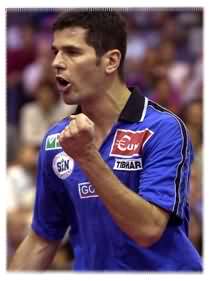
AP World Politics
Germany's Boll to face China's Kong in finals of ITTF Men's World Cup table tennis
Sat Nov 2, 9:07 AM ET
BEIJING - World No. 3 Timo Boll of Germany beat Croatia's Zoran Primorac on Saturday to set up a finals showdown against Chinese Olympic champion Kong Linghui in the ITTF Men's World Cup table tennis tournament.
Boll, the European champion, beat Primorac 11-9, 5-11, 11-3, 12-14, 1-11, 11-4, 11-8 in the tournament in the eastern Chinese city of Jinan.
"I was not nervous but tired against Primorac. My body was sore after so many intense fights in the event," said Boll, 21, who is playing in his first World Cup.
Kong defeated Austria's Werner Schlager 11-2, 5-11, 11-7, 11-9, 5-11, 11-9. Earlier in the day, Kong had beaten South Korea (news - web sites)'s Ohn Sang-eun.
World No. 1 Wang Liqin and No. 2 Ma Lin of China both crashed out of the event. Wang fell to Boll early Saturday, while Primorac beat Ma.
"It is the first time that I beat Ma," said Primorac, who had lost to the Chinese just days ago in the Dutch Open. "I had many lucky shots today. I am happy that I showed my full strength."
|
»
(E) Silvija Talaja Wins in Thailand - Volvo Open Tennis
|
SilvijaTalaja Wins 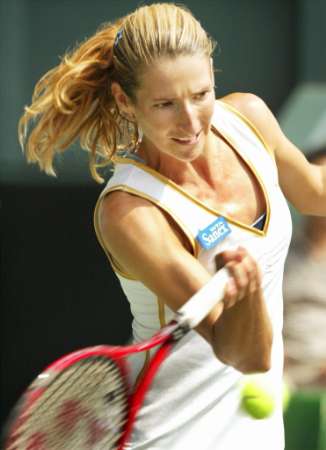
AP World Politics
Volvo Open Tennis Results
Thu Nov 7, 6:14 AM ET
PATTAYA, Thailand - Results of play Thursday at the Volvo Women's Open in Pattaya, Thailand:
Singles
Second round
Lina Krasnoroutskaya, Russia, def. Magdalena Grybowska, Poland, 6-1, 6-3.
Angelique Widjaja, Indonesia, def. Sandra Kleinova, Czech Republic, 6-4, 6-1.
Shinobu Asagoe, Japan, def. Anastassia Rodionova, Russia, 4-6, 6-2, 6-3.
Silvija Talaja (8), Croatia, def. Stephanie Cohen Aloro, France, 6-3, 3-6, 6-1.
|
»
(E) Bell Helicopters of Texas sold parts to Serbia during a U.N embargo
|
When Serbia was involved in a genocidal war using helicopters, Bell Helicopters of Texas sold them parts!
Serbia's Deadly Choppers - Bell Helilcopters Sold Parts to Milosevic
Pacific News Service
By Lucy Komisar
Bell Helicopters of Texas sold parts to Serbia during a U.N. armsembargo, a
report to the war crimes trial of ex-president Slobodan Milosevic shows. The Milosevic regime, writes PNS investigative reporter Lucy Komisar, paidthrough a secret offshore financial network that included a byzantine web of global tax havens.
At a time when Americans are concerned about U.S. corporate corruption, a
tribunal in The Hague has revealed another shadowy deal with international
reverberations. Bell Helicopters of Texas sold parts to Serbia during a U.N.
arms embargo, when Serbia was involved in a genocidal war using helicopters.
The regime of ex-president Slobodan Milosevic paid through a complex, secret
offshore financial network.
On June 5, 1998, Serbia paid Bell $154,785 for spare parts for helicopters.
At the time, Serbia was in dire need of working helicopters to use in
Kosovo. In that war, some 8,000 to 10,000 Kosovars died.
During the embargo, Milosevic got what he needed -- helicopter parts,
weapons, oil and millions of dollars of other supplies through an intricate
network of shell companies and secret bank accounts that spread from the
offshore financial center Cyprus through Greece and some 50 other countries,
including the United States.
The Bell sale was revealed in June by Morten Torkildsen, an investigator for
the U.N. International Criminal Tribunal at The Hague. His report on the
secret financial network that allowed Serbia to evade the embargo was
presented as evidence at Milosevic's war crimes trial, in session now.
In a telephone interview, a spokesman for Bell Helicopters in Fort Worth,
Mike Cox, said, "The parts we sold were fuselage parts for civil and
commercial aircraft. There were no weapons involved."
Cox said Bell checked with the Commerce Department and "were told we were in
compliance." However Marise Stewart, director of international government
relations in Washington for Textron, which owns Bell, said: "We don't have
to check with anybody. In the case of a civilian commercial aircraft or
parts sale, there's no requirement for clearance or review."
Was there any discussion inside Bell about the wisdom of selling the parts
to Serbia, then conducting a genocidal war? "There would be no reason to discuss the advisability of a commercialcivilian sale, unless you think the customer is not going to pay," said Stewart.
Helicopters are civilian and military dual-use equipment. Civilian choppers
can be retrofitted for military use. The Bell 206B, which carries five
persons, is an observation helicopter, used by police departments. The Bell
212, which carries fifteen, is the famous Huey of the type used in the
Vietnam War. It is designed as a transport but is easily and commonly
converted to military use. The parts sold to Serbia were for both types of Bell helicopters.
"The U.S. adds arms to its Hueys," said Mark Hiznay of Human Rights Watch.
"Serbia had its own weapons industry and could easily do the same." Serbia may well have changed the Hueys in just that way. RadomirMarkovic, head of the Serbian State Security (SDB) branch -- the secret police --toldHague Tribunal interrogators, "We needed to secure foreign currency reserves
to provide the SDB with the equipment it needed -- guns for [SDB] helicopters." He said the equipment arrived and was installed on thosehelicopters.
Stewart said Bell had no "legal requirements to look behind the customer's ultimate intention or motivation."The Serbs started their campaign in Kosovo in February and intensified
fighting in late May. News reports noted Serbian forces used tanks and
helicopters against ethnic Albanian villages. Bell signed its contract in June.
There has been no admission or proof that helicopters fitted with the new
spare parts were used in military operations either as gunships or to carry
troops or war material. What is certain is that the Serbs went to extremes
to disguise their Bell purchase. The Hague investigator, a Norwegian
forensic auditor, reported that the transaction was handled by the
Cyprus-based Abridge Trading Ltd. Bank documents show that Abridge's primary
function was purchase of military equipment for Serbia.
Abridge was part of a covert Serb network that included eight shell
companies with accounts in Cyprus banks that arranged weapons shipments from
firms in Israel, Russia, Germany and the United States. Investigators at the
U.S. Treasury Office of Foreign Assets Control believe that at least $1
billion was moved out of Yugoslavia through Cyprus Banks to global tax havens.
"In my career, I have never encountered or heard of an offshore finance
structure this large and intricate," said Torkildsen, the auditor.
Why did Serbia and Bell do the deal though this offshore company if they
didn't want to hide the sale? Bell declined to answer whether the
request for the sale came directly from Abridge or the Serbian government and
what it knew or found out about Abridge.
Komisar lkomisar@msn.com is a New York journalist who writes about
international bank and corporate secrecy
|
»
(E) Few more insights from mastercrooks
|
"U.N. forces were persuaded to allow him to interview local staff before they were hired. In this way he could reject any candidate who did not agree to spy for him. "
Former intelligence operative says Milosevic masterminded Croatian war
AP World Politics
Former intelligence operative says Milosevic masterminded Croatian war
Tue Oct 29,12:22 PM ET
By DANIELA VALENTA, Associated Press Writer
THE HAGUE, Netherlands - A former Yugoslav spy testified to the U.N. war crimes tribunal Tuesday that Slobodan Milosevic (news - web sites) commanded, armed and supplied Croatian Serbs in 1991 and tried to block a speedy end to the war in Croatia.
Slobodan Lazarevic, a Serb from Belgrade who said he was an undercover agent for the army intelligence agency KOS for more than 30 years, said his main task during the war was to gather information on U.N. forces and Croatian troops, and to recruit U.N. personnel as spies.
Lazarevic said he appealed to the patriotic Serb nationalism of potential recruits among the local U.S. staff, but used threats when necessary.
He also paid for information from international U.N. personnel, particularly "military observers, the radio room, anybody who's available." Some non-Serbs volunteered information because "they believed in the Serbian cause," he said.
Milosevic has claimed he had no connection with Serbs rebels during the war for Croatian independence from Yugoslavia, and cannot be held responsible for war crimes committed by Serb forces there.
But Lazarevic testified that the Serb rebel leaders were under Milosevic's control and that all officers, supplies and weapons came from Serbia.
As an example of Milosevic's influence, Lazarevic said delegations of Croatian Serbs went to Belgrade for instructions before every international peace conference, four of which he attended.
Their instructions from Milosevic's Cabinet were always the same — not to agree to any plan that would bring peace to Croatia, he said.
If the delegates were cornered into agreeing to a peace proposal, they were to sign any deal conditionally, pending approval of the Serb assembly in Croatia, he said. That approval would never come.
Lazarevic said Milosevic's regime intended to keep the war going to divert attention from Yugoslavia's economic problems and civilian unrest in Serbia.
"As long as you had these brethren fighting for bare survival in Croatia, the public eye would be on (them)," Lazarevic said.
Speaking in fluent English, Lazarevic said KOS hired him during his language studies at the University of Sarajevo in 1968. He was a covert operative for intelligence assignments against anti-communist student groups, Yugoslav emigres in Australia and Britain, and the National Olympic Committee during the 1984 Winter Games in Sarajevo.
Milosevic is conducting his own defense against 66 counts of alleged war crimes in Croatia, Bosnia and Kosovo during the 1990s.
Lazarevic, who was ostensibly a Serb army liaison officer with international organizations in Croatia, said U.N. forces were persuaded to allow him to interview local staff before they were hired. In this way he could reject any candidate who did not agree to spy for him.
"If they refused, they would be discredited and not permitted to work for the U.N.," Lazarevic said.
Lazarevic also said his task was to unnerve the international forces and create a "psychosis of fear."
He said Serb soldiers planted mines on a soccer field where U.N. soldiers were scheduled to play a friendly match against a local team. The Serbs "discovered" the mines minutes before the game and blamed "Croatian terrorists" who infiltrated the Serb-controlled area.
Another time, he said Serbs blamed Croatian terrorists for a mine they planted which blew up their own railway.
Prosecutors said Lazarevic, who testified under his own name, has been relocated from Yugoslavia to an undisclosed country and has been given a new identity.
|
»
(E) We are in the business of life
|
"We are in the business of life"
Op-ed
No, I am not a rare Croatian. My experience is that we are an amazing individuals who need to learn how to be a great society. And that is the way it will be. I am getting a lot of verbal support from many people, but as an editor in chief, it is very difficult to publish such letters thatpraise me. My concept is that YOU who are the CROWN subscribers are the POWER of CROWN.
best,
Nenad..here comes Steve and a beautiful balloon.
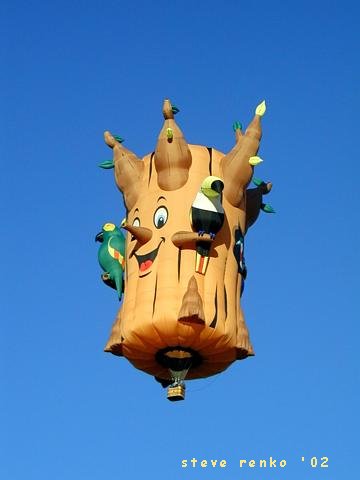
At this hour (5:40 a.m. Cleveland time) I have viewed the Croworld page. It is just lovely, the whole Croworld concept and now I see the Albuquerque balloons there. Thank you Nenad for encouraging me. You are a rare Croatian. It is just my luck we met. The Croworld network has developed to new emotional heights. I like these developments. It focuses on Croatian being what they do best, knowing we have personality flaws, knowing we were alienated in the past, now that we are in the 21st century, now we are in the business of life. That we are experts in, the business of life, love and laughter. Damn good, CroWorldNet! Damn good! I am very proud to be associated with you Nenad and the CROWN. My self-esteem is already dancing on a fast moving locomotive.
Yes, I like the concept, the design and the evolution of the CroWorldnet. Once upon a time, the actor Walter Brennan was playing a cowboy role, a young whipper snapper came by, challenged him verbally with the intent of fast shooting him. Before he tried popping him, he bragged how he heard that he, Walter Brennan, the role name escapes me, was the fastest gun in the west. Walter Brennan in hisgun slinging role, next to his side kick remarked, "Yup, no brag, just fact."
CroWorldNet. The best. So says I. Yup, no brag, just fact.
My personal self-esteem thanks you Nenad. I do not deny how low it was and is at times. Here, with CroWorldNet, I am in the swim, in the business of life, our greatest asset as Croatians.
You brought it home for us Nenad.
--Steve Renko
rukav1@yahoo.com "My self-esteem is already dancing on a fast moving locomotive."
|
|
|




 full story
 printer version