
Sponsored Ads
|
Articles by this Author
»
(E) War Babies: Call for submissions
|
War Babies - call for submissions Larry Cirignano, Esq
President
www.CatholicVote.org
120 Riverwood Ave
PO Box 118
Far Hills, NJ 07931
202-544-9600
202-318-0789 fax
609-781-0090 cell
Larryvote@aol.com
- SEXUAL EXPLOITATION: Gender, Ethnicity and Children's Human Rights
[call for submissions]
According to recent reports, thousands of infants have resulted from mass rape campaigns or sexual exploitation during times of war in the last decade. Anecdotal reports suggest these "war babies" - children born on the wrong side of a conflict - often face stigma, discrimination and even infanticide. Very little systematic scholarly data exists assessing their status and fate or theorizing their protection needs from a children's human rights perspective. To address this gap, I seek contributions from established scholars, graduate students, and human rights practitioners addressing this category of war-affected child. Contributions from fields such as sociology, political science, international law, anthropology, women's studies, and history are encouraged.
Paper authors will be invited to present their research at an interdisciplinary workshop, tentatively scheduled to be held March 16, 2004 in conjunction with the International Studies Association Annual Conference in Montreal, Quebec. Papers will forthwith be revised and submitted for inclusion in an edited volume, to be prepared for submission to book publishers by summer 2005. This book will be aimed at laying a foundation for future interdisciplinary work on war babies as a concern for the children's human rights community.
Contributions should be between 4000 and 7000 words long, and should address the intersection of gender, ethnicity, children's and women's human rights, sexual violence and armed conflict, and the evolving international legal framework that aims to regulate such behavior.
Please send proposals or queries, along with institutional affiliation and contact information. Proposals are due by November 15, 2003. Submissions from graduate students and international scholars are strongly encouraged.
For more information contact:
R. Charli Carpenter
Department of Politics and International Relations
Drake University, Des Moines, IA 50310, USA
Tel: +1 515 271 2136; Fax: +1 515 271 1870
Email: charli.carpenter@drake.edu
Website: http://www.drake.edu/artsci/faculty/carpente
|
»
(E) Screening of "Gori Vatra" candidate for Oscar 2003
|
Screening of Fuse (Gori Vatra) at AFI - Bosnia-Herzegovina's Candidate for Oscar 2003 From: Cameo1997@aol.com
Lets support this year Bosnia-Herzegovina candidate for the Best Foreign
Oscar for 2003. It is a winner of Best Feature at the Sarajevo Festival and Silver Leopard in Locarno Film Festival.
FUSE is the story of a small town in postwar Bosnia struggling with
corruption, crime and prostitution. One day there is the news that President
Clinton who has decided to become a citizen and godfather of their
municipality is coming to visit . Now they must build a democracy in seven
short days.
The screening will be held at Archlight Theatre in Hollywood on:
Sat, Nov 8 at 3:30 pm
Mon, Nov 10 at 9:45 pm
Tickets are $11 and please find more info at:
http://filmguide.afifest.com/2003/filmguide/eventnote.php?EventNumber=1977
|
»
(E) Letter of thanks from Angela Brkic
|
Letter of thanks from Angela Brkic
I would like to send out my sincerest thanks to the many people who have supported me during the publication of my book, Stillness and other Stories. Their assistance has meant a great deal to the book’s success and to me, personally. Over the past few months, Stillness has generated positive reviews in the Chicago Tribune, the New York Times, the Times of London, Newsday, the Los Angeles Times, and other publications. In tough economic times, it has held its own and received an award from the Whiting Foundation this Thursday.
It was not an easy road to publication. I was turned away by countless agents and publishing houses which informed me that the book’s subject matter (the wars in Croatia and in Bosnia-Herzegovina) was the “kiss of death”. Who, they repeatedly asked, would want to read a book on so depressing a topic? They frequently suggested scrapping the project altogether and writing about other things. I persevered even as I struggled to pay my rent. I am lucky beyond words, however, because my family was as dedicated to the project as I was.
Recently, a review in “The Anniston Star” was brought to my attention. It was written by Amna Jakupovic, a Croatian student in Florida. Although I have never met Ms. Jakupovic or heard of “The Anniston Star”, it is a review of great significance to me. She wrote:
“While reading this book I felt stronger love and passion for my country and my people. I also discovered a secret of human nature: no matter how many wars plague a country, nor how many lives are taken, the spirit survives…As a woman I read and review this book. Yet, I am a girl who still hides her feelings and memories in her heart. I am a girl whose dad fought in this war, and I did not know where he was for six months. I am a woman who has learned from this book — “people are strong seeds.” People survive with all the memories, good or bad.”
I would specifically like to thank Katherine Rosich and the entire Rosich family, Katarina Deletis, Dr. and Mrs. Vedran Deletis, Catherine Kanjer Kapphahn, Josip Novakovich, Jere Real and Nenad Bach. Generally, I would like to thank everyone who bought the book, people who showed up to my events and spoke words of encouragement, and people who passed the word along.
|
»
(E) "Novakovich is a world-class writer" Review of "SPLEEN"
|
Josip Novakovich 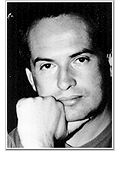
does it again "Novakovich is a world-class writer", proclaims Boris Fishman, writer for "The New Yorker" The new story called "SPLEEN" by Josip Novakovich is included among the "Wild East: Stories from the Last Frontier" an anthology of stories set in Eastern Europe.
In "Spleen" Novakovich breaks new ground by writing in first person from a woman's point of view. A peaceful and innocent woman living in Bosnia stabs a man in self-defense when he and another thief break into her house during the rampage when Serb army was advancing. She survives and runs away to America, settling down in Cleveland, but so do many of her neighbors from Bosnia. As much as any survivor of violence can, the heroine is trying to live for the future, only to be haunted by memories of attack when she meets a new man in her life, who also happens to be from her hometown.
"Novakovich is a world-class writer", proclaims Boris Fishman, writer for "The New Yorker" and editor of the "Wild East: Stories from the Last Frontier."
You can see for yourself how that is true by reading fiction story "Sheepskin" which appears in the "Salvation and Other Disasters" book. It is written in the first person point of view and set in the context of brutal war in former Yugoslavia. A deeply wounded man survives a Serb attack on Vukovar hospital and soon after seeks revenge. He kills the wrong man and the long story goes on with a twist.
Novakovich then wrote and published in the "Writing Fiction Step by Step" a fascinating explanation of how he made up the events that occur in "Sheepskin" and how they occur within the context of real-life events such as the war. "Writing the story helped me sort out some of my thoughts on the subject of victims of war and the theme of personal revenge. Almost like an experiment, so I could see for myself what revenge could look like, and what possible implications there could be in revenge that is highly individualized rather than sociologically abstract."
Josip Novakovich emigrated to the U.S. from Croatia at the age of twenty. He writes mostly in English. Josip's publications include "Plum Brandy - Croatian Journeys" published by White Pine Press in 2003, collection of stories from Croatia "Salvation and Other Disasters", Graywolf Press 1998, "Apricots from Chernobyl" and "Yolk" both published in 1995 by Graywolf Press. "Writing Fiction Step by Step" 1998 by Story Press and "Fiction Writer's Workshop" 1995. In addition, Novakovich co-edited "Stories in the Stepmother Tongue" published in 2000 by White Pine Press and was included in anthology "How To Write Funny" where he wrote a chapter on "Getting Laughs From Literature" published in 2001 by Writer's Digest Books.
Novakovich has won a Whiting Award, a Richard Margolis Prize for Socially Important Writing, three Pushcart Prizes, an O. Henry award, an NEA fellowship, and a nomination for the Pen/Hemingway Award for First Fiction.
In 2004, Novakovich new book "Infidelities: Stories of Lust and War" will be published by HarperCollins. Josip teaches writing at Penn State.
|
»
(E) Angela Brkic Wins Whiting Award, The New York Times
|
Angela Brkic Wins prestigious Whiting Award 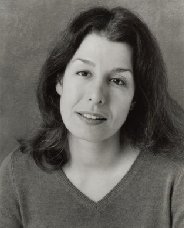
Ten Writers Win Annual Whiting Awards
By THE ASSOCIATED PRESS
Published: October 30, 2003
Filed at 8:39 p.m. ET
NEW YORK (AP) -- Ten authors have been named winners of the Whiting Writers' Award, given annually to ``emerging writers of exceptional talent and promise.''
Past recipients include playwright Tony Kushner and novelist Jonathan Franzen.
This year's winners each were to receive $35,000 Thursday night at a ceremony at the New York Public Library. Playwright John Guare was scheduled to be the keynote speaker.
Advertisement
Honorees include fiction writers Courtney Angela Brkic, Alexander Chee, Agymah Kamau, Ann Pancake, Lewis Robinson and Jess Row. Also cited were nonfiction writers Christopher Cokinos and Trudy Dittmar, poet Major Jackson and playwright Sarah Ruhl.
The Whiting awards were established in 1985 by the Mrs. Giles Whiting Foundation, a New York-based organization ``dedicated to the support of the humanities and of creative writing.''
Source:http://www.nytimes.com/aponline/arts/AP-Publishing-Whiting-Awards.html?ex=1068663998&ei=1&en=591fa549024e23e4
brkic251@aol.com
|
»
(E) Croatian-Owned Trio Gets Rave Reviews
|
Croatian-Owned Trio Gets Rave Reviews
The October 23, 2003 issue of Time Out New York Magazine has a cover story concerning "Cheap Eats" in New York City. One section of the coverage is entitled "Free Munch - Don't Settle for Peanuts" and lists great places to go to get free bar food while having a drink. The article provides a list of restaurants "in meal order," I.e., starting with appetizers and ending with dessert.
Trio is mentioned twice, as a place to get a "main course" and "dessert!" Trio is owned by the Ivanac family from Brela, Croatia. John Ivanac and his sister Maria also own Villa Berulia located on 34th Street between Lexington and Park Avenues.
"MAIN COURSE - Trio (167 East 33rd Street between Lexington and Third Avenues, 212-685-1001). Serves small-plate dishes starting at 5 pm nightly. They vary according to what the chef feels like sending out, but might include tender Croatian meatballs in marinara sauce, pizza wedges, crisp potato dumplings with crème traiche, freshly basked foccacia with Dalmatian Coast olive oil, or tomato-basil-mozzarella bruschetta. Consider making this a two drink stop.
********
DESSERT - Make that three drinks at Trio. The bar also serves great homemade cranberry-almond biscotti. And if you actually break down and dine here, you'll get free fruit-infused grappa at the end of your meal."
|
»
(H) Omis, Croatia
|
Omis, Croatia 
www.almissa.com Dragi Nenade:
Jedan moj prijatelj iz Omisa ima web page Omisa. Vrlo je zanimljiva i ima krasnih slika grada, a i mnogo slika starih Omisana. Mozes misliti kako sam bila iznenadjena kad sam vidjela slike mojih roditelja, oceve brace i mnogih starih i novih prijatelja. Mislila sam da to dolazi iz Omisa, i uputila sam im e-mail, medjutim Ugo to radi iz Chicaga. Ako stignes pogledaj: info@almissa.com.
Jos jednom od srca cestitam i zelim Ti jos mnogo uspjeha u buducnosti, uz najbolje zelje
Ina
|
»
(E) OLD CASTLE FOR SALE NEAR ZAGREB, Croatia
|
Old Castle in the Heart of Croatia. 200,000 euros
Adria Mare d.o.o.
Specializing in authentic Croatian homes, island and sea frontproperties.
For Sale:
Old Castle in the Heart of Croatia. 200,000 euros
Built in 1780. Located in Bedekovcina Donja. 46km from Zagreb. 500m2
on a magnificent 2500m2 property. Property is connected to all
communalities...water...electricity.. etc...and all operational.
Private residence or some type of hospitality project. Telephone me
on 385 91 2707561 for further information or email me at
amatesic@arazu.com .
Old stone farm on the island of Vis. 120,000 euros
The farm is abandoned...several stone structures high on a hill,
overlooking the sea, absolutely glorious, set on 8500m2, where the
40,000m2 rural land adjoining the property belongs as if to the
property (but is not, basically municipal land), 3 km from sea.
Ideal for restoration as a private residence or some type of
hospitality project (meditation centre comes to mind).
I encourage Croatians who are in the position of being able to
invest to buy property in Croatia now as it is only getting more
expensive and opportunities like the above are very hard to find
especially at such a decent price.
Other similar properties can be found, but sometimes the search for
a property meeting your specific criteria will take time as the real
estate market here is still relatively immature and locating prime
reasonably priced properties, then investigating ownership and
property rights takes quite a bit of effort and time. Also its
getting harder and harder to find 1st row to sea building size lots
of land that are zoned for construction. Really a needle in a
haystack type of problem. Your best bet is to find an existing
house and rebuild or remodel. Old seaside village property is still
doable but one is limited by the smaller size of the properties.
One can find more modern type properties but these are typically
overpriced if on a decent property.
Jadranka Matesic
An Australian/American Croatian Returnee
|
»
(E) Ebay for Charity - Fire Relief Fund
»
(E) Dr. Ivezic in The New York Times
|
Croatian Scientist Dr. Zeljko Ivezic, an astrophysicist at Princeton University. Halo Reveals Remains of Milky Way's Galactic Snacks
By JAMES GLANZ
Astronomers have long suspected a dark secret about Earth's galaxy, the Milky Way. They have even seen other galaxies engaging in the macabre behavior at the core of this secret. But without irrefutable proof, astronomers refused to admit that it might be commonplace closer to home. Now, they have that proof.
The Milky Way is a cannibal. It consumes other galaxies and makes their stars its own.
The evidence comes from some of the first data to emerge from the multi-institutional collaboration called the Sloan Digital Sky Survey, an $80 million project that will eventually observe and categorize hundreds of millions of celestial objects over a quarter of the entire sky. Faint stars that the Sloan collected in two patches of the sky have revealed, in effect, the partly digested remains of two small galaxies that the Milky Way's gravity grabbed, perhaps a billion or two billion years ago.
The clumpy patches turned up not in the bright disk of the galaxy, but in the thinly populated sphere of stars and other matter around it. The telltale remains hover about 150,000 light-years from the galactic center.
"It looks like the stars are formed in other galaxies, and then are being assimilated into our galaxy," said Dr. Heidi Newberg, an astrophysicist at Rensselaer Polytechnic Institute in Troy, N.Y., and a Sloan collaborator. The inevitable conclusion, she said, is that "we're munching on the little ones," or eating up smaller galaxies that once glittered on the outskirts of the Milky Way.
Dr. Newberg said it was still uncertain whether all of the stars of the halo were captured in this way. But the new results do provide strong support for theories holding that the halo was assembled bit by bit after the disk formed. Alternative theories maintain that the halo formed all at once, and that material inside it later settled into a disk.
The data were assembled from observations of two patches of sky, one in the northern galactic plane and one in the south, made by the Sloan Survey's automated telescope at Apache Point, N.M., said Dr. Brian Yanny, an astrophysicist at the Fermi National Accelerator Laboratory and a Sloan collaborator.
The telescopic images included a few million stars all told. But within that sample, the images revealed elongated clumps of hot objects called A stars. The northern clump contained about 2,000 A stars and the southern clump about 1,000.
The northern clump also turned out to be traced by another kind of star, the blinking variable stars called RR Lyraes, said Dr. Zeljko Ivezic, an astrophysicist who is a Sloan collaborator at Princeton University.
Both types of star have a special property: Their intrinsic brightness is approximately known, so their distance from Earth can be estimated from their apparent brightness on the sky. That knowledge allowed the Sloan astronomers to reconstruct the three-dimensional shapes of the clumps.
"They're very diffuse and elongated," Dr. Yanny said, or roughly cigar shaped, 15,000 light-years wide and 60,000 light-years long. They no longer look like little galaxies, he said, because "they've been disrupted by the gravitational potential" of the Milky Way -- partly digested, in less clinical language.
Such faint groupings of stars can be seen only using a vast survey like the Sloan, Dr. Ivezic said. He added that the precise way in which the former galaxies were being torn to pieces could reveal the distribution of a mysterious, nonluminous type of matter called dark matter in the halo. "That will constrain very strongly how the halo is built," Dr. Ivezic said.
The finding supports the basic theoretical picture of large structures in the universe being formed from smaller ones, said Dr. Abraham Loeb, an astrophysicist at Harvard University, who is not a member of the Sloan Survey.
And as for the Milky Way, Dr. Loeb said, "you can call it a cannibal. We have to eat to feed ourselves. And a galaxy feeds on these smaller components."
Source:http://www.nytimes.com/library/national/science/041100sci-cannibal-galaxies.html
|
|
|




 full story
 printer version