Sponsored Ads
|
Articles by this Author
»
(H) Sanader vs Racan Radio Interview
»
(H) Zeljko Ivezic, Ph. D. Astrofizicar - Mapiranje neba
|
Zeljko Ivezic, Ph. D. 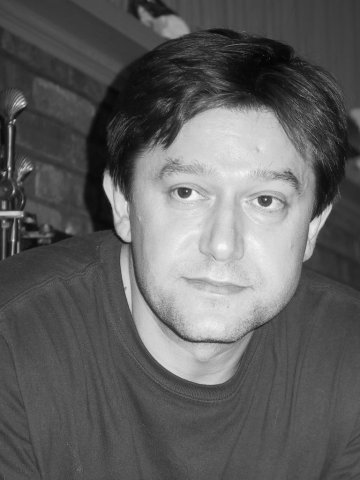 Zeljko Ivezic: Curriculum Vitae
Address:
Department of Astrophysical Sciences
Peyton Hall, Princeton University
Princeton, NJ 08544-1001
e-mail: ivezic@astro.princeton.edu
tel: (609) 258-1692
Positions:
2003- Assistant Professor, University of Washington
2002-04 H.N. Russell Research Fellow, Princeton University
1999-02 Research Staff, Princeton University
1998-02 Adjunct Assistant Professor, CUNY, York College
1997-99 Postdoctoral Researcher, Princeton University
1995-96 Postdoctoral Scholar, University of Kentucky
1991-95 Teaching & Research Assistant, University of Kentucky
1990-91 Teaching & Research Assistant, University of Zagreb
Education:
1995 Ph.D., Physics & Astronomy, University of Kentucky
1991 B.Sc., Physics, University of Zagreb
1990 B.Sc., Mechanical Engineering, University of Zagreb
-------------------------------------------------------------------------------- What is the Sloan Digital Sky Survey?
Simply put, the Sloan Digital Sky Survey is the most ambitious astronomical survey project ever undertaken. The survey will map in detail one-quarter of the entire sky, determining the positions and absolute brightness's of more than 100 million celestial objects. It will also measure the distances to more than a million galaxies and quasars. Apache Point Observatory, site of the SDSS telescopes, is operated by the Astrophysical Research Consortium (ARC).
The SDSS addresses fascinating, fundamental questions about the universe. With the survey, astronomers will be able to see the large-scale patterns of galactic sheets and voids in the universe. Scientists have varying ideas about the evolution of the universe, and different patterns of large-scale structure point to different theories of how the universe evolved. The Sloan Digital Sky Survey will tell us which theories are right -- or whether we have to come up with entirely new ideas.
The Sloan Digital Sky Survey (SDSS) is a joint project of The University of Chicago, Fermilab, the Institute for Advanced Study, the Japan Participation Group, The Johns Hopkins University, the Los Alamos National Laboratory, the Max-Planck-Institute for Astronomy (MPIA), the Max-Planck-Institute for Astrophysics (MPA), New Mexico State University, University of Pittsburgh, Princeton University, the United States Naval Observatory, and the University of Washington.
Funding for the project has been provided by the Alfred P. Sloan Foundation, the Participating Institutions, the National Aeronautics and Space Administration, the National Science Foundation, the U.S. Department of Energy, the Japanese Monbukagakusho, and the Max Planck Society. http://www.sdss.org/
http://www.astro.princeton.edu/
NGC 2068 (M78), a star forming region in Orion 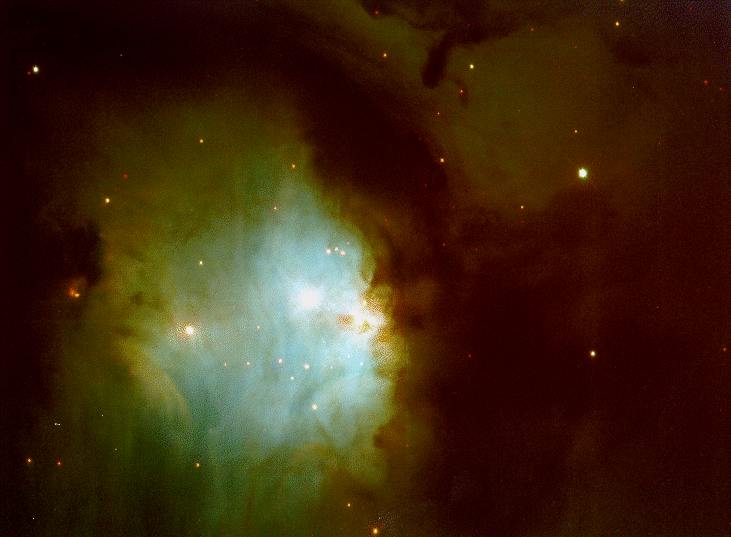
Bok Nenad,
Evo par odgovora na Tvoja pitanja:
> * Postoje li mogucnosti suradnje sa astronomima u Hrvatskoj?
Gdje ima volje i sposobnosti, uvijek se pronadju mogucnosti.
Posebno sam ponosan i sretan sto sam uspio uspostaviti jaku
suradnju izmedju nase SDSS grupe na Princetonu i istrazivacke
grupe na celu s prof. Kresimirom Pavlovskim na PMFu u Zagrebu.
U poslijednje dvije godine u istrazivacke posjete nam je doslo
pet apsolutno izvanrednih studenata (Mario Juric, Branimir Sesar,
Vernesa Smolcic, Marko Gacesa, Mirela Obric). Svi su postigli
vrhunske rezultate koristeci SDSS promatranja. Premda je
Princeton prema mnogim istrazivanjima najbolje americko sveuciliste,
a astrofizicki odjel se posebno istice, nasim studentima nije dugo
trebalo da se dokazu cak i u tako prestiznoj okolini. Cesto me
pitaju kako je moguce da tako mala zemlja moze proizvesti toliko
talentiranih mladih astrofizicara u samo dvije godine. Ta iskustva
su naravno prekrasan dokaz kvalitete astrofizickog programa
u Zagrebu.
> O SDSS-u
> * Sto je Sloan Digital Sky Survey ?
Sloan-ov Digitalni Pregled Neba je jedan od do sada najambicioznijih
astronomskih poduhvata. Cilj projekta je napraviti dvo-dimenzionalnu
mapu neba koja ce ukljuciti oko 100 milijuna zvijezda i oko 100 milijuna
galaksija, i tri-dimenzionalnu mapu dijela svemira sa oko milijun galaksija.
Osim sto ce te mape biti od deset do sto puta vece od dosadasnjih, imati
ce daleko vecu tocnost i detaljnost informacija. Glavni razlog tako velikog
napretka je koristenje CCD osjetnika (ista tehnologija kao u video kamerama
i digitalnim fotoaparatima), umjesto starih mapa koje se bile bazirane na
fotografskom filmu. Jos jedna velika prednost digitalnih slika je sto su
vrlo pogodne za koristenje racunala u analizi, sto omogucava efikasnu analizu
tako velikoga broja objekata.
Projekt ukljucuje stotinjak ljudi sa nekoliko sveucilista i znanstvenih instituta
iz SAD, Japana i Njemacke. Ukupni trosak ce biti oko sto milijuna dolara, uglavnom
finaciranih od NASA-e i americke National Science Foundation. Prvih desetak milijuna
je dala Sloan fondacija, po kojoj je projekt nazvan.
> * Sto vi radite u sklopu SDSS-a, koliko dugo ?
Poceo sam raditi na SDSSu 1997. godine, u sklopu grupe sa Princetona. Mi smo
zaduzeni za konstrukciju kamere i razvijanje softvera za analizu slika. Softver
ukljucuje oko milijun linija koda (C i Tcl), i sposoban je potpuno samostalno
analizirati oko 20 TB podataka koje cemo sakupiti u pet godina snimanja.
> * Koja su dosadasnja postignuca SDSS projekta ?
Do sada najpoznatija postignuca su otkrice desetak kvazara koji su sada najdalji
poznati objekti u svemiru, dokaz da je nasa galaksija Mljecni Put imala
"kanibalsku" proslost jer je "prozdirala" obliznje manje galaksije i tako
rasla - postoji zgodan clanak iz NY Timesa na
http://www.nytimes.com/library/national/science/041100sci-cannibal-galaxies.html
i otkrice da u Suncevom sustavu ima znatno manje asteroida nego sto se mislilo. (vidi clanke
http://www.er.doe.gov/Science_News/feature_articles_2002/January/Sky_survey/Sky_survey2.htm
http://news.bbc.co.uk/1/hi/sci/tech/1644899.stm )
Uz te "sexy" rezultate, postoji puno znanstveno vrijednih rezultata koji su do sada
objavljeni u oko stotinjak clanaka.
> * Imate li vi (tj. SDSS) jos iznenadjenja za nas u buducnosti ?
Carolija znanosti je sto se rezultat nikada ne zna unaprijed. No, uzevsi u obzir da imamo
oko 10 puta vise podataka nego sto je do sada prikupljeno, i da su novi podaci puno
detaljniji i tocniji, vjerojatno ce biti jos iznenadjenja i uzbudjenja.
> * Zasto je SDSS vazan za Sixpack Joe-a (prosjecnog covjeka)
Ovo je tesko pitanje, pogotovo bez six pack-a pri ruci :)
SDSS je sada najveci projekt u astronomiji, i svojom digitalnom mapom nagovijestava
sto ce sve biti moguce u 21. stoljecu. Vec smo pokazali kako su mnoge teorije bile netocne,
pa se moze realno ocekivati kako ce SDSS znatno unaprijediti nase razumijevanje kako
dalekog, tako i obliznjeg svemira. SDSS je vazan ne samo za astronomiju, nego i za
znanost opcenito. 20 TB podataka koje cemo sakupiti, i obraditi svaki bit, je puno puta
vise informacije nego u cijeloj Library of Congress. Jedini sadasnji projekt koji barata sa
slicnom velicinom podataka je Human Genome Project koji ima za cilj napraviti
detaljnu mapu ljudskih gena.
> O Zeljku Ivezicu ?
> * Vec dugo ste u USA ?
Nakon diplomiranja strojarstva i fizike na zagrebackom sveucilistu, u USA
sam otisao 1991. na postdiplomski studij fizike i astronomije. Nakon doktorata
na University of Kentucky 1995. ostao sam jos godinu dana tamo, a onda presao
u Princeton raditi na SDSS projektu. Jos uvijek sam fizicki u Princetonu, premda
sam od ove godine profesor astronomije na University of Washington u Seattle-u.
> * Princeton je jedno od najboljih sveucilista u USA, kako vam se svidja ?
Mogucnost svakodnevnog suradjivanja sa ovdasnjim znanstvenicima je za astronoma slicno
kao kosarkasu igrati za Chicago Bulls-e. Sveuciliste i gradic su ljepsi nego americki
prosjek, i blizina New Yorka ima svoje ocigledne prednosti.
> * Jednog dana povratak u Hrvatsku ?
Sunce tudjeg neba ne grije kao nase... Salim se, astronomi znaju zasto Sunce ne grije
svugdje jednako. No bez obzira na "toplije" Sunce, svakako bih se zelio vratiti kuci
(u stvari, mama me uvijek podsjeca kako sam obecao vratiti se odmah nakon doktorata).
Recimo, parafrazirajuci moju analogiju sa kosarkom, bilo bi krasno jednog dana procitati
intervju sa nekim americkim znanstvenikom koji kaze kako mu je raditi na zagrebackom
sveucilistu bilo kao nogometasu igrati za novog svjetskog prvaka iz Maksimira...
> * Zasto sam se i kako poceo baviti znanoscu?
Poceo sam u skoli "Sestre Bakovic" gdje je prof. Ana Kovacicek sa puno entuzijazma vodila
astronomsku grupu. Kasnije sam nastavio redovno odlaziti na Zvjezdarnicu na Gornjem
gradu, gdje sam pod utjecajem Dr. Hrvoja Bozica, i drugih zaljubljenika u astronomiju
okupljenih oko Pokreta "Znanost mladima", definitivno odlucio postati astronom.
U stvari, vecina prednosti americkog sistema obrazovanja u usporedbi s nasim se
mogu jednostavno sazeti u cinjenicu da je ovdasnje cjelokupno obrazovanje slicno
idejama naseg, jos uvijek ne dovoljno prosirenog, Pokreta "Znanost mladima".
A to znaci manje strebanja cinjenica i kojekakvih brojeva, te ploca-kreda predavanja,
a vise samostalnog i zabavnog rada.
Srdacni pozdravi citaocima Crowna,
Zeljko
|
»
(E,H) Prof. dr. sc. Ante Simonic, Deputy Prime Minister
|
Prof. dr. sc. Ante Simonic 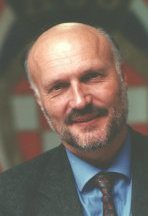
Potpredsjednik Vlade Republike Hrvatske Deputy Prime Minister of the Republic of Croatia http://www.vlada.hr 2001 - 2004 CURRICULUM VITAE
Prof. Ante Simonic, Sc.D., was born in Rijeka on 19 September 1949. He graduated from grammar school in Rijeka in 1968, and from the Faculty of Medicine in Rijeka in 1973.
In 1975 he became assistant lecturer at the Pharmacology Institute of the Faculty of Medicine in Rijeka, where he still works. He won his master’s degree in 1977, and his doctor’s degree in 1980.
He has been Director of the Pharmacology Institute since 1985 and Head of the Pharmacology Chair since 1991. He was appointed senior-lecturer in 1981, reader in 1987 and professor in 1990.
He has organized and run a number of graduate and post-graduate courses, and lectured at various institutions in Croatia and abroad. He has also frequently supervised master’s and doctor’s theses.
Prof. Simonic has attended advanced training sessions in a number of national and foreign institutions, e.g., at the Institute of Pharmacology of the Nobel Prize winner C. Heymans at the Faculty of Medicine in Gent (Belgium) in 1978. In 1995 he also spent two months at the same Institute. In 1981 he completed the course in clinical and preclinical pharmacology at the Royal Postgraduate Medical School, Hammersmith Hospital, University of London (United Kingdom). In 1982 and 1983 he was awarded a Fulbright scholarship for scientific advancement with Prof. E.F. Domino, Department of Pharmacology, School of Medicine, University of Michigan, Ann Arbor (United States).
He has for years reviewed articles in national and foreign scientific journals. He has also been on the editorial board of journals such as Acta Facultatis Medicinae Fluminensis, Medicina, Croatian Medical Journal, Pharmaca and Medicus. He has reviewed a number of books, and authored and coauthored seven books.
Prof. Simonic has supervised a number of scientific projects, and produced many expert opinions for the pharmaceutical industry. He is also an expert witness. He has taken active part in many national and international scientific and professional meetings as invited lecturer, and member and chairman of conference committees. He has published about 300 scientific and technical publications, some of which are cited in leading international journals and 7 books.
Prof. Simonic has been involved in the activities of many bodies of the Faculty of Medicine in Rijeka and of the University of Rijeka, as well as of various educational, scientific and health institutions of the Republic. Thus, he was twice President of the Croatian Pharmacological Society, President of the Association of Faculties of Medicine of Croatia, member of the commission for the drafting of the Law on Institutions of Higher Learning of the Republic of Croatia, Chairman of the Board of the Rijeka Clinical Centre, and Chairman of the Board of the Lovran Orthopedic Clinic. Between 1990 and 1994 he was Dean and Administrative Director of the Faculty of Medicine in Rijeka. In 1990 and 1991 he served as advisor at the Ministry of Health of the Republic of Croatia, member of the Drug Commission of the Republic of Croatia, and founder and member of the Executive Committee of Academicus.
For more than thirty years he has been very actively involved in the work of various public and sports organizations of Rijeka, the region and the Republic. He won several national rowing championships and was for a number of years member of the national rowing team. He was member of the Presidency of the Rijeka Sports Association, President of the Jadran Rowing Club in Rijeka (for years the most successful and exemplary rowing club of the former state), and vice-president of Panathlon, the international association of successful sportsmen and friends of sport. He is a member of Medicinar, the doctors’ football team which appears as the team of the Republic of Croatia and is the world and European champion.
He is a member of many professional and scientific national and international associations, e.g., the Croatian Medical Society, the World Pharmacological Association (IUPHAR), the International Toxicological Society, the Collegium Internationale Neuro-Psychopharmacologicum (CINP), the European College of Neuropsycho-pharmacology (ECNP), the Calcium Club. etc.
He acted as president of initiative committees for the foundation of many friendship societies in Rijeka, e.g., Croato-Turkish, Croato-German, Croato-Slovenian, Croato-Polish, Croato-Chinese, etc. He is a member of the Presidency of the Coordination of Croatian Friendship Societies in Zagreb, and also served as councillor of the City of Rijeka. He has organized and supervised many international economic, political, culturological, scientific, professional and sports events. He was vice-president of the Rijeka Lions Club. He is a member of the Croatian Peasant Party, he was the member of Parliament and President of the Parliamentary Committee for Education, Science and Culture. He is actual Departy Prime Minister of Croatia.
Prof. Simonic has received several awards from the Faculty of Medicine in Rijeka, the City of Rijeka, and various scientific, sports and other organizations.
But, ŽIVOTOPIS
Prof. dr. Ante Simonic roden je 19. rujna 1949. godine u Rijeci, gdje je polazio i završio osnovnu školu i gimnaziju. Maturirao je 1968. godine, te diplomirao na Medicinskom fakultetu u Rijeci 1973. godine.
Godine 1975. zapošljava se na Medicinskom fakultetu u Rijeci kao asistent na Zavodu za farmakologiju na kome je radio do 2001. godine. Magistrirao je 1977. godine te doktorirao 1980. godine.
Od 1985. godine je predstojnik Zavoda za farmakologiju, a od 1991. godine i predstojnik istoimene katedre. Docent je postao 1981. godine, izvanredni profesor 1987. godine, a redovni profesor 1990. godine.
Organizirao je i vodio dodiplomsku i poslijediplomsku nastavu veceg broja kolegija, te predavao u razlicitim institucijama u Hrvatskoj i inozemstvu, a bio je dvadesetak puta mentor tijekom izrade magistarskih i doktorskih disertacija.
U nekoliko navrata boravio je na kracem ili dužem usavršavanju u razlicitim institucijama u zemlji i inozemstvu. Primjerice 1978. godine boravio je na farmakološkom institutu nobelovca C. Heymansa, na Medicinskom fakultetu u Gentu (Belgija). U istom institutu je opet boravio dva mjeseca 1995. godine. Tijekom 1981. godine je završio tecaj iz klinicke i predklinicke farmakologije u Royal Postgraduate Medical School, Hammersmith Hospital, University of London (Velika Britanija). Tijekom 1982. i 1983. godine boravio je kao Fulbrightov stipendista na znanstvenom usavršavanju kod prof. dr. E. F. Domina, Department of Pharmacology, School of Medicine, University of Michigan, Ann Arbor (Sjedinjene Americke Države), i td.
Godinama recenzira clanke u domacim i inozemnim znanstvenim casopisima. Bio je ili je još clan uredništva veer broja casopisa: “Acta Facultatis Mediceae Fluminensis”, “Medicina”, “Croatian Medical Journal”, “Archives internationales de Pharmacodynamie et de Therapie”, “Pharmaca” i “Medicus”. Recenzent je veer broja knjiga.
Bio je voditelj niza znanstvenih projekata, ucinio je brojne strucne ekspertize farmaceutskoj industriji i sudski je vještak. Aktivno je sudjelovao u radu mnogih nacionalnih i internacionalnih znanstvenih i strucnih sastanaka. Bio je pozvani predavac, te clan i predsjednik kongresnih odbora u vecem broju zemalja.
Autor je tristotinjak znanstvenih i strucnih radova te 7 knjiga ili dijelova knjiga.
Prof. Simonic je sudjelovao u radu mnogih tijela Medicinskog fakulteta u Rijeci, Sveucilišta u Rijeci i republickih obrazovnih, znanstvenih i zdravstvenih institucija. Primjerice: bio je dva puta predsjednik Hrvatskog farmakološkog društva, bio je predsjednik Zajednice zdravstvenih fakulteta Hrvatske, clan komisije za izradu Zakona o visokim ucilištima Republike Hrvatske, clan Znanstvenog podrucnog vijeca biomedicinskih znanosti Republike Hrvatske, predsjednik Upravnog odbora Klinickog bolnickog centra Rijeka i presjednik Upravnog vijeca Klinike za ortopediju Lovran. U dva mandata (od 1990. do 1994. godine) bio je dekan i ravnatelj Medicinskog fakulteta u Rijeci. 1990. i 1991. godine je bio savjetnik u Ministarstvu zdravstva Republike Hrvatske i clan Komisije za lijekove Republike Hrvatske. Utemeljitelj je i clan izvršnog odbora “Academicus-a” i nekoliko humanitarnih udruga.
Tridesetak godina vrlo aktivno radi u razlicitim društveno-športskim organizacijama grada, regije i Republike. Višestruki je prvak države i godinama je bio clan državne veslacke reprezentacije. Bio je clan Predsjedništva Rijeckog športskog saveza, predsjednik npr. Veslackog kluba “Jadran” u Rijeci koji je godinama bio najuspješniji veslacki klub bivše države i najuspješniji športski kolektiv Rijeke, podpredsjednik je “Panathlona” - medunarodne udruge uspješnih sportaša i prijatelja športa. Clan je “Medicinara” - nogometne ekipe lijecnika koja nastupa kao reprezentacija Republike Hrvatske s kojim je bio prvak Europe i
svijeta i td.
Clan suradnik je Hrvatske akademije znanosti i umjetnosti, clan je i brojnih strucnih i znanstvenih udruženja u zemlji i inozemstvu. Primjerice: Hrvatskog lijecnickog zbora, Svjetskog farmakološkog društva (IUPHAR), Hrvatskog društva za pomorsku, podvodnu i hiperbaricku medicinu, Internacionalnog toksikološkog društva, Collegium Internationale Neuro-Psychopharmacologicum; (CINP); European College of Neuropsycho-pharmacology (ECNP), Federation of European Pharmalogical Societies (EPHAR), Calcium Club i td.
Bio je predsjednik inicijativnih odbora za osnivanje mnogih društava prijateljstva u Rijeci: Hrvatsko-Turskog,Hrvatsko-Austrijskog, Hrvatsko-Njemackog, Hrvatsko-Slovenskog, Hrvatsko-Poljskog, Hrvatsko-Kineskog i td. Clan je njihovih uprava, a bio je predsjednik ponekih. Clan je Predsjedništva Koordinacije Hrvatskih društava prijateljstva u Zagrebu, bio je vijecnik grada Rijeke, i td. Organizirao je i rukovodio brojnim medunarodnim manifestacijama gospodarskog, politickog i opce kulturološkoga, te znanstvenog, strucnog i športskog karaktera. Bio je potpredsjednik “Lions Club-a” Rijeka, bio je potpredsjednik je Hrvatske seljacke stranke, bio je saborski zastupnik i predsjednik saborskog “Odbora za obrazovanje, znanost i kulturu”, clan je odbora za dodjelu Državne nagrade za znanost, clan je Hrvatskog povjerenstva za suradnju s UNESCO-om, bio predsjednik je Odbora Nagrade “Ivan Filipovic”, predsjednik manifestacije “Nazorovi dani”.Predsjednik je Nacionalnog povjerenstva za suzbijanje HIV/AIDS-a, te Savjeta za mlade Vlade Republike Hrvatske.
Medicinski fakultet, grad Rijeka, te razlicite znanstvene, športske i druge organizacije dodijelili su mu nekoliko priznanja, medu kojima se istice Godišnja nagrada Grada Rijeke 2002. godine za izuzetan doprinos spoznaji, unaprjedenju i popularizaciji znanosti.
|
»
(E) Quo Vadis Scientia? - Ante Simonic - Autor
|
Prof. dr. sc. Ante Simonic - Autor 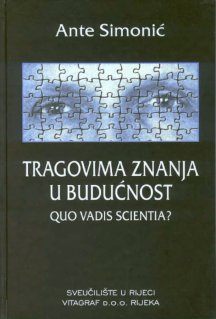 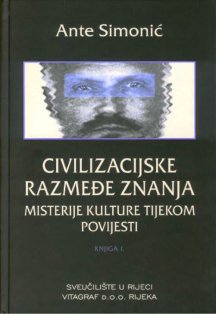 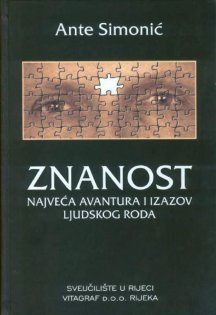
Kad netko kaze "sveobuhvatno", vjerojatno i povjeruje samom sebi da je obuhvatio sve sto je naumio. Prof. Ante Simonic je postavio toliko pitanja da koju god stranicu otvorite doznati cete nesto sto do sada niste ili nikad culi ili nikad razmisljali ili nikad povezali, da samog sebe parafraziram SVE "od sarme do zvijezda". Ove knjige su sveobuhvatne koliko i sama definicija rijeci. Predgovor knjige Civilizacijske Razmedje Znanja ( Dvije Knjige) pocinje citatom Sv. Toma Akvinskog: "Covjeku je urodjena teznja za kreposcu... Svi ljudi po prirodi teze za znanjem" Slijedi tekst: "Medju svim igrama intelekta, kao jedan od najvecih civilizacijskih izazova, napora, odusevljenja i inspiracije, izdvaja se znanost. Uz Vjeru, filozofiju i umjetnost - pomazuci otklonu od sirove borbe za materijalnu nadmoc - ona omogucava spoznavanje predjela koje covjek moze dohvatiti samo svojim duhom" Ante Simonic Sami uvod kao i prvih pet minuta u dobrom filmu otkriva intelektualnu avanturu kroz koju nas provodi Simonic. Trebalo bi procitati sve knjige i sve stranice da bi se ista pisalo, cak ni meritorno, ali nemir duse uzima svoje. Od Mezopotamije pa i puno prije pa do Suocenje sa sadasnjoscu. Etika: "Najblizi smo velicini kada smo veliki u skromnosti" R. Tagore Hrabrost: "Hrabrost je dostojanstvo u nevolji" E Hemingway I sami citati koji su dio trece knjige "Znanost, najveca avantura i izazov ljdskog roda" a pocinju poglavlja na temu etike, hrabrosti etc govore dovoljno o polaznoj tocki razmisljanja. "Quo Vadis Scientia? Tragovima Znanja u Buducnost" otvaraju i ove rijeci samog autora: "... I ja sam naucio dvije stvari: - postoji veza koju ne moze prekinuti niti jedan rastanak - ucenjem postajemo veci, ali razumijevanjem spoznajemo kako smo mali." Fasciniran sam neobicnoscu obicnih tema koje su sve obradjene u ove cetri knjige.Preporucio bih svima da kupe ove knjige i da ih citaju kao kad listas enciklopediju. SVE je zanimljivo i ne-obicno. Otkud, Ante, sva ta energija i znanje i hrabrost i ufanje upustiti se u sklisku kalu intelektualne pasivnosti koja nas guta ovih dana? Svaka cast, Nenad Bach .Ovo je nacin kako mozete naruciti knjige: Knjizara Tamaris: www.tamaris.hr Knjižara, Trg bana J. Jelacica 3, Zagreb Hrvatska | telefon | 01/4882-680 | | fax | 01/4882-681 | bookshop@tamaris.hr Ukoliko želite naruciti neku od knjiga koju ste našli na našim web stranicama pošaljite e-mail na adresu narudzbe@tamaris.hr.
Možemo Vam je poslati poštom, a možete je preuzeti i osobno u našoj knjižari na Trgu bana Jelacica 3.
Ako Vas zanima neka strana ili hrvatska knjiga koju niste našli na našim web stranicama, uštedite vrijeme i pošaljite nam upit e-mailom na adresu books@tamaris.hr.
U najkracem roku javit cemo Vam imamo li tu knjigu u knjižari, a ukoliko knjigu u ponudi nemamo - može li se nabaviti, u kojem vremenskom roku i po kojoj cijeni. Ako zelite stupiti u kontakt s autorom radi intervjua, kontaktirajte Ljerku Ivankovic: ljerka.ivankovic@vlada.hr 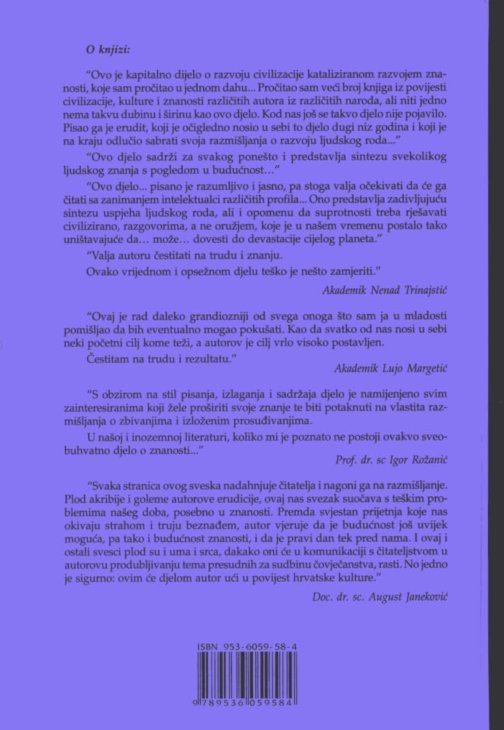
|
»
(E) U.S. State Dept. letter
|
U.S. State Dept. answer ICTY-Gen Gotovina
Today I received the following letter from the U.S. State Dept. answering
my recent letter regarding the General Gotovina indictment and the U.S.
Administration's offer of millions for his apprehension, while in
contrast badgering Croatia's government to exempt the US military from
the ICC. Here is the letter:
Hilda M.. Foley
Southern California Chapter
American Croatian Association
Oct. 27, 2003
Dear Ms. Foley:
Thank you for your letter to Secretary Powell of Oct. 16 expressing
concern related to the ICTY indictment against Ante Gotovina.
The ICTY was created by the U.N. Security Council under Chapter VII of
the U.N. Charter and is charged with investigating and prosecuting war
crimes, crimes against humanity, genocide, and grave breaches of the
Geneva Convention committed after 1991 in the former Yugoslavia. ante
Gotovina has been charged under terms outlined in the Statute of the
Tribunal with individual criminal responsibility and superior criminal
responsibility for crimes against humanity and violations of the laws and
customs of war. UN Security Coucil Resolution 1503 specifically calls on
Croatia to render all necessary assistance in bringing Ante Gotovina
before the ICTY, and Croatian Prime Minister Ivica Racan himself has
called upon Gotovina to address the indictment in the Hague. The best way
for Ante Gotovina to profess his innocence concerning the charges being
filed against him is to appear before the tribunal.
We see no contradictions between the need to assist ICTY in fulfilling
its mandate and our position on the International Criminal Court (ICC).
ICTY represents a particularized response of the international community,
endorsed by the U.N. Security Council, to a conflict which saw serious
violations of international humanitarian law and growing instability in
the region. The ICC, in contrast, creates an institution that purports to
have broad jurisdiction over citizens of the ICC parties and non-parties
alike. This assertion of jurisdiction over non-parties, absent a U.N.
Security Council mandate, is contrary to the most basic principles of
customary international law governing treaties.
Given this sweeping jurisdiction, the United States is concerned that
U.S. citizens, including military and civilian personnel, will be exposed
to politically motivated investigations and prosecutions.
Sincerely,
signed: Pierre-Richard Prosper
(My remarks: His last sentence is exactly my argument about the ICTY -
"politically motivated investigations and prosecutions" . As far as Racan
is concerned - a "reformed" communist most likely would not be too
concerned about a general who fought to free Croatia from communist
Yugoslavia.
Hilda
|
»
(E) No light at the end of this tunnel, George
|
No light at the end of this tunnel, George
editor@sunpub.com
Editor
(Letters)
The Toronto Sun
Re Eric Margolis:" No light at the end of this tunnel, George", Nov. 2, 03
(P. Viereck-metapolitics)?
Dear Editor.
Thanks to Mr. Margolis again for his thoughtful piece!
Yes, I agree with him - as usual.
I am glad that he cites Peter Viereck.
I read him much; in fact I quote Viereck in my book ( "Against Democracy and Equality: the European New Right, 1990).
Yes you are right Mr Margolis. But should you not mention that re. Wolfowitz, Perle, Feith, B. H. Levy, and consorts in France, etc.. their heritage goes back to Trotskyism?
They "came down from the Mao pass to the Rotary club, " as one French author stated years ago.. Were they not all peaceniks, former 68-ters, rabid pro-Titoists, back when the Gulag sewage system was running full steam?
Now they pontificate against "hate speech" and endorse the metaphysics of human rights.
You do not wish to trust intellectuals ("La grande peur de bien- pensants," by Bernanos(..), who betray their old ideals and turn to new voguish deities.
Germans have a proverb: "Wer heute seine Pflicht verraet, verraet morgen seine neue Pflicht - auch."
keep up a good work!
sincerely yours,
Tom Sunic
Croatia
http://doctorsunic.learn.to
http://www.canoe.ca/Columnists/margolis_nov2.html
Toronto Sun | November 2, 2003
|
»
(E) USCS anti-Croatian Lecture
|
Lecture, that shouldn't be Here is the address of the University of South Carolina Spartanburg. (USCS) The lecture is on Jan 22, 2004. I have sent a letter to their faculty and Student Newspaper editor, since no other e-mail address is available. I also sent it to the Chancellor at the same e-mail address. The University address is: University of South Carolina, 800 University Way, Spartanburg, SC 29303
School website: http://www.uscs.edu/
From the website: Dr. John C. Stockwell, Chancellor (op-ed) Few more phones and emails from the same University. Please find the shortest dial to the president of the University. Donette Stewart, Director 864.503.5280 864.503.5280
Michelle Morrell,Residency, 864-503-5284
Greg Dailey, Counselor 864.503.5281 Glynda Miller, Counselor 864.503.5289 Carlos Howard, Counselor 884-503-5278
Letter to Chancellor
Oct. 29, 2003
Twhaley@uscs.edu
Dr. John C. Stockwell
Chancellor
University of South Carolina
Spartanburg, SC 29303
Dear Chancellor Stockwell:
It is truly shocking to read in the University's schedule a lecture to be
given by USCS historian Robert McCormick titled "Pavelic, Croatia's
Fascist Dictator". It is hard to imagine what prompts this professor to
bring up the subject while he obviously has not researched it fully.
Case in point is his statement about the WWII Croatian Nazi puppet
state's concentration camps. He mentions that 400,000 Jews, Serbs and
Gypsies were killed in the camps. By now every unbiased researcher and
historian knows the fact that the actual number of concentration camp
victims in Croatia was between 60 to 80 thousand, not 200,000 or 400,000.
Every innocent victim is one too many, but such horrific exaggerations,
thanks to Serb propaganda lies, are utterly outrageous. During the 1999
trial of the Jasenovac camp commander Zakic in Zagreb, Croatia, the
correct numbers were undisputed even by the Zagreb Jewish community.
The actual list of victims dates back to 1964, issued by the communist
Yugoslav authorities in Belgrade, who, being Serb-dominated, certainly
had no wish to minimize Croatia's guilt. According to these data of the
Federal Statistical Ministry of Yugoslavia - Center for Scientific
Documentation of the Institute for History of the Workers' Movement, -
the total number of victims was appr. 59,000, and also revealed their
identities, which is certainly more significant than any throwing around
of fictitious numbers by anti-Croatian propagandists. As to Mr.
McCormick's contention that Croatia had "the third largest concentration
camp in Europe" that is too absurd to even merit a reply.
By no means is this letter meant to be an apologia for Pavelic, the
wartime leader of Croatia who was installed by Mussolini's Fascists. Only
about 1% of Croatians welcomed his rule. Historically, for centuries,
Croatia was never known as an anti-Semitic nation, yet its reputation
suffers to this day because of the four years under the Ustasha regime of
WWII, which was established by Nazi Germany and Fascist Italy, that
pursued their anti-Semitic policies. Ever since, this fact has been used
by its detractors to discredit Croatia in the eyes of the world.
Therefore such lectures as planned by prof. McCormick only continue to
malign a whole nation and one has to wonder what is the purpose behind
it.
Croats, and especially their Cardinal Stepinac saved hundreds of Jews and
the Cardinal publicly spoke against the camps and the killings of Jews
and Serbs. Does Mr McCormick ever mention the virulent anti-Semitism of
the Serb Orthodox Church or the large concentration camps run by Serbs in
Serbia during WWII, such as Sajmiste and Manjica, in which many thousands
of Jews were killed or handed over to the Germans? While Croatia
established a memorial to the victims in Jasenovac, Serbia paved over
their camps, so no one would ever see them. Does he mention the
Hungarian, Rumanian and even French, among other European regimes in
WWII, who delivered their Jewish populations to the Germans?
It should be in the interest of fairness, and even more specifically, of
historic accuracy, for your University to stop any such attempt of
disinformation or simply Serb propaganda to be disseminated in the name
of "historical lectures".
Sincerely,
Hilda M. Foley
National Federation of Croatian Americans
13272 Orange Knoll
Santa Ana, CA 92705
P.S. For your further information on this subject - and even more so for
prof. McCormick's, several good books are available on this subject:
Philip Cohen: "Serbia's Secret War"
Marcus Tanner: "Croatia, a Nation Forged in War"
B. Anzulovic" "Heavenly Serbia"
Henry Pozzi: "Black Hand Over Europe"
Ljubica Stefan: (recipient of the Medal of the Righteous Among Nations by
the Holocaust Remembrance Authority in Jerusalem) "From Fairy Tale to
Holocaust"
Michael McAdams: "Croatia, Myth and Reality"
|
»
(E) Croatian Partisans & Italian "ethnic cleansing" of Istria
|
Italian "ethnic cleansing" of Istria during WWII -- a historical note
Excellent information from John Kraljic. There is only one problem - a big one - which is that these type of books and/or statistics are written only in Croatian instead of being translated into English, German, French, and sent to appropriate addresses, influential government persons and newspapers. Otherwise it remains just a "secret" among us Croatians.
Hilda
On Sat, 1 Nov 2003 09:07:16 EST RobNSanja@aol.com writes:
Dear all,
I received the following note from John Kraljic, which puts the recent IHT article I sent around -- about Croat and Slovene survivors of Italian war camps -- into an historical context and adds further details which the article did not discuss.
best wishes
Sanja
*******
Sanja:
I thought your list readers might be interested in some more information
about the Rab Camp as reported in the International Herald Tribune.
It has often been noted that the camp was for Slovenes and Jews. In
fact, as the author points out in the IHT story, the camp was a prison
for Croats as well. According to Ivan Kovacic's work, Kampor 1942-1943:
Hrvati, Slovenci i Zidovi u koncentracijskom logoru Kampor na otoku Rabu
(Rijeka: Adamic, 1998) [translation -- "Kampor 1942-1943: Croats, Slovenes, and Jews in the Kampor concentration camp on the island of Rab"] , a total of 1,447 victims have been accounted for thus far in the camp. Approximately 15,000 people were housed in the
camp.
Of the 1447 victims, 564, or close to 40%, were Croats. Most of the
Croatians killed were from the area of Gorski kotar. Kovacic calculates
the following numbers for certain villages and towns: Trsca - 191; Cabar
- 145; Gerovo - 58; Prezid - 48 and Plesca - 30. These are obviously
the largest concentrations.
The Italians basically "cleansed" this entire region of its population
in order to stop the support that the locals had been giving to the
Partisans. This area was annexed by Italy after 1941. As in other
areas annexed by Italy, and as was done previously in Istria, the
Italians introduced a campaign of Italianization, which included the
slow but sure ending of Croatian language classes in schools. The
results of this campaign in Istria were well known where an estimated
100,000 Croats and Slovenes left as a result and countless others were
Italianized through brutal ethnic discrimination and oppression.
During WWII, the Italians placed tens of thousands of Croats in camps in
Italy as a means to both break the back of support for the Partisans and
to engage in ethnic cleansing of territory.
The means used by the Italians was not limited to internment of
civilians, but also involved mass killings.
On July 12, 1942, Italian army forces (and it should be emphasized that
most of these crimes were committed by regular army forces, not
blackshirts) killed between 91 and 128 people in the village of Podhum,
about 10 kms from Rijeka on the Rijeka-Zagreb road. Those killed ranged
in age from 14 to 60. The remaining 889 people who lived in the village
were shipped off to camps and over 320 homes were destroyed.
To put this in some context, it is interesting to see what the NDH's
consul to Rijeka, Zvonimir Caleta, said about the attack on Podhum (as
cited to in Kovacic's book): "Local Italian authorities justify these
acts on the grounds that Communists are in question. If this were
really the case, then the annexed continental (i.e., interior) portions
of the Kvarner region would be the only area in the world which is a
compact Communist one, because the entire population has been subjected
to these countermeasures. That the arguments of the Italian authorities
have no basis is shown by the recent and past political history of the
people in the area which is in question. Of all the vilages in this
area, Podhum has suffered the most, and that is a village which in this
area was a strong center of the national struggle of the Croatian people
in the past two decades. That village was politically speaking
pro-Croatian so that not one pro-regime (i.e., Yugoslav) party in this
largest village of the Grobinstina could ever get even one vote for
itself. Just as this village was not a Communist one, one cannot make
claims that other villages in the area are Communist as Communism was
never able to get a free ride here. This can be seen by the fact that
many rebels (i.e., Partisans) confess and take communion before they
leave for the woods (i.e., the Partisans)."
I had an opportunity to visit the Podhum memorial this summer which is
clearly visible on the highway from Rijeka to Zagreb. There are plaques
with the names of various individuals, some having fresh flowers on them
which shows how this massacre still resonates among the locals.
Even though the perpetrators of this crime were known, they were never
prosecuted.
We should also not forget the crimes committed by the Germans. I
recently read that following the German takeover of Istria in 1943 after
Italy's capitulation anywhere from 2.500 to 5.000 Croats were killed in
Istria alone. I travelled to a number of towns in the interior of
Istria during the summer and this is evident by the war memorials which
list people killed, most dying in 1943.
A substantial number of Croats from Istria were subsequently sent to
German concentration camps, including Auschwitz and Dachau.
A recent book by Vinko Sepic Ciskin, Gubici Liburnijskog kraja u Drugom
Svjestskom ratu (Rijeka: Adamic, 2003) [translation -- "Casualties in the Liburnian region in WWII"], contains a list of names of those killed in the region of Opatija, Matulji and the Kras region of Istria. The author found a total of 1230 people were killed from these
communities alone, of whom 519 were Partisans and 576 were what is
decribed as "victims of fascist terror." A further 79 died serving in
the Italian military. The lion share of these victims were killed in
1943 and 1944.
Of the 519 Partisans, 490 were Croats. Of the 576 "victims of fascist
terror," 498 were Croats, 58 were Jews (from Opatija) and 16 were
Italians. Of the victims of fascist terror, approximately 250 were
killed in one day in the village of Lipa, located about 5 kms from Rupa
on the Slovene-Croatian border.
In addition to the foregoing, the author lists the names of 48 people
"liquidated" by the Partisans.
I think it is important to note that when we talk about "Partisans" we
need to be careful not to make the mistake in assuming that they were
Communists. They were controlled by the Communist Party because of the
Party's control structure. Like the Domobrani, they were mostly
draftees (the Communists use the word "mobilizirani"). Practically all
Croatian families who lived on the coast were affected by this as the
Partisans took over the area for some period of time after Italy's
capitulation.
John Kraljic
|
»
(E) Let it be Beatrice
|
Let it be Beatrice 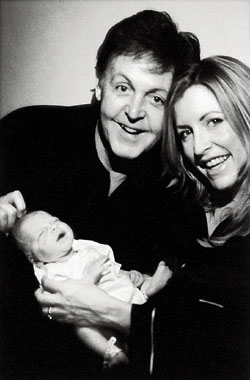
Beatrice Milly McCartney
October 29th 2003
Welcome Beatrice Milly! To remind Crown readers: Paul and Heather are continuously supporting Croatia to become free of landmines. Want to be part of 1000 dinners on November 6th 2003. Log on. www.landmines.org
|
»
(H) Prof Z. SEPAROVIC u Clevelandu 14 Studenog 03
|
Prof ZVONIMIR SEPAROVIC 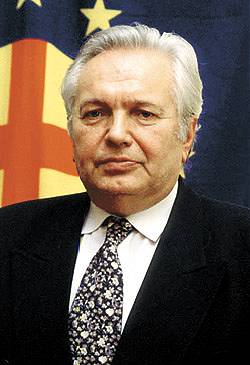
ce na svom putu u Vancouver proci kroz Cleveland, Ohio i tamo odrzati predavanje o tome sto smo duzni hrvatskim zrtvama u borbi za Hrvatsku. S tim u vezi predavanje ce biti "Podizanje memorijalnog sredista hrvatskog zrtvoslovnog drustva, za sve zrtve: Bleigurga i kriznih putova i svih zrtava komunisticke tiranije.
Predavanje ce biti 14. studenog 2003 u 7 p.m. u maloj dvorani Hrvatskog doma Alojzija Stepinca u
Cleveland - Eastlake 34 900 Lakeshore Blv.
Svi ste pzvani na ovu izvanrednu priliku sresti profesora Separovica, koji radi na tome
Da se ne zaborave zrtve bez kojih ne bi bilo slobdne Hrvatske
Dodatne informacije: jerkozovko@hotmail.com
|
|
|




 full story
 printer version