
Sponsored Ads
|
Articles by this Author
»
(E) Int. Fair to Boost Croatia, Bulgaria Cooperation
|
International Fair to Boost Croatia, Bulgaria Economic Cooperation
Politics: 16 September 2003, Tuesday.
The International Autumn Fair -- in which Bulgaria partners Croatia -- in Zagreb is an important drive for further development of economic cooperation and trade between the two countries, Bulgarian Prime Minister Simeon Saxe-Coburg said Tuesday during his official visit to Croatia's capital.
Saxe-Coburg joined the Fair's opening, also attended by Croatian President Stjepan Mesic. The Bulgarian prime minister made a tour around the exhibition area, starting from Bulgaria's pavilion.
Saxe-Coburg underlined that he joined efforts with his Croatian counterpart Ivica Racan to provide favorable conditions for economic assistance between the two countries. He also pointed that common goals -- to enter the European Union (EU) and NATO -- were a good basis for cooperation in the spheres of trade and industry.
The prime minister pledged unconditional support for Croatia's efforts to start EU pre-accession talks and receive an invitation to join NATO.
http://www.novinite.com/view_news.php?id=26171
|
»
(E) Kostelic back on skiis for new season
|
Kostelic back on skiis for new season
ZAGREB: Croatia’s triple Olympic champion Janica Kostelic is back on skiis preparing for the new season following a successful recovery from recent surgery on her troublesome right knee, Croatia’s ski federation spokesman Ozren Mueller said Sunday.
Kostelic, who had her third knee operation in July, started training in giant-slalom and super-G in Zermatt, Switzerland, Mueller said, adding that for now it has been decided that she will go on the US tour of the World Cup. “I feel great. It is such a pleasure being back on skis, I enjoy every curve. Really, nothing can be compared to skiing,” Kostelic told AFP, speaking from Zermatt.
The 21-year-old dual World Cup winner and her brother Ivica, who won the men’s slalom world title, will stay in Zermatt until Wednesday and are to continue with preparations in Hintertux, Austria. Kostelic, dubbed the Snow Queen, had her first operation in March and the second in May. —AFP
http://www.dailytimes.com.pk/default.asp?page=story_15-9-2003_pg2_13
Op-ed
It is interesting where the news travels. This is from Daily Times in Pakistan
NB
|
»
(E) NEW book Josip Novakovich Plum Brandy:Croatian Journeys
|
Plum Brandy: Croatian Journeys 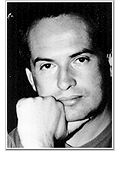
Josip Novakovich Josip Novakovich has a new book out: Plum Brandy: Croatian Journeys (White Pine Press, Buffalo, NY). A few of the pieces from the book appeared on CROWN last year, and many have appeared in a variety of journals, including the New York Times Travel Section, Minneapolis Star Tribune, Boulevard, and Iowa Review. The book is a mix of personal observation, memoir, and political and historical analysis. Phillip Lopate, the eminent American essayist, says: The triumph in this book is its narrative voice: that of a fully adult human beinng who has been places, done a lot, and knows how ludicrous and sad the world is, and he as well. The reader's pleasure issues frome very sentences, as Novakovich unveils with wry, disenchanted humor the way things are without relinquishing his ancient sense of wonder. Plum Brandy is an extraordinarily alive, enjoyable collection--the best books for far by an immensely gifted writer.
You can get the book on www.amazon.com or in a large bookstore.
Novakovich teaches at Penn State University. His book, Salvation and Other Disasters, won an American Book Award, a Whiting Award, and was listed as a notable book by the New York Times Book Review. Next year HarperCollins will publish his new novel and a collection of stories (entitled Infidelities: Stories of Lust and War). Feel free to get in touch with him at josipn@yahoo.com . Novakovich does not plan a book tour, but he will come to NYC in October to promote The Wild East, an anthology of stories from Eastern Europe. We will give you the dates later on.
Op-ed Support Josip Novakovich by buying his book. Support artists by buying their art. Nenad Bach
|
»
(E) World Bank, EU Praise Croatia
|
World Bank, EU Praise Croatia Business - Dow Jones Business News
World Bank, EU Praise Croatia, But Insist On More Reform
Mon Sep 15,10:58 AM ET
BRUSSELS -(Dow Jones)- Croatia won plaudits for its strong economic performance Monday from the World Bank (news - web sites) and the European Union (news - web sites) Commission, though they said it must still cut public spending, improve property and creditor rights and loosen up its labor market.
The Brussels meeting coincided with the publication of the World Bank's inaugural report on the country.
Croatian gross domestic product growth reached an impressive 5.2% last year, a result of the government's market-oriented reform agenda and a tourism boom.
"The enormous real output decline of (Croatia's) first wartorn years of independence has been virtually recuperated," said Arnant K. Seth, the World Bank's country director for south central Europe.
The Bank praised the government for opening up to the global economy, joining the World Trade Organization (news - web sites), and applying in February to join the E.U. The government also increased tax collection, cut public spending and kept the exchange rate stable, while overhauling the banking sector and loosening the job market.
But the Bank stressed the need for further change in order to attract more foreign investment. In particular, Croatia must revamp its public finances and public corporate sector. The government must cut its deficit by at least 2% of GDP (news - web sites) and stop propping up unprofitable public enterprises. More than half of publicly owned firms are making losses, and the Bank noted that radical privatization program is required.
Even after sizable budget cuts, "Croatia has one of the largest public sectors in the world," the Bank said in its report.
Croatia's Vice Prime Minister Slavko Linic, present for the Bank report launch, agreed with most of the policy prescriptions. He said Zagreb will concentrate on passing a new privatization law and privatization in the transport and energy sectors.
But he warned against haste. Croatia now suffers from an unemployment rate of 15.2%, and that already high figure could soar because of restructuring.
"We have a difficult job ahead of us," Linic cautioned. "The list of high- priority goals is a very ambitious list, but it is attainable."
By William Echikson and Karolina Rucinska, Dow Jones Newswires; 32 2 285 0134;william.echikson@dowjones.com
http://story.news.yahoo.com/news?tmpl=story&u=/dowjones/20030915/bs_dowjones/200309151058000781
|
»
(E) Croatia pound Thailand
|
Published on Aug 19, 2003 [VOLLEYBALL] Croatia hammered Thailand’s Girl under18 squad 31 (2628 2517 2514 2516) to finish fifth in the FIVB 8th Girls’ U18 World Championship in Poland on Sunday night. The fifth place playoff began with the Thais taking an early lead and maintaining it throughout the entire opening set. The European champions put up a strong resistance and Thailand had to serve five times to take the first set at 2826. The Thai team, who beat hosts Poland in the earlier round, struggled in the second set as the Croatians changed their gameplan. Senna Usic, one of the tournament's best scorers, was unstoppable in attack and collected 23 points in the match. Usic’s teammates made some magnificent contribution as Croatia cruised along smoothly. Thailand never got the break through they were desperately looking for and lost the next two sets easily. The defeat was a big setback for Thailand, who failed to repeat their 1997 success, when they ended up at fifth in the championship that was hosted by the Kingdom. "My girls showed tremendous guts. We have to accept the fact that the Croatians were much stronger than us. Their blocks made it difficult for us to bounce back," said Thai coach Jittipol Toomanee. "We’re smaller than other European players, so ending the tournament at the sixth is not bad at all," added Jittipol. Source: http://www.nationmultimedia.com/page.news.php3?clid=9&theme=A&usrsess=1&id=19292
|
»
(E) Croatia for High-lifers in hiding
Croatia for High-lifers in hiding Brigitte Bardot reckons St Tropez is finished, its glamour all gone. Can she be right? Anthony Peregrine went to investigate The case of the Côte d'Azur in general, and St Tropez in particular, has been exercising some great minds recently. Only a couple of weeks ago in The Sunday Telegraph, Brigitte Bardot complained that St Trop was now overrun by hordes and irremediably naff. Granted, she missed the irony that most of these crowds were drawn in by the racy, glam image generated by her and her skimpily clad chums in the 1960s. No matter. The point was that, for her, St Tropez as a phenomenon was finished. She's not alone. We are constantly being told that fashionistas and other types who pepper the "people" pages have abandoned La Côte for Croatia or Mauritius. Could this be true? It seemed vital to find out. After all, it's no good folk travelling to St Tropez thinking they're cool, and then being sneered at for being hopelessly passé. The obvious place to start inquiries was the Byblos Hotel, just off-centre in St Tropez. Prouder than any other French hotel of its celebrity past, the Byblos reckons itself "entwined in the mystique of St Tropez". For 35 years it has been at the apex of what was, at least, the planet's trendiest resort. BB herself was a regular, Mick and Bianca got married there, Elton stayed and Bruce took off his shirt in the bar (that's Willis, not Forsyth). Its Caves-du-Roy nightclub claims to have the toughest door policy on the coast - and an unrivalled name for sophisticated excess. Here was Côte d'Azur glamour in microcosm. Or not, of course. I approached on tenterhooks. A place with this kind of reputation had to be up itself to a critical degree. In truth, I wanted it to be vulgar and insensitive, so that I too could dismiss St Tropez and get off home. Talk about disappointment. The bloke out front didn't seem the slightest bit fazed to be dealing with a car a quarter the size of everything else in the car park. The welcome was charming and the room - well, my wife went through various grades of euphoria from the moment we entered. "These tiles," came a shriek from the bathroom. "I've seen similar ones in a magazine. They cost 300 quid a square metre!" I had to clamp some of the room-service nougat between her teeth just to get some peace. Outside, things were even better - therefore worse. The Byblos is built to resemble a Provençal hamlet, a succession of ochre frontages descending the hill. "Doesn't look like a real Provençal hamlet," I said. "No butcher's shop, washing or old women in black." "Or rubbish, bad drains or dog muck," said my wife, teeth once again unstuck. Mediterranean horticulture exploded abundantly, walkways and galleries led all over the place. They were dotted with antiques, busts and more ceramics. Lord knows, I looked for vulgarity - but found none. After a couple of scotches in the bedroom - we take our own bottle, wary now of muggings by minibar - we dined in the hotel's brand-new, Med-themed Bayader restaurant, low-lit, by the pool. Food and setting were splendid, but what of our fellow guests? Had we fallen in among jet-setters? Apparently not. On the next table was a heroically overweight banker-type with a well-preserved wife, over there two middle-aged English couples (GPs on a weekend break, at a guess), across the way a young French family. Not one of them looked as if they'd rate a down-page paragraph in their local paper, never mind Hello! magazine. Source: http://www.telegraph.co.uk/travel/main.jhtml?xml=/travel/2003/09/06/etbyblos.xml&sSheet=/travel/2003/09/09/ixtrvhome.html
|
»
(E) NATO begins joint naval exercise off Croatia
|
NATO begins joint naval exercise off Croatia ZAGREB (AFP) Sep 13, 2003
A joint naval exercise led by 14 NATO and partner countries began Saturday off Croatia's Adriatic coast. The exercise, codenamed "Cooperative Engagement 2003," will continue until September 20, a defense ministry spokeswoman told AFP. The exercise, focused on sea-rescue and anti-mine operations, began with 10 naval vessels entering the port of Split, in Croatia's southern Dalmatia region. Taking part in the exercise will be some 500 troops, a dozen ships and five planes from NATO members Belgium, France, Greece and Italy, along with Bulgaria, Romania, Slovenia, Latvia, countries invited to join the alliance, partner countries Albania, Croatia, Russia, Ukraine, as well as Egypt and Algeria. Officials said the exercise was aimed at demonstrating NATO's capacity to integrate forces for partner countries in such operations. The Cooperative Engagement exercise takes place every two years. All rights reserved. Š 2003Agence France-Presse. Sections of the information
|
»
(E) Croatian in Sea Battle with Slovenia
|
Croatian in Sea Battle with Slovenia
Slovene ambassador withdrawn as maritime dispute escalates.
By Drago Hedl in Zagreb (BCR No 459, 12-Sep-03)
Long-standing tensions between Croatia and Slovenia have escalated into a war of words over territorial claims to the Adriatic Sea.
Croatia says it plans to forge ahead with asserting its economic rights to an area of water far out to sea, blocking free access to the Mediterranean for Slovenia.
Analysts say the dispute reflects an obsolete nationalist approach to resolving foreign policy differences, at a time when both countries are seeking membership of the European Union, EU.
Slovenia recalled its ambassador to Zagreb, Petar Bekes, "for consultations" on August 31, after Croatian foreign minister Tonino Picula confirmed that his country was determined to declare an Exclusive Economic Zone, EEZ, in the Adriatic. Picula made the remarks in an interview published in the newspaper Slobodna Dalmacija earlier the same day.
The following day, Slovene foreign minister Dimitrije Rupel warned that once his country gets into the EU next May, it may not support Croatia's application to join in the next wave, expected in 2007.
Croatia's government has indicated that its decision is final, and that it will be submitted to parliament in October, a move which seems to undercut the possibility of compromise at talks with Slovenia scheduled for September 16.
The speaker of Croatia's parliament, Zlatko Tomcic, has denied accusations by his Slovene counterpart that Zagreb's stance on the EEZ is an electioneering tactic. The suggestion was that Prime Minister Ivica Racan's left-of-centre government, which faces an early general election in November, needed to do something to enhance its nationalist credentials.
Croatia is claiming an EEZ under the United Nations Convention on the Law of the Sea, which would give it a broad strip of the Adriatic all the way along its coast, extending much further than its current 12-mile territorial waters. It would not have full sovereignty over the area, but would have exclusive rights to fish and exploit mineral resources there. The latter aspect has become much more significant since the discovery of gas reserves in the Adriatic.
Croatian officials have made it clear that they resent Slovenia's presumption that it can interfere in a decision that Zagreb can take unilaterally.
Slovenia, with just 47 kilometres of coastline tucked into the northernmost corner of the Adriatic, faces the prospect of losing all claim to fishing and gas outside its own small offshore zone, and having its ships pass through foreign waters every time they head for the Mediterranean.
"If all countries in the Mediterranean were to start proclaiming trade zones, there would be chaos," said Foreign Minister Rupel.
Slovenia is not entitled to declare its own EEZ because its waters do not open onto the high seas. But in recent weeks its politicians and legal experts have been arguing that Croatia has no right to carve out a sector of the sea, because there has been no formal demarcation since the old Yugoslav state disintegrated. They say that as one of the inheritor countries, Slovenia should have a fair share of the former state's maritime territories.
What makes the Slovenes even angrier is that they thought they already had a deal with the Croatians. The Piran Bay agreement, drafted in 2001, drew new lines on the map to give them a sea corridor to international waters in the Adriatic, squeezed between the 12-mile zones of Croatia and Italy. But Croatian politicians subsequently got cold feet on the deal, sensing that it was viewed as a territorial loss at home, and failed to ratify it. Picula's latest announcement that the EEZ was going ahead appears to have killed the Piran accord off completely.
Faced with the spectacle of two prospective members quarrelling over borders, the EU has refrained from intervening but has urged both countries to negotiate a compromise solution. European officials hope that the September 16 bilateral talks will produce some kind of agreement.
The two countries have a record of wrangling over unresolved ownership issues that are the legacy of the Yugoslav break-up. As well as a dispute over sovereignty in the Piran Bay, they have rowed publicly about the Krsko nuclear plant, built by both countries but located on Slovene territory, and about outstanding debts arising from Slovenia's now-defunct Ljubljanska Bank.
Some local analysts are weary of what they see as a continuing pattern of confrontational behaviour, more reminiscent of the past than of a future within an integrated Europe. Slovene law professor Lojze Ude, who was involved in ratifying the UN convention on the sea when he was justice minister in the old Yugoslavia, says politicians on both sides are "slaves to nationalism".
Damir Grubisa, an analyst at the Institute for International Relations in Zagreb, thinks politicians in both countries have failed.
"Croatian and Slovenian politics long to distance themselves from the Balkans," he said. "Yet it could be said that they are led by typical Balkans politicians, in the derogatory sense of that phrase, used in both countries."
Drago Hedl is an Osijek-based IWPR contributor
http://www.iwpr.net/index.pl?archive/bcr3/bcr3_200309_459_3_eng.txt
|
»
(E) Foreign Debt Will Reach 21 Bln By Year's End
|
Foreign Debt Will Reach 21 Billion By Year's End
Zagreb, September 12, 2003 - Croatian National Bank Governor Zeljko Rohatinski said yesterday that measures enacted earlier this year to curb imports had proven effective and had not raised interest rates. Rohatinski added he did not believe interest rates would rise in the coming months either.
At the same time, imports have continued to increase, although at a slower rate. The balance of payments deficit, which is affected by imports, would be lower if foreign owned banks and businesses had not transferred a billion US dollars in profits out of the country this year, Rohatinski pointed out. Nearly half of that amount accounted for foreign business bank profits, HIC reports.
The Croatian National Bank believes that Croatia's foreign debt will continue to grow, reaching some USD 20.8 billion by the end of the year - an alarming 70 percent of the GDP. According to Rohatinski, there is no need for concerns if the growth of the deficit in the balance of payments can be curbed.
http://www.southeasteurope.org/subpage.php?sub_site=2&id=9517&head=hl
|
»
(E) Propaganda and the deceit of history
|
Propaganda and the deceit of history
From: zhrepic@phys.ksu.edu
To: hrwatcheu@skynet.be
CC: hrwnyc@hrw.org, hrwdc@hrw.org, hrwla@hrw.org, hrwsf@hrw.org, hrwuk@hrw.org, hrwgva@hrw.org
Dear Ms. Leicht,
In addition to my earlier letter related to your report on Human rights in Croatia I wanted to inform you about one of the sources that you used for this report. I would kindly ask you to read about it:
http://www.croatianworld.net/CROWNframes.htm?/Letters/3070.htm
My comment to this is that it is amazing that the way in which western public is informed about Croatia still works the same way as it worked 14 and more years ago during communist Yugoslavia: Namely, western informators go to Belgrade to ask about Croatia. What I never understood is why westerners have been so eager to believe whatever they were told there. Also - why they have been so persistent in presenting this one side of info. In spite the abundant evidence they should not. E.g.:
Cohen, P. J. (1996). Serbia's secret war: Propaganda and the deceit of history (1st ed.). College Station: Texas: A&M University Press.
One another, painful example for this illogical yet unconditional cooperation with sources from Belgrade is that westerners still teach that that Serbo-Croatian language is spoken in Croatia.
http://www.lmp.ucla.edu/profiles/profs01.htm
This "Serbo-Croatian" thing communists invented in 1954 as a transitional phase to Serbian language for all. This lasted until 1991. So during "full" 37 years of history.
However this transitional language continues to live in academic space of western universities. Knowledgeable professors support their claims with literature from this period (notice that there are no references before 1954 nor after 1992). Also, this litereture - all had the identical source.
I guess when there is too much democracy in politics and media, it is difficult for any tiny bit of truth to go through.
And human rights are not tiny. They are big thing.
When are they going to pass through?
Am I asking a wrong person / organization?
Sincerely
Zdeslav Hrepic
|
|
|




 full story
 printer version