The first history of Armenians in the West was written by a Croatian
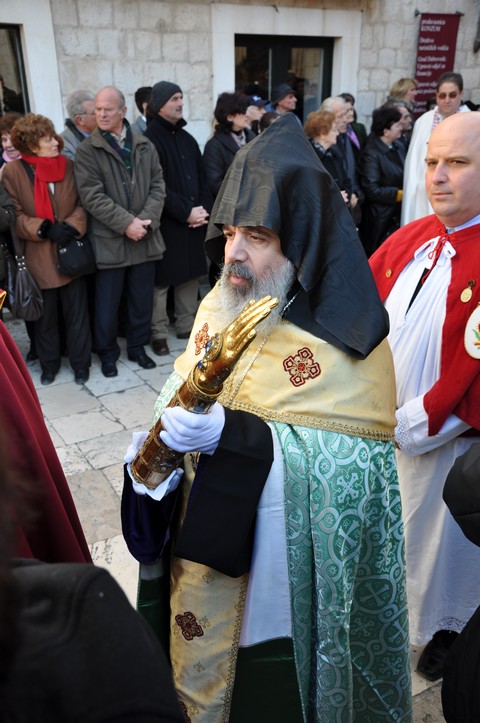
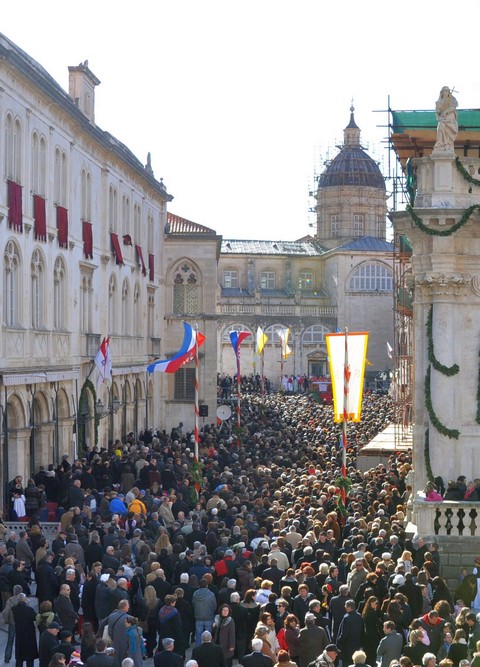
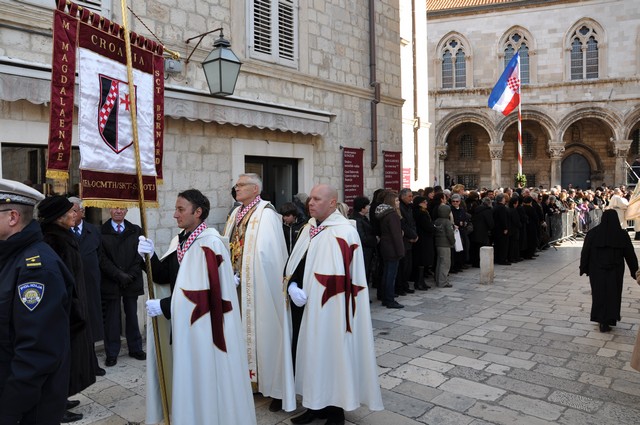
| The festivity of Saint Blaise, the patron of Dubrovnik, UNESCO Inscribed in 2009 on the Representative List of the Intangible Cultural Heritage of Humanity The evening before the festivity of Saint Blaise in Dubrovnik, Croatia, as all the church bells in the city ring and white doves are released as symbols of peace, worshippers gather for a ritual healing of the throat to preserve them against illness. On the third of February, the official day of both saint and city, parish banner bearers flow into the city in folk costume for the centrepiece of the festival, a procession attended by bishops, ambassadors, civic leaders, visiting notables and the people of Dubrovnik. The festivity embodies many aspects of human creativity, from rituals to folk songs, from performance to traditional crafts (including the making of the historical weapons fired in celebration). The ritual dates back in some form to at least 1190 and has reinforced a close identification of Dubrovnik’s residents with the city’s patron, Saint Blaise. Over time, the festivity has evolved as Dubrovnik and the world have changed. Each generation adapts it slightly, inspired by its own ideas and needs to make the ritual its own. On Saint Blaise’s day, Dubrovnik gathers not only its residents, but all those who pay respect to tradition and the right to one’s freedom and peace. |
| On Armenian and Croatian Contacts  Vinicije B. Lupis Institute of Social Sciences Ivo Pilar – Regional Centre Dubrovnik, Dubrovnik Dubrovnik, as an important trade centre between the East and West, was the meeting place of different peoples and cultures. Among the many foreigners in Dubrovnik there were also the Armenians. A special bond between Dubrovnik and Armenia is also the cult of the city’s patron saint St. Blaise from Armenian Sebaste, in addition to the older city patron saints of St. Zenobius and Zenobia, who are originally from Lesser Armenia, as is the cult of the Forty Holy Martyrs of Sebaste. Of the Dubrovnik Armenians, who were mostly traders, the most renowned in history is Giuro Baglivi Armeno. The archbishop Rajmund Jelić from Dubrovnik was a religious leader of the Catholic Armenians in Asia Minor at the beginning of the 18th century and exchanged letters with the priest Mkhitar, the founder of the Armenian Catholic Mkhitarist 216 order. The most important connection between the Armenians and Croats is the Jesuit Josip Marinović from Perast; he wrote the first history of Armenians in the West, thus laying the foundations of contemporary research of Armenian history in Europe. During the 19th and early 20th centuries the citizens of Dubrovnik maintained their contacts with the Armenians resulting in the archbishop of Sebaste’s visit to Dubrovnik in 1902. The interest of Dubrovnik’s citizens in the place of birth of their patron saint has continued to the present day, which is proof of a permanent spiritual bond connecting the Croatian and Armenian peoples. Source HRČAK Bibliography of Dr. Vinicije Lupis |
| Josip Marinović, Croatian Jesuit, wrote the first history of Armenians published in the West Josip Marinovic (1741 – 1801), was a Jesuit born in Perast – Kotor (in Boka kotorska, annexed to Montenegro in 1945), professor of theology in Venice. His friendship with an Armenian banker Serpos resulted in his interest for the history of Armenians. His assiduous research resulted in the book “Compendio storico…della nazione armena”, published in Venice in 1783. The book had a great success. Though it was signed by Serpos, its true author was Marinovic. It represents the first history of Armenians published in Europe. It is interesting that the book had been extended and republished by Ivan Dominik Stratico (1732-1799), bishop on the Croatian island of Hvar. This book incited European interest for Armenian people and their culture. In particular, upon the initiative of the Vatican, supported by Austria and Russia, in 1830 the Turkish sultan admitted very old Armenian Christian Church and allowed Armenian Archbishopric to be founded in Constantinople. Source www.croatianhistory.net |
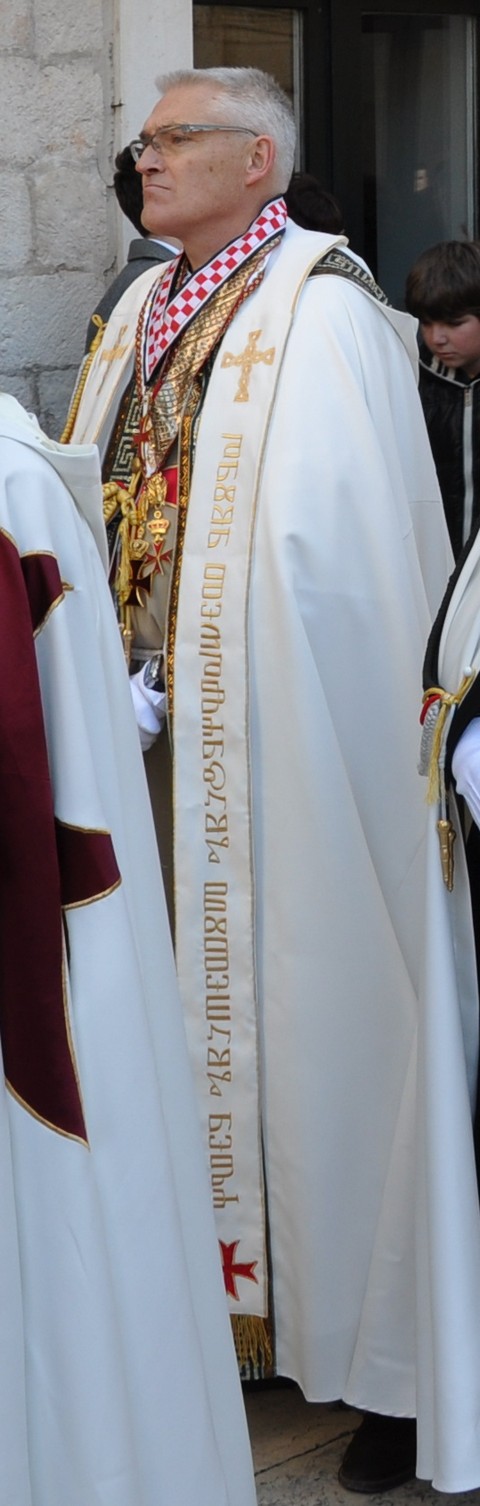
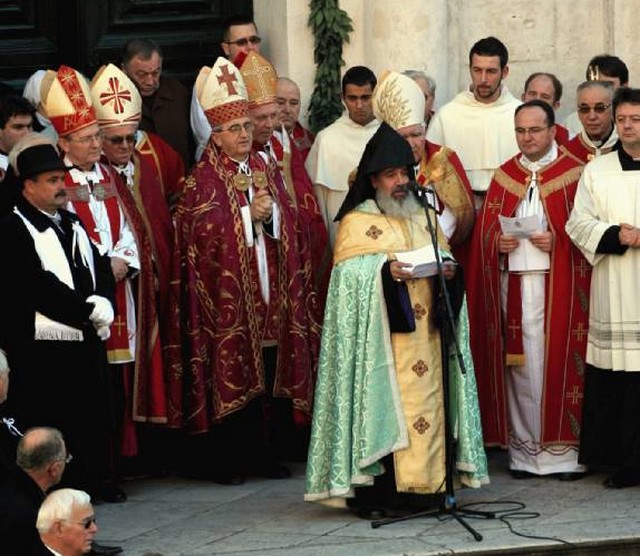
| Armenski biskup na otvorenju 1038. feste sv. Vlaha Tradicionalna 1038. festa sv. Vlaha otvorena je u utorak 2. veljače ispred crkve Sv. Vlaha prvi put kao svjetski priznata nematerijalna baština čovječanstva, a s platoa ispred crkve jezikom sv. Vlaha okupljene je pozdravio armenski biskup Nareg Alemezian, izaslanik katolikosa Arama I. iz Cilicije. O duhovnoj vezi koja je stoljećima spajala hrvatski i armenski narod u pozdravnom govoru dubrovački biskup Želimir Puljić rekao je:
Pozdravljajući okupljene biskupe, predstavnike vlasti i javnog života, biskup Puljić skrenuo im je pozornost na važnost brige o okolišu u svjetlu međunarodne godine bioraznolikosti i Papine poruke za 43. svjetski dan mira: “Ako želiš njegovati mir, čuvaj stvoreno”. |
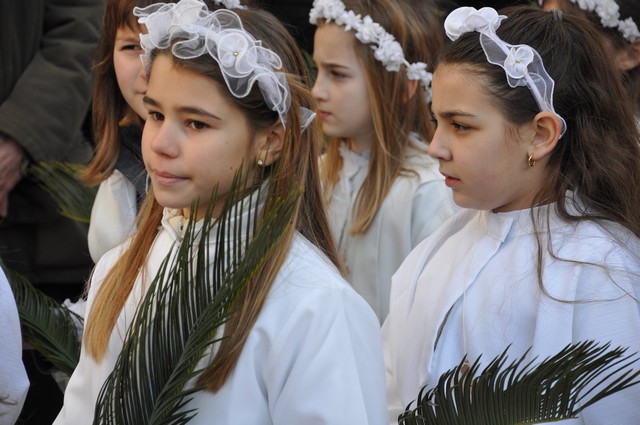

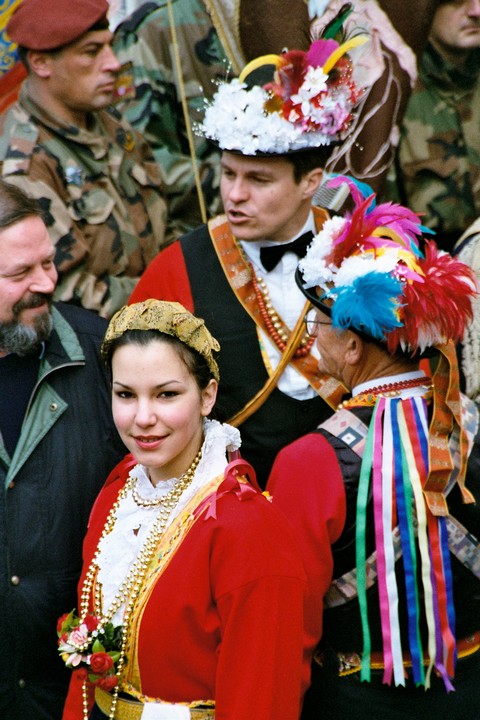
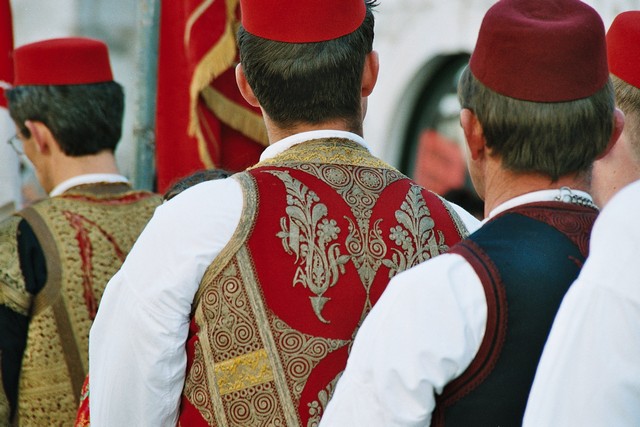
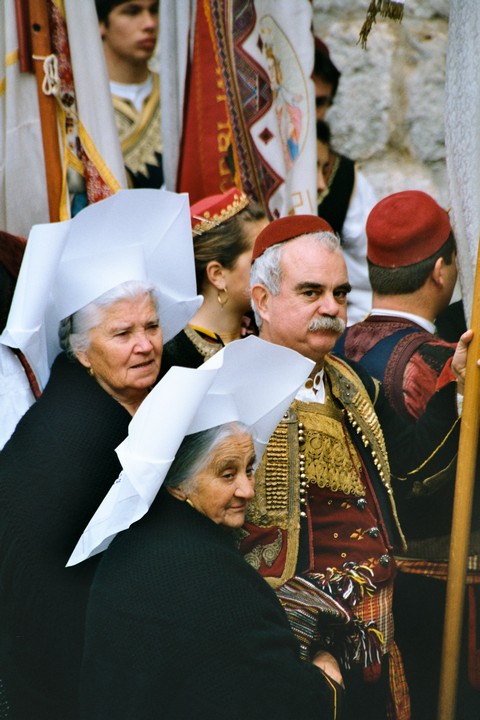
Fantastic Croatian costumes from the Konvale region near Dubrovnik.
Many thanks to Najka Mirković, Dubrovnik, for her beautiful photos.
TEREZA KESOVIJA, Croatian diva, singing – O, Sveti Vlaho
with the Big Symphony Orchestra of the Croatian TV
Dubrovnik Sveti Vlaho festival 2006
Formated for CROWN by prof.dr. Darko Žubrinić
Distributed by www.Croatia.org . This message is intended for Croatian Associations/Institutions and their Friends in Croatia and in the World. The opinions/articles expressed on this list do not reflect personal opinions of the moderator. If the reader of this message is not the intended recipient, please delete or destroy all copies of this communication and please, let us know!


