Sponsored Ads
|
Articles by this Author
»
(E) 2nd Generation Croatians active in US Politics
|
2nd Generation Croatians active in US Politics
573 U.S. service members have died since the beginning of military operations in Iraq on March 20, according to the most recent Department of Defense figures. Of those 391 died as a result of hostile action, and 183 died of non-hostile causes.
Over 100,000 people peacefully demonstrated against the war in New York City on March 20, 2004. One of the main speakers was the Democratic Presidential candidate Dennis Kucinich.
Dennis Kucinich (1946) The oldest of seven children, Kucinich was born in Ohio, near Cleveland's West Side, an area dotted by gritty ethnic neighborhoods and blue-collar suburbs. His Croatian father, Frank Kucinich, drove a delivery truck; his Irish mother, Virginia, cared for the children. Like many other working class people in the city, Kucinich's family lived through austere, difficult times. With his father's meager income as the only means of support, the family frequently couldn't pay rent, and Kucinich would live in 21 different places by the time he was 17. Dennis pursues a career in public service and has won elections for Mayor of Cleveland, Ohio State Senate, now serving his fourth term in Congress, while running for President of the United Stateswww.kucinich.us or call toll free 866-413-3664
Another second generation Croatian contemplating political office is
Krist Novoselic, (1965) born in Compton, California. He was the bass guitarist and one of the founders for Nirvana, a punk rock group. His parents Krist and Maria were Croatian immigrants from Zadar and moved to the US in 1963. While teenagers, Krist and his brother Robert constantly got into trouble with their father and authorities for such things as vandalism, and property damage. His parents send him to Croatia when he was fourteen to live with relatives for one year. Having a little knowledge of the Croatian language from around the house, he fit in nicely and made lots of friends and found the schools to be excellent. It was also during this extended stay that he found his first tastes of "punk rock".
His mother Maria is still a hairdresser in Aberdeen, Washington State. Krist is now a dedicated leader of artists, music fans and music industry professionals alike. As an activist and artist, he continues to champion free speech and decided not to run for lieutenant governor in WA, but wants to remain active in politics by working with "Music for America" to boost voter participation among young people and continue his efforts for election reform. Krist writings on democracy are posted at http://fixour.us orhttp://murkyslough.com orwww.novoselic.com orwww.nirvana-online.net/krist.htm
|
»
(E) Garth Hudson on Bird Up
|

GARTH HUDSON on the recently released BIRD UP:
http://redmusic.com/ecards/BirdUp
Savoy Jazz: October 2003
http://www.savoyjazz.com/sites/savoy/sjNews/bird3b.asp
The artist/track listing is as follows: "Now's The Time (No Time Like Now)" featuring Red Hawk and Deke Damascus; "Relaxin' At Camarillo (August 29)" Me'shell NdegéOcello; "Salt Peanuts (The Mr. Peanut Chronicles)" Hal Willner, Dr. John, The Kronos Quartet, Mocean Worker; "Bebop (Live At the Rooftop)" Choco, The RZA; "Bird of Paradise (Gone)" Serj Tankian; "Congo Blues (Silencer)" Donk, Ravi Coltrane, Wild Children, Hubert Laws, Kodo; "Steeplechase (Sittin' on 22's)" Dan The Automator; "Cheers (X-ecutioners Style)" The X-ecutioners; "A Night In
Tunisia (Downpour)" Donk, The Coconut Tree, Kodo; "All the Shadows of Nuff" Hal Willner, Garth Hudson of The Band, Mocean Worker; "Perhaps (Someday the Roof Will Get Fixed)" Dan The Automator; "Barbados (Where Fish Fly)" Matthew
Backer, Hubert Laws, Redback; "Constellation (Heavenly Bodies)" El-P, Stephanie Vezina.
|
»
(E) Arlene Martinolic Kelly: American of Croatian descent
|
CROWN
Hello!....I am so happy to see this base of information on Croatia on
the Net!....My maternal grandparents came from the Dalmatian Coast (Mali
Losinj and Veli Losinj) at around the turn of the last century prior to
World War I. They settled in Philadelphia, Pennsylvania and started a
social club stiil in existence called The Adriatic Club.
They spoke Italian, considered themselves "Austrian", but, as I found
out only after their deaths, were actually Croatian!....My Grandfather's
name was Adamo Martinolic and My grandmother's maiden name was
pronounced like "Jurich", but my mother said her immigration papers
spelled it more like "Hzrich"..
In any case, I have always been interested in my Croatian heritage. My
family only recently discovered the precise towns in which the
grandparents were born (They called the towns "Lussine Picolo and
Lussine Grande" - their names in Italian, apparently).
....I understand that these places "Mali Losinj" and "Veli Losinj" are
quite beautiful and are popular tourist destinations. I intend to visit
them, hopefully sometime this year, and will attempt to do a little
genealogical searching.
...Thank you for creating this site...I certainly feel more "rooted" at
learning so much more of Croatian history and culture...(It's not that I
know a lot, it's just that until somewhat recently, I knew next to nothing!
Please keep my email address for any further notices, or information.
And thanks again.
Yours,
Arlene Martinolic Kelly
attagirl2@att.net
Dear Arlene,
Welcome ! Dobrodosli, to the Croatian, Honorary Croatian and Friends of Croatia, World community
Participate and enjoy,
Svako dobro, All the best,
Nenad
p.s. After over 1000 "Dear Nenad" letters, I finally decided to open that category.
Thank you for all your kind comments and praise, so good that it was embarrassing to publish them.
|
»
(E) Annual Croatian Youth & Children Festival (New York)
|
CROATIAN CATHOLIC MISSION AND CROATIAN COMMUNITY OF ASTORIA PRESENT:
2ND ANNUAL CROATIAN YOUTH FESTIVAL ( www.crofestivalny.com )
WHEN: APRIL 17, 2004
TIME: 7:00 PM
5TH ANNUAL CROATIAN CHILDREN's FESTIVAL ( www.crofestivalny.com )
WHEN: APRIL 18, 2004
TIME: 4:00PM
WHERE: York College
94-45 Guy R. Brewer Boulevard
Jamaica, New York 11451
SPECIAL GUESTS:
DINO JELUSIC FROM CROATIA, Winner of the first Junior Eurovision Song Contest 2003
GINA Winner of MIK Festival 2003, 4th place, DORA Festival 2003, Croatian Children's Festival and Croatian Youth Festival Alumni
To show our gratitude and appreciation for your donations, we will be awarding the following to our patrons:
$1000.00 or more Diamond Certificate Full Page Advertisement in Festival Book, CD & Video
$ 600.00 to 999.00 Gold Certificate
Half Page Advertisement in Festival Book & Video
$ 400.00 to 599.00 Silver Certificate
Quarter Page Advertisement in Festival Book
$ 200.00 to 399.00 Bronze Certificate
One Eighth Page Advertisement in Festival Book
The names of the above and all the other sponsors will be listed in the Festival Book, which will
serve as a guide for both nights, as well as in the Hrvatski Korijen and in the Croatian Chronicle newspaper. Please mail in your donation with your advertisement (e.g. business card) in order to have the Festival Book printed accordingly in a timely manner.
We look forward to seeing you at the Festivals in April by celebrating our musical heritage as our children and youth continue to contribute to the unique cultural diversity of New York.
|
»
(E,S) Karlo Mirth "Zivot u emigraciji"
|
The Croatian Academy of America sponsors:
BOOK PRESENTATION
"ZIVOT U EMIGRACIJI" by Karlo Mirth
(Written in Croatian)
7:00 pm Thursday, March 25, 2004
Croatian Cultural Center, 502 West 41st Street, NYC
http://www.matica.hr/www/wwwizd.nsf/AllWebDocs/mirth
Hard cover; 434 pages - Promotional price: $ 40.00
To order contact: The Croatian Academy of America, Inc.
P. O. Box 1767 Grand Central Station, NY NY 10163
E-mail: croatacad@aol.com Fax: 516.935.0019
In any discussion of the institutional completeness of the Croatian diaspora in the United States during the last half of the 20th century, the name of Karlo Mirth will surely stand out. As a publisher, editor and writer, he has been at the center of two major publishing successes, Croatia Press (1947-1980) and the Journal of Croatian Studies (1960- ), and has played a prominent role in the Croatian Academy of America.
Karlo Mirth was born on July 15, 1917 in the town, now city, of Otocac, in the Gospic-Senj province of Croatia. As Mirth would explain during a 1998 interview, "I wrote about all events which I felt were important for Croatia, and I was especially interested in writing documentary reviews of the cultural and political life of Croats outside of Croatia." His diverse and numerous contributions to the leading Croatian diaspora publications would certainly confirm the above statement. Mirth's extensive writing, editing and publishing activities, point to a man with immense energy, enthusiasm, focus and discipline. This discipline and enthusiasm would characterize his entire approach to presenting Croatia and the Croats both to an English-speaking audience and to the Croatian diaspora.
Mirth continues to be actively engaged in the work of the Croatian Academy of America and of the society's Journal of Croatian Studies, where he has been a managing editor since its launch in 1960 and has "carried the lions share and burden of work." In recognition of his "tireless work on behalf of the Academy and its Journal" he was named Honorary President for Life in 1993.
"Zivot u emigraciji" was published by Matica Hrvatska, Zagreb, 2003.
- - - -
En cualquier análisis de la complitud institucional de la diáspora croata en los Estados Unidos durante la segunda mitad del Siglo XX, el nombre de Karlo Mirth seguramente se destacará. Como editor y escritor, estuvo en el centro de dos publicaciones de éxito, Croatia Press (1947-1980) y el Journal of Croatian Studies (1960- ), y tuvo un rol prominente en la Croatian Academy of America.
Karlo Mirth nació el 15 de julio de 1917 en el pueblo -ahora ciudad- de Otocac, en la provincia de Gospic-Senj de Croacia. Como el propio Mirth explicó durante una entrevista en 1998, "Escribí sobre todos los eventos que sentía fueran importantes para Croacia, y estaba particularmente interesado en escribir crónicas documentales de la vida cultural y política de los croatas fuera de Croacia". Sus diversas y numerosas contribuciones a las publicaciones líderes de la diáspora croata confirmarán con certeza la afirmación anterior. Las extensas actividades de Mirth como escritor y editor indican que es un hombre con inmensa energía, entusiasmo, focalización y disciplina. Esta disciplina y entusiasmo caracterizó todo su forma de presentar a Croacia y a los croatas tanto a la audiencia angloparlante como a la diáspora croata.
Mirth continua participando activamente en el trabajo de la Croatian Academy of America y en la publicación de esa sociedad Journal of Croatian Studies, del cual fue su editor ejecutivo desde su lanzamiento en 1960 y cargó con "la parte del león del peso de su trabajo". En reconocimiento de su "trabajo incansable por la Academia y su Journal of Croatian Studies" Mirth fue nombrado Presidente Honorario Vitalicio en 1993.
Para adquirir el libro, contactarse con la Croatian Academy of America, a la dirección consignada más arriba.
"Zivot u emigraciji" fue publicado por Matica Hrvatska, Zagreb, 2003.
- - - - - - - - - - - - - - - - - - - - - - - - - - - - - - - - - - - - - - - - - - - - - - - - - - - - - - - - -
This Bulletin is published by the journal Studia Croatica - Institute for Croatian Culture. The journal is published in Buenos Aires since 1960 - The Bulletin is distributed in two versions, Spanish and English, to some 2300 email addresses in 30 countries. Please provide us with email addresses of people that might be interested in receiving this Bulletin and tell us if you do not want to receive more this kind of material. Studia Croatica is on the Web since 1996, -where it has some 17500 pages in Spanish, French, English and Croatian. It receives some 140000 hits per month. www.studiacroatica.com - joza@velocom.com.ar .
Este Boletín es publicado por la revista Studia Croatica - Instituto de Cultura Croata, editada en Buenos Aires desde 1960 - El Boletín se distribuye en castellano e inglés a unas 2300 direcciones electrónicas en 30 países y retransmitidos a varios miles de personas. Rogamos nos provean direcciones electrónicas de personas que podrían estar interesadas en recibir este boletín, y nos comuniquen si no desean recibir este tipo de información. Studia Croatica se encuentra en la Web desde 1996, -donde tiene unas 17500 páginas en castellano, francés, inglés y croata- y recibe unas 140000 visitas por mes.www.studiacroatica.com -joza@velocom.com.ar .
|
»
(H,E) Ivan Klapez - Sculptor, Kipar
|
Ivan Klapez 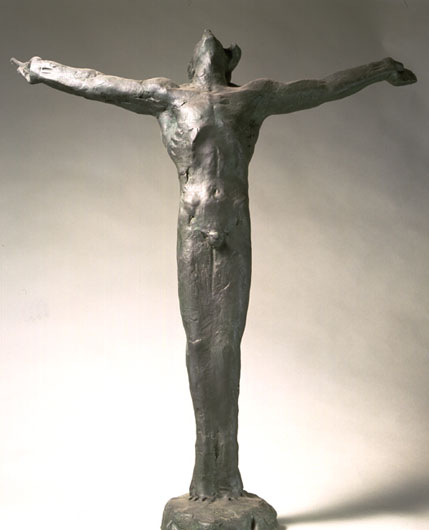
www.klapez.freeuk.com
Nenade pozdravljam vas.
Prije dvije godine smo se upoznali u Londonu.Vjerovatno cu u N.Y. krajem proljeca po pitanju galerija.Volio bi da se sretnemo,a ako dolazite u London,onda uz casu da se upoznamo.
Kipar sam.Moj web. www.klapez.freeuk.com cisto da pogledate sto kiparim.
Razlog mog javljanja je,naletio sam na vasu adresu u Matici iseljenika.
Od srca pozdrav
ivan klapez
ivan.klapez@btopenworld.com
|
»
(H) "DUGA MRACNA NOC´" REDATELJA ANTUNA VRDOLJAKA
|
"DUGA MRACNA NOC´" REDATELJA ANTUNA VRDOLJAKA
Film jakih dojmova
Glumci u Vrdoljakovu filmu daju na ekranu nepatvorenu razigranost, prirodnost i uvjerljivost kakvu rijetko mozemo zapaziti u hrvatskoj kinematografiji. Vrlo gledljiva, iako traje oko 200 minuta, "Duga mracna noc´" ne ostavlja nikoga u udobnosti, nedodirljivosti i neosjetljivosti
Nakon sto smo ispratili film "Svjedoci" redatelja Vinka Bresana - u Rijeci je u kinu Teatro Fenice izdrzao umjetno odrzavan na zivotu, mizerna odaziva gledatelja, puni tjedan - stigla je "Duga mracna noc´", novi hrvatski film na ogled domac´em filmu vec´ predugo nesklonim ocima. Poznati filmski i TV redatelj, nekada i popularni glumac, Antun Vrdoljak bio je odsutan iz hrvatske kinematografije od daleke 1988. i filma "Glembajevi". Taj film je bio vrlo hvaljen pa Vrdoljakovo apstiniranje nije zbog pokuda, skandala ili bankrota.
Vrdoljak ima zudnju prema filmu, ali zaokupljenost politikom neprestana je opsjednutost staroga maestra. I Krsto Papic´ je trajno zaintrigiran politikom kao magnetom umjetnickih htijenja i interesa, no uvijek na ekranu hladno analiticki suzdrzanih emocija, s teznjom za univerzalnim pa i alegorijskim, skrivajuc´i vlastitu kozu. Ne hitajuc´i za statusom preko politike. Vrdoljak je nakon 1990. bio obnasatelj mnogih visokih i utjecajnih drzavnih duznosti i posve je zanemario film. Vec´ina redatelja i njihovih filmova nastalih nakon uspostave samostalne hrvatske drzave nisu dorasli - glede umjetnickih, produkcijskih i drustvenih implikacija - Vrdoljakovom opusu.
Podvig njemackog bataljuna
I sada 2004. "Duga mracna noc´". Vrdoljakov scenarij ima povijesno epsko zariste u burnom, katastrofalnom i prijelomnom razdoblju od 1940. do 1952. sto u valovima potresahu jugoslavenske, balkanske prostore, a sredisnji zemljovid je neimenovano slavonsko mjesto nastanjeno Hrvatima i Nijemcima. Vrdoljak je osamdesetih bio zaokupljen scenarijem o nastanku partizanske postrojbe "Ernest Tellmann" (predvodnik njemackih komunista) u Hrvatskoj 1943. kao vojske pripadnika njemacke nacionalne manjine. "Duga mracna noc´" je mozda preradba i znatna dopuna tih Vrdoljakovih scenarijskih i tematskih nauma.
Sredisnji lik filma je Hrvat Ivan Kolar (Goran Visnjic´), zbivanja izlaze iz ratnih vremena u poratnu Jugoslaviju Tita i OZNE, no njemacka brazda u filmu jaka je i mi odista gledamo vojni podvig bataljuna "Ernesta Tellmann", napad na njemacki vlak, kao dio krvi i mraka u "Dugoj mracnoj noc´i".
Uvod filma, bozic´no doba 1940., otvara zimski krajolik u gotovo zimskoj idili. Domac´i Nijemci, recimo stari Schmidt (Zarko Potocnjak), na sajmu prodaje robu svima. Nema netrpeljivosti, Bozic´ je u zraku, ljudi dobri, obazrivi, srdacni. Zidovski trgovac Neumann daje bonus stalnim kupcima, katolicima. Ima i zandara, koliko prijetec´ih, toliko karikaturalnih, poput bezimena podnarednika. Upoznajemo i Ivana Kolara, on zavrsava agronomiju u Zagrebu i dolazi posjetiti roditelje. Rekosmo, gotovo idila. Jer zlo izbija uvezeno iz Hitlerove Njemacke za arijevske izljeve pripitih, ponekih, slavonskih Nijemaca.
Vrdoljakova skrusenost
Vodec´i lik nije Kolar, on ne donosi bitne odluke, ne daje poticaje, ne stvara podvige (jer za to nije vrijeme, u scenariju), to je mladi zgubidan Mata (Goran Navojac) u krivolovu s dvocjevkom, rasprama sa zandarima i opsluzivanju zgodnih i podatnih seljanki. U rijetkim prizorima seksa u Vrdoljakovim filmovima (erotizam mu je nepotrebni luksuz) obicno bliske tjelesne susrete vizualizira lateralnim napadom kamere na lijevu nogu prileznice, u carapi, razgolic´ena bedra, a ruka ljubavnika puzi njeznom kozom. Redatelj ima smjernost mladomisnika - tako je jednom u zagrebackom "Telegramu" opisana Vrdoljakova estetska i moralna skrusenost u svezi scena skromnih naznaka seksa. Tako je i u "Dugoj mracnoj noc´i".
Rat je sredisnji dio filma. Borbe vode njemacki okupatori, zvjerski krvolocni SS i partizani, mnogi njemackog podrijetla. Partizani i ustase imaju vrlo malo srazova. Ustastvo je u filmu dovezeno njemackim vlakom. Nenapadna, tako rec´i bez dodira, harmonija njemacke vojske i ustasa, dana je zvukom harmonike u njemackim rukama i pjesmom njemackih vojnika na otvorenom vagonu. Vidimo Matu u ustaskoj odori i sa strojnicom u ruci. Vican je tamburici, oruzju mnogo manje. Spasio je Ivana Kolara iz ruku zandara i preko ravnice napustio film. Tek na kraju vidimo Matu, izmrcvarena sudionika Kriznog puta, pripremljena za smrt. Ivan Kolar 1945. kao partizanski pukovnik vrac´a Mati dug.
U fabuli lik Kolarov jaca. On je u partizanima zbog osjec´aja pravde i covjecnosti, ali uskoro razabire okrutnu prijetvornost komunistickog inzenjerstva utjelovljena u liku partizanskog zapovjednika (Mustafa Nadarevic´), ulazi u sukobe s gvozdenim drugovima, razvidan mu je balkanski staljinizam s Titovim licem. Gubi utjecaj, status, suprugu (Katarina Bistrovic´-Darvas), prokazan, uhic´en, ponizavan, izudaran, ali nikada slomljen. Ni na Golom otoku. Kolarov lik prate i mlate negativci iz Ozne Tarik Filipovic´ i Ivo Gregurevic´.
Izuzetna suradnja s glumcima
Prisnost, neposrednost, slikovitost, vjerodostojnost, istancano oko za anegdotalne i vizualne sitnice, bogati dijalozi s poantama u puckom humoru (u ovom filmu kontrapunktirani s biblijskim reminiscencijama, marksistickim vulgarnostima, nacistickim ludorijama i govorom torture Ozninih isljednika) te izuzetna suradnja s glumcima kao i u prethodnim filmovima "Kad cujes zvona", "U gori raste zelen bor" i "Povratak" vode "Dugu mracnu noc´" na vrh Vrdoljakova stvaralastva. Spomenuti glumci, tu je i Boris Dvornik u ulozi Ivanova oca (stalni Vrdoljakov glumac), daju na ekranu nepatvorenu razigranost, prirodnost i uvjerljivost kakvu rijetko mozemo zapaziti u hrvatskom filmu.
Kamera Vjekoslava Vrdoljaka pruza filmu mracno i svijetlo ozracje uvijek sukladno radnji, razvitku likova, prijelomnim trenucima price i nasluc´ivanjima, pretezito opasnim i kobnim. Obzor, beskrajni obzor nad slavonskom ravnicom, s olovnim, sivim, purpurnim, violetnim modrim oblacima, zrcalo je zbivanja apokalipticke surovosti. Posjeduje draz i uzas vizualnosti, podaruje filmu iznimne simbolicke i emocionalne vrednote.
"Dugu mracnu noc´" smatramo dugo iscekujuc´om alternativom ultraljevicarskim - neosporna artizma - "Vecernjim zvonima" Lordana Zafranovic´a. Vrlo gledljiva, iako traje oko 200 minuta, jakih dojmova, "Duga mracna noc´" ne ostavlja nikoga u udobnosti, nedodirljivosti i neosjetljivosti.
Aldo PAQUOLA Novi list ( www.novilist.hr ), 16. ozujka 2004.
|
»
(E) TONI FRANOVIC IN NEW YORK CITY
|
TONI FRANOVIC IN NEW YORK CITY
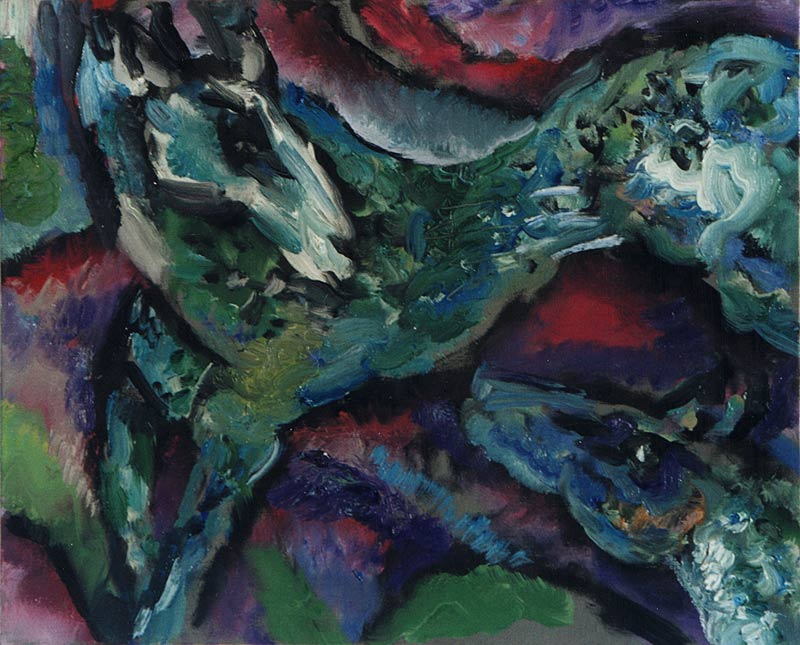
Horses
Friday, March 19, 2004
Dear Friends
Just a little note to inform you that my good friend
TONI FRANOVIC is exhibiting his works at the
New Century Artists Gallery
530 West 26th Street (bet. 10th and 11th Aves.)
Starting March 15th to March 27th, 2004
Hours: 11:00 am to 6:00pm
You are invited to join us at the
Celebratory Reception
On
Saturday, March 27th, 2004
3:00 – 6:00pm
RSVP: WandaSRadetti@aol.com
Toni’s Cellular: 1 469 348-3525
Here is Toni’s web site:
Toni Franovic's Home Page
Notes on Toni Franovic From: TONI FRANOVIC “Go West Young Man!!”
Oils on canvas 2003
The Gallery at Phoenix Art and Supplies
Dallas, Texas – December 6- 23, 2003
Toni Franovic
In an earlier foreword, I have already attempted to identify the painter Toni Franovic through elements of artistic form, in the sense of observing how his controlled application of selected coloristic daubs is perhaps best suited to his acute observational sensibility. It was said then that "with the masterful rapid strokes that dominate his painting (...) Franovic readily reacts with his random jottings in an attempt to preserve forever the excitement that has spurred him to the artistic discipline of his own creative energy." However, can the same line of thinking be applied to the pictures from his latest cycle? I believe that I can, indeed --the expression of the color and speed of painting now come to the fore to an even greater extent. His paintings continue to be constructed with powerful, expressive deposits of color but the previous diffusion of the artistic stroke has been replaced by a fine, nearly arabesque exuberance and the confidence of an excellent painter's hand. Scattered tachist splatters are now completed with "enformel" dripping, which sometimes runs down a painting and produces a feeling as if we are looking through a window bathed in rain. On the observational plan, this would signify that the individual and particular are replaced by an interpretation of the invisible and unfathomable, and the field of painting activity has been transformed into a metalinguistic projection of genuine plausibility. In this inter- twining of the material and fluid, the logical and intuitive, multiple levels are achieved that transparently add conviction and authenticity to the exclusively spiritual and imaginative existence of these works. From the other side, these paintings are ostensibly landscape oriented and I have also already written on an earlier occasion how it is entirely certain that Franovic's creative reflections of ambiance have their origins in a specific and actual clime. They all radiate the recognizable toponymic identities of the artist's haunts (Legrad, Vinodolska Valley and, certainly, the garden of his family home in Zagreb), which consequently influence the very precise determination of Franovic' s motif. Franovic's motif is purposeful and unfaltering. It is called by its place of origin. The elements of the form of his painting are therefore easily legible artistic units, because each detail follows the constructional logic of a warm view of our local clime, except when we find ourselves before Franovic's motifs from Israel, that always seem sunnier, airier, warmer and lighter. It is highly evident that the painting of Toni Franovic originates on the illustrative basis of reality. However much at certain moments t seems to be symbolic and out of the character of actual physical spatial existence, it is first of all painting that expertly perceives and then defines the totality of a place from the existential essentials that are crucial in the process of the formation of Franovic' s creative individuality. However, this artist does not start from a simple mimetic projection of an ambience in which he moves and with which he becomes intimate, but first of all internalizes a space mentally. Therefore, the work of Toni Franovic does not compete with nature. The painter and his work exist in a space liberated from mimetic relations with nature to such m extent that sometimes in his most recent works a motif based upon reality is transformed into an abstract vista. The motif becomes nearly unrecognizable, educed to the level of a symbol (particularly in a minimalistic composition of the setting sun), so that the semeiological interpretation competes with perception. Moreover, that which we truly see is the painter's subjective and creative reflections on the totality of a place from his own experience, movement, sojourn and relief. Thereby, artistically Franovic's work, strictly speaking, becomes a mental construction not only of that which exists but of thoughts. This work relies on the personal and intimate, is less conversant with the external, and more with the world of the artist's inner freedom.
Goran Blagus
From: Mark Talisman
Imagining and realizing a modern setting to pray
Creating New Judaica: Toni Franovic is pushing the envelope
New Judaica
Toni Franovic is pushing the envelope
Franovic personifies the very person who, as artist, is so hard to find in this complicated early 21st Century because so much art work is not original, does not push the to imagine what may lay ahead in this rarified field all the while worrying about dreams and ideas can be realized here on earth.
Franovic's ideas come fast and furiously, He can commit them to paper, sometimes backs of envelopes, other times wildly waving the emptiness of the air in from of him. Other times producing finished product before even introducing the concepts in raw form. As a result of such alternative methods of showing his thoughts and dreams, too many drop out unable to follow this artistic pan. I hear his whistle; it beguiles me, yet his sleight of hand and his peripatetic nature are just too fast to follow. Until, of course, this maddeningly talented artist produces the most imaginative crystal goblet, hand etched, frosted here and there, and the viewer, now the startled bystander, is handed a most original and breath taking religious chalice ready to be integrated in a kiddush, a he wine, as if it had always been there ready to use.
Happily, Franovic is busy at work creating a whole series of pieces of newly devised j pieces of Judaica to be used easily in the Jewish Life Cycle, filling vacuums in some instances which have existed and enhancing others vastly. A cut crystal Seder a series of Kiddush cups utilizing materials in creative ways not heretofore possible or probable. Mazzuzot in brass, bronze, glazed clays of all types, and hand woven into which have been woven real gold thread, not done since the 15th or 16th centuries. But Toni researched, found the maker of the gold thread as it was made long ago, found living still a weaver who has carried forward from centuries past, an ability to Did thread directly in the linen.
Franovic has also found the people who still know how to make hand made cut velvet; otherwise a long lost art form. He has found and nurtured the artisans who can make new sequined rare fabrics which otherwise are only available to view in museums of culture and anthropology.
He has also searched the depths and breadth of these museums to find costume fabric long unavailable, which he now is able to reproduce, to use in new forms of religious ceremony as if they never disappeared.
The significant number of artisans and artists Toni has found and befriended have stood and appreciated greatly his willingness to work with them and to help r and then to flourish. Their rare art forms would surely have long ago disappeared except for the Franovic interventions in which he has served as a one-man endangered species brigade.
Happily Project Judaica Foundation has selected the works of Judaica to be exhibited and sold in its major Judaica website where young artists are asked by juried exhibitions works. www.judaica.org
Project Judaica Foundation's mandate is to:
Rehabilitate, exhibit and disseminate all forms of Judaic culture.
Mark E. Talisman President,
Project Judaica Foundation, Inc.
Founding Vice Chairman,
U. S. Holocaust Museum and Memorial Washington, D. C
|
»
(H) P r o c e s _ G r a d , I I I d i o
|
P r o c e s _ G r a d , I I I d i o
Ovog smo puta krenuli od kraja, ne bi li se uputili ka pocetku. Umjetnost, ili kako zelite zvati ovu vrstu stvaralastva, jedino je mjesto-vrijeme u kojem je reverzibilnost moguca i prihvatljiva nasoj percepciji.
From: bacaci_sjenki@europe.com
Nije nuzno da izadjes iz svoje sobe.
Ostani sjediti za stolom i osluskuj.
Mozes cak i ne slusati, jednostavno cekaj.
Mozes cak i ne cekati, nauci samo da budes smiren, miran i sam.
Svijet ce ti se ponuditi neposredno, ne bi li se razotkrio.
Nece imati izbora: zavrtjet ce se u ekstazi pod tvojim nogama.
NOVE IZVEDBE!!!!
BACACI SJENKI: P r o c e s _ G r a d , I I I d i o
(process-in-progress – umjesto premijere)
Inspirirano djelom Franza K.afke i Orsona Wellesa
Po prijevodu Snjesk.e K.nezevic
Koncept, dramaturgija i rezija: Boris Bak.al
Nastupaju: K.atarina Bistrovic Darvas, Damir K.lemenic i Boris Bak.al
Video supervizija: Josip Visk.ovic
VJ-ing: Ivan Slipcevic, Plak.or K.ovacevic
Suradnik na dramaturgiji i asistent produkcije: Luk.a Ruk.avina
Suradnica na konceptu i dramaturgiji: K.atarina Pejovic
Prostor i svjetlo: Boris Bak.al
Produkcija: Bacaci Sjenki, Dani Hrvatskog Filma, Galerija SC, Kulturni Centar Pescenica, Orchestra Stolpnik (Bologna)
Potpora: Gradski ured za kulturu i Ministarstvo kulture RH
Projekt ostvaren uz sponzorsku podrsku: HSM Informatika d.o.o.
Galerija SC, Savska cesta 25, Zagreb Hrvatska
Petak, 19.03.2004 u 23h – umjesto premijere 1
Nedjelja, 21.03.2004 u 21h – umjesto premijere 2
Nuzno rezervirati zbog malog broja mjesta!!!
Rezervacije na tel. (od 11-13 i 18-20h) 01-459 35 10
Informacije i rezervacije na: bacaci_sjenki@europe.com
-.-.-.-.-.-.-.-.-.-.-.-.-.-.-.-.-.-.-.-.-.-.-.-.-.-.-.-
U medjuprostoru Kafkinog i Wellesovog djela, pokusavamo porazgovarati o djelu u prostoru i prostoru u djelu, iskopati tunel koji bi nas odveo do onog tajnog i neznanog mjesta iz kojeg Kafka progovara. Interaktivno koriscenje videa – VJ-ing ili upotreba slike kao glazbene dinamicke sekvence koja se moze obradjivati uzivo – sredstvo je kojim nastojimo uci u krupne planove price i njenih mogucih protagonista: nas samih. Tako ce se pred publikom odvijati svojevrsni film u realnom vremenu, kompleksno prozimanje fizicke i digitalne radnje koju ce i publika sama, svojim odabirima pogleda, rezati i prosivati.
Ovog smo puta krenuli od kraja, ne bi li se uputili ka pocetku. Umjetnost, ili kako zelite zvati ovu vrstu stvaralastva, jedino je mjesto-vrijeme u kojem je reverzibilnost moguca i prihvatljiva nasoj percepciji.
Drugi dio trilogije P r o c e s _ G r a d odigrace se od 5. do 8.04. u Kulturnom centru Pescenica. Treci dio ce se dogoditi krajem travnja, na razlicitim lokacijama u Zagrebu.
-.-.-.-.-.-.-.-.-.-.-.-.-.-.-.-.-.-.-.-.-.-.-.-.-.-.-.-.-.-.-.
Jedna od osnovnih ideja ovog projekta je obnova bojnog polja - redifiniranje teritorija Kafkinog “metafizičkog” ostranjenja unutar konkretnih političkih i filozofskih postavki kojima se on bavio cijelog života. Tražimo ravnovjesje “sreće odlaska i sreće povratka” i razumijevanje političke i fantazmičke prirode Kafkinih simulacija.
Grad se obavija oko covjeka kao slatkasta zmija.
Ulice mijenjaju smijer bez prekida.
Optuzenik postaje tuzitelj i odlazi kupiti kilu krompira.
Svaki krevet je sudnica, svaki orgazam smrtna presuda.
Kazna je put, oslobodjenje je produziti.
B.B.
Nije nuzno da izadjes iz svoje sobe.
Ostani sjediti za stolom i osluskuj.
Mozes cak i ne slusati, jednostavno cekaj.
Mozes cak i ne cekati, nauci samo da budes smiren, miran i sam.
Svijet ce ti se ponuditi neposredno, ne bi li se razotkrio.
Nece imati izbora: zavrtjet ce se u ekstazi pod tvojim nogama.
F. K.
|
»
(H) "Zivot u emigraciji" Karlo Mirth, Promocija Knjige
|
Promocija Knjige 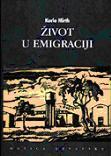
“ZIVOT U EMIGRACIJI” Karlo Mirth
.jpg)
7:00 navecer, Cetvrtak 25.ozujka, 2004
Hrvatski Kulturni Centar, 502 West 41st Street, New York
Biblioteka: REDOVITA IZDANJA ZA CLANSTVO
Izdavac: Matica Hrvatska, Zagreb, 2003
Tvrdi uvez s ovitkom
434 stranica, 17×24 cm
ISBN: 953-150-695-7
Podrucje: Emigracija; Hrvatska emigracija
Priredio Igor Zidic - Predsjednik Matice Hrvatske
Knjiga je opremljena sa sezdesetak c/b ilustracija,
pogovorom Stana Granica i imenskim kazalom.
Vecina naklade knjige dijeli se clanovima Matice Hrvatske.
Karlo Mirth (Otocac, 1917), publicist, urednik, poliglot,
izdavac i esejist, jedna je od vodecih intelektualnih
osobnosti hrvatske dijaspore na sjevernoamerickome
kontinentu u drugoj polovici 20. stoljeca. Pripadnik trece
generacije hrvatskih emigranata na Zapad, Mirth se put
Zapada otisnuo nakon 1945, postavsi izbjeglica u kampu
raseljenika u talijanskome Fermu. U Zagrebu je 1942.
zavrsio studij sumarstva. Od 1946. do 1962. studira
novinarstvo u Rimu, spanjolski jezik u Barceloni i
bibliotekarstvo i informacijeske znanosti u New Yorku. U
tome vremenu pokrece, ureduje i sudjeluje u vodenju nekih
temeljnih intelektualnih i kulturno-znanstvenih institucija
hrvatske dijaspore: casopisa Croatia Press i Journal of
Croatian Studies te Hrvatske Akademije Amerike "The
Croatian Academy of America" kojoj je predsjednikom postao
1958. Mirth se pokazao kao odlican organizator i neumorni
kronicar svih vaznijih politickih, kulturnih i drustvenih
dogadaja u Hrvatskoj, Jugoslaviji i emigraciji.
Njegova je knjiga zivot u emigraciji
publicisticko-knjizevna reminiscencija na taj uzbudljivi
zivotni put i na susrete s Ivanom Mestrovicem, Bogdanom
Radicom, Vladkom Macekom, nadbiskupom Ivanom Šaricem,
slikarom Kristijanom Krekovicem, kartografom Stjepanom
Horvatom i ostalim znamenitim Hrvatima. "Život u
emigraciji" dokumentarni je portret jednoga vremena i
pomalo gorko svjedocenje o tuznoj cinjenici nerazumijevanja
izmedu domovinskih Hrvata i onih u emigraciji.
Karlo Mirth "Život u emigraciji" Hard cover; 434 pages
Promotional price: $ 40.00 To order contact:
The Croatian Academy of America, Inc.
P. O. Box 1767 Grand Central Station, New York NY 10163
E-mail: croatacad@aol.com Fax: 516.935.0019
www.croatianacademy.org
Link: http://www.matica.hr/www/wwwizd.nsf/AllWebDocs/mirth
|
|
|




 full story
 printer version