
Sponsored Ads
|
Articles by this Author
»
(E) Croatia Study Abroad program
|
NEW STUDY ABROAD PROGRAM:
IMMERSION IN CROATIAN LANGUAGE AND CULTURE 5 WEEKS in the beautiful medieval capital city of Zagreb in the heart of Central Europe.
Offered by the State University of New York College at Plattsburgh,
Department of Anthropology
in conjunction with the Faculty of Philosophy, Zagreb University In case you or someone in your family might be interested. Also, please
pass on to anyone who might be interested. Please see the website:
http://faculty.plattsburgh.edu/amy.mountcastle for further information.
Thank you,
Amy Mountcastle
Assistant Prof.
Dept. of Anthropology
SUNY College at Plattsburgh
contact: mountca@mac.com
Summer in the heart of Central Europe
NEW STUDY ABROAD PROGRAM:
IMMERSION IN CROATIAN LANGUAGE AND CULTURE
JUNE 21-JULY 23 2004
[ http://faculty.plattsburgh.edu/amy.mountcastle ]
5 WEEKS in the beautiful medieval capital city of Zagreb
in the heart of Central Europe.
Offered by the State University of New York College at Plattsburgh,
Department of Anthropology
in conjunction with the Faculty of Philosophy, Zagreb University
WEEKEND EXCURSIONS TO MAJOR EUROPEAN CULTURAL CENTERS SUCH AS VIENNA, BUDAPEST, VENICE, BRATISLAVA, LJUBLJANA.
A STONE’S THROW FROM THE BEAUTIFUL ADRIATIC SEA
GUIDED OUTINGS AND EXCURSIONS IN AND AROUND ZAGREB
LECTURES ON POLITICS, HISTORY AND CULTURE BY EXPERTS AND SPECIALISTS
LEARN A LANGUAGE BY THE MOST EFFECTIVE METHODS—EXPERT INSTRUCTORS AND CULTURAL IMMERSION (Beginner, Intermediate, and Advanced levels available)
EARN SIX COLLEGE CREDITS
OPEN TO ALL—Matriculated and non-matriculated students; All ages
FOR MORE INFORMATION, VISIT THE WEBSITE:
http://faculty.plattsburgh.edu/amy.mountcastle
OR CALL
518 564 4009 OR 518 564 2321
|
»
(E) Croatian FOLK MUSIC Workshop
WORLD MUSIC CroatianFOLK MUSIC WORKSHOP MUSIC OF NORTHWESTERN CROATIA -THE MEĐIMURJE REGION Organizer: Croatian Heritage Foundation,www.matis.hr Co-organizers: Ethnology and Folklore Institute,www.maief.ief.hr Croatian Music Centre,www.hgc.hr Project manager:Melita Matijević, e-mail:melita@matis.hr Place: Čakovec Time: July 11-18, 2004 Number of expected participants: 20 This workshop is to present the music of northwestern Croatia (the Međimurje region) and to explore the possibilities of its application within the context of Croatian folk music. It is going to contribute to the preservation and development of cultural tradition in Croatian communities around the world and introduce this inspiring part of Croatian cultural legacy to musicians worldwide. The characteristics of Međimurje's music are single-voiced choruses with emphasys on the melody's emotional dimension expressed with the harmonic minor scale accompanied by authentic instruments such as tamburitza, cetra and cémbalo. The diversity, beauty and vividness of this music are closely linked with true values, i.e. nature and tradition that help sustain this kind of art which makes a part of popular contemporary culture. Folk music workshop is divided into three sections: I. Study of theory - lectures on different topics /musicological field of Croatian folk music - regional overview of Croatian traditional music - collecting, documenting and publishing of traditional folk poetry (from 19th century on) - connection between world music and traditional music - Croatian folk music scene - traditional music of Međimurje - classification of traditional Međimurje songs on the basis of form and content - traditional musical instruments of Croatia II. Practice- a modern perception of the traditional: A - performing Međimurje folk songs (learning choruses and verses, arrangement and practise of musical back-up) - use of instruments in traditional music - use of traditional instruments in folk music B - meeting the musicians - meeting the cultural organizations - visiting the wind instruments orchestra - visiting the music instrument workshop of craftsman Vladimir Proskurnjak III. Extracurricular activities: - documentary film shows related to the workshops - sightseeing tour of Međimurje ( visiting the Museum of Međimurje in Čakovec) - excursion to Zagreb/qualified guides (sightseeing, visiting the Zagreb City Museum and the Etnographical Museum) We invite all folk music lovers to our workshop headed by top Croatian folkmusicologists and musicians (Lidija Bajuk, Stjepan Večković, etc…). Every voice and instrument is most welcome! Accomodations: The participants will be accomodated in hotels (Aurora and Japa). All participants will have lunch & dinner in the Aurora hotel. Participants accomodated in the Japa hotel will have breakfast. Both hotels are located in the immediate centre. Čakovec is a typical mid - European small town. Its city centre is well- preserved and its citizens are proud of its rich cultural & historical legacy. Just as well, Čakovec has many modern coffee shops, restaurants, clubs, bars and its visitors have various sporting facilities at their disposal, such as horse- riding, tennis, darts, and the town's swimming leisure centre. Price list The entire program costs 360 € per person. Price includes: - Accomodations in Čakovec: the Aurora hotel or the Japa hotel/6 days Double rooms/3 meals/tourist tax - Accomodations in Zagreb: the Dora hotel/1 day - Double rooms/bed&breakfast/tourist tax - Qualified guides, expert lecturers, visiting the wind instruments orchestra, the music instrument workshop and some other interesting cultural organizations - Bus transportation (Zagreb-Čakovec-Zagreb) - Two study trips (countryside around Čakovec) - Sightseeing of Zagreb (Upper & Lower Town) - Touring museums Payment to the Croatian Heritage Foundation: Application form and the 100€ deposit has to be received by the Croatian Heritage Foundation no later than June 10, 2004. The rest of the payment (260€) should be received by the CHF office on July 11, 2004 at the latest. The cheque must be addressed to the Croatian Heritage Foundation. The participants can pay: A) via bank cheque mailed to the address: Hrvatska matica iseljenika (for the Folk Art Workshop) Trg Stjepana Radića 3 10 000 Zagreb, Croatia tel. ++385 1 61 15 116, fax.++385 1 61 11 522 e-mail:melita@matis.hr B) via bank payment to the address: Privredna banka Zagreb (za Hrvatsku maticu iseljenika/Folk Art Workshop) Račkoga 6, 10 000 Zagreb, Croatia CHF bank-account number: 7020-val-9182800-132344-273 Notice: This workshop is intended for adults over 18. In case of less than 10 applicants, the Croatian Heritage Foundation reserves the right to cancel the program and refunds the entire payment. Attention Applications must be sent to the following address: Croatian Heritage Foundation, Trg Stjepana Radića 3, 10 000 Zagreb, Croatia, fax.++385 1 61 11 522 e-mail:melita@matis.hr Travel arrangements: Departure from Zagreb to Čakovec: July 11, 2004 in the afternoon Meeting place: in front of the ŤVatroslav Lisinskiť Concert Hall Return to Zagreb from Koprivnica: July 17, 2004 in the forenoon For additional information, please contact: Hrvatska matica iseljenika (Croatian Heritage Foundation)Odjel za kulturno-prosvjetne djelatnosti i šport (Culture, Education & Sports Dept.) Mrs. Melita MatijevićTrg Stjepana Radića 310 000 Zagreb, Croatia tel.++385 1/6115 116, fax ++385 1/6111 522 e-mail:melita@matis.hr
|
»
(E) Croatian NAIVE ART Workshop
DISCOVER THE EXTRAORDINARY WORLD OF CROATIAN NAIVE ART NAIVE ART PAINTING WORKSHOP Organizer: Croatian Heritage Foundation Co-organizer: Josip Generalić Gallery of HlebineProject manager: Melita Matijević, e-mail:melita@matis.hr Place: HlebineTime: June 20-27, 2004 Number of expected participants: 20 We invite you to participate in a truly exeptional new project; a Croatian naive art painting workshop organized in cooperation with the Josip Generalić gallery in Hlebine, in the Podravina region. With this project we are hoping to raise the interest of people of Croatian descent and other lovers of Croatian naive art for one of the most representative features of Croatian identity in the world. In addition we hope to teach people the technique of glass painting. Naive art, under the name Hlebinska škola has been present in the Croatian art history since the early 1930s. It originates from the small village of Hlebine, situated in the pictoresque region of Podravina, between the Drava river and the Bilogora mountain, a village which claims its worldwide fame as the birthplace of genuine Croatian naive art. It is no accident that Croatian naive art originated from the countryside. In Podravina's dormant and quiet landscape it thrived through works of our naive painters as an exeptional combination of the region's landscape, soil and people- as a testimony of the unbreakable bondage between nature and man. The Hlebinska škola gathered many Croatian naive painters. One of them was Ivan Generalić who made a breakthrough for our naive art with his Paris exhibition in the 1950s. The exhibition of Croatian naive painters in the Museum of Fine Arts in St.Petersburg, Florida in the year 2000 proved that the interest for naive art hasn't faded. ťCroatian naive painting is something that cannot be blotted out. Its signature is firmly stamped on Podravina's plains, as well as on the entire Croatian art…ť, - these were the words of Ivan Večenaj, the famous naive art painter. Naive art painting workshop is organized in three sections: I. Study of theory - with the following lectures: - Croatian naive art within a context (Vladimir Goss, Ph.D.) 2 lectures - Croatian naive art on the trail of avanguard (Mrs. Ljiljana Domić) 2 lectures II. Practice - demonstration of the glass-painting art - painting plans - drawing on given subject matter (on paper- a sketch for glass painting) - composition - motif - color tones - aerial view (the relation of colors in the plans) - meeting famous naive painters - field class (the so calledťgallery roadsť) - exhibition of the finished works III. Extracurricular activities: - sightseeing tour of Podravina, getting to know the local customs - excursion to Zagreb/qualified guides (sightseeing, visiting the Zagreb City Museum and the Museum of Naive Art, meeting one of the outstanding living naive painters) With this project we are hoping to raise interest among people of Croatian backgrund, their children and other naive painting lovers from around the world who want to learn about our naive art and the technique of glass-painting. Prominent Croatian naive painters and art historians will introduce the participants to the magnificent world of Croatian naive painting, revealing a truly exeptional area of artistic creation. Welcome to the amazing world of naive painting! Accomodations: The participants will be accomodated in the B- category Podravina hotel in Koprivnica, situated in the city's centre. The hotel provides a truly traditional atmosphere of the Podravina region. For relaxing, there is a gym and a bowling alley in the hotel's vicinity. Koprivnica is situated in the very heart of the Podravina region, in an area close to many large mid-European towns, and it has grown as a free town since 1356. The city is the capital of the Podravina and Prigorje region and an important economical and cultural destination. Koprivnica has a lot to offer to its guests - a variety of restaurants, clubs and numerous sporting facilities. Its geographical location and natural environment (the untouched landscape rich with meadows, forrests, hills, river Drava's brooks and small lakes) make this place a tempting destination for tourists. The workshop will take place in the village of Hlebine (12 kilometers from Koprivnica), in a quiet, pictoresque landscape on the family property of Josip Generalić, the famous Croatian naive art painter. Price list The entire program costs 400 € per person: 1. Tuition fee - 150 € 2. Additional expenses /CHF - 250 € 1. The tuition includes: - learning the art of glass painting (5 days) - tutoring of the painter Ivan Generalić and his co-workers - meetings with Podravina's painters and study visits to their studios - glass materials for the painting - certificate after the finished course 2. Additional CHF expenses: - food and accomodation in the ŤPodravinať hotel - double room - bed and breakfast in the ŤDorať hotel in Zagreb (double room/upon return) - turist tax - painting materials (oil colors, brushes, terpentine, etc. ) - round- trip bus transport (Zagreb- Koprivnica, excursion to the Koprivnica countryside, daily bus transport ( Koprivnica-Hlebine- Koprivnica / 5 days) - expert – guided city sightseeing (Zagreb/ Upper Town & Lower Town), study visits to museums Tuition paymentsTuition payments (150€) must be sent at least two weeks before the workshop begins, i. e., by June 5, 2004 to one of the following addresses: A) via your bank to - Erstesteiermärkische Bank (for Mr. Ivan Generalić/ Naive Art Painting Workshop) Nemčićeva 1, 48 000 Koprivnica, Croatia Bank-account number: 2402006-1031262160 7190058837 ESBCHR 22 SWIFT B) in cash immediately upon arrival in Hlebine (in kunas according to the exchange rate valid on the day of payment) Payment to the Croatian Heritage Foundation: Application form and the 100€ deposit must be received by the Croatian Heritage Foundation no later than May 20, 2004. The remaining fees (150€) should be received by the CHF office on June 20, 2004 at the latest . The cheque must be addressed to the Croatian Heritage Foundation. The participants can pay: A) via bank cheque mailed to the address: Hrvatska matica iseljenika (for the Naive Painting Workshop) Trg Stjepana Radića 3 10 000 Zagreb, Croatia tel. ++385 1 61 15 116, fax. ++385 1 61 11 522 e-mail:melita@matis.hr B) via bank payment to the address: Privredna Banka Zagreb (za Hrvatsku maticu iseljenika / Naive Painting Workshop) Račkoga 6, 10 000 Zagreb, Croatia CHF bank-account number: 7020-val-9182800-132344-273 Notice: The workshop is intended for adults over 18. In the case that fewer than 10 participants apply for the program, the Croatian Heritage Foundation reserves the right to cancel the program and refunds the entire payment. Attention Application forms must be sent directly to our address: Croatian Heritage Foundation, Trg Stjepana Radića 3, 10 000 Zagreb, Croatia, fax.++385 1 61 11 522 e-mail:melita@matis.hr Travel arrangements: Departure from Zagreb to Koprivnica: June 20, 2004 in the afternoon Meeting place:in front of the ŤVatroslav Lisinskiť Concert Hall Return to Zagreb from Koprivnica: June 26, 2004 in the forenoon For additional information, please contact: Hrvatska matica iseljenika (Croatian Heritage Foundation)Odjel za kulturno-prosvjetne djelatnosti i šport (Culture, Education & Sports Dept.) Mrs. Melita MatijevićTrg Stjepana Radića 310 000 Zagreb, Croatia tel.++385 1/6115 116, fax ++385 1/6111 522 e-mail:melita@matis.hr
|
»
(H,E) Matica Preporucuje, Croatian Heritage Presents
|
2004 u HRVATSKA MATICA ISELJENIKA PREPORUČUJE CROATIAN HERITAGE FOUNDATION PRESENTS LA FUNDACIÓN PARA LA EMIGRACIÓN CROATA RECOMIENDA 1. SVEUČILIŠNA ŠKOLA HRVATSKOGA JEZIKA I KULTURE, ZAGREB Sveučilište u Zagrebu & Hrvatska matica iseljenika Vrijeme odvijanja: 26. lipnja - 23. srpnja 2. MEĐUNARODNI TEČAJEVI HRVATSKOGA JEZIKA, ZADAR Lingua Croatica& Hrvatska matica iseljenika Vrijeme odvijanja: 25. srpnja - 14. kolovoza / za osobe iznad 16 godina 3. MALA ŠKOLA HRVATSKOG JEZIKA I KULTURE, NOVI VINODOLSKI Hrvatska matica iseljenika Vrijeme odvijanja: 24. srpnja – 4. kolovoza/ za djecu 4. RADIONICA NAIVNOG SLIKARSTVA, HLEBINE Hrvatska matica iseljenika & Galerija ŤJosip Generalićť Vrijeme odvijanja: 20.- 27. lipnja/za odrasle 5. WORLD MUSIC: ETNO-GLAZBENA RADIONICA, ČAKOVEC Hrvatska matica iseljenika & Hrvatski glazbeni centar, Zagreb & Centar za kulturu Čakovec Vrijeme odvijanja: 11. – 18. srpnja/za odrasle Za sve podrobnije upute i informacije, javite se: HRVATSKA MATICA ISELJENIKA, Trg Stjepana Radića 3, 10 000 Zagreb, tel: 385 1 61 15 116, fax: 385 1 61 11 522, e-mail:melita@matis.hr, e-mail:lada@matis.hr, e-mail:skolstvo@matis.hr, http://www.matis.hr 2004 u HRVATSKA MATICA ISELJENIKA PREPORUČUJE CROATIAN HERITAGE FOUNDATION PRESENTS LA FUNDACIÓN PARA LA EMIGRACIÓN CROATA RECOMIENDA 1. UNIVERSITY SCHOOL OF CROATIAN LANGUAGE AND CULTURE IN ZAGREB University of Zagreb & CHF Term: June 26 - July 23 2. INTERNATIONAL COURSES OF CROATIAN LANGUAGE & CULTURE IN ZADAR Lingua Croatica & CHF Term: July 25 - August 14 / students over 16 3.LITTLE SUMMER SCHOOL OF CROATIAN LANGUAGE & CULTURE, Islet OBONJAN near ŠIBENIK Term: July 24 – August 4 / children & teenagers 4. NAIVE ART PAINTING – WORKSHOP IN HLEBINE Croatian Heritage Foundation & Gallery “Josip Generalić” Term: June 20-27/for adults only 5. WORLD MUSIC WORKSHOP IN ČAKOVEC Croatian Heritage Foundation, Croatian Music Center (Zagreb) & Culture Center Čakovec Term: July 11 – 18/for adults only For further information, please contact: HRVATSKA MATICA ISELJENIKA, Trg Stjepana Radića 3, 10 000 Zagreb, tel. 385 1 61 15 116, fax: 385 1 61 11 522, e-mail:melita@matis.hr, e-mail:lada@matis.hr, e-mail:skolstvo@matis.hr, http://www.matis.hr
|
»
(E) Croatian Scientists Work on The Bends - Diving
|
Croatian Scientists Work on The Bends - in Diving
The following appeared in The New Scientist magazine. John Kraljic
***************************************************
Diver's pill could fend off the bends
17:11 26 March 04
Exclusive from New Scientist Print Edition.
Within a decade, divers will be able to take a pill that allows them to stay under water longer without risking decompression sickness when they get to the surface. That is the prediction of a team that thinks it has stumbled across a totally new way of preventing the bends.
The risk of the bends severely limits how long divers breathing compressed air can stay under water without having to make decompression stops on the way back up. At 30 metres, the safe period is just 20 minutes.
Higher pressures at depth force nitrogen from the air in divers' lungs into their blood and other tissues. If they come up too quickly the decrease in pressure causes bubbles to form, just as they do in champagne when the cork is popped. Effects range from skin rashes to death.
A team at the Norwegian University of Science and Technology in Trondheim set out to investigate anecdotal reports that being fitter reduces a diver's chances of getting the bends.
The team's animal studies showed fitness above a basic level made little difference, but that a bout of intense exercise around 20 hours before a simulated dive in a pressure chamber dramatically reduced bubble formation. "It was an accidental discovery," says team member Alf Brubakk.
Micro bubbles
A burst of exercise seems to work for people, too. Researchers at the University of Split School of Medicine in Croatia asked 12 male divers to do two simulated dives to 18 metres for 80 minutes. They exercised on a treadmill for 40 minutes 24 hours before one of the dives.
Ultrasound imaging of the heart and arteries revealed that the average number of bubbles fell from 0.98 per cubic centimetre of blood on the first dive to 0.22 on the dive after exercise. The bubbles were also much smaller.
The researchers think the exercise session works by eliminating microbubbles, or nuclei, that seed the formation of larger bubbles in the blood. Other work suggests that these microbubbles are attached to the walls of blood vessels, and exercise is known to stimulate the release of nitric oxide (NO), which not only dilates blood vessels but changes their surface properties, making them more slippery.
It is too early to recommend exercise, stresses Zeljko Dujic, head of the Croatian team. "Divers should wait for further studies," he says. And even if it does prove effective and divers are willing to make the effort, exercising in a narrow window of time around 20 hours before each dive is unlikely to be practical.
Totally novel
But if the Norwegian team's theory is right, it might be possible to give divers drugs to mimic the effect of exercise.
In fact, the team has now shown that giving mice an NO-releasing drug, or NO itself, reduces bubble formation. All the latest results appear in The Journal of Physiology (vol 555, p 588, p 637 and p 825).
"This is a totally novel approach," says Brubakk. Until now, all the ways of preventing the bends, such as staying within safe limits, ascending in stages or breathing gas mixtures with less nitrogen, have been designed to limit or reduce the levels of nitrogen in the body. But if you can get rid of the nuclei, bubbles cannot form even when the blood is supersaturated with nitrogen.
A drug that helps prevent the bends could be used simply to make diving safer. Some divers get decompression sickness even when they stay within recommended limits.
But Brubakk thinks such a drug would allow divers to go deeper or stay down longer. "It's not dangerous if you can prevent bubble formation," he says. A drug would not prevent bubbles forming in other tissues such as cartilage, he admits, but it is in the blood that bubbles cause the most serious forms of decompression sickness.
Many questions remain to be answered, though. Other researchers say it is plausible that exercise helps eliminate microbubbles, but question whether NO production is really the main factor.
Michael Le Page
Š Copyright Reed Business Information Ltd.
|
»
(H) PROJEKT POVRATKA HRVATSKIH ZNANSTVENIKA
|
PRIMORAC: PROJEKT POVRATKAHRVATSKIH ZNANSTVENIKA IZ INOZEMSTVA U DOMOVINU ZAPRAVO JE POVIJESTAN
(Hina)
Projekt povratka hrvatskih znanstvenika iz inozemstva u domovinu, za koji je nedavno Svjetska banka Hrvatskoj odobrila zajam od 35 milijuna kuna, ministar znanosti, obrazovanja i športa Dragan Primorac smatra zapravo povijesnim i tvrdi da ce se svaka kuna samo za to potrošiti, te istice da je hrvatskim znanstvenicima diljem svijeta vec poslao poruku da "krenu u bitku za povratak kako bi ostavili 'trag' u domovini".
Ministar Primorac potporu za stajalište da je rijec o povijesnom projektu pronalazi i u cinjenici da je odobravanje tog zajma zapravo bio i odreden presedan za Svjetsku banku jer je u tom slucaju nacinila nevjerojatno brzu evaluaciju.
U razgovoru za Hinu, u kojemu je iscrpnije govorio o projektu povratka hrvatskih znanstvenika iz inozemstva u domovinu, Primorac je objasnio da je Svjetska banka u slucaju odobravanja tog zajma nacinila nevjerojatno kratku i brzu evaluaciju.
Jer, podsjetio je Primorac, ako, primjerice, pogledate da su za zajmove koje je Svjetska banka dosad odobrila nekoj hrvatskoj instituciji bile potrebne oko dvije i pol godine, u posljednjem slucaju to je ucinila za nešto manje od tri mjeseca.
To je pak Primorcu i potvrda da je Svjetska banka ocijenila da oni koji su tražili takav zajam zapravo znaju što cine i kako ce "vratiti" hrvatske znanstvenike u domovinu.
Rok za odobreni zajam od pet milijuna americkih dolara zapravo je "otvoren", ali, kako je rekao Primorac, vec je poslao "snažnu poruku hrvatskim znanstvenicima diljem svijeta da svi zajedno krenemo u bitku da se najbolji ljudi iz inozemstva vrate u domovinu".
Kako je istaknuo, porucio je "hrvatskim znanstvenicima da najboljima medu sobom predlože da se vrate u Hrvatsku", a on ce kao ministar, dodao je, znanstvenicima-povratnicima koji budu predložili projekte dati novcanu potporu, osigurati im mjesto gdje ce raditi i, što je posebice važno, znanstvene novake koji ce s njima suradivati na projektima.
To pak znaci, ustvrdio je Primorac, da više nema izgovora za znanstvenike da se ne mogu vratiti. Istaknuo je da je hrvatskim znanstvenicima koji rade izvan domovine porucio kako je "konacno došao trenutak da vlastitim djelom ostave 'trag' u domovini". Buduci da je zajam tek odobren, rekao je da se još ne može reci kako ce se on sukcesivno trošiti. Znanstveniku koji, primjerice, želi raditi izvan Zagreba ili Splita ministar Primorac spreman je dati dvostruki novcani iznos od traženoga. On smatra da se i u manjim mjestima mogu ostvariti sjajni uvjeti za tehnologijski projekt - malu biotehnološku korporaciju.
Projekt povratka hrvatskih znanstvenika iz inozemstva u domovinu ministar Primorac nedavno je predstavio i na Rektorskome zboru u Zadru, održanom u povodu prve obljetnice rada obnovljenoga Sveucilišta u Zadru.
Spomenuo je i projekt koji se ostvaruje u suradnji sa Svjetskom bankom - tzv. japansku darovnicu, kojom je Hrvatska posredstvom japanske države od Svjetske banke dobila više od 766 tisuca americkih dolara.
Takva darovnica, rekao je, u nacelu je namijenjena samo onim državama za koje je Svjetska banka procijenila da su spremne pokrenuti reforme. Tako je, dodao je, Svjetska banka nacinila evaluaciju našega projekta i zakljucila da je Hrvatska spremna poceti reformu školstva.
Darovnica obuhvaca sve elemente i pripremu, koji ce u konacnici pokrenuti reformu, a namijenjena je evaluaciji sadašnjeg stanja, kadrovskom popunjavanju, prijedlozima i procjenama koliko bi, primjerice, u našem konkretnom slucaju trebao trajati katalog znanja i kakav bi on trebao biti, te kakav bi trebao biti projekt novoga nastavnog programa utemeljen na tom katalogu znanja.
Osim toga, taj je novac namijenjen i prosudbi naše vizije kako bismo pokrenuli projekt evaluacije nastave sa strucnim skupinama u kojima mogu biti i vanjski suradnici, a posebice je važno osigurati neprekidnu izobrazbu nastavnika.
Dakle, istaknuo je Primorac, predstavnici Svjetske banke rekli su sljedece - nas zanima da vi u Hrvatskoj sastavite predprojekt i sve što je nužno za pokretanje reforme.
Ministra Primorca posebice veseli to što je rijec o bespovratnom novcu, zbog cega je donatore trebalo uvjeriti da doista imamo viziju te, što je osobito važno, ljude koji su je sposobni ostvariti.
Nakon što su razgovarali s vecinom dužnosnika u hrvatskim državnim službama, a i sa mnom više puta, predstavnici Svjetske banke zakljucili su da smo spremni, rekao je Primorac i najavio da ce vec sljedeci tjedan biti zaposlena prva osoba zadužena za taj projekt.
Po preporukama Svjetske banke, medu strucnjacima bi obvezno trebali biti oni koji briljantno poznaju medunarodno pravo, financije te operativni dio posla vezan uz taj projekt.
Primorac smatra da je darovnica posebice važna ako znamo da tog novca jednostavno nema u proracunu. Spomenuo je da je taj novac i jamstvo da on kao ministar sa strucnim suradnicima može razgovarati o poslu i platiti im za ono što su ucinili.
Ministar je podsjetio da je i dio novca iz proracuna namijenjen tom projektu, dodajuci da sada, zahvaljujuci i darovnici, zapravo pripremamo kvalitetnu reformu hrvatskoga školstva. Ipak, ustvrdio je, treba biti vrlo oprezan jer cemo tek nakon prve faze, u koju ce se uložiti novac te darovnice i dio novca iz proracuna, znati "cijelu situaciju".
A buduci da, kako je rekao, nije samo osoba koja se previše uzdaje u procjenu stanja i analizu, ministar Primorac istaknuo je da usporedno želi raditi na toj reformi i pokrenuti reformski sustav.
|
»
(E) A scene at City Hall in San Francisco
|
A scene at City Hall in San Francisco
"Next."
"Good morning. We want to apply for a marriage license."
""Names?"
"Tim and Jim Jones."
"Jones? Are you related? I see a resemblance."
"Yes, we're brothers."
"Brothers? You can't get married."
"Why not? Aren't you giving marriage licenses to same
gender couples?"
"Yes, thousands. But we haven't had any SIBLINGS....
That's INCEST!!"
"Incest? No, we are not gay."
"Not gay? Then WHY do you want to get married?"
"For the 'financial benefits', of course. And we DO love
each other. Besides, we don't have any other prospects."
"But we're issuing marriage licenses to gay and lesbian
couples who've been denied 'equal protection' under the
law. If you are not gay, you can get married to a woman."
"Wait a minute. A gay man has the same right to
marry a woman as I have. But just because I'm 'straight'
doesn't mean I want to marry a WOMAN........... I want to
marry JIM."
"And I want to marry TIM. Are you going to
DISCRIMINATE against us just because we are NOT gay?"
"All right, all right. I'll give you your license. Next."
"Hi. We are here to get married."
"Names?"
"John Smith, Jane James, Robert Green, and June
Johnson."
"Who wants to marry whom?"
"We ALL want to marry 'each other'."
"But there are FOUR of you!"
"That's right. You see, we're all 'bisexual'. I love Jane
and Robert, Jane loves me and June, June loves Robert
and Jane, and Robert loves June and me. All of us
getting married together is the ONLY way that we can
'express' OUR sexual preferences in a marital relationship."
"But we've only been granting licenses to gay and
lesbian couples."
"SO......... you're discriminating against BISEXUALS!!!!"
"No, it's just that, well, the traditional idea of marriage is
that it's just for couples."
"Since when are you standing on TRADITION?"
"Well, I mean, you have to 'draw the line' SOMEWHERE."
"WHO SAYS? There's NO logical reason to limit marriage
to 'couples'. The MORE the BETTER!!. Besides, we
DEMAND our RIGHTS!! The mayor says the
contitution GUARANTEES 'equal protection' under
the law. GIVE US A MARRIAGE LICENSE!!!!"
"All right, ALL RIGHT...... Next."
"Hello, I'd like a marriage license."
"In what names?"
"David Deets."
"And the other man?"
"That's all. I want to marry MYSELF."
"Marry yourself? What do you mean?"
"Well, my psychiatrist says I have a 'dual personality',
so I want to marry the two together. Maybe I can file
a 'joint' income-tax return."
"That does it! I quit!!
YOU people are making a 'MOCKERY' of marriage!!!!"
|
»
(E) Didulica switches loyalty to Croatia
|
Didulica switches loyalty to Croatia 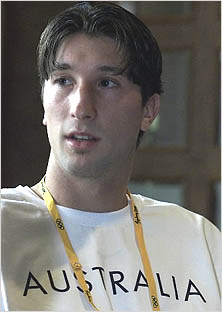
Joey Didulica Peter Desira
29mar04
GEELONG'S top goalkeeping export, Joey Didulica has defected from Australia to Croatia.
After being overlooked for four years by the Socceroos, Didulica has switched his international
loyalty to the country of his parents' origin.
The keeper has been officially called into Croatia's squad for this Thursday's international
friendly against Turkey in Zagreb and is set to lock himself internationally by getting the nod to
start in goal.
"I think I'm a keeper of international quality and wanted to be given an opportunity to prove it,"
Didulica said in an obvious reference to being overlooked by Socceroos coach Frank Farina.
Didulica got one sniff of Socceroo selection after winning the first team spot at Ajax Amsterdam a
year ago, but dropped out of contention after moving to Austria-Wien.
It was a big-money move that guarantees Didulica's financial future -- a multi-million dollar,
four-year deal.
But it has been perceived as a move to a lower league and the keeper has been overtaken by Michael
Petkovic as the understudy to Mark Schwarzer, of Middlesbrough, and Zeljko Kalac, of Perugia, in
Italy's Serie A.
Petkovic, the former South Melbourne keeper now playing in Turkey, got the call-up for last month's
Socceroo international against Venezuela, in what is likely to have been the final straw for
Didulica.
"I had a chat with Joey at the time and told him he was certainly in the frame," Farina said.
"But I certainly couldn't give him any guarantees."
Didulica came up through the ranks at North Geelong, then played 60 NSL games in three seasons with
Melbourne Knights before his international breakthrough with a contract offer at Ajax in 1999.
"International football is something every player aspires to," Didulica said.
"It's an opportunity that presents itself once in a lifetime -- if you're lucky.
"Having grown up in Geelong, playing for Australia seemed the most likely scenario, but Croatia is
a country I have always felt intimately and strongly connected to.
"Like Australia, Croatia is a nation with a proud sporting and cultural history and it's difficult
to explain what a privilege it will be to stand in goals for Croatia.
"Euro 2004 is three months away and to be a part of something as huge as that is a goal I need to
start working toward immediately."
http://www.heraldsun.news.com.au/common/story_page/0,5478,9111100%255E2883,00.html
Australian-born Didulica cleared to debut forCroatia against Turkey
Canadian Press
Friday, March 26, 2004
ZAGREB, Croatia (AP) - Australian-born Joey Didulica has been granted Croatian citizenship and
cleared to play for Croatia in an upcoming Euro 2004 warmup match against Turkey, a sports daily
reported Friday.
Coach Otto Baric selected Didulica to make his debut for the country of his heritage against Turkey
next Wednesday, but his appearance hinged on getting his citizenship papers before the match.
"The procedure was stalled a bit because I had to wait for documents from Australia," Didulica told
the daily Sportske Novosti. "Luckily, they arrived and were processed in time."
Didulica was scouted by Baric's assistants while he was playing for Dutch powerhouse Ajax a season
ago, but he won serious consideration after Baric watched him up close in goals for his new club,
Austria Vienna.
Didulica, whose parents were born in Croatia, played for Australia at the junior level but never
made an appearance at the top level.
Holding out hope for a call-up to the Croatian national squad, the 26-year-old Didulica has avoided
calls to play for the Australian Socceroos, citing injury. "I feel fortunate and a great satisfaction to play in Croatian colors," Didulica said. "It's an added incentive to prove myself." It's not the first time Croatia and Australia have been drawn into a clash of loyalties. Australian-born Anthony Seric also opted to play for Croatia at the 1998 World Cup, creating a national stir in Australia.
http://www.canada.com/sports/soccer/story.html?id=31FE6631-E5B2-42B6-B7FA-D05CAFB83FC1
|
»
(E) New York - Zagreb in 45 minutes ?
|
NASA's 5,000-MPH Jet Makes First Flight
By ROBERT JABLON, AP
LOS ANGELES (March 28) - Three years after its first test flight ended in an explosion, NASA on Saturday successfully launched an experimental jet that the agency believes reached a record-setting speed of about 5,000 mph.
Op-ed Wouldn't it be nice to reach Zagreb from New York in 45 minutes? They say in 16- 20 years, possible. NB
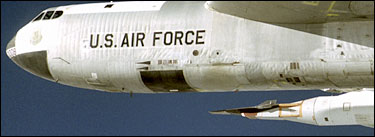
NASA's B-52 mother ship carries the X-43A, perched atop its booster rocket, lower right
The unpiloted X-43A made an 11-second powered flight, then went through some twists and turns during a six-minute glide before plunging into the Pacific Ocean about 400 miles off the California coast.
``It was fun all the way to Mach 7,'' said Joel Sitz, project manager at NASA's Dryden Flight Research Center.
Flight engineer Lawrence Huebner said preliminary data indicated the needle-nosed jet reached a maximum speed of slightly over seven times the speed of sound, or about 5,000 mph, after a rocket boosted it to about 3,500 mph.
Huebner said it was the first time an ``air-breathing'' jet had ever traveled so fast. The rocket-powered X-15 reached Mach 6.7 in 1967.
``It's a great way to end, certainly all the sweeter because of the challenges we've had to step up to and overcome through the life of this project,'' said Griffin Corpening, Dryden's chief engineer on the project.
The first X-43A flight ended in failure June 2, 2001, after the modified Pegasus rocket used to accelerate the plane veered off course and was detonated. An investigation board found preflight analyses failed to predict how the rocket would perform, leaving its control system unable to maintain stable flight.
NASA built the X-43A under a $250 million program to develop and test an exotic type of engine called a supersonic-combustion ramjet, or scramjet.
In theory, the air-breathing engine could propel an airplane to speeds of Mach 7 or faster, enabling around-the-world flights that would take several hours. The Department of Defense also is working on the technology, which it's eyeing for use in bombers that quickly could reach targets anywhere on the globe.
The 12-foot-long, 2,800-pound X-43A was mounted on a Pegasus rocket booster and carried to an altitude of 40,000 feet by a modified B-52 bomber, which took off from Edwards Air Force Base in the high desert.
A few seconds after the craft was dropped, the rocket flared, sending the jet skyward on a streak of flame and light. At about 100,000 feet, the rocket dropped away.
The scramjet took over, using up about two pounds of gaseous hydrogen fuel before gliding. Applause rang out in the control center at Dryden Flight Research Center at Edwards.
Technological hurdles mean it will be decades before such a plane could enter service. And NASA's role in developing the technology remains in doubt, as the agency recently cut funding for more advanced versions of the X-43A.
Engineers have pursued scramjet technology because it could allow rocket-speed travel but with considerable savings in weight. Rockets must carry their own oxygen to combust the fuel they carry aboard; scramjets can scoop it out of the atmosphere.
In scramjets, oxygen is rammed into a combustion chamber where it mixes with fuel and spontaneously ignites. To work, the engine must be traveling at about five times the speed of sound - requiring an initial boost that only a rocket can provide.
A third X-43A could fly as early as the fall.
http://aolsvc.news.aol.com/news/article.adp?id=20040327134609990001&_mpc=news%2e6
|
»
(H) Carobna Stopa - nova knjiga kap. Ive Rudenjaka
|
Čarobna stopa Ljepote i putovanja, Uvijek će nas privlačiti 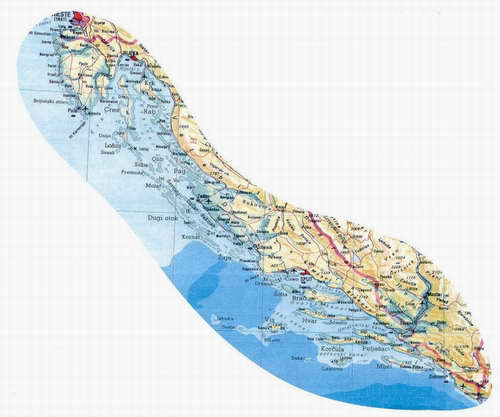
Beauties and Journeys Always attract us Nova Knjiga kapetana Ive Rudenjaka: Čarobna stopa, MATICA HRVATSKA Urednikova nota: Knjiga kapetana Rudenjaka, je vrijedno štivo koje bi trebalo biti prevedeno na barem pet svjetskih jezika. Book "Magic Foot" by Captain Ivo Rudenjak is a literature that needs to be translated to at least five world languages. Book like this... you couldn't make it better for Croatia. Anybody interested, send us a note. Zainteresirani javite se naletters@croatianworld.net Informacije kako naruciti knjigu su na dnu pisma. Information, how to order the book, are at the bottom. (http://www.tamaris.hr) Cestitke autoru. Congratulations to the author. Nenad Bach Riječ autora Za zdravlje, emotivno doživljavanje i obrazovanje turizam je važan svakom čovjeku. U ovom izlaganju nalazimo tumačenje fenomena turizma i obrazloženje zašto su predjeli Čarobne stope najprivlačniji dio svijeta. Iz Bilješke o autoru prof. dr. Nikole Stražičića: Ivo Rudenjak, pomorski kapetan, osebujna je ličnost, čovjek živog duha i zaljubljenik u prirodu. Na svojim brojnim i dugim putovanjima promatrao je sa zanimanjem svijet oko sebe, te istodobno znalački zapažao i uspoređivao pojave s kojima se sretao. Pobliže pozna akvatorij, otočje i primorje Jadrana, te gorske predjele u zaleđu njegovih obala. Plovio je mnogim morima. Zadržavao se na pet kontinenata. Boravio u svim klimatskim zonama. Oplovio je Afriku i ispenjao biblijsku planinu Ararat. Kao profesionalnom nautičaru i dobrom poznavatelju oceanografije, meteorologije i astronomije, a treba dodati i vrsnom planinaru, piscu se sama po sebi nametnula usporedba pojedinih predjela našeg planeta. Ovako specifično štivo mogao je napisati samo čovjek s velikim poznavanjem svjetskih prostranstava i bogatim životnim iskustvom. Djelo je namijenjeno ljudima koji vole putovanja i vesele se ljetovanju, te onima koji se bave turizmom. Iz Osvrta na Čarobnu stopu dipl. ing. Hrvoja Šarinića: U Čarobnoj stopi autor je svoje znanje, životno iskustvo i senzibilitet prema prirodi pretočio u odu ljepoti male, ali beskrajno lijepe Hrvatske. Kapetan Rudenjak u svojoj Stopi uvjerljivo obrazlaže zašto je hrvatsko more, šume i planine, te općenito tamošnja jedinstvena i raspjevana priroda najprivlačniji kraj na Zemlji. Stručan poznavatelj, lucidan promatrač i analitičar kapetan Rudenjak nabraja i ispituje bitne karakteristike Čarobne stope koje ugođaj življenja u njenim prostorima čine zanosnim. Onome tko nije zaljubljenik u prirodu, ovo će se štivo katkad učiniti nestvarnim. Toliko ljepote i zanosa na jednom tako malom prostoru, da li je to moguće? Onaj pak tko je "okusio" i djelić opisanih prirodnih draži, naći će još pokoju ljepotu koju je naš kapetan "zaboravio" ugraditi u trag svoje Čarobne stope. Ivo Rudenjak, Čarobna stopa, MATICA HRVATSKA Ogranak u Rijeci, Rijeka 2003. ISBN 953-6035-12-X Mekani uvez, 112 stranica, 17 x 24 cm Dostupno u Knjižari TAMARIS, Trg bana J. Jelačića 3, Zagreb, Hrvatska, http://www.tamaris.hr
|
|
|




 full story
 printer version