Sponsored Ads
|
Articles by this Author
»
(E) 470 World Championships in Zadar, Croatia
|
470 World Championships in Zadar, Croatia The latest on the Olympic Dinghy Classes....
Posted on Monday 10 May @ 22:00:45 |
470 World Championship - Yngling World Championship - Finn European Championship
Today saw the start of the 470 world championships in Zadar, Croatia for the 101 men's teams and 53 women’s teams. After a short postponement waiting for the wind to fill in, two races were sailed in both fleets in 8 knots of breeze.
Team GBR sailors Christina Bassdone and Katherine Hopson made a steady start to the championship scoring an eighth and a third place which places them sixth overall after day one. The Polish team of Katarzyna Tylinska and Zuzanna Gladysz currently lead the fleet at this early stage.
Fellow British sailors Nick Rogers and Joe Glanfield started well to score a second place in their group in the first race of the day. They followed this up with an eighteenth place which places them 23rd overall. Team mates Nic Asher and Elliot Willis started well scoring an eleventh and fifth and are 15th overall, two places in front of Graham Vials and Bevis Field.
The 470 competitors have four days of qualifying races where they are spit into groups, before going on to race the final series from the 13-16 May. Full results can be found on the event websitehttp://www.uskok.biz.hr/470wc2004/index.htm.
470 results
Women
1, Katarzyna Tylinska/Zuzanna Gladysz, POL (3,4) 7 pts
2, Franziska Duerig/ Monika Meier, SUI (2,7) 9 pts
3, Elisabetta Saccheggiani/ Myriam Cutolo, ITA (6,3) 9 pts
GBR
6, Christina Bassadone/Katherine Hopson (8,3) 11 pts
Men
1, Philippe Gildas/Nicolas Le Berre, FRA (1,1) 2 pts
2, Nathan Wilmot/Malcolm Page, AUS (1,1) 2 pts
3, Andreas/Kosmatopoulos/Kostas Trigonis, GRE (4,1) 5 pts
GBR
15, Nic Asher/Elliot Willis (11,5) 16 pts
17, Graham Vials/Bevis Field (6,10) 16 pts
23, Nick Rogers/Joe Glanfield (2,18) 20 pts
Yngling world championship
The first day of the Yngling world championships started in a light 5-7 knots of breeze with heavy rain and the first race of the event got underway after a general recall. As the race continued the wind turned very light and shifty and the New Zealand boat of Sharon Ferris, Joanna White and Kylie Jameson rounded the second mark first, a position they maintained for the remainder of the race.
After a poor start and then getting caught up in the pack, Olympic gold medallist Shirley Robertson and team mates Sarah Ayton and Sarah Webb struggled to recover in the spread out fleet and finished race one 34th. Their luck didn't change in race two and after a number of general recalls the British team received a black flag along with six other boats for starting prematurely. At the bottom mark the wind died and the Race Committee decided to abandon the race, however this does not make a difference for Team Robertson/Ayton/Webb as they are now forbidden to race the re-sail.
Robertson commented, We made costly schoolboy errors today, starting poorly and not reading the clouds well. Perhaps also after the practice race when tide was a winning factor, we were considering tide as a bigger influence than it was. It is a really tricky venue; waves, cliffs, tide, real weather - for sure its going to be high scoring, with only one discard were now relying on it.
Tomorrow sees a further two races scheduled and it is hoped that the conditions will be a little steadier. A total of ten races are scheduled for the championship which concludes on Saturday 15 May. Further information can be found on the event website http://www.rcmsantander.com/yngling/index-y-i.htm.
Yngling results
1, Sharon Ferris/Joanna White/Kylie Jameson, NZL (1) 1 pt
2, Trine Palludan/Christina Otzen/Ida Hartvig, DEN (2) 2 pts
3, Ulrike Schuemann/Wibke Buelle/Winnie Lippert, GER (3) 3 pts
GBR
25, Dominica Lyndsey/Victoria Symmers/Annie Lush (25) 25 pts
34, Shirley Robertson/Sarah Ayton/Sarah Webb (34) 34 pts
Finn European championship
Racing got underway today for the worlds top Finn sailors who have flocked to La Rochelle, France to compete in their European championship. After racing was postponed first thing due to lack of wind, the event finally got underway in 8 knots of breeze.
The 1996 Olympic gold medallist Mateusz Kusznierewicz of Poland was the most consistent sailor of the day in the tricky conditions, scoring two second places to give him the overall lead.
Double Olympic gold medallist and reigning European champion Ben Ainslie did not have the strongest start to the regatta scoring a 29th place, but he quickly followed this up with a fourth in the second race which took place in ten knots of breeze. Team mate Andrew Simpson finished just behind Ainslie in the first race of the day, but got the better of him in race two finishing one place in front in third.
A total of nine races are scheduled for the event which concludes on Sunday 15 May. Further information can be found on the event website http://www.srr-sailing.com/divers/pagesiteeuropefinn.htm.
No Finn results are available at this time.
http://www.yachtinguniverse.com/site/article.php?sid=2125&mode=nested&order=0
|
»
(E) Europe Plans For An Arab Expansion
|
Europe Plans For An Arab Expansion
The Times, London
BRUSSELS, May 4. — WITH the largest-ever enlargement of the EU behind them, European officials are now preparing even more ambitious plans to expand the Brussels empire across North Africa, West Asia and Asia.
They hope that just as last weekend’s enlargement helped to entrench democracy in eight former Communist countries, this new policy will stabilise much of the Arab world, as well as the still turbulent far eastern regions of Europe.
Next week, the European Commission, the EU’s executive body, will launch a strategy document setting out details of an effective enlargement of the EU over decades across all the Muslim countries lining the Mediterranean, from Morocco to Syria, as well as Israel, Lebanon and all the former parts of the Soviet Union which are in Europe, including Russia.
This is in addition to the well-advanced plans for Romania and Bulgaria to become full members of the EU in 2007, followed by all the Balkan countries including Albania, Croatia, Bosnia and Serbia. The Commission will also announce in October whether it thinks that Turkey is ready to join the EU.
Source:http://www.thestatesman.net/page.news.php?clid=3&theme=&usrsess=1&id=42295
|
»
(E) Slobodna Dalmacija on Ashdown
|
ASHDOWN'S EDUCATION MANIFESTO Slobodna Dalmacija's BiH has run a piece on Ashdown's
UK education policies. My article from last October
has filtered through! Link to SD item below, as well
as my original piece.
Brian
http://members.madasafish.com/~opus/Croatia/Brian.Gallagher.200404.html
VIEWPOINT FROM LONDON
by Brian Gallagher
The Croatian Herald, Australia No. 987 - 10.10.03
Paddy Ashdown's manifesto commitments and his writings
whilst he was leader of the Liberal Democrats in the
United Kingdom shed a lot of light on his policies in
Bosnia-Herzegovina. In particular, the details on
education are of great importance, as that is a major
issue right now in BiH, especially for the Croats. And
Ashdown's views are very close to the Croats.
In BiH, reform of education is being debated by
parliament. There is a push by the Organisation for
Security and Co-operation in Europe (OSCE) to place
education on the entity level away from the local
level. In the Muslim-Croat Federation this would mean
control passing to the education ministry in Sarajevo.
Croats are very concerned about this; not unreasonably
they wish their children to be taught in their own
language and about Croat culture, which they are able
to do now at local level. They believe this may be
compromised if it is placed at entity level; the
Croats are significantly outnumbered in the Federation
by the Bosniaks.
If a solution is not found, then Paddy Ashdown may
impose one. If one considers his political track
record then in theory his solution would be something
Croats find agreeable.
In an interview for the Guardian last year, Ashdown
stated that he is implementing the 1992 Liberal
Democrat manifesto in BiH.
So it seems that Ashdown is drawing on his party
policies as leader in running BiH. The 1992 election
manifesto is very clear on education: Under "Putting
education at the heart of the community" they discuss
the independence of schools and colleges and their
pioneering local management. They want education
within a "democratically accountable framework of
local education authorities". Local education
authorities in the UK roughly translates into cantons
in BiH, rather than the entities.
The manifesto also says that education is an area that
"should be devolved from Whitehall (central
government) and brought nearer to the people they most
affect."
For Ashdown's 1997 manifesto - which I personally
campaigned for - previous ideas are built upon, with
more power to be given to schools. The "valuable role"
of church schools is recognised, and where there is
substantial community support, the major faiths can
establish publicly funded voluntary schools.
Furthermore, the role of national culture and language
is also regarded as important. The 1997 Scottish
Liberal Democrat manifesto under "A new deal for
Gaelic and Scots culture", states they "will support
and maintain the diversity of Scotland's linguistic
and cultural traditions." Specifically they will
support and develop the provision of Gaelic in
education and that they will "Promote a greater
emphasis on Scottish culture in the mainstream
curriculum".
It is obvious from all this that Ashdown's commitments
as party leader were to local control of school and a
strong recognition and support of religion, language
and culture. The positive implications for Croats are
clear.
In 1994 Ashdown wrote a book entitled 'Beyond
Westminster - Finding Hope in Britain'. Essentially he
travelled across the United Kingdom, including
deprived areas, spending time with the diverse people
of the country.
In East London, he speaks approvingly of Saturday
schools run by and for ethnic minorities which "teach
their religion, preserve their language and culture
and supplement mainstream education". Croats of course
are a constituent people, not an ethnic minority. They
expect mainstream schools to do their job rather than
having to organise separate schooling themselves. And
East London is extraordinarily multi-cultural in
contrast to BiH. The situations are very different.
But the critical point here is that Ashdown supports
the preservation of people's language, culture and
religions.
In Beyond Westminster's conclusion Ashdown declares
his belief in local communities and people providing
solutions - not centralised government.
In total, it is very clear that Paddy Ashdown's
manifesto commitments as Liberal Democrat leader and
his own words lean towards local control of education,
an appreciation of religion in schools and supporting
the development of local language and culture. This
certainly would benefit Croats - but it also benefits
Serbs and Bosniaks as well. No one group should be
able to dominate another in any field in BiH under the
guise of unity - Serb domination in former Yugoslavia
was hardly a good idea.
Croats should set about reminding Paddy Ashdown of his
manifesto commitments - and use them right now in
support of their case for their schoolchildren and
students to be taught in their own language and about
their own culture.
If Ashdown has to impose a solution, it will be
interesting to see what he does; I am sure many
observers in Britain will be keen to see if he sticks
to his principles.
Š Brian Gallagher
My 'Viewpoint from London' column appears fortnightly
in the Australian 'Croatian Herald' and thereafter at
www.croatiafocus.com
|
»
(E) Andrej Urem, poet, sculptor, designer
|
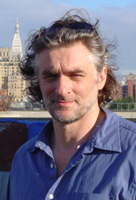
Andrej Urem is a poet, sculptor and graphic designer who lives in New York City from
the year 2002. He was born in 1965. in Rijeka, Croatia, where he completed his
education. He was a member of Rijeka's new - wave band Kaos (1980).
Andrej continued his studies in sculpture in Rome and Florence, during the middle of
the 80-ies. His solo exhibitions were held in Rijeka and Zagreb. He worked on
portraits and other statuary forms within plastic art across the USA, Canada, Mexico
and Italy. After return to Croatia in 1990, he started working as a graphic designer
mainly for books and magazines. He is the author of the numerous graphic solutions in
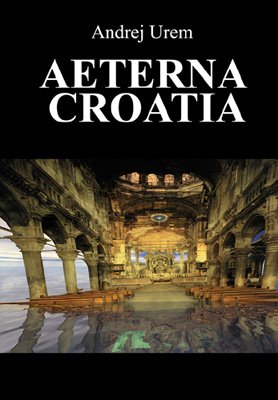
differing design fields. In the year of 2000. Urem's monography "Aeterna Croatia" was
published.
For already two decades Andrej Urem has been writing poems. Those were published in
Croatian and American periodicals and translated to the English. He has published four
collections of poems: Ballad of the Yellow Knife ( 1991), Bugged Hart ( 1993),
Laughter in Darkness (1996) and Singing to the Essence (2000).
He is represented within the anthology of the Croatian poetry titled Passion of
Difference, Dark Sound of Emptiness (1995) as well as within Small Encyclopedia of the
Croatian Pop and Rock Music (1994). In 2003. Andrej Urem founded Urem Publishing Inc.,
and in 2004. he co-founded DOORS Art Foundation. Contact: urem@earthlink.net
|
»
(E) Tuning in to WELW
|
Tuning in to WELW -"Voice of Croatia"
04/27/04
Clint O'Connor
Plain Dealer Reporter
You know how radio stations brag about caring for the community? How they're close to home and right in your back yard (even though they're controlled by corporations thousands of miles away)?
WELW is in someone's back yard. Literally. It's behind a tool shed, actually, down a long driveway in a tiny, lonely building that can best be described as a shack.
The shack hides out in a residential neighborhood in Willoughby (and Eastlake), which also explains its call letters: ELW stands for "EastLakeWilloughby."
In an era of suffocating consolidation, when most stations are controlled by distant giants such as Clear Channel, Infinity, Radio One and Salem, locally owned WELW AM/1330 is as unassuming as its home.
It primarily offers "oldies," rock 'n' roll gems from the '50s, '60s and '70s.
But if you tune in at 5:45 a.m., you'll hear a priest praying the rosary. Click on at 3 in the afternoon, and you'll catch Tony Petkovsek's "PolkaRadio." Nights are filled with Lake County Captains' baseball games and high school sports. On weekends, it's "Health Talk," a philosophical show called "Visions," "The Italian Hour," "Voice of Croatia" and "Shalom America."
"We're really here for people over 50," said Ray Somich, the station's president and principal owner. "People in their 50s don't get a lot of respect from radio stations and advertisers. But we know that someone turns 50 every seven seconds." WELW signed on in 1965 as a religious station. It also has been Top 40, Country and Talk. Sadly, it no longer airs one of its signature shows, "Swap Shop," which allowed Maggie in Mentor to try to unload a set of dishes, while Earl in Euclid expressed his desire for a semidecent, secondhand lawn mower.
The Somich strategy is simple: Keep it local, air as much community information as possible and be omnipresent at local events and promotions. WELW even has a mission statement.
Mention a "Mission Statement" in most radio circles, and it probably would read something like: "To squeeze every miserable dime out of this station, trim budgets and staff, and make corporate headquarters smile."
WELW's mission statement reads: "To continuously provide superior communication service, in accordance with the Ultimate Truth, to add value to the life of anyone whom we encounter, in an environment that unconditionally nurtures Respect, Integrity and Love."
Zowie.
When asked what the "Ultimate Truth" is, Somich says, "We are here to add value to the universe and the God that is in all of us. We're not all of one religion, but everyone here understands there is more to life than punching a time clock."
That would include morning man Allan Parrish, "Dean of the Dusty Discs"; midday host and music director Ravenna Miceli; and Scott "The Scottster" Howitt, the mad rhymer who is on afternoons before and after polka.
Miceli and Howitt were both formerly big-time jocks with big- time ratings at Majic (WMJI FM/105.7). It's akin to jumping from the QE2 cruise ship to a dinghy. They like the dinghy.
"I'm blown away that people have found me here, it's really humbling," said Miceli. "The biggest difference is we're not controlled by corporate America. We're giving people what is not available on conventional radio."
WELW boasts a much larger playlist than most oldies stations; the jocks will find and play that obscure request you call in, and, more importantly, they say they have the freedom to play and say anything they want.
"We play the original hits," says Somich, "not the remix, not the shortened version, not the speeded-up version. The way they sounded before the conglomerates owned all the stations."
On a recent afternoon, Howitt spun "She Ain't Lovin You" by the Distant Cousins ("one of those WIXY records") and "The Little Black Egg" by the Nightcrawlers ("an old WHK record"). They were not huge national hits, but they were Cleveland hits.
Howitt's musical frame of reference is not necessarily bands and singles but the defunct Top 40 AM stations that played them: WIXY (as in Wicksy-1260), WHK, KYW and CKLW out of Canada. Back when listeners had extreme loyalty to a particular station.
"Cleveland has this rich music and radio history," says Howitt. "That's what makes a station like this more precious. If you can make even a few people feel better, give them an escape feature from paying a buck-80 for gas, then you've done something."
To reach this Plain Dealer reporter:
coconnor@plaind.com, 216-999-4456
Š 2004 The Plain Dealer.
http://www.cleveland.com/entertainment/plaindealer/index.ssf?/base/entertainment/108306900132521.xml
|
»
(E) ANATOMY OF DECEIT by Jerry Blaskovich
|
ANATOMY OF DECEIT 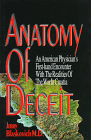
by Jerry Blaskovic, M.D.
Have you ever heard of Dr. Jerry Blaskovich? Well, he is an outstanding Croatian Doctor that went to Croatia during the war, to help and give everything he could. He wrote an account of what happened in a book called Anatomy of Deceit. I hope that you have had the opportunity to read these true accounts of the misery that Croatians had to endure, and the murders by the Serbs. I was wondering if you could post his website on your website or have a link? I firmly believe that all Croatians need to read this documentary account of the truths that happened. I can only hope that Ms. Carla Del Ponte can put her bias aside and read this book also, and realize that this war is not on equal standing, and to stop accusing Croatians of genocide, when still Karadzic and Maldic are free.
http://www.jblaskovich.com/
ANATOMY OF DECEIT:
An American Physician's First Hand Encounter
With The Realities of The War In Croatia
by Jerry Blaskovich, M.D.
Thank you again for taking your time to take care of this website, I truly love it!
Thank you,
Michelle Dunaj
The author welcomes your email comments: jblaskovich@hotmail.com
Reviews
Croatian Medical Journal - December 1998 (Volume 38, Number 4)
Book Review
A Beacon for Croatian Intellectuals:
Blaskovich J. Anatomy of Deceit. An American Physician’s First-hand Encounter with the Realities of the Warin Croatia.
New York: Dunhill Publishing, Co., 1997. 247 pages, hard cover. ISBN 0-935016-24-4. Price: US$24. Jerry Blaskovich is a US physician of Croatian origin, Zagreb University School of Medicine graduate, KoreanWar veteran, Diplomat of the American Board of Dermatology, devoted member of the World Association of Croatian Physicians, and, as he has recently convinced us, a great author. During the 1991-1995 war in Croatia, nobody had to tell Dr Blaskovich where to go, what to do, whom to help, and what to write. Althoughliving in California, Jerry knew what his homeland needed, what tasks suited his abilities, what pressure hisfamily was able to go through, and what his health and strength allowed him to do. Being a doctor and anintellectual, he did not opt for playing shallow politics, futile heroism, or hypocritical humanism. Croatianeeded intellectuals-soldiers, and Jerry, among the few of them, became one of the most successful. I wasacquainted with his assistance to war-ravaged Croatia, with his love, care, concerns and efforts. Many otherhave offered all this too but Jerry is special for writing about it. When the aggression against Croatiacommenced, accompanied by a powerful Serbian propaganda, hypocrisy, and deceit of internationalcommunity, Jerry Blaskovich, a dermatology professor in his early fifties, took a university course increative writing to be able to respond to innumerable anti-Croatian articles published in the US newspapersand journals. Despite the animosity towards anything Croatian in the western media (really familiar only tothose who attempted to talk/write to them), Jerry published over 100 rebuttals to lies and vicious accusationsof Croatia during the war. This alone calls for admiration and recognition as an unsurpassed achievement inthe Croatian recent history. However, this did not satisfy Jerry Blaskovich: after the war, he embarked onwriting a book on the war in Croatia, a first-hand encounter with the realities of suffering, injustice, hypocrisy,deceit.
This book is completely in line with Jerry’s other works, his erudition, and experience. It is written for anAmerican reader, and thus has a typical personal touch, fluency, and comprehensive approach which makesit easily readable, interesting, and even exciting. It begins with Dr Blaskovich’s involvement in forensicinvestigation of the Voæin massacre (80 executed Croatian civilians), but soon turns into a description andanalysis of the unwillingness of the western media to report the event. This develops into a description andanalysis of the reasons for a refusal of the media to report on any Croatian sufferings in the war, and theninto the analysis of the entire Serbian aggression against Croatia and Bosnia and Herzegovina. Jerrywas thus involved with the analysis of international politics, and, being an American, he knew more than thosemost informed living in Croatia. It was fascinating to read about the disgraceful background of actions andstatements of many important political figures who were deciding people’s destinies in the area. It was alsodiscouraging that the old sayings proved to be true: great nations find their interests more important than ourlives, many people consider money and position more important than justice and fairness. The lecture DrBlaskovich teaches us should not be only remembered, but also given a serious consideration and scientificanalysis, especially by the Croatian intellectuals and experts.
I particularly enjoyed Dr Blaskovich’s description and explanation of the fact that a large number of Croatianphysicians took the leading roles in the state and society after the free elections and especially in the war(chapter Physicians, Leaders by Default). A touch of humor, but not at the expense of the depth of analysisand soundness of facts, can be found in the author’s description of the first steps of the infant Croatiandemocracy and changing of political views of Croatian emigrants in San Pedro. Dr Blaskovich nicelydemonstrates his ability of succinctly describing and thoroughly analyzing reactions of the presidents ofstates, ministers, generals, but also of the refugee women, and even a basketball player. Each of thesestories has the same goal: revealing the truth about the wars in Croatia and Bosnia and Herzegovina. Thisbook is, more than anything else, a book about the truth (there are a few incorrect numbers, but they areobviously typing errors). The truth is written for a foreigner – simple, interesting, and general but also for anexpert, because the book provides relevant arguments revealing the appropriate background, and touchingthe right points.
The revelation of truth is not the only, and even not the key point of the book: it is a Croatian testimony, andevery one of those who have experienced the events will be able to explain and support its every detail,every standpoint. Blaskovich’s book should be considered our starting point, in at least two extremelyimportant aspects: a) this is a Croatian story, b) this is an example of what Croatian intellectuals should bedoing. Those who were late for joining the war should not be sorry (but happy) that the war ended and will notrepeat: there is a lot more to be done, in every aspect of the Croatian history, values, achievements, wardefeats and victories, culture, science, education, future. An intellectual – a writer, scientist, physician, orother – does not have to defend his country with a gun in trenches, and does not have to sell his/her soul fora position, political or other; one should do what he/she does best. I believe that with Jerry Blaskovich theCroatian story only started marching through the jungle of the western public information system, and hopethat other experts will follow his example.Matko Marušic
International Journal of Dermatology: "The genocide, the pathos,and the grim details of war arerecounted with objectivity and compassion. The author is an excellent war correspondent and medicaljournalist."
Anthony M. Mlikotin: Professor Emeritus, former Chairman of Slavic and Comparative Literature;
University of Southern California: In spite of the apocalyptic tone, the book is written in the style of anodyessy, lyrical tone of narration prevails from the beginning to the end. Through as the evidence in everyinstance is, the style lifts the book from the dullness of discursive prose tothe inspiring regions of the genre offiction...This book will be read even after the events of the war years in Croatia and Bosnia have sunk intooblivion."
PENINSULA PEOPLE:The antagonism between Serbs, Croats, and Bosnian Muslims runs deep, and to makeheads or tails out of the true causes of the bloody fueds is a formidable task Anatomy of Deceit is an attemptto set some records straight.
Muhamed Sacirbey: Ambassador, Permanent Mission of Bosnia-Herzegovina to the United Nations:
"Anatomy of Deceit undertakes a serious and most necessary review of how media and official factorsmanipulate raw information...My continuing official responsibilities curtail me from pronouncing a finaljudgment on Dr. Blaskovich's conclusions. Nonetheless, Dr Blaskovich's presentation of the facts aresupported by many of my first hand observations and one can reach their own judgment on that basis."
Los Angeles Times: "Clearly written to inform, not sensationalize, the atrocities detailed sends the reader tothe tissue box asking, "How can one human being do this to another?"
Irene B. Bierman, Ph.D., Director Gustave von Grunebaum Center for Near Eastern Studies: UCLA:
"His book has three parts: the physical events of the Serbian military action; broken, mutilated bodies,hospitals under siege, Croatian and Bosnian victims of programmed torture and rape. These hate killed actsare documented by medical investigations, including autopsies.
Second, the realization that the international media who witnessed the same unspeakable horrors would notspeak of them or write of them: persuaded themselves and the world that the Serbs were guiltless and that theCroats, even women and children and the elderly, were not victims of hate-filled violence, but simply warcasualties."
American Croatian Review: "We believe Dr. Blaskovich's book is destined to become the seminal piece thetruth puzzle about the former Yugoslavia."
jnmir@aol.com from San Diego, California. "A very candid and refreshing view on a complex issue.I foundthis book to be very clear and concise in dealing with the recent issues in the Balkan regions. Too often, thepress gives a one-sided or watered down view of current events. Dr. Blaskovich has provided his readers withan eyewitness account which brings the atrocities of war into the reality of the reader.
mcadams@usfca.edu from San Francisco CA, is not the work of an armchair "expert" or that of a journalist-turned-historian who paid a brief visit to the region. Anatomy of Deceit is the product of a lifetime of education,a knowledge of the language and cultures of Croatia and Bosnia, and the product of one who has been onthe front lines, in refugee camps, in the hospitals, and in the morgues and makeshift burial grounds. His storyis at once infomative, sickening, and riveting. It is a true personal chronicle of one man's transformation andthe world's transformation into the grim realities of the "New World Order."
drenner@apc.net from Laguna Beach, CA, Finally a clear description of the "whys" of the Balkan War.Somehow Slobodan Milosevic, iron handed ruler of Serbia, also known as the Butcher of the Balkans,convinced the governments of the civilized world not to interfere while 250,000 Croat and Bosnian civilianmen, women and children were slaughtered, and in the case of the women, raped as recreation by Serbparamilitary soldiers (thugs) in order to bear Serbian children or be killed and cast away if they had becomeuseless. It was a gruesome but fitting fate the world was made to believe. It took five years for the west tomount a tepid response that resulted in the Dayton Accords awarding Serbian violence with half of Bosnia. Dr.Jerry Blaskovich rips away the fictions and myths so adroitly put in place by a canny Serb PR machine (theyhired Saatchi and Saatchi in London among others), fictions maintained and reinforced with the dedicatedhelp of Kissinger Associates who had a vested interest in Serbian victory. As a medical doctor who haddevoted his life to medicine, scholarship and teaching at USC, Dr. Blaskovich saw first hand the atrocitiesvisited on these unprotected populations targeted for extinction. He could not remain silent, and began anintensive examination of this shameful chapter in modern western history. Why did the world allow thisatrocity? Read "Anatomy of Deceit" for the truths our press ignored or failed to grasp. (The State Departmentknew. Five career diplomats quit in disgust - a historical first.) Milosevic continues his wars of aggressiontoday as his thugs kill Albanian civilians, including children, in Kosovo - a program he set in motion in 1989,two years before his attacks against Slovenia, Croatia and Bosnia. Although a war criminal by any standard ofcivilization, Milosovic remains unindicted and hailed by some as a "peacemaker."
Those who wish to purchase an autographed hard cover copy of the book please click here.
|
»
(E) Croatia could begin to produce electricity from wind
|
Pag wind farm gets the green light
CNO Staff | 15-Apr-2004
Zagreb Croatia could begin to produce electricity from wind power as early as this fall, with the construction of the first wind farm set to be completed by the end of this November.
The Croatian-German company Adria Wind Power building the wind farm on the island of Pag secured the necessary financing for the completion of the project this week when it signed an agreement with Hypo-Alpe-Adria bank.
The development of Ravine 1, as the wind farm will be called, began in 1998 with the study of wind strength and patterns on the island. Since then a study on the wind farm’s impact on the environment and migrating birds in the area has been completed, Pag’s urban plan has been altered to accommodate the project and a road connecting the location to the main highway has been built. The total value of the project is 6.5 million euro.
Adria Wind Power said construction will begin immediately upon signing of the financing agreement. The future wind farm will have rated power of 5.95 megawatts (MW), generated by seven wind turbines. A turbine column stands at 49 meters (162 feet) and the turbine rotor diameter is 52 meters (171 feet). Adria Wind Power expects to have completed and connected the wind farm to the power grid by the end of November, 2004. Once connected the wind farm will produce about 15 million kWh of electricity annually.
An observation point will be build near the wind farm and together with the famous Pag cheese and alleged UFO sittings Pag will again another tourist attraction.
Adria Wind Power plans to build two more wind farms on Pag, Novalja 1 and 2, with the combined power of 17 MW, and a third one near Dubrovnik with a 52.5 MW capacity, although completion dates have not been made available.
In recent years wind power has gone from the hippy fringe to economic viability. In Germany, over 3,200 MW of wind power were installed in the last year alone, supplying electricity to more than 2 million households. In the EU, a massive 75,000 megawatts of wind capacity is expected to be online by 2010, tripling the current power and adding the equivalent electricity production of 14 large nuclear reactors.
A report commisioned by Greenpeace France in responce to the French government's proposal to invest 3-3.5 billion euros in building a new nuclear power plant found that the same about of the money invested in wind power would generate 5 times more jobs and 2.3 times more electricity than a nuclear reactor. Zagreb Croatia could begin to produce electricity from wind power as early as this fall, with the construction of the first wind farm set to be completed by the end of this November.
The Croatian-German company Adria Wind Power building the wind farm on the island of Pag secured the necessary financing for the completion of the project this week when it signed an agreement with Hypo-Alpe-Adria bank.
The development of Ravine 1, as the wind farm will be called, began in 1998 with the study of wind strength and patterns on the island. Since then a study on the wind farm’s impact on the environment and migrating birds in the area has been completed, Pag’s urban plan has been altered to accommodate the project and a road connecting the location to the main highway has been built. The total value of the project is 6.5 million euro.
Adria Wind Power said construction will begin immediately upon signing of the financing agreement. The future wind farm will have rated power of 5.95 megawatts (MW), generated by seven wind turbines. A turbine column stands at 49 meters (162 feet) and the turbine rotor diameter is 52 meters (171 feet). Adria Wind Power expects to have completed and connected the wind farm to the power grid by the end of November, 2004. Once connected the wind farm will produce about 15 million kWh of electricity annually.
An observation point will be build near the wind farm and together with the famous Pag cheese and alleged UFO sittings Pag will again another tourist attraction.
Adria Wind Power plans to build two more wind farms on Pag, Novalja 1 and 2, with the combined power of 17 MW, and a third one near Dubrovnik with a 52.5 MW capacity, although completion dates have not been made available.
In recent years wind power has gone from the hippy fringe to economic viability. In Germany, over 3,200 MW of wind power were installed in the last year alone, supplying electricity to more than 2 million households. In the EU, a massive 75,000 megawatts of wind capacity is expected to be online by 2010, tripling the current power and adding the equivalent electricity production of 14 large nuclear reactors.
A report commisioned by Greenpeace France in responce to the French government's proposal to invest 3-3.5 billion euros in building a new nuclear power plant found that the same about of the money invested in wind power would generate 5 times more jobs and 2.3 times more electricity than a nuclear reactor. Zagreb Croatia could begin to produce electricity from wind power as early as this fall, with the construction of the first wind farm set to be completed by the end of this November.
http://www.croatianewsonline.com/news.php?id=86
|
»
(E) Josip Novakovich in Writer's Digest
|
Josip Novakovich in Writer's Digest
Crafting Your Fiction
Josip Novakovich, author of Writing Fiction Step by Step, gives some steps to stay in fiction-writing shape.
"Since we now have the telephone, we do not stay in writing shape; most of us are quite sluggish with the written word, and when we are on the page, we feel awkward and brittle, like an unskilled skater on ice." That's Josip Novakovich writing in the introduction of his book, Writing Fiction Step by Step.
Here are some steps Novakovich recommends for staying in fiction-writing shape:
Character motivation rules the world of characters, but don't forget to add the flaws and oddities that make them real. Pick three people you know and construct one character from them, which Novakovich calls the fusion method. Use their most dramatic traits, their most unusual features. Incorporate a distinctive voice, and you have a realistic, multi-dimensional person.
Setting. It's best to give descriptions of setting while the action is taking place, in bits and pieces rather than pages of history. As you follow your protagonist - a doctor, let's say - in a walk to the office, you could give us that perspective on the smells, sounds and images of a hospital. You must bring us into a place so we can see it. One exercise Novakovich recommends is to walk through a forest and describe what it feels like, using all the senses. Forests are wonderful, diverse places. You'll need this diversity to hold readers' interest, especially in a novel.
Dialogue. Among Novakovich's tips:
" Strike a balance between realism - with repetitions and false starts - and idealism, with everyone speaking correctly and always to the point.
" Vary sentence lengths. Both half-liners and sermons become monotonous.
" Let the characters say something surprising - to surprise not only each other but also you. It's healthy to have characters say something outrageous now and then. To get started in this, try writing a dialogue between two liars trying to outdo each other. Start with mild exaggerations and gradually shift to outrageous boasting.
For more advice on crafting fiction, with myriad exercises that will help you stay in writing shape, check out Josip Novakovich's Writing Fiction Step by Step
www.writersdigest.com/
Below is a paragraph from the article "Walking Tour of Croatian History in New York"
Among Croatians writers, writing mostly in English is award-winning author Josip Novakovich. As in his previous books, Novakovich continues to write universal stories about growing up in Croatia. "When I am in Croatia, I feel American. Of course, in America I feel Croatian. I am hyphenated between two cultures, and I will never integrate the two, but will suffer always from multicultural schizophrenia, or rather, bicultural psychosis." After his first visit to America, he writes, "You can leave another country to go to the States, but once you get into the States, the States get into you, and there's hardly any way of leaving. Even if you do, you carry America with you!" His publications include three collections of stories, "Apricots from Chernobyl" (1955), "Yolk" (1995), and "Salvation and Other Disasters" (1998). He has also written two books on the art of writing and co-edited "Stories in the Stepmother Tongue" (2000), a book of stories written in English by immigrant writers in the United States.
Katarina Tepesh
|
»
(E) Miro Sinovcic exibits in Irvington, New York
|
Miro Sinovcic, award winning Croatian artist 
Blue Umbrellas Miro Sinovcic, award winning Croatian artist is exhibiting 12 new paintings in The
River Gallery in Irvington, NY. For more information visit gallery web site.
The River Gallery
39 Main St. Irvington, NY 10533
914.591.6208
www.therivergallery.com
Mon-Sat 10am - 6pm
Sun Noon - 5pm
Biography
Croatian born artist and architect. Graduated from Zagreb Art Academy.
As an artist, art director and architect he received numerous international
awards including "The Best of Show" from the Rizzoli in Milan, Italy.
He is also the two time recipient of the highest Croatian art award and
the Bronze Medal winner at the world’s biggest book fair in
Frankfurt, Germany.
In 1985, he emigrated to the United States where he became one of the
most sought after artists in publishing, advertising and in motion pictures.
His art has appeared on more than a thousand book covers, and his
innovative techniques greatly influenced the traditional look of book
illustrations to more modern treatments of color and atmosphere.
After 16 years as a commercial artist, Miro is now dedicating his time
to fine art. His big canvasses are vibrant and warm, exhibiting
the recognizable brush strokes of an impressionistic master.
He has held 28 one-man exhibitions and participated in more than
a hundred group exhibitions. His work can be found in many private
art collections throughout the world and some of his corporate clients
are among Fortune 500 companies.
Art commissioned by: BMW, Volvo, IBM, Budweiser, Coca Cola, 7UP,
Mountain Dew, Seagram's, Bradford Exchange, Metro-Goldwyn-Mayer,
Twentieth Century Fox, Universal, Ballantine Books, Berkley Books, Doubleday,
Harper Collins, Pocket Books, Random House. www.mirosinovcic.com
|
»
(E) Sylvan Winds Season Finale with Quatuor Arthur-LeBlanc
|
Sylvan Winds Season Finale at Carnegie with Quatuor Arthur-LeBlanc 
We invite you to join the Sylvan Winds on
Thursday, May 20 at 8:00 PM in
Weill Recital Hall at Carnegie Hall
154 West 57th Street
in a program of
Winds & Strings
with special guests
Quatuor Arthur-LeBlanc
Program:
Louis Spohr Nonet in F Major, op. 31 (1814)
Benjamin Britten Sinfonietta for 10 instruments, op. 1 (1932)
Dmitry Shostakovich Symphony for strings & winds after String Quartet No. 3 in F Major, op. 73A (transcribed by Rudolf Barshai)
Join us for this special program with the Quatuor Arthur-LeBlanc from Quebec, Canada in their New York City and Eastern U.S. debut and, following the concert, for a benefit reception at Shelly's,
104 W 57 St (between Sixth and Seventh avenues)
For reservations & program information call or fax 212 / 222-3569.
Tickets for the concert are $25 & $20 for adults and $15 & $12 for students and seniors.
sylvanwinds@worldnet.att.net
|
|
|




 full story
 printer version