
Sponsored Ads
|
Articles by this Author
»
(E) Pianist Radoslav Lorkovic at Martyr's July 10, 2004
|
Radoslav Lorkovic at Martyr's
I thought you might like to know that the grandson of renowned Croatian
classical pianist Melita Lorkovic is playing at 6:00 PM this Saturday, July
10 at Martyr's, 3855 N. Lincoln Avenue, just south of Irving Park, in
Chicago.
Radoslav Lorkovic is a blues, folk, and classical pianist. He is touring
Chicago with Andy White. There is a second opportunity to hear them at a
House concert on Sunday night, July 11 at 7:00. For details and
reservations for that concert, call 312-371-2294 or reply by e-mail to
njonese@ameritech.net .
Andy White and Radoslav Lorkovic
Saturday, July 10, Early Show 6 to 8 PM
Cover $12.00
Martyrs Pub
3855 N. Lincoln Avenue
Chicago
(773) 404-9494
www.andywhite.com
www.radoslavlorkovic.com
www.martyrslive.com
CroNetwork: The Croatian-American Organization for Young Professionals.
|
»
(E) Pavarotti and Friends Collection on Sale
|
Pavarotti and Friends Collection on Sale "The Pavarotti and Friends Collection" celebrates the internationally renowned charity concert series that brought together the world's greatest pop performers with the greate... Pavarotti And Friends Collection: The Complete Concerts 1992-2000

Universal Music (11/12/2002)
Starring: Bryan Adams, Eros Ramazzotti, Eurythmics, Gaetano Veloso, Gam Gam, Gianni Morandi, Gloria Estefan, Jon Bon Jovi, Jon Secada, Jovanotti, Laura Pausini, Ligabue, Lionel Richie, Litfiba, Liza Minnelli, Luciano Pavarotti, Lucio Dalla, Marco Armiliato, Mariah Carey, Meat Loaf, Michael Bolton, Michael Kamen, Mike Oldfield, Nancy Gustafson, Natalie Cole, Nenad Bach, Neville Brothers, Paco De Lucia, Patricia Kaas, Pino Daniele, Renato Zero, Ricky Martin, Savage Garden, Sheryl Crow, Simon Le Bon, Spice Girls, Stevie Wonder, Sting, Suzanne Vega, The Chieftains, The Corrs, The Edge, The Kelly Family, Trisha Yearwood, Vanessa Williams, Zucchero, Tracy Chapman, Alex Britti, Andrea Bocelli, Andreas Vollenweider, Aqua, B.B. King, Biagio Antonacci, Bob Geldof, Bono, Boyzone, Brian Eno, Brian May, Celine Dion, Edoardo Bennato, Eric Clapton, Al Di Meola, Caetano Veloso, Florent Pagny, Elton John, Enrique Iglesias, Aaron Neville, Dolores O'Riordan, George Michael, Chieftans, Joe Cocker, John McLaughlin, Joan Osborne. | Retail Price: $79.98
Planet Price: $59.99
Savings: $19.99 ( 25% off )
Add to Cart
Add to Wish List | http://www.dvdplanet.com/search_actor.asp?sKeys=Nenad+Bach
|
»
(E) Anyone know what Croatia still owes?
|
Anyone know what Croatia still owes?
Dear all,
Over HALF of Serbia's remaining debt is to be written off, and then the rest is to be paid back at very low rates -- initially 3.75 percent for 5 years and then 6.75 percent for 15 years. In the end, it will only owe just over $1 billion.
This is of course on top of previous debt write-offs.
The London Club initially offered a 20% write-off. See what good negotiation gets you?
Hilariously, Serbia might be issuing bonds on European markets.
Anyone know what Croatia is paying or how much it still owes?
regards
Sanja
Want to send this story to another AOL member? Click on the heart at the top of this window.
London Club to Write Off Serbian Debt
By MISHA SAVIC
.c The Associated Press
BELGRADE, Serbia-Montenegro (AP) - The London Club has agreed to write off more than half of Serbia's $2.8 billion debt to the group and reschedule payments on the remainder over the next 20 years, the government said Friday.
Finance Minister Mladjan Dinkic said the interest rate for the remaining debt of $1.08 billion would be an annual 3.75 percent over the first five years, and 6.75 percent for the following 15 years.
``This is a huge relief for our economy,'' Dinkic said in announcing the write-off of about $1.7 billion in debt.
The deal with the group of commercial lenders came nearly three years after Serbia-Montenegro, the Balkan union formerly known as Yugoslavia, agreed with the Paris Club of sovereign lenders to slash the $4.4 billion owed by the country by 66 percent. The Paris Club, a 19-nation group, deals with loans underwritten by state guarantees.
But negotiations with the commercial lenders of the London Club were much tougher, Dinkic said, because Serbia insisted ``on conditions it could endure.'' The London Club's initial offer was only a 20 percent write-off.
A deal was eventually reached after ``very intense'' talks this year, and should help cut the republic's overall external debt to 60 percent of gross domestic product, Dinkic said.
A worse debt ratio would exclude Serbia from joining the European Union, as it aspires to do, he said.
``We have now fully sorted out our relations'' with major foreign lenders, Dinkic said triumphantly, adding that the agreement with the London Club would take effect in a few months after its ratification in Serbia's parliament.
Serbia's economic recovery, however, could be marred by other factors including a soaring trade deficit likely to total $6.8 billion by the end of this year - an increase of more than $2 billion compared to 2003, the Belgrade-based Institute for Market Research said Friday.
The institute also said inflation would likely reach an annual rate of 10.7 percent by the end of 2004, though earlier predictions had said it would not exceed 9.5 percent.
The Serb economy was all but ruined during the 1990s rule of former leader Slobodan Milosevic, whose belligerent policies led to punitive international sanctions.
When he was ousted in 2000, Serbia's external debt stood at nearly 150 percent of the republic's GDP. The bulk of the burden was built up during the 1980s, when Serbia was part of the former Yugoslavia.
``We are now a financially normal state,'' Dinkic said, adding that Serbia might start issuing bonds on the European markets as soon as next year.
07/02/04 10:51 EDT
Copyright 2003 The Associated Press.
|
»
(E) Croatia puts 'family jewels' under hammer
|
Croatia puts 'family jewels' under hammer
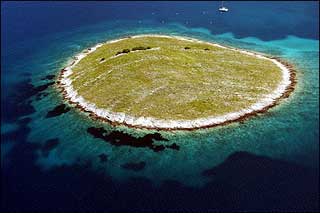 An aerial view of one of Croatia's small islands which were put on sale to attract foreign investors wishing to get their own little piece of Mediterranean paradise. [AFP]
"For sale! Island in the Sibenik archipelago, partly under pine trees, pebble beach, three million dollars." That is one of about 20 advertisements being circulated by Croatia's real estate agents for the small islands off the Adriatic coast, known as the Balkan
country's "national jewels."
Agents say foreign investors are flocking to acquire a little piece of the paradise isles as the country's tourism industry booms to levels not seen since
the former Yugoslav republic's 1991-95 independence war.
"Foreign interest in buying property in Croatia, including the small islands, suddenly grew two years ago. Until then foreigners did not believe this was a
market worth investing in," real estate agent Jasminka Biliskov told AFP.
Property prices have rocketed on Croatia's 1,800-kilometre (1,112-mile) Adriatic coast, one of the most picturesque parts of Europe and the
centrepiece of the country's lucrative tourism industry.
But the market is still recovering from the shock of war, and many believe the islands are good value compared to similar properties in other parts of
the world.
Almost 80 percent of island buyers are foreigners, Biliskov said. Britons top the list, followed by Hungarians, Swedes, Norwegians and Germans.
Biliskov's agency currently has seven islands on its books and recently sold Smokvica, near the central Adriatic town of Primosten.
Smokvica, with a total surface area of some 36,000 square meters (387,360 square feet) completely under pine trees, was bought last year by a local
company which is planning to build a botanical garden there. It reportedly fetched 1.6 million euros (1.9 million dollars).
Croatia has more than 1,100 islands, islets and reefs. Most are small and uninhabited and the few which are privately owned have been handed down
through generations of families. Currently there are some 20 islands on sale with prices ranging from five to 40 euros per square meter. Five have been
sold so far. But Croatian law bans new construction on small islands, allowing only reconstruction of the existing buildings, predominantly small stone
stables. The law also defines a protected maritime area extending at least six meters (20 feet) from the shoreline, which belongs to the state and on
which no title can be obtained. The state is also planning to reserve exclusive rights to buy islands within 90 days of their being offered for sale.
"Buyers are hoping that once Croatia enters the EU the legislation will change and construction will be allowed. However, it should be strictly
conditioned, defined and controlled," Biliskov said.
The law should enable construction of small, traditional Mediterranean-style stone houses, she said.
But despite the legal complications, Croatian islands have the advantages of being relatively cheap, unspoilt and close to Europe.
"The most important thing is that the landowners realize that they are in possession of the 'family jewels' of the Adriatic, a heritage of priceless value,"
Tourism Minister Bozidar Kalmeta said. He complained that the islands were being offered for a "trifle compared to world prices."
But Biliskov said Croatia's islands would not be bargains for long.
"The prices of real estate in Croatia are booming now and show a tendency to continue like that," she said.
http://www.chinadaily.com.cn/english/doc/2004-06/28/content_343489.htm
|
»
(E) Croatian skeletons reveal changing status of cancer in Europe
|
Croatian skeletons reveal changing status of cancer in Europe across the centuries
Cancer incidence rates in the developed world are increasing each year and developing countries are also now showing an increased incidence of the disease. But how much were our ancestors affected by the disease? Dr Mario Slaus of the Croatian Academy of Sciences and Arts in Zagreb presented archaeological findings at the 18th Meeting of the European Association of Cancer Research (EACR-18) in Innsbruck today (6 July 2004), suggesting that the disease was very uncommon even in our recent ancestors, reinforcing the concept that cancer is a ‘modern’ disease and is largely a consequence of the greater longevity we are now experiencing.
Dr Slaus and his colleagues1 analysed the skeletal remains of the 3,160 individuals in the Skeletal Collection of the Croatian Academy of Sciences and Arts for evidence of neoplasms (uncontrolled and abnormal tissue growth). The remains in the collection date from 5,300BC to the 19th Century AD and have been collected from archaeological sites across Croatia. Analysis (including gross morphology, X-rays and CT-scans) revealed 4 cases of neoplastic disease in individuals ranging from 3-4 years to 50-60 years of age. All 4 cases involved bone neoplasms (obviously, as bone was the only tissue remaining): two fibrous cortical defects, an osteochondroma and an osteoma. All three conditions were benign, with little potential for malignant transformation.
“The low frequency of neoplasms in the Croatian Skeletal Collection is characteristic for archaeological material”, said Dr Slaus. “We found no evidence of secondary bone tumours in any individual in the collection, a factor that is probably explained by the fact that the mean age-at-death of the specimens is 35.6 years. Primary malignant and benign tumours of bone are relatively rare, even in young individuals where the incidence of these neoplasms is highest, whilst secondary tumours of bone, although much more common, are associated with older age”.
Life expectancy in the 21st Century is higher than it has ever been in the past; a consequence of a range of factors such as better nutrition, improved health awareness in the population, better sanitation and more accessible healthcare. However, increased longevity is accompanied by an increased incidence of cancer. The factors most clearly correlated with the development of cancer in the European Union are smoking (estimated to cause 30% of all cancer deaths) and obesity / dietary factors (estimated to be responsible for a further 30% of all cancer deaths) but these factors often take many years to lead to the development of symptomatic tumours, so aging populations naturally show a higher incidence of the disease.
“The individuals in the Croatian Skeletal Collection would have been prone to diseases such as syphilis, tuberculosis and leprosy (and we found evidence for each of these conditions in individuals in the collection) and these illnesses (and others) would certainly have contributed significantly to mortality in our ancestors”, added Dr Slaus.
“The change from these ‘old’ illnesses to ‘modern’ ones such as cancer can be seen as part of the evolution of our society, but as with the ‘old’ illnesses we can go some way to combating the ‘modern’ illness of cancer through educating people about the risks of the disease and encouraging them to adopt a healthy lifestyle”, said Dr Slaus.
The Croatian Skeletal Collection demonstrates how cancer is, in large part, a consequence of our recently significantly increased life-span, as well as significant changes to our lifestyle. The incidence of cancer we currently have in Europe, and the increasing incidence being seen in the developing world, can be reduced significantly through greater education about the benefits of not smoking tobacco, by encouraging people to eat a diet plentiful in fresh fruit and vegetables, through the promotion of a lifestyle that includes regular exercise and by encouraging people not to drink alcohol to excess.
http://www.innovations-report.com/html/reports/life_sciences/report-30917.html
|
»
(E) What will you get in return? Nothing. Just the glory.
|
Calling scientists back home to Croatia “What will you get in return? Nothing. Just the glory.”
Doreen Carvajal International Herald Tribune Tuesday, July 6, 2004
The world's scientists are like a flock of flamingos that migrates from briny lakes when they dry up and returns only when its lagoons are replenished.
.
But last week, hundreds of scientists gathered in the Cité des Sciences et de l'Industrie in Paris to try to analyze their own peculiar migratory patterns.
.
A few years ago, gatherings such as these offered ample opportunity to bemoan the flight of bright researchers to enticing jobs across the Atlantic in the United States. Yet now the debate has clearly shifted from worrying about brain drain to brainstorming about practical strategies to “circulate” researchers between nations.
.
Finland, Italy and Poland are subsidizing networking systems to build ties with their expatriate scientists. The European Union also announced the start of an online “mobility portal” along with centers in 33 countries offering expatriate researchers and their families customized assistance to ease the return home.
.
Last fall, Croatia's government handed over the keys to Villa Dalmatia, the opulent former summer residence of Marshal Tito on the Adriatic coast, to create a new biological research institution called the Mediterranean Institute for Life Sciences. The country has already spent E1.7 million, or $2 million, to restore the former Yugoslav leader's house and a cloister-like soldier barracks that will house a new laboratory.
.
All of these projects are tentative first steps to match the temptations of laboratories that gleam with the promise of research and development funding, access to leading technologies and a critical mass of creative research institutions.
.
In Croatia, the task has fallen to Miroslav Radman to raise a E100 million endowment to create a seaside resort of ideas in his hometown of Silt, an ancient Roman city.
.
Radman, 60, is a popular figure in Croatia, but has spent most of his career in France, where he leads a team of 25 scientists at the Necker Institute in Paris involved in research on the human genome project and HIV/$ AIDS.
.
“I'm doing this to create a space where the quality of the workplace and life is the level of the best," said Radman, who wants to develop a freewheeling new institute like Cold Springs Harbor Laboratory in Long Island, which drew many of the world's molecular biology pioneers in the mid-20th century and nurtured a new field.
.
“Some say I'm totally crazy," Radman said. "It's meant to be a place that should become a factory of new projects, of new ideas.”
.
Last week he returned from the United States, where he was wooing wealthy Croatian immigrants to back the project.
.
“I'm trying to tempt them to play the role of Croatian Rockefellers or the Medicis of Florence," he said. The sales pitch isn't flowery: “What will you get in return? Nothing. Just the glory.”
.
It's pretty much the same message that Antonio Giordano is using with Italian expatriates are donating some of their wealth to cancer research.
.
Giordano, 40, is a scientist and a native of Naples, Italy, who is experimenting with his own laboratory to build links between his home and homeland with exchanges between postdoctoral students and researchers. He is a professor of pathology at the University of Siena and the director of the Sbarro Institute for Cancer Research and Molecular Medicine at Temple University.
.
Giordano promotes his adopted home, Philadelphia, with the buoyant enthusiasm of a state governor, right down to offering to search for a cheese steak in Paris.
.
He's still not convinced that enough money and attention have been devoted to research in Europe to persuade scientists to circulate home.
.
As he points out, this is a problem that scientists have lived with for decades.
.
The invention of the first phonograph, for instance, is usually credited to Thomas Edison, but the first to create a workable design was Charles Cros, a Parisian who delivered plans for a paléophone that would use discs to the French Academy of Sciences in 1877.
.
Cros lost the competition and the glory to Edison partly for prosaic reasons. His rich patron withdrew his funding and he couldn't find another Medici to help build his dream.
.
Doreen Carvajal can be reached atdcarvajal@iht.com
Copyright © 2004 the International Herald Tribune All Rights Reserved
http://www.iht.com/articles/528160.html
|
»
(E) ITALY-CROATIA: MARTINO MEETS RONCEVIC
|
ITALY-CROATIA: MARTINO MEETS DEFENCE MINISTER RONCEVIC
(AGI) - Rome, Italy, July 6 Defence Minister Antonio Martino, met in Rome today his Croatian counterpart, Berislav Roncevic, on an official visit in Italy. During the talk they reviewed the main themes of security and common defence and the state of bilateral relations. The two ministers expressed their agreement on the positive evolution of the security situation in Bosnia Herzegovina and they said that they agreed on the conclusion at the end of 2004 of the "Sfor" mission and the beginning of the Eufor mission by the EU. The two then examined, with reciprocal satisfaction, the state of bilateral relations in the defence sector. They went into the details of the agreement signed in Ancona in 2000 and ratified with law 20 March 2003, n. 75. Of particular interest for Roncevic, was the Croatian participation in the MLF (Multinational Land Force), the multinational brigade level formation with Italy, Slovenia and Hungary which was born at the end of the 90s. It is a force oriented towards the execution of EU missions in the context of the Petersberg declaration. Regarding this, Minister Martino confirmed the support of Italy for a policy of openness towards the offerse from Croatia (participating as an observer nation) for its future, progressive participation in the initiative. Finally, Minister Roncevic, with reference to the aspirations of Croatia of joining EU and euro-atlantic political and security institutions, expressed words of gratitude for the constant and strong support given by Italy. Minister Martino, on his part, repeated the importance of Croatia in the context of international community policies for the stabilisation of the Balkan area. (AGI) .
062045 LUG 04
COPYRIGHTS 2002-2003 AGI S.p.A.
http://www.agi.it/english/news.pl?doc=200407062045-1219-RT1-CRO-0-NF82&page=0&id=agionline-eng.italyonline
|
»
(E) An area of exceptional beauty, natural attractions and uniqueness
|
An area of exceptional beauty, natural attractions and uniqueness
New world game series Tour to Italy and Croatia
A Mondial tour to romantic Italy and beautiful Croatia, a Lm50 Malta International Airport shopping voucher and a year's membership in the Scrabble Club await the lucky winner of the new word game series starting today. The tour will be made between August 24-31 and includes sightseeing in Rijeka and Trieste.
There will be an optional full day city tour of Zagreb and the northern Croatian city of Varadzin, the administrative, economic, cultural and educational centre of the country on the right bank of the river Drava.
Another optional excursion will be to Ljubljana, the capital of neighbouring Slovenia - a charming, inexpensive city with a relaxed pace, active café life and fondness for poets, referred to by visitors as "the Prague without tourists".
Yet Ljubljana still has its own distinctive character with every nook and cranny filled with whimsical and delightful surprises.
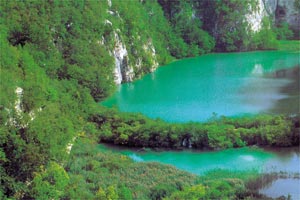
The tour offers an optional excursion to the beautiful national park of the Plitvice lakes, an area of exceptional beauty, natural attractions and uniqueness, declared by Unesco as a World's natural inheritance area. Rijeka, one of the most important port cities of Croatia and Trieste, a beautiful city in an idyllic setting backed by a white limestone plateau and facing the Adriatic are included in the tour. Other excursions will be to the unique city of Venice, to the most famous of all Italian resorts, Cortina d'Ampezzo, in the snow-covered Dolomite mountains and to Padua, the city of St Anthony.
The winner of the word game which ended last Saturday is being drawn on Tuesday. The prize is a free place on Mondial's Mediterranean Cruise between July 16-23 and a year's membership in the Scrabble Club. The six nine-letter words for the series were undertone, nefarious, pervasive, sentiment, harlequin and undercoat.
http://www.timesofmalta.com/core/article.php?id=156240
|
»
(E) Sunset in Croatia July 3, 2004
|

Mario Jurman, 10, fishes for the first time as his father Zeljko looks on during sunset in the Adriatic town of Fazana, Croatia, Saturday, July 3, 2004. (AP Photo/Darko Bandic)
|
»
(E) BOROS took second place in Chicago at the US Open
|
BOROS took second place in Chicago at the US Open 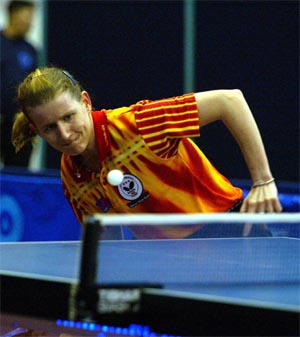
US Open
Singapore’s LI Jia Wei won her first ever Women’s Singles title on the ITTF Pro Tour when she beat Tamara BOROS of Croatia in the final in Chicago on Saturday 3 July 2004; her previous best being in Wels, Austria when on Sunday 27 January 2002 when she had finished runner up to the Chinese penholder, LI Nan.
The final was a match between the topspin player with the gravity defying high toss serve, Tamara BOROS, and the close to the table attacker who serves continually with the backhand, LI Jia Wei, a player renowned for her fast backhand topspin before the ball has reached the peak of the bounce.
LI Jia Wei, won her first Women's Singles title on the ITTF Pro Tour in Chicago
The girl from Singapore started in the fast lane, she won the first three games 11-6, 11-6, 11-4 and in the fourth went 4-1 ahead but then something happened. `I wanted to win and became timid, I played too softly,’ said LI Jia Wei after the match; from that stage what appeared to be one way traffic became a duel.
BOROS won the next nine points to lead 10-4, eventually winning 11-8. In the fifth she led throughout, winning again 11-8 and in the sixth BOROS made a splendid start, she went ahead 4-1 but then lost five points in a row! It seemed the tide had turned back in favour of LI Jia Wei, who serving, went ahead 7-5; the next seven points were all won by the server and at 10-9 LI Jia Wei had her first match point. She served, played a backhand topspin, BOROS returned with a brave forehand topspin, won the point and then the next two, to level proceedings.
Throughout the seventh game BOROS was the aggressor but she had to plan the strategy herself, at 2-2 in the sixth game her coach, Neven CEGNAR, having been warned earlier was red carded and had to leave his courtside seat. However, BOROS made errors; the watershed came at 5-4 with LI Jia Wei leading. The Singapore girl played a weak topspin but BOROS missed the opportunity, her attacking stroke missing the end of the table; the very next point exactly the same thing happened but with one difference, the BOROS smash didn’t miss. However, it seemed the earlier error had affected her confidence; she lost the next five points to trail 5-10. A desperate situation but BOROS kept fighting, she served and followed with a searing backhand topspin to save match point; then she won the next point, possibly the best of the match, hitting winner after winner before finally actually winning the point!
However, it was to be the last point she would win, LI Jia Wei composed herself won the next point and the ITTF Pro Tour Killerspin US Open Women's Singles title, 11-6, 11-6, 11-4, 8-11, 8-11, 11-13, 11-7.
`Relax, don't worry about the score, stay aggressive’, was LI Jia Wei’s relieved comment after the match and the key to her victory. `I played the wrong tactics. I was too far from the table and couldn't play strong backhands,’ added BOROS. `I need to stay closer to the table against her.’
BOROS further explained that she had experienced trouble concentrating the first three games and was obviously bothered by the backhand she'd missed at 5-4 in the seventh and on how it had affected her concentration; on such crucial points are championships won and lost.
http://www.ittf.com/stories/Stories_detail.asp?Year=2004&General_Catigory=General&ID=6021&
|
|
|




 full story
 printer version