Sponsored Ads
|
Articles by this Author
»
(E) Spider Sabich - US-Croatian Olympian
|
Vladimir "Spider" Sabich, a top member of the US Olympic Ski team Thanks to Adam Eterovich for his terrific synopsis of Croatian Olympians. I wanted to add another Croatian-American to the list, Vladimir "Spider" Sabich, who was a top member of the US Olympic Ski team. He did not win a medal, but placed in 5th in the Giant Slalom competition in the 1968 Olympics. He became a top contender in the pro-tour.
Unfortunately, Spider became more famous as a result of his murder in 1976 which resulted in what has been dubbed the "OJ Trial of the 1970s" when he was "mistakingly" shot by his girlfriend, actress Claudine Longet.
There have been a number of documentaries about the killing which have appeared on US television. The following is from the Biography Channel web page. I note that Sabich is credited as being one of the people for making Aspen into what it is today. While the excerpt from the Biography Channel implies that Sabich is forgotten in Aspen, there is a "Spider Sabich Race Arena" in Aspen named after him.
John Kraljic
*********************************
Once a prosperous silver mining camp, Aspen evolved into a year-round mountain retreat for the rich and famous. It was a place where the powerful could forget the hustle and bustle of their hectic lives. But in 1976, one of the town's most glamorous residents found herself behind a smoking gun. The accidental shooting death of ski champion Vladimir Sabich shocked the community and outraged the nation as many felt his rich girlfriend was using her wealth and connections to get away with murder.
Aspen lies at an altitude of 8,000 feet on Colorado's Roaring Fork River. It is one of the most popular ski centers in the western United States. It is a magnet for celebrities including Jack Nicholson, Kevin Costner, and Goldie Hawn. But these stars are relative newcomers to Aspen. One of the first celebrities to make Aspen her home was French actress Claudine Longet.
Longet moved to Aspen in 1974 to be with her lover, downhill ski champion Vladimir "Spider" Sabich. Due to injuries, Sabich's career was heading south on a downhill slope, and by 1976, he had retired from competition. Tensions soon developed in the relationship. The ex-champion told friends their relationship would either end, or they'd be married within a year. Sabich could not have guessed how tragic the end would be.
On March 21, 1976, Longet finished a hard day of hitting the slopes. Late in the afternoon, Longet returned home. At 6:30, she called police and reported that she had accidentally shot Sabich in the stomach. Sabich was taken to Aspen Valley Hospital. Longet was taken into custody.
Longet was put on trial for murder. In Aspen and around the world, people watched and waited to find out if the famous actress would end up in jail. Her ex-husband, pop star Andy Williams, flew to Aspen and stood by Longet during the trial.
Throughout the high profile trial, the jury listened to testimony for and against Longet. The prosecutor claimed she had purposely murdered her boyfriend during an argument. Longet claimed that Sabich had been instructing her on the proper use of the gun when it accidentally discharged. The decision belonged to the jury, and all of Aspen waited to learn whether or not one of their own would spend the next ski season in prison.
After deliberation, the jury refused to believe Longet's story and found her guilty of reckless endangerment. Although she could have received 2 years in jail, she was ordered to serve only 30 days after convincing the judge the "stigma" of prison would harm her children. In Aspen, at the lodges and local ski boutiques, locals were stunned with the verdict. After returning from a Latin American vacation and then serving her month in jail, Longet married her defense attorney Ron Austin. Vladimir Sabich's legacy is confined to a framed display of his skis in Aspen's Hard Rock Cafe. The Longet/Sabich case did not end the allure of Aspen for those able to afford its charms; in fact, Longet's short sentence only confirmed how different the world of the Aspen elite is from the lives of mere mortals.
CROATIA AT THE OLYMPICS, 1890’s-1980’s
By Adam S. Eterovich
Great honor has come to Croatia in Utah. The Battleship USS Utah was sunk at the Japanese attack of Pearl Harbor on December 7, 1941. Chief Petty Officer Peter Tomich, Croatian American, gave his life saving his fellow sailors and was awarded America’s highest honor and awarded the Medal of Honor for bravery beyond the call of duty. No next of kin could not be found and this Medal of Honor lays unclaimed; it is on display in Salt Lake City, Utah as he has been adopted by the State of Utah.
Now, a young Croatian girl, Janica Kostelic, was honored with a Medal of Gold at the Olympic Games in Utah.
Croatian Olympic Champions Credited to Italy, Austria and England
Croatians participated in all Olympic Games since the start of the modern games in the 1890’s. Credit was always given those that ruled her. Milan Neralic was awarded a Bronze medal in Fencing for Austria in 1900. He was a Croatian. Croatia was a part of Austria.
Petar Ivanov, Ante, Frano, Simun Katalinic, Viktor Ljubic and Bruno Soric were awarded Bronze medals in Rowing for Italy in 1924. They were from Zadar; Zadar was then part of Italy.
Paolo Radmilovich from Dubrovnik was awarded a Gold medal in swimming for England in 1908, and a Gold medal for waterpolo in 1908, 1912, 1924 and 1928.
Many Croatians won Olympic medals while controlled by Yugoslavia. Croatia and Croatians should not allow Austria, Italy or Yugoslavia to any longer take credit for something that is not theirs. These are spoils of war and national heritage theft.
From the beginning of the Olympic Games to the 1980’s, Croatia won approximately 170 Olympic medals including 51 Gold medals. Croatian Olympic Gold winners included:
Name Year Sport
COSIC, KRESIMIR 1980 BASKETBALL
JERKOV, ZELJKO 1980 BASKETBALL
KNEGO, ANDRO 1980 BASKETBALL
KRSTULOVIC, DUJE 1980 BASKETBALL
NAKIC, MIHOVIL 1980 BASKETBALL
SKROCE, BRANKO 1980 BASKETBALL
PARLOV, MATE 1972 BOXING
BASIC, MIRKO 1984 HANDBALL
HORVAT, HRVOJE 1972 HANDBALL
JURINA, PAVAO 1984 HANDBALL
MILJAK, ZDRAVKO 1972 HANDBALL
OGNJENOVIC, MIRJAN 1984 HANDBALL
PRIBANIC, MIROSLAV 1972 HANDBALL
PTUJEC, JASNA 1984 HANDBALL
VIDOVIC, ALBIN 1972 HANDBALL
VISNJIC, BISERKA 1984 HANDBALL
ZORKO, ZDENKO 1972 HANDBALL
ZOVKO, ZDRAVKO 1984 HANDBALL
LJUBEK, MATIJA 1976 KAYAK
LJUBEK, MATIJA 1984 KAYAK
BONACIC, DUJE 1952 ROWING
SEGOVIC, PETAR 1952 ROWING
TROJANOVIC, MATE 1952 ROWING
VALENTA, VELIMIR 1952 ROWING
ANKOVICH, ANTE 1960 SOCCER
BEGO, ZVONKO 1960 SOCCER
MATUS, ZELJKO 1960 SOCCER
PERUSIC, ZALJKO 1960 SOCCER
ZANETIC, ANTE 1960 SOCCER
BJEDOV, DURDICA 1968 SWIMMING
BEBIC, MILIVOJ 1984 WATERPOLO
BEZMALINOVIC, MISLA 1988 WATERPOLO
BONACICH, OZREN 1964 WATERPOLO
BUKIC, PERICA 1984 WATERPOLO
DUHO, VESELIN 1988 WATERPOLO
HEBEL, ZDRAVKO 1968 WATERPOLO
LOPATNY, RONALD 1968 WATERPOLO
LUSIC, DENI 1984 WATERPOLO
LUSIC, DENI 1988 WATERPOLO
PASKVALIN, TOMISLAV 1984 WATERPOLO
PASKVALIN, TOMISLAV 1988 WATERPOLO
POLJAK, MIROSLAV 1968 WATERPOLO
POSINKOVIC, RENCO 1988 WATERPOLO
ROJE, ZORAN 1984 WATERPOLO
SIMENC, DUBRAVKO 1988 WATERPOLO
STIPANIC, KARLO 1968 WATERPOLO
SUKNO, GORAN 1984 WATERPOLO
TRUMBIC, IVO 1968 WATERPOLO
VULETIC, BOZO 1984 WATERPOLO
LISJAK, VLADO 1984 WRESTLING
American Croatian Olympic Contributions
Former National Amateur Athletic Union and World's Diving Champion, Helen Crlenkovich is about to make a perfect entry into the water after a dive from the highboard. Known popularly as "Clenkie", Crlenkovich was National Outdoor Springboard Champion in 1939, 1941, and 1945; National Platform Champion in 1941 and 1945, and the National Indoor Three Meter titleholder from 1939 to 1942. She won the Olympic Gold Medal in Diving in 1932. The former University of California student and native of San Francisco, California died of cancer in 1955 only one week after learning that she had been named to the Helms Foundation Diving Hall of Fame. Helen Crlenkovich is a Croatian American.
Sacramento’s George Stanich was John Wooden’s first All-American at University of California at Los Angeles. Stanich played guard for the Bruins and earned his honors in 1950. An all-around athlete, he captured a Bronze Medal in the high jump at the 14th Olympic Games in London and later pitched for Oakland of the Pacific Coast Baseball League. Stanich coached basketball at El Camino College in Los Angeles for 15 years and in 1971 coached Yugoplastika of Split to the national basketball championship. He was Professor of Physical Education at El Camino College in Los Angeles. George Stanich is a Croatian American.
The "Miracle on Ice" still ranks among the nation's greatest sporting moments and, in many ways, Mark Pavelich was symbolic of the American team. The conversation quickly moves to that night in Lake Placid, N.Y., against the Soviet Union, more than 20 years ago, when he collected the puck along the boards and slid it in front of the net. That puck ended up on the stick of teammate Mike Eruzione, who scored to give the U.S. squad an upset over the USSR on the way to a Gold Medal at the 1980 Winter Olympics. Pavelich was small for the game, never growing taller than 5 feet 8, but all those childhood days on outdoor rinks molded him into a clever skater and stickhandler. "A throwback player who could control the puck like he had it on a string," says Baker, who grew up nearby in Grand Rapids. He was born in nearby Eveleth, in rugged country known as the Iron Range, where boys learn to hunt and fish from an early age. The town claims to have the world's largest hockey stick at 107 feet long, so they also learn to play. In the late 1970s, those skills made Pavelich one of the greatest players in the history of the University of Minnesota Duluth. They subsequently earned him a spot on the Olympic team. He earned respect with his work ethic and a knack for passing the puck. Former goaltender Jim Craig recalls him as "an honest man, just a wonderful guy to be around." Little was expected of the Americans that winter, their coach reportedly telling them before the Olympics it would take some luck to win a bronze. But after an opening tie against Sweden, they rolled to four consecutive victories against the likes of Norway and Romania to reach the medal round against the powerhouse Soviets. Pavelich played an essential, supporting role that night, assisting on two of the four goals. Two days later, the U.S. defeated Finland to win the gold medal, and Pavelich wound up with six assists in the seven Lake Placid games. The players became overnight heroes, appearing on television, visiting the White House, attending promotional events across the nation.
Robert Minerich was asked by the United States Olympic Committee, to become Director of Olympic Village and Public Facilities for the VIII Winter Olympics to be held at Squaw Valley, California in 1960. Bob, Minerich was in charge of designing and directing the housing and feeding arrangements for the athletes, National and International Olympic Committee Members and heads of the many corporations involved in the Olympics. After the Olympics, as a management consultant, he helped plan, organize and staff a new ski facility, Alpine Meadows in the Squaw Valley, California area. In 1979-80, when the United States Olympic Committee again called upon his expertise. He took a three month leave of absence to become the liaison of the USA Olympic Committee and International Olympic Committee to help solve the problems confronting the Winter Olympics in Lake Placid, New York. Bob Minerich received a football scholarship from Northwestern University of Evanston, Illinois. Bob Minerich is a Croatian American.
Sandra Bezic, a 1972 Olympian and former Canadian pairs champion, joined NBC Sports in 1990 as an analyst for its figure skating coverage. Sandra skated competitively with her brother, Val, from 1967 through the mid-1970s. She and her brother won the Canadian pairs novice title in 1967 and the Canadian senior competition four straight times from 1970-1973. Sandra has served as the analyst on numerous NBC Sports' figure skating events, including four World Figure Skating Championships 1991-1993 and 1995 and the World Professional Figure Skating Championships from 1990-1995. She has designed programs for many top skaters, including Brian Boitano, Katarina Witt, Kristi Yamaguchi and Kurt Browning. Sandra Bezic has choreographed and/or produced more than 25 television specials in Canada and the United States, including the Emmy Award-wining "Carmen on Ice." She won Gemini awards for producing Browning's "You Must Remember This" and Brian Orser's "Night Moves." Bezic also produced the North American Tour of "Stars on Ice" and is the author of "Passion to Skate:
An Intimate View of Figure Skating." Sandra and her brother Val are Canadian Croatians.
Croatian Contributions
Goran Ivanisevic was born on September 13, 1971 in Split, Croatia. He played tennis for the Croatian National Davis Cup teams; he was awarded an Olympic Bronze Medal in 1992, individually and in pair with G. Prpic. He is Wimbledon Champion in 2001 and was Wimbledon finalist 1992); Wimbledon semi-finalist (1990); best placing on ATP list: fourth place, 1992. He was awarded Best Sportsman of Croatia in 1992.
Drazen Petrovic led the Croatian team to the Olympic Final against the American Dream Team and won the Silver Medal in Barcelona. In 1988 Drazen joined “Real”, a club from Madrid and after three years of successful playing he accomplished the dream of the dreams of all basketball players, when he scored his first goal for the colors of the best World League-the American NBA. At first he played for Portland Trail Blazers and from 1991 to his death he was wearing the colors of New Jersey Nets. During the nine years of his brilliant carrier he was the number one player on all basketball levels, in Spain, even in the USA where he was scorer number one of the NETS and the scorer number eleven of the NBA League.
Toni Kukoc is a professional basketball player. Born September 18, 1969 in Split, Dalmatia, Croatia. married with one child. Olympic Silver Medal 1988, Olympic Silver Medal 1992. Played professional basketball in Chicago for the Chicago Bulls.
|
»
(H) Udruga americkih prevoditelja uvrstila Hrvatski
|
Jezični parovi hrvatski > engleski i engleski > hrvatski uvršteni u program certifikacije umijeća prevođenja Udruge američkih prevoditelja (ATA) Drage kolegice, dragi kolege! 30. srpnja 2004 S veseljem vas izvješćujem o prihvaćanju jezičnih parova hrvatski > engleski i engleski > hrvatski u redoviti program certificiranja prevoditelja Udruge američkih prevoditelja (ATA), odlukom upravnog odbora Udruge od 24. srpnja. Pokusni ispit Materijal za pokusne ispite u oba smjera biti će svim članovima ATA-e dostupan već od početka kolovoza, izravno od Udruge, nakon uvrštenja novih podataka u web stranicu ATA-e. Ispit za stjecanje certifikacije Ovome ispitu mogu pristupiti oni članovi ATA-e koji ispunjavaju određene uvjete. Za polaganje ispita se je potrebno prethodno prijaviti ATA-i, a održavanje ispita za certificiranje u oba smjera početi će nakon 1. siječnja 2005. Valjanost stečene certifikacije treba nadalje održavati stjecanjem bodova za trajno obrazovanje. Ovime su prihvaćene preporuke inicijative SSLI o isključivom korištenju standardnih aktuelnih imena jezika (bosanski, hrvatski, srpski) u bazama podataka i glasilima ATA-e, te o uklanjanju nestandardnih imena jezika (srpskohrvatski). U okviru inicijative SSLI pri ATA-i u tijeku je rad na uspostavljanju jezičnih grupa za smjerove srpski < > engleski i bosanski < > engleski. Informacije o ATA-i i njenom programu certificiranja prevoditelja naći ćete na stranicamawww.atanet.org iwww.atanet.org-certification. Informacije o inicijativi SSLI nađite na listi ATA-SSLI, na Yahoo:http://groups.yahoo.com/group/ATA-SSLI. Zahvale Izražavam ovdje duboku zahvalnost gospođici Pauli Gordon, pokretačici inicijative SSLI, i gospodinu Davidu Stephensonu, voditelju certificiranja ATA za usporedni jezični smjer hrvatski > engleski, na njihovom požrtvovnom i nesebičnom dvogodišnjem radu oko uvođenja programa. Dugujemo također hvalu svim onim mnogim pojedincima (posebno našim ocjenjivačicama te ATA-inom Odboru za certificiranje), zatim ustanovama koje su pridonijele naporima oko uzdizanja statusa prevoditelja u i iz hrvatskog jezika, te onima koji su nam uputili svoje dobre želje. Uz srdačne osobne pozdrave, Dr. Marijan A. Bošković, voditelj certificiranja ATA za jezični smjer engleski > hrvatski
|
»
(E) American Translators Association Adds Croatian
|
American Translators Association (ATA) AddsCroatian-English-Croatian to Its Translation Certification Program
Dear colleagues and friends,
Attached is the self-explanatory announcement, in Croatian and English, of the addition of Croatian-into-English and English-into-Croatian language selections to the established translation certification program of the American Translators Association (ATA).
ATA, headquartered in Washington, D.C., is a member of the Federation Internationale de Traduction, and has over 4,000 members over the world. It is the leading translators association anywhere. Established in the 1960's, ATA has thus far instituted certification in 10 language pairs and 2 single language directions. All language directions are into or from American English. ATA limits itself to the field of translation (its scope does not include interpretation).
The last new language or pair introduction into ATA's certification program occurred five years ago.
The initiative, the development and the introduction of the Croatian language pair all in the span of just 2 years, an unprecedented event at the ATA.
We wish to share these good and exciting news with you. It is our belief that the successful introduction and execution of this program will generate capable and professional translators and generally add to the cultural and educational interchanges between Croatia and the U.S. by:
A more visible "placement of Croatia on the world map"
Better understanding and knowledge in the U.S. of Croatian language, culture and heritage in general
Stimulating the interchanges between professional translators and their organizations in two countries
Increased quality of translation in Croatia, and
Responding to the expected increasing needs for quality translation as Croatia nears entry into the European Union and NATO associations.
In this spirit, we proudly and happily share this moment with you. Please pass on the news, and let us be in touch should you have questions or comments on the program.
Sincerely yours,
Dr. Marijan A. Boškovic
July 30, 2004
Language Pairs Croatian > English and English > Croatian Added to the American Translators Association (ATA) Certification Program
Dear colleagues,
At its meeting on July 24, the ATA Board of Directors voted to approve the addition of Croatian into English and English into Croatian as language pairs in which ATA translator certification is offered.
Practice tests are now available, and the ATA certification exam for both language directions will be offered at exam sittings after January 1, 2005.
The SSLI recommendations on the exclusive use of standard current language designations (Bosnian, Croatian, Serbian) in the ATA databases and publications and on the discontinuation of non-standard language designations (Serbo-Croatian) have been accepted.
Within the SSLI Initiative at ATA, work towards meeting requirements for Serbian < > English and Bosnian < > English is ongoing.
Information on ATA and its certification program can be found atwww.atanet.org andwww.atanet.org’certification . For information on SSLI, visit the ATA-SSLI list on Yahoo:http://groups.yahoo.com/group/ATA-SSLI .
May I express the deepest gratitude to Ms. Paula Gordon who started the SSLI Initiative and to Mr. David Stephenson, Croatian > English Language Chair, for their dedicated and unselfish work during the two-year period of program development and introduction. We are also thankful to many individuals (particularly to our Graders and to the ATA’s Certification Committee) and to the organizations that contributed to the efforts on improving the status of translators working from or into Croatian, as well as to those who sent us their good wishes.
With sincere personal regards,
Dr. Marijan A. Boskovic, English > Croatian Language Chair
|
»
(E) Povitica and the Croatians in Kansas City on Food Network
|
Povitica and the Croatians in Kansas City on Food Network
Hello Everyone!
Food Network airs a show called "Food Finds" this week's (July 31, 2004)
episode featured food finds in Kansas City, and in particular was a segment
about povitica in Kansas City. The piece talked about povitica and the
Croatians in Kansas City. A very well done piece!
You can read a little more about it at:
http://www.foodnetwork.com/food/show_fi/episode/0,1976,FOOD_9962_33596,00.html
You can find the bakery that was featured in the povitica piece at:
Strawberry Hill Povitica Tel: (800) 634-1002 Website:
http://www.povitica.com
-Marko
|
»
(E) Townhouse in Manhattan, New York for SALE
|
Townhouse in Manhattan, New York for SALE Townhouse in Manhattan, New York, located on Lexington Avenue, between the
91st and 92nd Str., Victorian built in 1880. The measurements of the house
are 19 ft by 50 ft, the lot it is built on measures 19 ft by 75 ft, the
house has four floors. The street level one is an apartment with an independent
entrance, the rest of the house (three floors) is one big apartment with
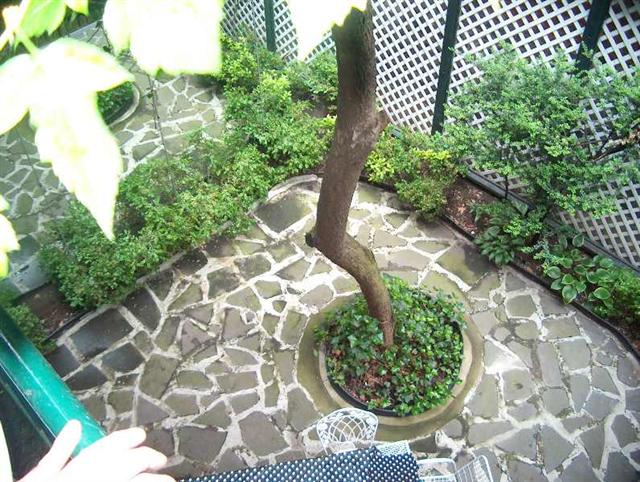
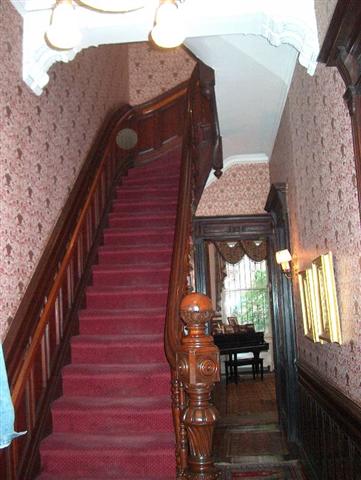
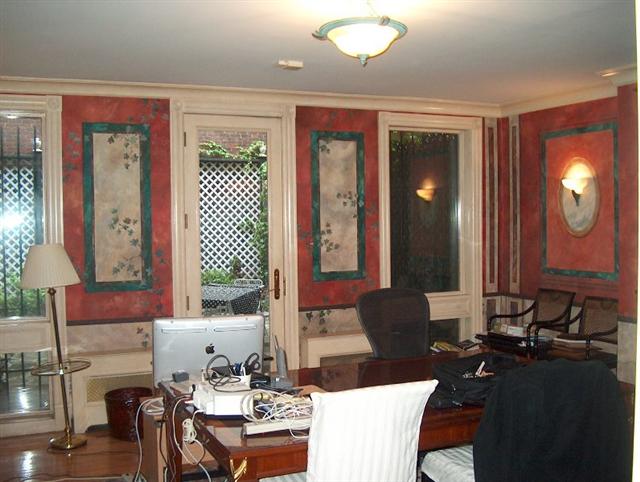
4 bedrooms, 4 baths. The house is in perfect condition, with high ceilings
and straight walls, a terrace and a garden in the back. The asking price
is US$ 5 million.
 |  |
My e-mail address is: marinadiragusa@tiscali.it
My phone numbers in Italy are:
003906-77205780
cell: 0039-328-7697516
Cell phone in Croatia:
00385-98-1805236
Dear Nenad,
Thank you very much again. Hope this helps. I'm afraid to ask you any further
questions, knowing how many e-mails you have to read and possibly answer.
I just hope, that there is someone rich out there who has and wants to invest
money by buying this house. It would obviously be good for someone with
Euros (given the exchange rate). If the payment can be done partly outside
the US, the owners would be more willing to negotiate the price.
Many, many thanks, dear Nenad! Best wishes and kind regards,
Marina
|
»
(E) Beautiful and unspoilt country, full of history, kindness and very tall men
|
Croatia, we agreed, is a stunningly beautiful and unspoilt country, full of history, kindness and very tall men.
Back from the brink
Christina Patterson and her mother were thankful to survive the precipitous drive to their Croatian villa. Luckily there was light at the end of the tunnel, an idyllic spot and a handsome man
31 July 2004
Four hours after we arrived in Croatia, my mother nearly had a heart attack. "We'll have to go somewhere else," she declared firmly, "we can't stay here." I looked out at the sparkling sea - vivid turquoise by the rocks, a deep, hypnotic blue further out - and back at my mother's ashen face, and wondered what to do.
It had started so well. After our crack-of-dawn flight to Dubrovnik we emerged, blinking, into brilliant sunshine and a huge blue sky. The airport was like Toy Town: a little patch of concrete surrounded by rolling hills and trees. In continental Europe, the trees are different. The greens are darker and they seem to point towards the sky or hover, like puffy green clouds, over the land beneath. They make me think of fairy tales.
After picking up our hire car we were soon speeding past those magical trees, through those cucumber-green hills and along a vast expanse of amethyst sea. The road was cut into the rock and offered sudden, breathtaking vistas of the villages and sea below. It snaked into heart-stopping bends, but it was Sunday morning and the roads were mercifully clear.
An hour later, in a café with views over the valley, we toasted our holiday with espresso. We had arrived safely. The sun was shining. We would potter around a few sites, but mostly we would lie in the sun and admire the beauty. I would continue to write the family history I'd started, and my mother would chip in with stories. We would bond over G&Ts on the terrace as the sun set.
Two hours later, we were on the Peljesac peninsula. We had driven through Ston, noted for its oyster beds, and were edging our way towards the village of Potomje. "Turn left towards the factories and drive straight till you pass through the stone-made tunnel," said our directions. "Be aware of the traffic from the opposite direction, because the tunnel is quite narrow." It was indeed quite narrow, and also pitch black. With the headlights on full beam it was like being in some kind of grotto - a grotto where a sudden flash of lights might herald disaster.
On the other side, the sunlight was dazzling and so were the views. We were on the edge of a cliff, on the edge of the world. Somewhere in the distance, by the rocks and the sea, was our villa. It was an awfully long way down. "Please slow down," my mother begged as we inched our way around another hairpin bend. Moments later, we met a car. The road was wide enough for only one and we were on the outside. Somehow, miraculously, the oncoming vehicle reversed into a tiny dip in the rocks and somehow, miraculously, I manoeuvred past. I glanced over at my mother, who was clutching at her heart.
The road got even narrower as we crawled our way down the mountain. Some of the hairpins seemed too narrow for even one car. Suddenly, we saw a sign to our villa, Tabo, which involved a 320-degree turn. I drove on to a little patch of concrete, fumbled with the reverse and doubled back onto the steepest drive I have ever seen. One final hairpin and we were there.
My mother was crying. I was shaking. We stared grimly down at the beautiful villa, the garden full of olive and lemon trees, the pool and terrace overlooking a sea that was like glass. "We can't stay," sobbed my mother, who has weathered numerous family tragedies with less visible grief. "We'll have to find somewhere else. But how will we get out?" I nodded sadly. We were prisoners in paradise.
Ante Radovic, our genial and extremely handsome host who had built both the villa and the pool, was reassuring. His 40 years at sea had taught him that most problems can be solved. "It will be fine!" he boomed, seizing my mother's suitcase. "I will show you a better road! It will be fine. You'll see." Ante led us down to the steps to an airy apartment where every room had a view down to the sea. The terrace was the size of a restaurant. The pool was for our use only. My mother smiled politely, but I could see the panic in her eyes. We had no food and no way of getting any. Perhaps, she whispered, we could pay Ante to go and buy us some?
Ante had, in fact, laid out a tray of cold meats and cheese and a fresh loaf of bread. He brought us wine from his brother's vineyard. After lunch, he would take us to the good road. Everything would be fine. But first, could I please move my car? He needed the driveway, so could I just move it onto that concrete strip over the garage? I nodded and smiled. Infused with his cheery optimism, I tripped off with the keys.
Moments later, I was perched on the edge of a precipice. I had mastered the reverse, but my foot was shaking. If it slipped, I would be dead. For the first time in my life, I understood the phrase "paralysed with fear". I couldn't get into the space and I couldn't turn the car. Instead, I turned the steering wheel on full lock and went up the drive, back around the hairpin bend and back onto the road that led into the village. I pulled into a clearing with some tables and chairs. Perhaps this was the restaurant that was "only open at high season". A plump man bustled out of the kitchen and smiled. Were they open? Yes. Hallelujah! Could I leave the car here? Could I, in fact, leave it all week? We would, I promised, eat there every night. Yes, he said, with a warmth that tried to hide his bewilderment. Yes, if that's what I wanted. Yes, I replied, nodding hysterically, yes, thank you, it was what I wanted.
Ante's good road was slightly better than the bad one. At least it was paved and he was driving. I sat in the front while my mother cowered in the back, trying not to look at the inches that separated us from the rocks below. The views were spectacular, a surreal mix of sea and mountain - as if a magician had conjured up a Mediterranean and an Alpine landscape and somehow jumbled them up together.
In Trstenik, a tiny village on a harbour, we stopped at a café. My mother and Ante both had coffee and I had a cold beer. "I have never yet let a woman pay for a drink," he thundered when the bill came. "And I am 70!" My mother is 69. They made, I couldn't help thinking, a handsome pair. Ante took the bad route back, the one that twisted back to the main road from Ston, onto Potomje and through the tunnel. My mother shut her eyes.
Back at the apartment, we clinked glasses, sipped our G&Ts and nibbled the cashew nuts my mother had packed. Things were looking up. Dinner was only a short walk away and in the morning Ante would take me to Potomje to buy some food. That night, as the sky changed from blue to pink to black, we picked the bones out of the local catch of the day, a deliciously fresh sea bream.
In the village the next morning, Ante knew everyone. He stopped the car in the tunnel to clasp the hand of an old man and pass him a cigarette. "My cousin!" he announced before leading me to the tiny shop that was run by his sister. I piled my basket high with carrots and cabbage and ham that had passed its sell-by date and shook more hands: Ante's brother-in-law and nephew as well as his sister. Could I, I wondered, buy some of the local wine? "My brother's wine is best!" bellowed Ante, moments before we bumped into him in the street. "Mirka will give us some," he added, as he climbed into the car.
Mirka's house was surrounded by vineyards, stretching out to the mountains ahead. She disappeared for a few minutes, re-emerged with a litre of excellent red wine and beckoned us in. Sitting on Mirka's balcony, sipping strong, sweet coffee and eating her stupendous home-made mille-feuilles, I nodded and smiled. She could speak no English and I had learnt only huala (thank you), which I said a lot. The huge gardens around us were packed with produce - onions, potatoes, tomatoes, green beans - and birds were singing in the lemon trees.
After a hearty lunch, in which carrots and cabbage featured prominently, my mother and I settled down for a lazy afternoon reading and writing by the pool. That night, at the restaurant, we were the only customers. The family who ran it were all hunched around a little television that they'd rigged up outside to watch the football. We were eating sea bass when Croatia scored. When we left, they were still in the lead.
The following morning, we left the house at seven and trudged up to the restaurant to fetch the car. We were off to Mljet, an island that's now a national park, and the ferry from Trstenik was leaving at eight. On the journey from one beautiful harbour to another we studied the guide book. Mljet was, we were told, used by the Romans as a place of exile and was briefly owned by the kings of Bosnia, who sold it to Dubrovnik in 1333. According to legend, it's where Odysseus holed up with Calypso.
When we drove off the ferry we could see why. The coast around Villa Tabo was stunning, but this was something else. The whole island is covered in forest and has two salt water lakes of such piercing turquoise that it's hard to believe they're real. The forest - of Aleppo pines, cypress and holm oaks - is full of butterflies. We got a ferry to the tiny island in the big lake and had coffee and waffles and apple strudel in the shadow of the monastery of St Mary. It was, I decided, my duty as a journalist to do some intensive research on Croatian cakes. They are, in fact, a little lumpen, but don't let that deter you. There's little in life as pleasant as coffee and waffles in the sunshine as you gaze down at a glassy, azure sea. In the end, it proved irresistible. I had assumed (after dipping my toe in the sea at Trstenik) that the water would be too cold and had left my swimsuit behind. I swam in my underwear and dried myself with my dress. The mild discomfort that followed was worth it.
On the Thursday, after another demanding day reading and writing by the pool, we set off for Orebic, where you can get the ferry to Korcula. First inhabited by the Greeks, Korcula was fought over by Venice and the Croat kings and later by the Genoese and Turks. The ice-cream was delicious (a concoction of nuts and cherries in honour of Marco Polo, whose house on the island you can visit). We went to the cathedral of St Mark, the Gothic church of St Peter and the civic museum, which houses an eclectic array of icons, pictures and pots, as well as documents on the island's seafaring history. And then, in a restaurant by the water's edge, we ate seafood risotto. Only the journey back dented our joy. On the road down from the tunnel we met a car that I couldn't get past. "Can I help you?" said the kind Croatian with a worried smile. "Yes," I said, handing him my keys. We got out of our car and watched him move it. He waved cheerily as we climbed back in.
Two days later, after a final lazy day at the villa, we packed our bags and waved goodbye to Ante and to the Villa Tabo. "I'd need a helicopter to come back," my mother announced happily as we left the treacherous track behind. We were spending our final night in Dubrovnik, to the south, at the four-star Excelsior.
Dubrovnik was even more beautiful than I had imagined, a gorgeous cluster of honey-coloured buildings, rich in history. We walked along the city walls, visited the Franciscan monastery with its ancient pharmacy, the cathedral and its treasury, the synagogue and the Rector's Palace. It was only in the Sponza Palace that recent history reared its head. Mostly, you miss it. Only the new tiles and stones are testament to man's inhumanity to man and his capacity, afterwards, to paper over the cracks. Off the courtyard of the Sponza there's a room lined with black-and-white photos of the young men who fought and died in the war that tore Yugoslavia apart. They would now be in their early thirties. Back in the square, we walked straight into an enormous wedding. The bridesmaids arrived first, splendid in lilac silk, and then, to a medley of yells and whistles, the bride. On the steps of the cathedral a man played an accordion and sang. The reception was at our hotel. When we got up for our flight at six the next morning, some of the revellers were still on the terrace.
Waiting for our plane in the Toy Town airport we had time to reflect on our trip. Croatia, we agreed, is a stunningly beautiful and unspoilt country, full of history, kindness and very tall men. We had been to a beautiful island. We had seen a monastery and the ruins of a Roman palace. We had eaten exquisite squid and sea bream. We had driven and survived.
TRAVELLER'S GUIDE
Christina Patterson travelled as a guest of Croatian Affair (020-7385 7111; www.croatianaffair.com). A fortnight's holiday in August at Villa Tabo costs £1,281, based on two sharing, and includes flights from Gatwick, Birmingham, Norwich, Manchester or Edinburgh, transfers/car rental and self-catering accommodation.
© 2004 Independent Digital (UK) Ltd
http://travel.independent.co.uk/europe/mediterranean/story.jsp?story=546324
|
»
(E) I favor the Croatian wines, particularly the native Teran
|
I favor the Croatian wines, particularly the native Teran
Sports Illustrated senior writer Paul Zimmerman covers the NFL for the magazine and SI.com. His Power Rankings, "Inside Football" column and Mailbag appear weekly on SI.com.
Andrew has sent me seven pages of commentary from these loyal folk, and I am deeply grateful to all parties concerned. Too many to comment on individually, especially after this thing has run as long as the Trans-Canada Highway, as predicted. But I will mention a few:
To Erich of Zagreb, Croatia, and yes, I favor the Croatian wines, particularly the native Teran, but not the Cabernet. French grapes for the French, Croatian grapes for the Croatians, I say. Incidentally, the Redhead and I simply loved the Istrian Peninsula when we were there last year. Unfortunately, that's all we were able to see of Croatia.
Just a ton of mail to answer this week, I mean a real load of stuff. So if you're thinking of getting through this in the usual minute or two, forget it. It's gonna be a long one.
I'll lead with my E-mailer of the Week Award, which goes to a gentleman who asks a question that gets right to the heart of our business, kapow! From Gary Hoover, living in Alabama but originally from Wisconsin -- "What does it mean when a person says something off the record? Are you still allowed to use it? Can you use it if you don't say who said it? Have you as a journalist ever gotten in any trouble with an athlete [or anyone] about confusion over what was said?"
OK, gimme room, and if you can hear the cathedral bells in the background, it's because I'm bucking for sainthood.
Violating an off-the-record confidence is a risky way to travel, in addition to being nasty. Usually young writers trying to make a name for themselves are guilty of this prime journalistic sin. To me, it just doesn't make sense. You're trading a snappy quote, or statement, or a cheap headline, for the loss of a news source, possibly forever. And then, if the word gets out in the locker room that you're a sneak and not to be trusted, you're losing a lot of sources.
Sometimes when something doesn't seem that inflammatory to you, you try to talk it onto the record. Maybe you'll be told that you can use the quote but not if you mention the source's name. That's when you see all these unnamed players or unnamed sources or "source close to management," or close to the water cooler, etc. Sometimes you protect a person on a quote you're sure is off the record, even though you were never told that, and eventually you have the pleasure of seeing something you got first widely quoted in rival outlets, when the quote was repeated.
If anything, I've probably been guilty of over-protection. I remember when I was beat man on the Jets, and they were about to play the Redskins, and left tackle Bob Svihus was looking at a picture of Verlon Biggs, the DE he was going to play against. "Handsome devil, isn't he?" Svihus said.
I used the quote in a story, but it bugged me all night. I couldn't sleep. So at 2 a.m. (my paper, the Post, came out in the afternoon, which meant that the lock-up was real late) I called Svihus at home. Those were the days when we used to have players' home numbers. I asked him how he felt about my using the quote.
"I felt OK about it," he said, "but the fact that you're so worried makes me worried, too, and you'd better take it out." Which I did.
Some years ago I was doing a piece on a lineman who was a bit of a wild man, but a very nice guy as well. He had a thing going with terminally ill children whom he used to bring to the games. I mean I was really in the guy's corner. So we were out to dinner, he, his wife and I, and somehow he got started on The Fellowship of Christian Athletes. Some major rips. Guys who need a crutch to lean on, who can't do it on their own, etc. The worst thing about it was that he played for a team in the heart of the Bible Belt.
So I'm writing everything down in my notebook (I always make it clear that if it's going into the notebook it's on the record, but if they want it off the record, then it won't be written down), and his wife is looking more and more nervous, and finally she asks him, "Do you really want to see this in a national magazine?" And he pauses for a moment and then says, "Yeah, I might as well be controversial in my old age," and keeps on ripping. And I keep on writing.
When it comes time to do the piece a few days later, I'm looking at those notes and I'm thinking, "This guy doesn't realize what'll happen to him if these quotes see the light of day, how his life will change." So I kill them all. See, I could have had a nice, nifty headline, and all the wires would have picked up the quotes and I would have been like the guy who broke the John Rocker story, but I just couldn't do it. And I can guess what you're thinking. Oh, if you like a guy, then you protect him, but if you don't like him, then you'll use the nasty stuff to bury him, right? Those are some journalistic principles you've got there. Sorry, but I'm trying to be honest, and that's just the way it is. We're all human.
See what I mean? I've answered only one question and written the equivalent of half a regular Mailbag column already. It's a long trail a-winding, folks.
A lot of people got fired up about my famous running back twosomes two weeks ago. Hey, read the thing again. I said I was commenting only on the names my e-mailer supplied because I didn't want to spend the rest of the week researching all the great duos in history. So everyone's mentioning people I forgot. Hey, I didn't leave them out. Marc of Margate, N.J., is the guy who came up with the eight twosomes I analyzed for him.
Still annoyed? OK, since I'm a good guy, and I'm in a much better mood this week, after all my anti-Bush support came pouring in, I'll get into each of the "How could you neglect?" pairs mentioned. Jack of Bangor, Maine, likes the Cleveland duo of Kevin Mack and Earnest Byner. A good call. They were both over 1,000 yards in 1985. Mack, in his rookie season, gained 1,104 yards, Byner, a second-year man, had 1,002.
Ickey Woods and James Brooks of the Bengals, says Bryan of NYC. Another good call. I wouldn't have thought of them, yet in 1988, a Super Bowl year for Cincy, they put together 1,997 yards, a 5.2 average and 23 TDs. Rick of Jackson, Miss., mentioned the 49ers Roger Craig and Tom Rathman, who faced the Bengals in that Super Bowl. Total yardage for 1988, 1929, with Craig accounting for 1,502 of them.
Finally Mike of New London, Conn., points to the "glaring omission" (and I'm glaring at you right now) of Bo Jackson and Marcus Allen on the Raiders. Allen's most productive years came before Bo arrived. First off, I had a hell of a time looking Bo up because he wasn't listed. I nearly went blind searching out the B, Jacksons, until I finally stumbled across him in the V's. His first name was Vincent, you see. Anyway, his best season was 1989 (950 yards), but Marcus missed eight games and only accounted for 293 that year. The most yards they had together was 1,411 in 1988. Boy, that year has come up a lot, hasn't it?
Tony of Vancouver is intrigued by the whole HB-FB tandem idea, with the halfbacks drawing fire away from the middle, opening it up for the fullbacks, and vice-versa. Yeah, I like it, too -- the precision of a well-blocked running play. And I particularly liked the last real HB-FB running attack the league saw (although some of what they did was without the other guy on the field), which would be Mike Alstott and Warrick Dunn in Tampa Bay. Most productive season -- 1998, when they accounted for 1,872 yards and carried the ball 460 times between them ... uh, I don't mean they actually carried the ball between them ... each one carried it under one arm ... it's just ... you know what I mean. And do you know how many entire teams failed to record 460 rushing plays last year? You don't? Me, neither. Just kidding. Of course I know. I just looked it up. The answer is 20.
There's nothing that gets me as psyched as being called "a walking encyclopedia of football history," which is what Jack of Toronto uses as his hook to get me to undertake an obscure research project for him. Jack writes the following: "I remember [world class hurdler Renaldo "Skeets" Nehemiah of the 49ers] getting totally cold-cocked going out for a pass one time, and the guy who did it to him standing over the still warm body, looking down at him, but for the life of me I can't dredge up the name of the tackler. Can you?" They don't call me a walking , or stumbling, encyclopedia for nothing. It was Kenny Johnson, cornerback, Atlanta Falcons, in 1983. There. I hope I've impressed upon all you youngsters out there the value of hard work and dedication.
OK, OK. I vaguely remembered the play, but I put through a quick call to the San Francisco Chronicle's Ira Miller, my West Coast encyclopedia. Ira said he'd get back to me and put through a quick call to Randy Cross, who lined up at right guard for the Niners that day. "Kenny Johnson, No. 37, right corner," Randy said, "and Skeets came back and played later." See what it means to have friends in high places.
Hal of San Francisco thinks I'm a nice guy. Honest. As a counter-measure to all the George Bush hate mail I've gotten recently he recounted the following story. "I bumped into you along Ocean Beach in San Fran and you had the humbleness to stand and talk to an average fan for 20 minutes about nothing in particular. You even called over the redhead. 'Hey, dear, it's a fan. Come on over.'" Well, as soon as Andrew faxed me that e-mail I clutched it tightly and ran up the 14 stairs to Linda's studio, where she was busy creating another of her lovely photo assemblages. "Honey, do you remember? DO YOU REMEMBER?"
Oh boy, did she remember. It's a story she has enjoyed telling. The day she was a celebrity. We had just had lunch at the Cliff House, the Redhead, myself, my daughter, Sarah, and my granddaughter Natasha, who was a year and a half old and in the full flower of her wildness. An average lunch for Natasha. Heaved a few plates, tripped some waitresses, upset a tray or two. So now we're on the way back to the car, which is down the street, Sarah taking the point, Linda pushing the stroller with the baby in it, Z bringing up the rear and fending off the cars whizzing by. I mean a real shleppers' caravan. And here comes Hal. And we yack for a while. And I call Linda and over she comes, pushing the stroller, and Hal says, "Omigod, it's the Redhead, wow!" And, buoyed up by her celebrity status, Linda engages in some lively conversation, with the cars honking and Natasha screaming and trying to twist out of the stroller, and Sarah yelling, "What the hell's going on?" I don't think it was 20 minutes, Hal. More like three or so. But it was memorable.
Sgt. Mike of Houston is a soldier in Iraq who doesn't like officers, either, and if this is off the record information, then I'm sorry, but I am protecting him by not using his last name. And let me say, please, without sounding sanctimonious, that my political views have nothing to do with the great respect I feel for our military personnel in the Middle East and the sacrifice they are making. The sarge wants to know how I see the AFC South. Yeah, I guess I have to go with Indy again. I did a self-scouting, and I found that year after year I tend to rank the Colts too low and the Titans too high. The interesting thing is that neither one of them did a damn thing in free agency, actually losing more than they gained, and neither team had a first-round draft choice. Tennessee is still basically blue collar, Indy is flashier. You tend to think of the Titans with the good defense and the Colts lousy in that department, but Indy actually finished one place (11th to 12th) ahead of Tennessee last season. The Titans will still grind it out on the ground, using that as a platform to set up everything else, and I like that big, hog line, and I think Antowain Smith will do OK. Jacksonville is a comer, if you believe in Byron Leftwich, but I don't think he's ready yet. Houston? Show me an offensive line and I'll get interested.
Time for Samson Antagonistes to weigh in with his Hall of Fame Greek chorus, and first up, oh my God, not again, is Larry of Fredericksburg, Va., waving a banner that has Art Monk's name on it. I say it, over and over again, why I feel others are more deserving than Art, although he was a valuable player. But it just keeps bouncing off them, like a tennis ball off a wall, and on they come, wave upon wave of them. And it's wearing me down. It's like the H.G.Wells story, The Man Who Could Work Miracles, which opens with Mr. Fotheringay and Toddy Beamish having an argument in the bar of the Long Dragon, and Toddy Beamish conducting a "monotonous but effective" argument consisting of answering every one of Mr. Fotheringay's statements with "So you say." Monotonous but effective. Why isn't Art Monk in? Why isn't Art Monk in? I'll admit, it's getting to me. Air. I need air.
Why not Big Daddy Lipscomb? Asks Peter of Ashland, Va. I've already written that he'd get my vote in a minute. It's just that when you're in the Seniors Pool you have to wait in line behind about five million other worthies.
Eddie, a Giants fan from Jersey City, N.J., wonders, with amazing objectivity and an eye toward the statistics, whether or not Phil Simms really is Hall of Fame material. I think that Phil was one of those players who was better than his stats, who lifted his game when the pressure rose. He's an iffy choice. Whether or not he would get my vote would depend on whom he was up against.
"Gene Hickerson," scream Sunny Jim of Brooklyn and Doug of Arlington, Va. (Didn't I just answer you? Wait a minute. Sorry. That was Larry of Fredericksburg). Interesting case here. A few years ago Hickerson, the right guard on the Jimmy Brown Cleveland teams, was a very hot name in the Seniors Committee meetings, and I really believe that if they'd have allowed two candidates to go in each year he would have made it. Then he kind of cooled. Don't know why. There's an ebb and flow to these things. Right now the guard I'm pulling for hardest is Bob Kuechenberg. Then Hickerson.
General Hall of Fame question from my man, Fuzz, of Milwaukee. Why not take a year to "clean up" the veterans list once and for all? Just put everyone in who belongs, even if 15 people all are enshrined, and bag the rest? Fuzz, old boy, I would pay big money to be the guy in charge of that operation. How much money? Just name it. Sky's the limit ... 50, 60, 75, Even a dollar. I'll find you 20 great, great neglected players who deserve enshrinement as much as anybody. Unfortunately such a scheme would subject the Hall, the NFL (which runs it), and American sports in general to ridicule from the rest of the world. "I mean, harrumph, 15 people all going in? Where the deuce have they been hiding until now?" etc.
And from Fuzz one more thing, as Columbo would say. My thoughts on William Henderson blocking for assorted Green Bay tailbacks through the years. Good man, but more of a position blocker than a real boomer type. But that's what happens to fullbacks. They learn. They start off trying to kill people, then they learn to position themselves.
Finally, thanks for your kind remarks, and that goes for just about all the preceding e-mailers, except for the Art Monk guy. Fuzz adds, "Say hello to your lovely wife from all of us Cheeseheads." Just a minute. OK, I said it. "Hello, and are their heads really made of cheese?" says Linda. Phew, it's getting late. All right, I piped that stupid quote. The Redhead isn't home. She's hosting a dinner for the Society of Unfortunate Bald Headed Women of Denville, N.J.
Steve of Astoria, N.Y., needs a good primer on football for his wife. My own New Thinking Man's Guide to Football, 1984 edition, will cover it, if she doesn't mind the sexist title. Dated as to the characters, but she'll find the basic information there.
James of Sacramento sets me up with a lot of whipped cream...very few writers have your experience ... big fan of redheads ... I respect your views, etc., and then hits me with the snapper. Wants a complete recreation of the Immaculate Reception game. OK, pal, but it's only because my first ever newspaper job was as a schoolboy writer for the Bee. Boring game. Daryle Lamonica wasn't right. Flu or something. Finally he's out of there and Kenny Stabler is in. Nobody's doing anything on that frozen field. Steelers are up, 6-0. I remember saying to the guy next to me in the press box, in one of the few real flashes of insight that I've had during a contest, "Boring games tend to get real exciting toward the end." He yawns. Presto, the Snake scrambles for 30 yards or so and goes in and the Raiders are up, 7-6, with a little over a minute left. Time for one last Steeler drive. I had been on my way down to the locker room, but I stopped and went back to my seat. Art Rooney, the Steelers' owner, wasn't so lucky. He was in the elevator down and missed the Immaculate Reception. The play was over just so quickly ... bang-bang, like that. I remember there was a quick TD signal from the ref, then a big huddle by the officials, and John Madden was all hot on the sidelines, and then I disappeared into the elevator to get down to the locker rooms. I didn't think the play was legal. It looked to me like Frenchy Fuqua touched the ball and Tatum hit him and knocked it loose but never touched it before Franco caught it. But the call didn't bother me because it was such a magnificent play on Franco's part.
Always glad to get a women's input in the old Mailbag department, and let's have a great big West 50th St. welcome for Jennifer of Pensacola, Fla. "My first time writing," she says. OK, I'm ready. Let's have your thorniest gridiron problem. Here it is: "How much do you know about African wine?" Just this. When you hear the drums, you pop the cork. "South African to be specific," she adds. Ohhhh, that? Look for anything you can find from Meerlust. Really a high class house. Anything else is mere lust (seems that I've used that line before ... I'm wondering if it's really that funny). Thanks for the praise, Jen, and that of your husband, too.
From Steve of Phoenix, home of you know who (who has red hair) -- What do I remember of Tommy Kramer? Caroused a bit. I remember Gary Smith did a big bonus piece on him in the magazine. Made him sound like an All-Pro. Actually he was a gutsy QB who took a lot of chances, threw a lot of picks and had one magnificent year, 1986. The biggest knock on him was that he couldn't stay healthy. The Vikes this year? Almost everyone I know says they're really gonna be good. Gonna sneak up on people. If everyone says that, then it's not a sneak attack anymore, right? Personally? I guess I kind of like them, but I'm curious to see if Chris Hovan regains his form of two years ago. If not? Well, their rushing defense allowed 4.9 yards a crack last season, and that ain't good. Thanks for the nice words, and yeah, I admit I wrote the last mailbag with a hair up my ... uh, with a touch of annoyance, but I've calmed down this week, haven't I. HAVEN'T I?
Thanks, Matt. That's Matt of Astoria. The rippers got me down two weeks ago, but not now, mainly because there haven't been any. Matt feels that DTs flash in the pan quicker than vermouth in an omelet? Oy, what an analogy? I'll tell you what's good in an omelet. Linda makes this great meat sauce for lasagna and spaghetti. So you take some of her sauce and make sure there's plenty of meat in it, add Tabasco, cook it in an omelet and guess what? Huevos Rancheros, Ole! The question: Why do these big guys burn out so quickly, case in point being Darrell Russell, who went down in a heap at age 27? Well, in Russell's case, I think there was a little chemical help involved, but for the rest of them, I think the defensive coaches finally have caught on to the idea that no interior D-lineman can play every down. There's got to be some relief from the constant pressure of those sumo monsters leaning on them every play, there's got to be a rotation. As this idea takes hold, seriously, I think you will see the defensive guys hanging around longer.
A sincere thanks to Dave of Santa Barbara for finding something nice to say about my draft chart, which consumed many hours and drew much ridicule. Dave wonders if it would be possible to draw up a free agent chart, chronicling success and failure related to money spent? Yes, but not by me. Too complicated, and then you'd have to differentiate street free agents from unrestricted high-priced guys, and all manner of things so time consuming that yours truly wouldn't even think of entering that realm, especially following the reception of the last such venture. But there is a guy who does precisely that. Mike Giddings of Pro Scout, Inc., a private consulting service used by a number of NFL teams. Want to get aboard? It'll cost you something in the neighborhood of serious six figures.
Chris of Southfield, Mich., asks a very sensible question. What's the difference between being cut, waived and released, and how does it affect contracts? Cut is the same as waived. A player is released after he has gone through the waiver process and no one has picked him up. If a team picks up a player who has been waived, it must pay him his old salary. If it signs him after he's been released, it can pay him anything, as long as his contract is not below the league minimum.
Barry, a Dolphin fan from Holden, Mass., suggests a trade -- Unhappy Adewale Ogunleye for a RB such as KC's Larry Johnson, in the wake of Ricky Williams' departure. No, no and no. Now is not the time to panic. Don't give up a near-Pro Bowl DE, even if he does want more money, for an unproven back-up. So many people have weighed in on the Williams thing that you don't need my two bits worth, so here it is. What bothers me about Williams, and a lot of guys, is that they're kind of inhuman in a way. They just won't communicate. They don't care about anyone else. They can't even recognize their existence. But it's not unique among high-priced athletes. Try dealing with the business community in New Jersey, where I live. The guy who says he'll call you back when the part is ready, who'll call you with an estimate, who'll be over on Thursday ... and then never shows. Never calls. Never writes. Doesn't love you anymore. Amazing how often it happens. These people are inhuman, too. As far as what Miami should do for a running back, well, I called their GM, Rick Spielman, with the following suggestion: Mike Anderson, former running back and current back-up fullback for Denver. I think he'd be OK in the Miami system. If they actually do sign him, remember you heard it here first. "What are your thoughts on Mcallen's 16-year old scotch?" Barry wants to know. Three thoughts -- 1) It's spelled Macallan's, 2) I've never seen a 16-year old ... the 18 is the one I've got in the house, and 3) it's delicious, but I kind of like Glenmorangie a little better because of the exotics.
Al. G. of Santa Monica would like my thoughts on Lance Armstrong and the Tour de France. Sure, I'd be glad to provide them if someone could please explain to me what the hell it is that they do. I mean nowhere in the 5,000 pieces I've read is there any explanation of how the rules of that thing work. I've said it many times, I'm interested in any sport in which the stakes are high. I mean I'll watch every minute of every game in World Cup Soccer and love it ... but this Tour thing, hoo boy. It makes me feel awful dumb to watch world class competition without having a clue as to the rules.
Well, folks, we've come to the end of a long, hard journey. We've supped from the cup of friendship and tasted the bitter dregs of discord. We have dined on many exotic dishes, and now it's time for dessert, the piece de resistance. Once, when I was a kid, my father bought me a record called I Can Hear It Now with Edward R. Murrow. Recorded sights and sounds of world history. My favorite band was something called The Jungle Answers Back, and it was the sound of jungle warfare in the Pacific in World War II. You'd hear an artillery round being fired, then you'd hear the sounds of the jungle animals screeching and hissing and snarling in response. The jungle answers back. Well, after my prolonged bout with the powers of darkness two weeks ago, the jungle has answered back, and those who have heard the artillery shells are snarling and hissing, not at me, but at those who would pull me down. Andrew has sent me seven pages of commentary from these loyal folk, and I am deeply grateful to all parties concerned. Too many to comment on individually, especially after this thing has run as long as the Trans-Canada Highway, as predicted. But I will mention a few:
To Erich of Zagreb, Croatia, and yes, I favor the Croatian wines, particularly the native Teran, but not the Cabernet. French grapes for the French, Croatian grapes for the Croatians, I say. Incidentally, the Redhead and I simply loved the Istrian Peninsula when we were there last year. Unfortunately, that's all we were able to see of Croatia.
To Tim of Portland, Ore. -- Someday, maybe, we'll go through a run of Oregon pinots, and please don't forget my favorite, Scott Henry Estates. I agree with you about Denny Green. Good organizer, not a great game day coach.
To Michael of Gaithersburg, Md. -- Yes, I think Linda and I will enjoy the New Zealand wines, if it comes to that. When we were there two years ago, I managed to visit 35 wineries. My favorite region was Central Otago, which looks like Wyoming.
Distressing news from Michael of Denver. "New Zealand has some really tough rules about bringing pets there." Oh man, that breaks it. What do I tell Little Jake, our tabby? I've got to think this one through.
General thanks to Alan of East L.A. and Rob of Charlottesville, Va. And Guy from Northbrook, Ill. Sorry but it's too early to get a read on either Rex Grossman or Terry Shea's Bears' offense. Mark of Tucson suggests that I consider his town instead of NZ. The problem is that it's still the USA and that's what we'd be trying to get away from.
"Think Vancouver," says Derek of Falls Church, Va. Derek, I was there before you were born. Played in a rugby game there against UBC in Stanley Park. Part two, from Derek. Wants to know the best offensive lines. Well, KC and Green Bay for a start. I like the Titans, hog-wise, and Denver's finesse style is effective, although nasty. New England has a bunch of no-names, but they did it with mirrors against Carolina in the Supe. Jacksonville, believe it or not, looks pretty good to me. I'm probably forgetting a bunch, but it's getting late. I mean seriously late.
Sports Illustrated senior writer Paul Zimmerman covers the NFL for the magazine and SI.com. His Power Rankings, "Inside Football" column and Mailbag appear weekly on SI.com.
http://sportsillustrated.cnn.com/2004/writers/dr_z/07/30/drz.mailbag/
|
»
(E) Le Méridien moves into Croatia
|
Le Méridien moves into Croatia World leisure news
03 Aug 2004
Le Méridien Hotels & Resort has signed a management contract which will see the hotel operator move into Croatia.
The company is to take over a luxury 381-bedroom property in Split on the Croatian Adriatic coast.
The hotel is currently closed for redevelopment and will reopen as a Le Méridien seafront destination in early 2006, boasting three restaurants, four bars and health and leisure facilities including indoor and outdoor swimming pools, a spa, a private beach with water sports and two tennis courts.
As well as a nightclub and casino, the resort will also offer the largest conference space in Croatia with 2,000sq m of flexible meeting space.
Robert Riley, Le Méridien’s CEO, said: “This hotel project represents a fantastic opportunity for Le Méridien to move into an emerging destination that has experienced ongoing stability and substantial growth.
“Strong inward investment and the anticipated accession to the EU over the next five years will also contribute to the overall success of the region.”
http://www.worldleisurejobs.com/newsdetail.cfm?codeID=8649
|
»
(E) No Doctor Luka, but I still fell in love
|
No Doctor Luka, but I still fell in love
The ER heartthrob might be nowhere in sight, but Dorota Nosowicz doesn't mind - a twin centre trip to Croatia and Slovenia is twice as nice
Sunday August 1, 2004
The Observer
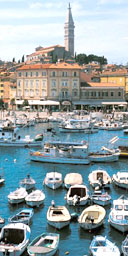
The harbour at Rovinj, Croatia, where the culture and food is heavily influenced by nearby Italy (op-ed: And vice versa).
The only Croatian man I have lusted over, along with thousands of ER fans, is Goran Visnjic, the moody but gorgeous Doctor Luka Kovac. So it was with expectations of great natural beauty that I arrived at Rovinj, on Croatia's rocky Istrian coast.
First impressions were favourable. The sun shone high, the green sea sparkled and the dusty pastel bars and houses of the old harbour looked inviting. Everything about Rovinj - 40 kilometres from Venice - breathes its Italian influences. Menus and street signs are in both languages and Italian is taught at school.
Bohemian and charming, Rovinj is a perfect base from which to visit other parts of Croatia. We wandered the old town of chalkstone-cobbled streets lined with chic shops, artists' studios and cafes, the sun glinting on corn-yellow houses with high-stacked chimney breasts.
There was the obligatory religious stop, climbing 192 woodworm-riddled steps to the bell-tower of the 17th-century church of St Euphemia. The reward was a stunning view of terracotta-tiled rooftops, clear sea and surrounding islands. In the distance was Monsena, a nudist resort, celebrating a long Istrian tradition, of which the church strongly disapproves.
There are plenty of boat trips from Rovinj - Venice is a two-hour voyage. A shorter option is to sail 12km down Lim Fjord, the longest outside Scandinavia. The rocky coastline, dense with vegetation, is populated by fishermen and naturists - particular thanks to the man who stood full frontal watching our boat pass by (no Doctor Luka he). At the end of the fjord, an amazing restaurant served a banquet of freshly caught giant prawns and squid, helped along by fruity cold wine. We headed back to Rovinj to drink cocktails lying on cushions on the rocks of a shoreline bar.
Early the next morning we drove to Fazana, a small harbour village, for the boat to Brijuni: in 1983, three years after his death, Tito's former private island was opened to the public and made a national park.
Here you can hire funny looking golf carts and whizz round the island, stopping to check out the Tito museum which brims with photos of him meeting world leaders. Visiting heads of state would offer as gifts animals from every continent (Gandhi bestowed two elephants and a holy cow). When the creatures expired, Tito would have them stuffed - and they're still there.
The beautiful Brijuni has long been popular with the famous: Richard Burton and Elizabeth Taylor came, and Princess Caroline of Monaco holidays there every year.
The town of Pula, however, didn't do it for me. Once the Austro-Hungarian Empire's naval base, it was furnace hot when we visited, and although the guidebook describes it as 'engaging', our guide was the grumpiest known to mankind. That said, James Joyce must have found something to write home about, since he taught English there in 1904-5.
Certainly the amphitheatre is impressive, built by the Romans towards the end of the first century BC and now a concert venue for the likes of Sting and Plácido Domingo.
That night we discovered what has to be Istria's best kept culinary secret: Taverna Vodnjanka in Vodnjan, an unpretentious restaurant run by a Croat family who have embraced all the best elements of Italian food. We gorged on pasta with fungi, truffles and asparagus, sheep's cheese, followed by sea bass, and oven-roasted lamb, washed down with Malvazija white. If I'd stayed any longer I would have come back the size of one of Tito's elephants.
Croatia is clearly keen to welcome back tourists: one of our guides was so enthusiastic he assured us that his country has the tallest men, the lowest crime rate in Europe and entirely organic food. What no one talks about is its recent bloody history: in 1991 the Balkan conflict erupted as emerging Croatian and Serbian nationalism tore former communist Yugoslavia apart and Croatian nationalists seized land from the Muslim population.
That summer the Croatian parliament declared its independence; autumn and winter saw a terrible war between Croat separatists and an army and paramilitary loyal to Belgrade. Independence was won amid widespread death and destruction on both sides. Croatia also played its part in the carnage across Bosnia between 1992 and 1995 during which Bosnian Croats carved out vast tranches of country inhabited by Bosnian Muslims.
Slovenia broke free during a 10-day war in 1991, pulling out of the Yugoslav Federation and voting in favour of independence. In May 1992, with a new constitution, it was admitted to the UN, becoming a full EU member last May. At this year's Observer Travel Awards, it was voted favourite European country.
We arrived at the serene and stunning Lake Bled in the north west, which offers long walks by day and blueberry schnapps by night. For the not easily embarrassed, a noddy train circles the massive lake; for cyclists and walkers, there are the Karavanke mountains nearby.
On to Bohinj, comprising the Julian Alps, Slovenia's only national park and Lake Bohinj, which we sailed across with a group of sprightly septuagenarians. Like us, they proceeded to walk 240 feet up through the forest to reach Slap Savica, a beautiful waterfall. Our guide was like Denis Lawson's Gordon Urquhart in Local Hero - the island's lawyer, hotelkeeper and bartender. A celebrated musician, he had also appeared in a Slovenian soap opera as a gay hairdresser.
I discovered I still had a pulse at Adrenalinski park: here, after too many placid lakeside hours, I allowed myself to be secured into a harness, attached to a giant swing, winched high in the air and released to swing backwards and forwards screaming.
There was some silent screaming that afternoon on a boring tour of a cheese factory and museum that charted the history of alpine cheese making. A part of me died in that museum. Otherwise Bohinj is gorgeous - coveted by walkers, climbers, summer cyclists and (with two ski resorts) winter piste-bashers.
Slovenia is as pristine and welcoming as Croatia, and although I didn't spot any Dr Luka lookalikes - the food, the clear sea and mountain air kept me deliciously light-headed for the whole visit.
For further information on Croatia contact the Croatian National Tourist Board (020 8563 7979; www.croatia.hr).
http://travel.guardian.co.uk/countries/story/0,7451,1273654,00.html
|
»
(E) Paul Spoljaric Still Carrying a Torch for the Major Leagues
|
Paul Spoljaric Still Carrying a Torch for the Major Leagues
By RICK WESTHEAD
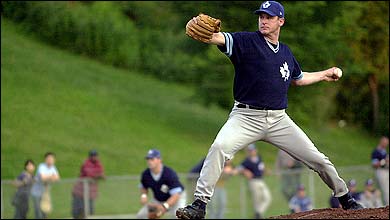
Canada's Paul Spoljaric, pitching in an independent league in Ontario, last played in the majors in 2000. ORONTO, July 30 - Paul Spoljaric's fastball no longer pops a catcher's glove, and he has not sent major league scouts scribbling for at least several years.
Spoljaric, 33, a left-hander whose tenure in the majors from 1994 to 2000 included stops in Toronto, Seattle, Philadelphia and Kansas City, has spent the past two years pitching once a week for about $6 in gasoline and meal money in Ontario's Inter-County Baseball League.
Although it has helped keep him in shape, the stint in the independent league - a former home to pitchers like Ferguson Jenkins and Denny McLain - will not get Spoljaric back in the big leagues.
For that, he will have to play in Athens.
"He's facing an uphill battle," said Jon LaLonde, the Toronto Blue Jays' director of scouting. "But with the state of left-handed pitching being what it is, if he goes out and gets hitters out, you never know."
For Spoljaric, the Olympic tournament represents more than a "way to cap my career." It is also a last-chance audition.
Teams are always on the lookout for talent, and most major league clubs will send scouts to the Olympics, especially to scrutinize the Cuban team, said Craig Shipley, director of international scouting for the Boston Red Sox.
Canada enters the Olympics as a medal contender thanks partly to the unlikely absence of the United States, which lost out to Canada and Mexico in a qualifying tournament last year.
Spoljaric will be handed the ball in almost any situation against the high-scoring Cuban and Japanese teams, said Greg Hamilton, the Canadian team's general manager.
"The only thing he won't do is close," Hamilton said, "but he brings an awful lot of flexibility and experience."
The son of an immigrant construction worker from Croatia, Spoljaric began playing baseball at 13 when a friend's team was short a player. He said his father soon agreed to build a pitching mound on an empty lot next to his family's home in Kelowna, British Columbia, complemented by a makeshift strike zone built with two-by-fours.
In 1989, Spoljaric signed as a free agent with the Blue Jays for $35,000, and after seven years in the minors, he became a major league regular. In 1997, he was traded to Seattle. Two years later, after trades to Philadelphia and back to Toronto, he was traded again, this time to the St. Louis Cardinals. They released him before the start of the 2000 season after he injured his back while bending to tie his shoes.
In 195 games and 277 1/3 innings, Spoljaric posted an 8-17 record with a 5.52 earned run average.
"Paul left the game out of frustration and didn't read the sports section for at least a year," said Lisa, his wife. "Baseball just wasn't talked about."
Instead, Spoljaric began working in a Toronto suburb as a project supervisor for a construction company. Playing in the Inter-County League started as a way to help re-establish ties to the sport, Spoljaric said.
"Playing here has helped me get past the 'Woe is me, I don't belong here, I'm better than this' mentality," said Spoljaric, who made as much as $450,000 a year in the major leagues.
Last year, pitching against mostly former United States college players and those with low-level professional experience, Spoljaric was the Inter-County League's most valuable player with an 11-0 record and a 1.61 E.R.A.
"The stigma he faces is why he hasn't been in pro ball recently," LaLonde said. Another concern could be Spoljaric's arm strength. His fastball averages 85 miles an hour, about four miles an hour slower than when he was last in the major leagues.
Spoljaric will not necessarily be playing with Canada's best. Hamilton will not have access to all his country's top talent because the tournament runs Aug. 15-25, at a time when major league teams may be poised for a pennant race.
Among the players absent from the Canadian lineup are the Baltimore Orioles pitching prospect Adam Loewen, the fourth pick in the 2002 draft, who signed a $4 million contract, and Minnesota Twins first baseman Justin Morneau, who was recently recalled to the majors.
"I'm not trying to snuggle up to anyone, and I'd tell you if I thought teams were giving us a hard time, but they've been very accommodating," Hamilton said. "If you look at Morneau, the Twins are fighting for the playoffs and he's batting near .300. How can you argue with that call-up?"
The Colorado Rockies have not said whether they plan to allow the left-handed pitcher Jeff Francis, the ninth pick over all in 2002 and now in Class AAA, to participate in Athens, Hamilton said.
Spoljaric, meanwhile, said the Olympics was just the high-profile event he needed to bolster his comeback attempt.
"I can pitch and go out there and do the job," he said. "I may not throw as hard as I once did, but I'm a better pitcher today than I was when I broke into the majors. I just need to have a few teams see what I can do."
http://www.nytimes.com/2004/07/31/sports/olympics/31canada.html
|
|
|




 full story
 printer version