
Sponsored Ads
|
Articles by this Author
»
(E) Commission publishes brochure of Croatian science
|
Commission publishes brochure of Croatian science and technology
[Date: 2004-08-25]
As part of its international scientific cooperation policy activities, the Commission has published a new brochure providing an overview of Croatia's science and technology (S&T) activities and policies. The brochure follows confirmation of the country's EU candidate country status in June.
The report states that, in the field of research, Croatia's accession to the EU will not require the adoption of legal provisions, but rather the existence of the necessary conditions for effective participation in the Framework Programmes. According to the 'Strategy for development of science in the Republic of Croatia in the 21st century', radical changes to the Croatian science base are required in order to introduce an S&T system based on the EU model.
'Full participation in the Framework Programmes should be the first step towards the implementation of the aquis [communautaire] in the field of research, and requires the development of research policy, infrastructure and the appropriate institutional set-up,' states the brochure.
Croatia's national science and research programme for 1996 to 2000 defined a number of specific and general priorities within six scientific fields: natural sciences, technical sciences, biomedicine, biotechnology, social sciences and humanities. However, the Commission points out that the programme was never fully implemented, and suggests that priorities should be redefined 'in a more rational and systematic manner.'
Science and research fall under the responsibility of the Croatian Ministry of Science, Education and Sport (MSES). In 2002, the Ministry financed 1,702 projects, the majority of which were curiosity-driven initiatives in the fields of biomedicine, technical and natural sciences.
However, the brochure warns that the funding of research and development (R&D) in the country is becoming increasingly restrictive: 'The decline in investment in science, which took place in Croatia particularly during the 1990s, has multiple consequences. [...] Equipment still needs to be modernised further and the inadequate material conditions make [...] research work in some fields difficult. The number of scholars and scientists is also [in] decline.'
On a more positive note though, the report states that in terms of international cooperation, 'S&T indicators show that [the] Croatian academic community has [the] potential for larger participation in international programmes.'
Progress has also been made in diversifying the sources of research funding in the country, so that in addition to the MSES budget (18.5 million euro in 2002), resources are also made available by regional authorities, municipalities, private companies and other legal entities. Increased links between research institutes, universities and industry are also a new feature of the Croatian S&T landscape, according to the brochure.
But if Croatia is to fulfil its potential and become fully integrated into the European Research Area, research investments will have to be spent in a far more efficient manner. In 2003, for example, only 15 per cent of the Ministry's total budget was spent on funding research projects, with the majority being spent on salaries, according to the report.
To download the brochure, please consult the following web address:
http://europa.eu.int/comm/research/iscp/pdf/croatia.pdf
Category: Publication
Data Source Provider: European Commission
Document Reference: Based on the brochure 'A new Candidate to EU accession: Croatia S&T developments'
Programme or Service Acronym: FRAMEWORK 6C; ERA
Subject Index : Scientific Research; Policies; Coordination, Cooperation; Economic Aspects
http://dbs.cordis.lu/cgi-bin/srchidadb?CALLER=NHP_EN_NEWS&ACTION=D&SESSION=&RCN=EN_RCN_ID:22517
|
»
(E) Tony Maglica's Story
|
Tony Maglica's Story 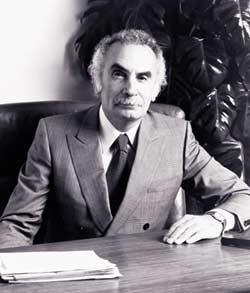
patriot and businessman
Every flashlight made by Mag Instrument, Inc., represents an abiding commitment to perfection and underscores the indomitable spirit and prowess of American manufacturing. A champion of free enterprise and “Made in the U.S.A.” manufacturing, Anthony Maglica founded Mag Instrument in Los Angeles in 1955 and designed the Maglite® flashlight, now an American product icon.
Through sheer determination, hard work, and know-how, Anthony Maglica achieved the American Dream when he founded Mag Instrument in 1955. When he went on to design and manufacture a product that revolutionized an industry, he achieved that dream all over again. In his ongoing pursuit of innovative technology, quality products, design and the customer service to back them up, Maglica believes
he has found the key to creating worldwide demand not only for his company's products, but for all goods made in America.
HUMBLE BEGINNINGS
Born in New York City during the Great Depression, Maglica was raised in his mother's native Croatia. He was a small child when his mother decided to return to Croatia so that he could be raised close to her family. In 1950, he returned to the United States. With complete faith in the American free enterprise system, Maglica set out to make the most of his training as an experimental machinist, in spite of the fact that he spoke no English. Five years later he had managed to save $125 in order to buy a lathe and start his own machine tool business in a Los Angeles area garage.
Maglica manufactured precision parts for industry, aerospace, and the military, and quickly earned a reputation for quality, efficiency and ingenuity. Mag Instrument was eventually incorporated in 1974. By that time, Maglica had clearly demonstrated his innovative techniques for cutting production costs and increasing quality. Continuous improvement is a talent that continues to keep his company ahead of the competition. Maglica established a hands-on leadership style, as well as a core business philosophy of combining superior quality of all Mag products with unsurpassed customer service.
LIGHTING THE PATH TO SUCCESS
As his company grew, Maglica set his sights on designing and manufacturing a new and improved flashlight. Initially targeted for the public safety sector, the Maglite® flashlight was introduced in 1979. Police officers, firefighters and mechanics quickly spread the word about this rugged, reliable anodized aluminum flashlight, which would change the portable lighting industry forever.
Committed to product innovation and refinement, Maglica followed up the success of the Maglite® flashlight with the Maglite® Rechargeable Flashlight System™, one of the most powerful rechargeable flashlights of its size. The Mini Maglite® AA flashlight was launched in 1984 and set a new standard for personal size flashlights. A smaller AAA-Cell version of the Mini Maglite® flashlight, ideal for many industrial and medical applications, was introduced in 1987; and the Solitaire® single AAA-Cell flashlight, designed for key
chains and purses, was introduced in 1988.
Often referred to as "A Work of Art That Works®", the Maglite® and Mini Maglite® have been honored by the Japan Institute of Design and the Museum for Applied Art in Germany. Fortune and Money magazines ranked Mag Instrument® products among the top 100 products that "America makes best". In 1996, the Wall Street Journal referred to the Maglite® flashlight as "the Cadillac of flashlights", and quoted then-CEO of Apple Computer Gilbert F. Amelio as saying he wanted Apple to be "essentially the Maglite® of computers".
EXPANSION AND INNOVATION
Headquartered in Ontario, California since 1982, Mag Instrument has 850 employees and occupies 450,000 square feet of space, including factory, offices and a distribution center. A new fully integrated manufacturing facility, now under construction in Ontario, is expected to create 2,400 additional jobs. This expansion will help Mag Instrument® meet the increasing worldwide demand for its products. The long-term goal is for exports to account for no less than 50 percent of sales.
Mag Instrument is proud to be a leader in the current renaissance in American manufacturing. Maglica himself, a fervent believer in the importance of manufacturing in the United States, insists that all Mag Instrument® products be produced domestically and bear the "Made in America" label. He has dedicated himself to proving that American-made products can excel in the global marketplace by using
technology to continually improve quality and reduce costs. Over the last two decades, Maglica's innovations have allowed Mag Instrument to offer consumers consistently better value than the competition.
Maglica, who is personally involved in all product research and development, holds hundreds of patents and trademarks for features that are employed in company products. Over the past decade and a half, Mag Instrument has vigorously enforced its intellectual property rights in courts here and abroad. Maglica believes that all American manufacturers benefit from the aggressive defense of patent and trademark rights against any and all infringers.
Several new products are under development, to be introduced only when Maglica is personally satisfied that their design and execution are up to Mag Instrument standards. In the meantime, he has plenty of other interests to occupy his time, including building an environmental reclamation plant in Zlarin, Croatia, where he grew up. From Maglica's childhood home to the birthplace of his success, this patriot and businessman continues to champion and exemplify the blessings of free enterprise.
http://www.maglite.com
|
»
(E) Art in Ernestinovo & Karlovac, Croatia
|
Ernestinovo & Karlovac The eastern Croatian town of Ernestinovo is hosting the 31st annual Ernestinovo art colony, which opened on 21 August. The event, organised by the Petar Smajic Art Association, will continue for a week and will feature the works of sculptors and painters from Croatia and Hungary.
The 7th Alstom Hrvatska international folklore festival began in the Croatian town of Karlovac on 20 August. Ensembles from Croatia, Macedonia, Russia, India, and Algeria are participating.
|
»
(E) Mag Instrument will open 1600 new jobs
|
Mag Instrument to build new center in San Bernardino Co. 1,600 new jobs, generate more than $1 billion per year.
Mag Instrument Inc. said Wednesday it plans to build a 700,000-square-foot manufacturing plant in Ontario that will consolidate more than 800 jobs, create 1,600 new jobs and generate more than $1 billion per year in economic stimulus.
Mag Instruments makes Maglite flashlights. The building will be constructed on a 30-acre parcel of land.
When the new center is complete, Mag Instruments will employ about 2,400 in Ontario.
Mag Instrument, which is privately held, currently operates a 500,000 square-foot center in Ontario.
|
»
(E) Natasa Vezmar into the quarterfinals
|
Natasa Vezmar into the quarterfinals
Taekwondo draw completed
ATHENS, 25 August - The draw for Athens 2004 Olympic Games Taekwondo competition has been completed at the Faliro Sports Pavillion and has produced a highlight match to be conducted on Saturday, 28 August in the Men's -80kg category.
Iraq's Raid RASHEED has been drawn against Steven LOPEZ (USA), the defending gold medal champion from the Sydney 2000 Olympics, in a bout that is sure to raise some interest.
There are four women who will sleep a little easier tonight, as a result of their draw moving them directly into the quarterfinals with a first round bye.
Yanelis Yuliet LABRADA DIAZ (CUB), Irina KAYDASHOVA (UZB), Ineabelle DIAZ (PUR) and Croatia's Natasa VEZMAR will have the opportunity to gauge their opponents' technique before meeting them in the last eight.
The Taekwondo competition begins on Thursday, 26 August at 09:00, commencing with the Women's u49kg Preliminary Round of 16.
|
»
(E) MIKE CELIZIC REPORTING FROM THE OLYMPICS
|
MIKE CELIZIC 
Reporting from the Olympics
By Katarina Tepesh
Mike Celizic writes regularly for NBCSports.com and is a freelance writer based in New York. At the present time, Celizic is one of the most prominent commentators from Games of the XXVIII Olympiad: Athens, Greece.
Mike's parents are longtime members of the Croatian Fraternal Union or CFU from Pittsburg.
In his recent column, "Race has nothing to do with NBA's success - League needs heroes, compelling stories, no matter what color." Celizic included the late DRAZEN PETROVIC (1964-1993), legendary Croatian basketball player who was drafted by the Portland Trailblazers of the NBA in the third round of the 1986 draft and later played for the Nets. He tragically died in a car accident. Celizic agrees that 'Petro' fueled Europe's passion for NBA. Celizic attended Petrovic memorial in Croatian Center on 41st Street.
In June, Celizic wrote about the Nets taking Croatian swing man ZORAN PLANINIC.
Celizic can be easily recognized at the sporting events wearing a unique hat. In the old days, when Celizic wrote for a New Jersey newspaper, he used to wear what looked like a hat from Slavonia. Nowadays, he wears an expensive type, usually a classic fedora or Stetson, but still - always a hat!
As recently as yesterday, concerning the gymnast controversy at the Olympics, Celizic wrote a widely quoted column "Hamm should give up gold - American has the opportunity to show he's true champion."
A few days ago, Celizic wrote "At Games, it's a woman's world - why do women's sports rule the Olympics?" He wrote how within eight years, the IOC has promised, the gender split will be 50-50.
Mike Celizic is the author of "Courage: American Role Models in Sports" and "The Biggest Game of Them All: Notre Dame, Michigan State & the Fall of '66" and co-author of six books.
Celizic can be reached at Celizic@yahoo.com .
|
»
(E) Veljko Rogosic, 63 year old Croatian, swam across La Mancha
|
Veljko Rogosic, 63 well-known Croatian marathon swimmer
swam between 43 and 45 kilometers in 11 hours and 27 minutes.
Vjesnik
Dobrila Stella, Ivan Smircic, Aug 16, 2004 translated by Hilda M. Foley
The best known Croatian marathon swimmer, 63 year old Veljko Rogosic from Split, swam across the La Manche Channel Sunday night. He needed for this feat 11 hours and 27 minutes. In spite of very bad weather conditions the Croatian marathon swimmer succeeded at his second try to cross the sea passage which connects the Atlantic Ocean with the North Sea, while rain, driven by strong winds that raised high waves, accompanied him all the way to his goal, causing him quite some physical difficulties. Practically the same weather conditions occurred a year ago, when Rogosic tried crossing La Manche for the first time. In spite of his very good physical condition and excellent health, Rogosic was not able at that time to cross the sea passage between France and England, because it was judged that such a try would be too risky, in effect, life threatening for our marathon swimmer.
A few months later Rogosic nevertheless succeeded this great undertaking, commenting about it with these words: "You cannot even imagine what it was like. Frightening. I thought my very soul would come into my mouth". Rogosic said that the unfavorable weather conditions exhausted him to such an extent, that the accomplishment of this undertaking was only thanks to the great physical but also psychic exertions in which he invested. "I am very happy, though it was difficult and indeed dangerous to enter a sea the strength of four bofors. Still it became the most difficult for me after four hours of swimming when I started vomiting in spite of the tablets, and I thought then that all is finished" said Rogosic, emphasizing that many have tried to talk him out of the attempt to swim across La Manche, telling him that such an undertaking very few could accomplish.
Rogosic emphasized that four more marathon swimmers, including a woman, attempted the crossing, and all of them accept for himself and an American gave up in the middle of the Channel, where the sea strength reached seven bofors. "I crossed La Manche and I must say that this is one of my most difficult marathons, not because of the extreme cold, but because of the vomiting that caused me such difficulties that I thought I will suffocate. I am so physically exhausted that after this success I could not even drink a drop of liquid" said the overjoyed Rogosic, adding that the route he managed to swim is between 43 and 45 kilometers.
Rogosic is the world's four-times first place winner in the swim marathon and winner on all Continents.
The "King of cold waters" , as he is called by the press, is inducted in the International Hall of Sports Greats in Fort Lauderdale, Florida. Rogosic was 142 times Yugoslavia's leader in various disciplines, and topped 52 times the country's record. He swam across the Nile, Michigan, Cook's Passage, Ontario, La Plata, Missouri and Mississippi and on the Adriatic alone he swam 22 marathons. Previously he was also twice first place leader in the Balkans, while, looking at the rank lists of the best time, he is listed as fourth in the world in the crawl style at 1500 meters. According to the official count of his swimming miles Rogocic circumvented the globe six times. The Croatian marathon swimmer was congratulated for his achievement by president Mesic this Sunday.
|
»
(E) Vanessa Redgrave on Goli Otok and Guantanamo
|
Goli Otok
Vanessa Redgrave: Guantanamo's torture regime is a shameful disgrace
The British intelligence services and the Foreign Office appear complicit in the torture
23 August 2004
The Independent
I have just returned from a theatre workshop in
Croatia, with women who survived Tito's concentration
camp for political prisoners on the island of Goli
Otok. Officially this was a "work site" or "labour
camp", and was opened by the Yugoslav State Security
Service in 1948, when Tito split from Stalin.
The women prisoners were suspected of being
pro-Stalin. They were never formally charged with a
crime, and were never tried or given access to lawyers
or a chance to defend themselves. On the island they
were subjected to hideous beatings, forced to stand
over urine buckets or against a wall for hours on end
in "stress-positions"; they were deprived of sleep,
denied food and drinking water as punishment and
locked away in isolation. They were prohibited from
washing even in the sea, and had to endure repeated
interrogations and "self-criticism". They were called
"bandits", "scum", "traitors", "enemies of the state".
In effect, Stalin's methods were being used by the
State Security Service against those suspected of
being "pro-Stalin". No one knows how many went mad,
how many died, or how many attempted suicide. In
Tito's time, this was a "State Secret".
All the survivors of Goli Otok (the island had a camp
for men as well) agree that under prolonged conditions
of torture, they would do anything, say anything,
write anything and sign anything that was demanded of
them in the hope of being released.
I have also just finished reading the 115-page
document Detention in Afghanistan and Guantanamo Bay
compiled by Birnberg Pierce & Partners, lawyers for
the three British citizens released from Guantanamo
Bay without charge in March. Their accounts of
detention are horrifyingly similar to the conditions
in Goli Otok. In both cases, the denial of a trial,
and a specified date of release added to the physical
torture the three endured.
Shafiq Rasul, Asif Iqbal and Rhuhel Ahmed were
captured in northern Afghanistan in November 2001. All
three state that they were physically tortured in
Sherbagan, Kandahar, before being consigned to the
psychological and physical hell of Guantanamo Bay. In
March this year they were sent back to England and
released without charges.
Asif and Shafiq say they were interrogated by an SAS
officer in Kandahar before they were flown to
Guantanamo. Rhuhel states that he was questioned in
Kandahar by MI5 and separately by someone from the
Foreign Office. He was in a terrible state from
prolonged sleep deprivation, starvation and
dehydration. The MI5 officer told him he would be sent
home if he agreed to "admit to everything" that was
put to him. "I just said 'OK' to everything they said
to me. I agreed with everything, whether it was true
or not. I just wanted to get out of there." During
their two years of incarceration in Guantanamo M15
officers and a representative of the British embassy
in Washington made six or seven visits/interrogations.
All three men made complaints about the conditions
under which they were being held; and about the
interrogations by US military intelligence and other
US agencies. The British intelligence services and the
Foreign Office appear therefore to be complicit in the
conditions of psychological and physical torture in
Afghanistan and Guantanamo Bay.
The document depicts a Kafkaesque nightmare combined
with a barbaric system of punishments, including
"short-shackling" for hours on end. Any decent person,
British or American, could only feel the utmost shame
and revulsion that such methods should be used.
It is clear from the accounts of the three British
detainees that many prisoners have gone mad and many
have attempted suicide. The Foreign Office has evaded
the requests of family lawyers to allow independent
doctors to see the British citizens and UK residents
who still remain in Guantanamo.
Torture is morally repugnant, degrading both the
tortured and the torturers. It is also wholly
destructive of security, which in part depends on
intelligence. Torture produces dysfunctional
intelligence since the suspect is being forced to give
only the answers the interrogators want.
Article 2 of the UN Convention on Torture, 1984,
states: "No exceptional circumstances whatsoever,
whether a war or a threat of war, internal political
instability or any other public emergency, may be
invoked as a justification of torture." Both the UK
and the US signed and ratified this convention. Yet
our Appeal Court has upheld our Government's case for
accepting evidence extracted under torture.
In the name of security, our Government is destroying
the principles and the laws which are the foundations
of the security of all citizens; these principles were
proclaimed by the American Patriots in their
Declaration of Independence and after the war, in
their constitution which also prohibits cruel and
degrading treatment. It is a spine-chilling disgrace
that the Blair government has supported the Guantanamo
torture regime, and agreed to the pre-tribunal
hearings that have been repudiated by US civil rights
lawyers and human-rights NGOs.
http://argument.independent.co.uk/commentators/story.jsp?story=554088
info@guantanamo.chr.org
23 August 2004 02:35
|
»
(H) HRVATSKI LJETNI KAMP Astoria, New York
|
HRVATSKA MATICA ISELJENIKA ORGANIZIRA
HRVATSKI LJETNI KAMP ZA DJECU I MLADE
Djeca od 4 godine pa do 18 godina
(hrvatske narodne djecje igre, pjevanje pjesama, ucenje folklora, izrada kostima, postavljanje izlozbi, izrada novina, cestitki, kako napraviti jednu predstavu i jos mnogo zanimljivih stvari za nasu djecu i mlade)
Most Precious Blood School Cafeterija
32-23 36th street; Astoria, Ny 11106
26. kolovoza - 4. rujna
Pocetak u cetvrtak 26. kolovoza u 9,30 – 1,30 PM
susret sa roditeljima i zajednicko planiranje
$ 40 za jedno dijete; $ 70 za dva djeteta trece dijete ne placa
Iz Hrvatske nam dolaze cetiri uciteljice koje ce raditi sa nasom djecom i mladima. Za dodatne informacije i prijavu nazovite ured Hrvatske katolicke misije u Astoriji 718 726 7937
.
|
»
(E) Croatia's challenge to the Big Mac
|
Croatia's challenge to the Big Mac 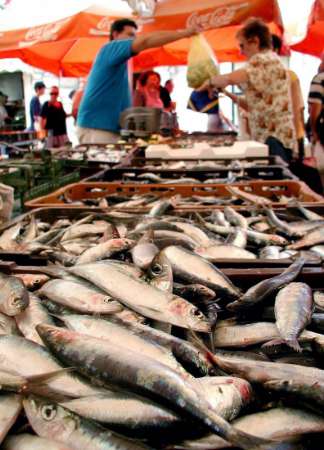
August 24 2004
By Kolumbina Bencevic
Kali, Croatia - Croatia's Adriatic coast may be hard to beat for natural beauty but tourists often complain it lacks a proper culinary identity, offering little other than expensive fish or cheap grilled meat.
The Srdela (Sardine) Snack project hopes to change this.
You have to like fish but for those who do, a group of local enthusiasts has put together menus for a simple, healthy meal plus a glass of home-made wine, for just two euros, hoping it will become a trademark of true Croatian food.
'Oily fish not only tastes good, it is very healthy'
If the way both locals and visitors have taken to the new menu is anything to go by, the idea to expand it into a franchise with hundreds of outlets could take off.
There is nothing fishy about the Snack, launched last month in a former pizzeria in a fishing village on the central Dalmatian island of Ugljan.
Everything served here - sardines, pilchards, anchovies, mackerel and tuna steak - is freshly caught locally and either grilled, broiled, fried or served in a light marinade. Red or white wine comes from vineyards on the nearby mainland.
"Clients are absolutely thrilled. Business has boomed fourfold in this past month," said Djenko Perin, keeper of the Trita which had languished as a pizzeria.
The picturesque village of Kali, with its long fishing tradition, seemed a logical choice to test the market.
The idea was the brain child of Ante Kolega, a Kali native who is an agriculture professor in the capital Zagreb. Confident of sardines' nutritive value, he asked his friend Perin in Kali to test the new menu.
As part of a state-backed project, Kolega aims to introduce the Srdela Snack as an authentic Mediterranean meal not only in seaside areas but in a chain N with up to 1,000 outlets, he says N throughout the country over the next five years.
Some have already dubbed the Srdela Snack a Croatian response to the Big Mac, the epitome of fast-food success worldwide. Others might wonder what is so special about a Mediterranean country pushing fish as its own typical meal.
The truth is that Croatia's diet is very much meat-based.
Establishments ranging from roadside inns to fancy city restaurants serve a rich variety of meats, including popular grilled minced meat fingers "cevapcici", or young suckling pigs and lamb roast on a spit over open fire.
Non-meat eaters may find it hard to get a decent selection of fish or vegetables at reasonable prices. And most fish restaurants are expensive.
Kolega says sardines and oily fish have long been neglected in the Croatian diet except on the coast.
"Oily fish not only tastes good, it is very healthy, the richest source of Omega 3 and Omega 6 acids," he said. "It is an antioxidant."
Served on paper plates with toothpicks instead of cutlery and wine poured into paper cups, the new fish dishes may not exactly be a holiday highlight.
Yet patrons lunching at the Trita say they are a perfect for an affordable sit-down or takeaway meal on a hot day.
"The fish is very good, tasty. And we did not have to cook it ourselves," said 19-year-old holidaymaker Vlatka Buzjak from Zagreb.
The planned Srdela Snack franchise system will also include fishermen in a bid to help them find regular buyers for their catch without middlemen.
"There is plenty of fish to ensure a steady supply. And fishermen will be able to earn twice as much as they do now," Kolega said.
The only thing left to resolve is reconciling the offer with Croatia's new traffic law which introduced a zero tolerance for alcohol last week.
"What does one do, if you cannot have a glass of wine with your fish?" said a customer.
http://www.iol.co.za/index.php?set_id=1&click_id=418&art_id=qw1093347904367B213
|
|
|




 full story
 printer version